Tag: Twitter

  • Do you know your audience?

    by: Spencer Jones

    Businesses either “get” social media or they don’t.  Every small, local business and international corporation faces this dilemma and some may not even realize it.  Remember this?
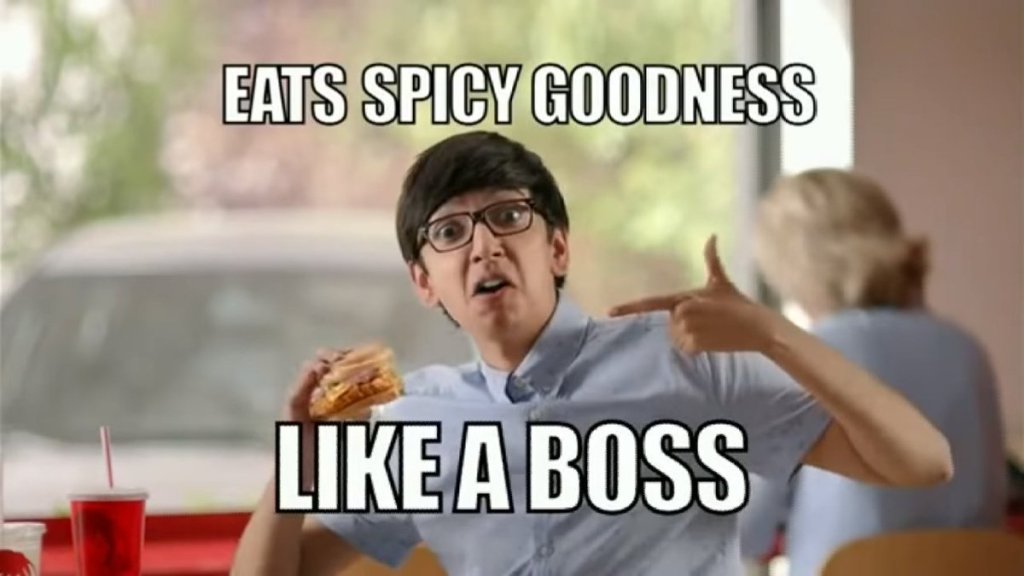
    (Photo from Wendy’s, 2015)

    That originated from a 2015 Wendy’s commercial promoting their Jalepeño Fresco Spicy Chicken Sandwich.  Initial reactions were… mixed.  Incorporating elements of online media used in this commercial felt tacky upon release.  Although there’s an argument to be made that it did catch people’s eyes a bit.  If you saw this back when and your friend showed you the frame, how can you not crack a smile?  At the time however, thematic elements from online humor on television mixed like oil and water in this instance.  

    Let’s fast forward a couple years.  The fast food giant would soon pick up steam online at the beginning of 2017 stemming from a hilarious brand-user discussion on Twitter:

    @Wendys: Our beef is way too cool to ever be frozen.

    @NHride: Your beef is frozen and we all know it. Y’all know we laugh at your slogan “fresh, never frozen” right? Like you’re really a joke.

    @Wendys: Sorry to hear you think that! But you’re wrong, we’ve only ever used fresh beef since we were founded in 1969.

    @NHride: So you deliver it raw on a hot truck?

    @Wendys: Where do you store cold things that aren’t frozen?

    Oh, boy.

    @NHride: Y’all should give up. @McDonalds got you guys beat with the dope ass breakfast.

    @Wendys:

    (Wendys, 2016).

    This discussion would shortly thereafter be featured on CNN’s Anderson Cooper 360.  The following positive brand feedback by users blossomed into an intriguing shift in their tone of messaging.  A series of caustic rebuttals and witty banter with both followers and corporate competitors shot their total online follower count up 13% in just 6 months (Thorne, 2020).  I wouldn’t blame you if you think it’s unprofessional or distasteful.  Keep in mind, we’re talking about Wendy’s.  This is an international corporation; a lot of people are familiar with them.  The reach of your business and expectations of a target audience should correlate to what values are upheld in messaging practices.  Building a strong tone for brand messaging consists of surveying the land, aligning with values, and being active.

    Surveying the land

    Research is the predecessor to any informed decision.  That starts with understanding our target audience.  What has worked in the past?  How do they communicate?  What types of content or genres are of  interest to them?  What’s the most important element of what we have to say?  Anticipating how the target audience will react determines what topics or actions to steer away from.  Try to humanize your tone when responding to complaints and compliments alike.  Developing personal, casual tones to messages separates the idea of talking to a brick wall (Jeong & Kim, 2022).  

    Aligning with values

    Each business has messaging values that apply for each active channel. Look for key words or expressions to keep in mind.  Establishing a consistent structure of messaging has to happen before users can express their own positive sentiment towards you.  Aligning values helps to clarify an outline of a business’s social presence to users.  That way, users grow a stronger bond to the business through similar values.

    Being active

    Appropriate usage of humor in social media marketing tells users that a business is not only competent, but confident.  Humor relies on context (Bitterly et al., 2017).  Every business may not intend to be humorous, but should be looking to engage with their audience.  That means speaking in an active voice, being resourceful, rewarding feedback, etc.  The little details that feel authentic and human (emojis, phrases, etc.) strengthen a brand’s social relatability and presence online, widening the path for users to construct a positive view of the brand (Hayes et al., 2019).

    Takeaways

    I like to imagine a business is a living, breathing entity. In order for an audience to have an emotional reaction, there needs to be emotion conveyed through messaging. In order for consumers to engage, there should be engagement going their way. Consistency and confidence creates authenticity. Lean into that. Keep in mind employers (especially local) see Gen-Z interns or staff members with the assumption that they “get” the nuances of a brand’s identity. Some of us assume that we get it, too. Going off assumptions or skipping steps is where businesses and professionals alike fail to maximize their reach.

    References

    Bitterly, T. B., A.W. Brooks, and M. E. Schweitzer. (2017). Risky Business: When Humor Increases and Decreases Status. Journal of Personality and Social Psychology 112, no. 3 (March 2017): 431–455.

    Hayes, J. L., Britt, B. C., Applequist, J., Ramirez, A., & Hill, J. (2019). Leveraging textual paralanguage and consumer–brand relationships for more relatable online brand communication: A social presence approach. Journal of Interactive Advertising, 20(1), 17–30. https://doi.org/10.1080/15252019.2019.1691093 

    Jeong, H. J., Chung, D. S., & Kim, J. (2022). Brands Are Human on Social Media: The Effectiveness of Human Tone-of-Voice on Consumer Engagement and Purchase Intentions Through Social Presence. International journal of communication [Online], 16, 4231+. https://link-gale-com.liblink.uncw.edu/apps/doc/A717299271/PPCM?u=wilm99594&sid=bookmark-PPCM&xid=cf588424

    Thorne, J. (2020). How Wendy’s revolutionized corporate social media accounts. Medium. Retrieved March 22, 2023, from https://bettermarketing.pub/how-wendys-revolutionized-corporate-social-media-accounts-6d4aec739f37 

    Wendy’s. [@Wendys]. (2016, December 30). Our beef is way too cool to ever be frozen. [Photo attached] . Twitter. https://twitter.com/Wendys/status/815973811115925504
  • @POTUS

    rt-rump-plane-mem-161206_12x5_1600

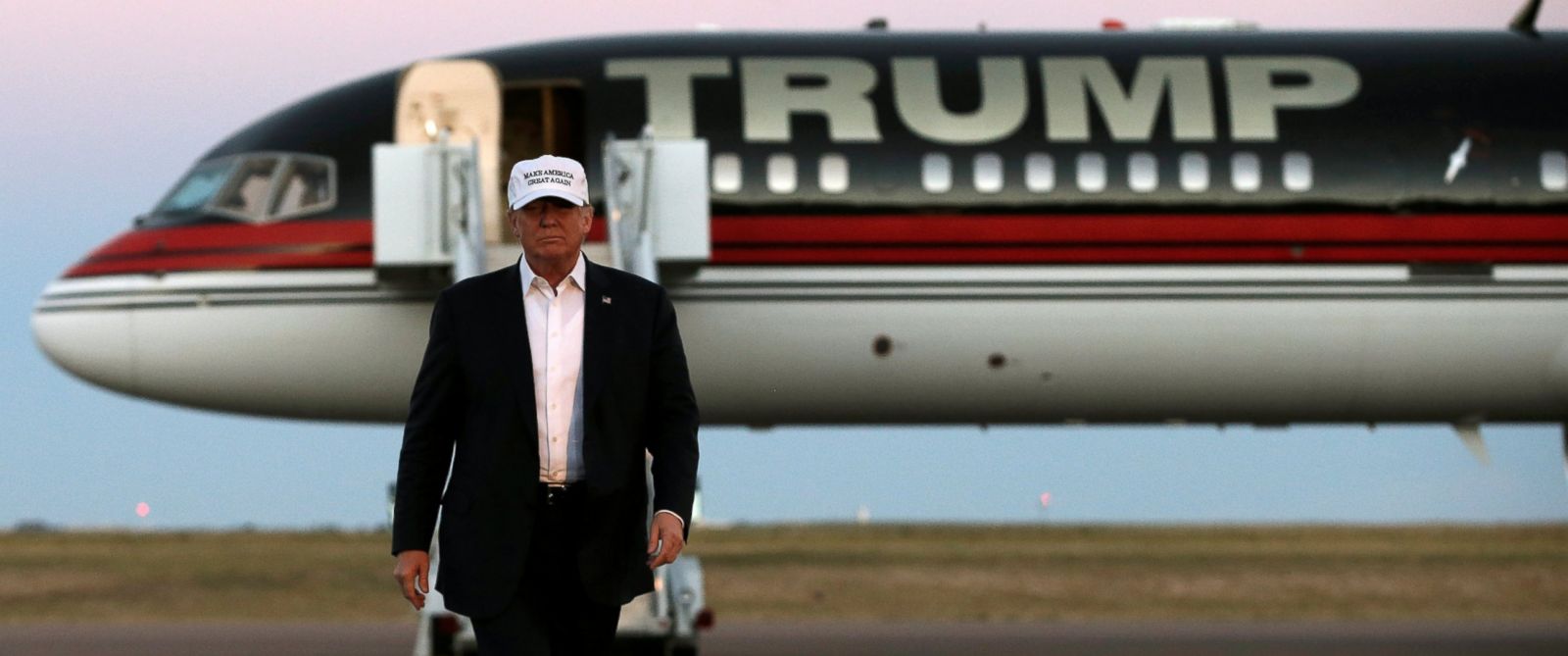
    Donald Trump as a citizen and as a presidential candidate was known to get himself into sticky situations on social media, more specifically Twitter.

    @realDonaldTrump engaged heavily in Twitter communication during the course of the election cycle. His ‘twitter-happy’ personality often came across aggressive and disrespectful. However, this was the brand that Donald Trump created for himself, as he knew what I was getting himself into.

    screen-shot-2017-02-03-at-10-14-41-am
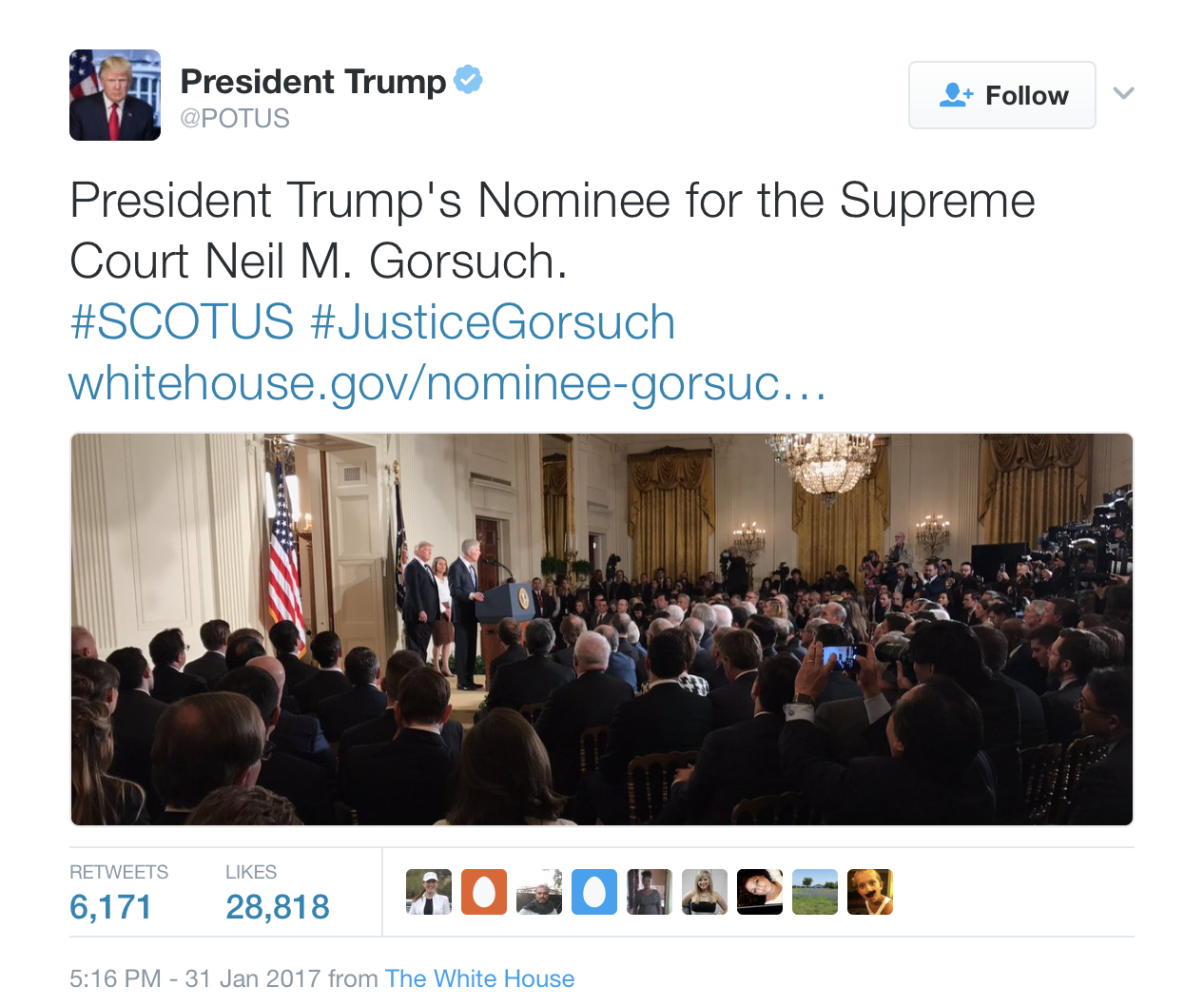
    Donald Trump, just minutes before the inaugural ceremony, took the time to tweet for the first time with his newly adopted Twitter handle @POTUS.

    A little less than a month ago, on January 20th, Donald J. Trump was sworn into the Office. Also on that day, the now 45th President adopted the Twitter handle @POTUS. With this transition comes a bigger responsibility of how the President chooses to communicate using social media. President Trump must now reinvent his social media communication strategy, and re-brand himself as the President of the United States.

    Former President Barack Obama was the first president to utilize Twitter to communicate with the nation; However, the 44th President was not nearly as dependent on this form of communication as is President Trump.

    screen-shot-2017-02-03-at-10-21-03-am

    Ever since President Trump entered office, he has been utilizing Twitter and Facebook heavily. I have personally seen several events streaming live via Facebook. As many of us know, it can take up valuable time to generate a powerful message with only 140 characters. As students who are studying communication, we understand that a key skill to have in the process of “managing mutual responding” is to be able to generate effective and efficient messages to convey understanding to listening parties. It is not easy, especially with a limit of 140 characters. President Trump, however, seems to have no problems generating messages throughout the day among his Presidential duties. I can almost see the book on the shelf now…The Art of the Tweet by Donald Trump.

    Regardless of anyone’s opinions of President Trump’s policies, decisions, and beliefs, he is still breaking through barriers by trying to cut out the middleman in bringing you important information. If he is able to maintain ‘presidential etiquette’, do you think it is appropriate for President Trump to continue his frequent tweeting? Can this help prevent news sources from misinterpreting his attitude towards something, or an event that occurred? Just a couple points to think about.


    ~ Ben Yerby


  • Forever Teal

    homecoming2016_header

    Hello fellow Seahawks, it is your time to show off your school spirit this week for UNCW’s Homecoming. This week is packed with fun events for students, alumni and friends, leading up to the Women’s and Men’s basketball games this Friday and Saturday.  

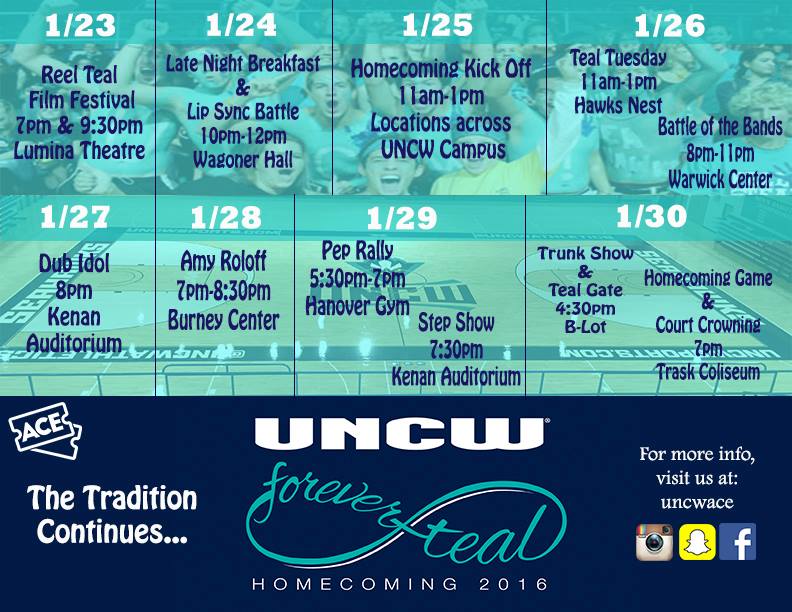
    Are you on campus today? It’s our favorite day of the week… Teal Tuesday! If you are wearing your teal stop by Hawk’s Nest from 11-1pm for free t-shirts, giveaways, and make your own sign for Homecoming week. Later in the evening, show your support for your fellow students at Battle of the Bands in Warwick from 8-11pm. Five bands will be competing for a cash prize, judged by American Idol look-a-likes, including Bigg B from 97.3. You can help determine the winner by attending and voting for your favorite band!

    homecoming16_logo

    Students are constantly using social media to find out information about upcoming events. Campus organizations have decided to use Instagram, Twitter, and Facebook to promote UNCW’s 2016 Homecoming Week. If you plan on attending any of the homecoming events, make sure to snap a picture and use the hashtag #UNCWHC16.

    This week UNCW’s campus organizations will be promoting Homecoming week with banners, posters, and flyers on Chancellor’s Walk. Follow the social media sites, @uncwilmington and @uncwace to keep up with Homecoming 2016 events.

    Here’s a preview for UNCW’s 2016 Homecoming events:

    • Wednesday
      • Dub Idol 8pm in Kenan Auditorium
    • Thursday:
      • Amy Rolloff 7-10pm in Burney Center
      • Homecoming Variety Show 7pm in Warwick Center.
    • Friday:
      • Homecoming Pep Rally 5:30-7pm in Hanover Gym
      • Women’s Basketball UNCW vs. Towson 7pm in Trask Coliseum.
      • Homecoming Step Show 7:30pm in Kenan Auditorium
    • Saturday:
      • College of Arts and Sciences 5K 8:30am
      • Intercultural Festival (iFest) 10am-2pm in Burney Center
      • Trunk Show & Student TEALgate 4:30pm
      • Men’s Basketball UNCW vs. Charleston at 7pm in Trask Coliseum.

    12376380_10153433104582684_1578962519850455067_n

    -Erin Fouhy, Sarah Garner, Caitlin Rodermund, and Megan Suggs.

  • Parody accounts are no joke

    Parody accounts have become a unique way for people to reach stardom. The idea of using someone else’s brand to create your own image is what makes it so unique. We have encountered tons of parody accounts while scrolling endlessly through social media. While we use social media as a platform for entertainment, parody account users are taking advantage of this by establishing a brand that will benefit from the platform and the audience. By doing this, parody accounts have become real businesses.

    Accounts such as @MedievalReacts and @student_problems are owned by a European marketing company called The Social Chain. The Social Chain offers its clients (which include Disney, Microsoft and Universal) different packages to reach over 200 million people.The Social Change uses these parody accounts to generate content about their clients. According to their website, The Social Chain “…subtly talk[s] about a product from hundreds of different channels all within the same short time frame, which makes it become a trending topic.” In an interview with Vice, the creator of @MedievalReacts says The Social Chain relies on its over 150 Twitter accounts to share and retweet each other to reach their audiences. Accounts that pertain to certain stereotypes, like @SororityProblems, allow organizations to reach their target market with ease.

    Michael Heaven Jr., the owner of The Social Chain, describes the company’s commercial accounts to be “seamless” when advertising content, meaning the advertising doesn’t look like advertising. He goes on to say, “We’ll speak within the tone of the page, we’ll speak as if the page is discovering it for themselves as each of the pages has a personality. So, the things that we mention will be relevant to our target audience.” What he is illustrating is a form of native advertising.

    According to the Harvard Business Review, native advertising can be described as “an ad format that must be created specifically for one media channel in terms of the technical format and the content (both must be native to the channel on which they appear and unable to be used in another context).”

    John Oliver explains native advertising more in this video: 

    Oliver focuses on how native advertising and news cannot coexist, but is this true with parody twitter accounts? Is it ethical to disguise advertising as content?  

    – Nick, Melanie, Mary & Patrick

  • Burger King’s Spooky Whopper

     Name three common fast-food restaurants in five seconds…. Go! Hopefully you came up with something along the lines of McDonald’s, Wendy’s, and Burger King. Since their creation, the trio have been constantly fighting for brand loyalty. In an effort to attract new consumers, each found ways of making their product unique. Recently, Burger King released the Halloween Whopper, a normal Whopper with a black, A.1 flavored bun.

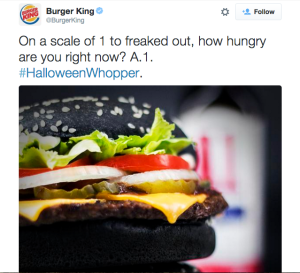
    If you haveScreen shot 2015-10-28 at 9.54.51 PM Facebook, Twitter, Instagram or really any social media outlet, you probably experienced Burger King’s presence on social media. Before the launch of the Halloween Whopper, Burger King teased their consumers with a promo video featuring thunder, lightning, and a lunar eclipse with a black bun burger placed front and center – stating “Something Wicked is Coming” on Twitter.

    As the Halloween Whopper was announced publicly, Burger King released this press release: “Burger King Restaurants Unveil the A.1 Halloween Whopper Sandwich with A.1 Flavor Baked into the Black Bun.” stating this whopper was inspired by Japan’s specialized burger. They followed up by saying “
    We tailored the flavor of the black bun to the American palate with A.1. sauce, a flavor this country loves, and we’re delivering it in a way that’s never been done before by baking it into the bun. It may look Japanese but it tastes like America.” The hashtags of #HalloweenWhopper and #SomethingWickedIsComing filled Twitter and other mainstream social media outlets because of the non-traditional appearance.

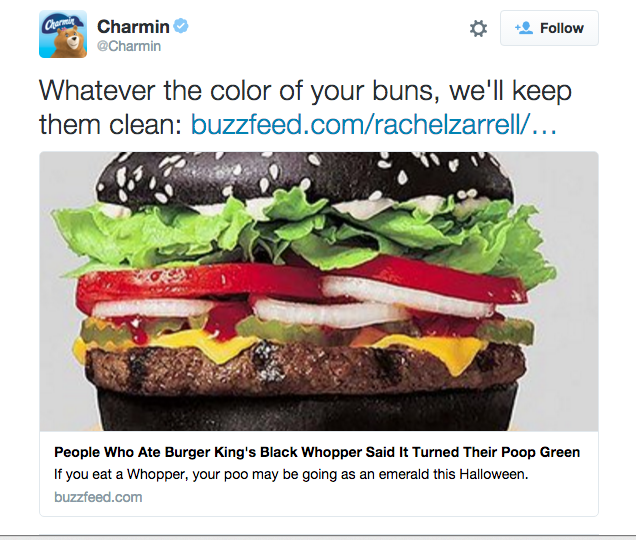
    Screen shot 2015-10-29 at 11.01.47 AMPeople who were daring enough to try it- are daring enough to share the results with the Internet. Twitter comments are consistent in complaining of a green stool (which admittedly sounds very unpleasant). This green situation might make you wonder, “What people are willing to try without pausing to consider what’s going into their bodies?” Burger King hasn’t publicly released the ingredients or replied to the negative comments. Burger King seems to be choosing silence as their strategy in this crisis, but Charmin has taken a clever chance to chime in. Comments such as “whatever the color of your buns, we’ll keep them clean”, posting a link to the Buzzfeed article on the green poo crisis. Negative or positive press, Burger King is taking over social media, 29,000 tweets in a single week. 

    America’s detachment from our food has reached crisis level proportions. We don’t know what the ingredients in our food are, where they come from, who grows and or genetically modifies them. And it’s not without its consequences; as a nation, we are morbidly obese and chronically unhealthy. This way of living is becoming very expensive. Health care for weight-related issues puts a huge strain on the health-care system. 

    Burgers turning our poo green is a light-hearted example, but shines light on the heart of the issue. We honestly have no idea what’s in our food, or how it affects our health, and we really don’t seem to care. This example reaches the point that a halloween themed hamburger is turning poop green and people think it’s hilarious. The food we eat literally affects all the cells of our body. This concept of detachment is what Marx calls commodity fetishism. When a culture forgets, ignores, or is otherwise separated from the source of a commodity (in this instance where food comes from), the culture becomes wasteful and overuses, almost always at the disadvantage of those who create the given commodity, and in this case ourselves as well.

    103027033-BK_Halloween_Whopper[2].1910x1000

    We implore anyone reading this to once a week, once a month even, get together with friends and family and cook a meal from scratch. Be grateful for every ingredient.

    Have you tried the #HalloweenWhopper yet? Let us know your thoughts on this controversial burger.

    -Jonathan Callahan, Erin Fouhy, Julia George, Joseph Hines, and Sarah Suggs

  • One Country Painted Red

    With the rapid growth of new products, brand extensions and the blurring of traditional and new age advertising, marketing and advertising to target audiences has reached a new level of competitiveness. Brands now must adapt to this changing environment and contest with competitors to stay at the top of their market and target to audiences in creative, attention-grabbing tactics.

    The most iconic brand in the soda market, and throughout the world, is undoubtedly that of Coca-Cola. In the summer of 2011, Coke created an original marketing strategy to run a campaign that would inspire people to connect with the brand both online and offline in order to acclimate to the changing marketing environment. The campaign’s prime objective was to increase consumption of Coke over the summer season and to get people to fall in love with the iconic brand again. Particularly, in Australia, at the time nearly 50% of teens and young adults had never tasted a Coke and this drove the brand to reconnect with the country.

    Established in Australia, the ‘Share a Coke’ campaign immediately received positive media attention and consumer responsiveness. The idea of the ‘Share a Coke’ campaign was to place Australia’s 150 most popular names on the front of millions of Coca-Cola bottles, simple right? This was the first time in 125 years that Coke had made such a paramount transformation to it packaging, and it was revolutionary.

    “We used publicly available data to review the most popular names in Australia and ethnic representation in Australia to ensure the diversity of our multi-cultural nation was represented appropriately.”

    – Coca-Cola Spokesperson.

    The Coca-Cola brand wanted to initiate conversations by putting Australians front and center and inspire them to connect with people and ‘Share a Coke’. The central theme that gave ‘Share a Coke’ its power was the way a brand so universal could replace its logo with individual names by reaching out to consumers and personalizing its brand to individuals.

    “We are using the power of the first name in a playful and social way to remind people of those in their lives they may have lost touch with, or have yet to connect with”

    -Lucie Austin, Marketing Director for Coca-Cola South Pacific.

    The ‘Share a Coke’ campaign strategically exhibited that when personalization in advertising is done the right way, it can be highly appealing and extremely effective. While Coke got personal, media was buzzing with talk over what the brand was implementing behind the personalization. Coke remained silent until Australia’s highest rated media weekend. The campaign was revealed to the public and aired across the biggest weekend in Australian sport, during the AFL (Australian Football League) and NRL (National Rugby League) grand finals which reached over 30% of the population.

    Succeeding the campaign launch, requests for more names were coming in the thousands. Coke was prepared for this boom of requests by setting up kiosks that toured 18 Westfield shopping centers attracting consumers to personalize any name on a Coca-Cola bottle.

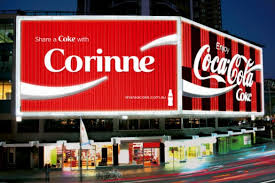
    Coke wanted to especially reach out to the 50% of young adults that had never tasted a Coke in Australia, and there was no better way to reach this target market than online. Participation and mass allocation was achieved through Facebook by providing consumers with the resources to connect and ‘Share a Coke’ by creating a personalized virtual Coke bottle to share with a Facebook friend. Consumers were tagging friends in pictures with personalized Coke bottles and sharing stories on social media platforms like Twitter, Facebook and YouTube. Coke consumers also could create their own commercials! With the abundance of requests still pouring in, Coke told consumers to put in a vote of “who do you want to share a Coke with the most?” via Facebook. After 65,000 people voted, Coke bottles with 50 new names were released. “Consumers were invited to SMS a friend’s name, which was projected live onto the iconic ‘Coca-Cola’ sign at Sydney’s King’s Cross. They then received an MMS enabling them to share their friend’s name up in lights, via Facebook and email.”

    untitled

    The multi-platform communications strategy was implemented to ‘Share a Coke’ with someone you know, or want to know and ultimately gave people the resources to find, connect and share. After 3 short months of running the campaign, young adult Coca-Cola consumption increased significantly in Australia by up to 7%, making 2011 Coke’s most fruitful summer season in history. The ‘Share a Coke’ campaign resulted in 76,000 virtual coke cans shared, 378,000 extra coke cans printed at kiosks, and 5% more people were drinking coke. Coca-Cola had successfully won over Australia and became a part of popular culture again.

    -Briana McWhirter

  • Banking on Bracketology

    Even if you’re not a fan of college basketball, you’ve likely heard friends and colleagues exclaim about their “busted brackets” as of late. The NCAA Division I men’s basketball tournament, billed as “March Madness” runs throughout the month of March and is one of the most popular spring sporting events. The tournament begins with 64 teams and ends with the championship game in April. Part of the fun of March Madness, is Bracketology, the science of pitting teams against each other to predict the outcome of the tournament. It gets pretty serious–billionaire Warren Buffett of Berkshire Hathaway even offered $1 billion to whoever fills out the perfect bracket.

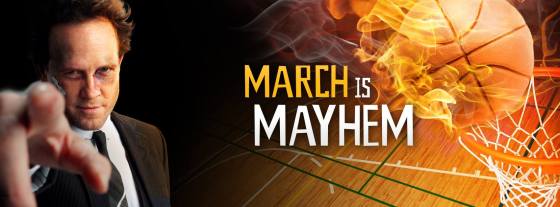
    Where does Bracketology intersect with IMC? The answer lies in the “good hands” of Allstate. 2014 is the insurance company’s third year as official sponsor of the NCAA tournament. This year, Allstate’s antagonistic character, Mayhem, is breaking brackets in a series of Tweets, Facebook updates, and Vines. While Mayhem is infamously known for causing car wrecks and burglaries, the Leo Burnett-created “March Mayhem” campaign makes light of Bracketology. Watch as Mayhem breaks, bends, and even blends busted brackets.

    March is Mayhem

    “March Mayhem” is Allstate’s social media component of its NCAA tournament campaign. During TV coverage of the tournament, the company sponsors the “Good Hands Play of the Game” and is rolling out increased advertising for its homeowners insurance. Pam Hollander, Allstate’s senior IMC director, points out that the campaign goes on as the tournament progresses, taking into account how different teams perform in the tournament. She says the campaign features direct engagement with fans. Mayhem acts as a direct engagement tool to connect and learn more about Allstate’s social media-savvy audience. With Mayhem, interpersonal communication takes place in an ad campaign, personifying the brand’s relationship with the consumer.

    Mayhem isn’t the only insurance character with social media presence. Representing insurance companies big and small: the Gecko, Flo, Jake, and J.J. Hightail each interact with their Twitter followers. One of the strong points of the March Mayhem campaign is how it takes advantage of the Bracketology phenomenon to establish a connection with the consumer. Using a popular social trend in a social media campaign exemplifies the personification of brands.

    Do you believe using Bracketology in advertising is effective? How have you seen other brands use social phenomena in their advertising?

    Nathan Evers