Tag: Rhetorical Theory

  • What was that word again?

    “Four score and seven years ago our fathers brought forth…” and the rest I can’t remember. I know I’m not alone in the painstaking task of memorizing the Gettysburg Address, but are current junior high students the first generation to not participate in this tedious tradition? Dating back to 5th century BCE Sophists, memorization has been considered a great asset for rhetoricians. Sophists are known for their emphasis on teaching effective dialectics. One aspect of their teachings included encouraging their students to memorize long discourses to persuade their audiences. Sophists, who were masters of persuasion, considered memorization an art form of delivery.

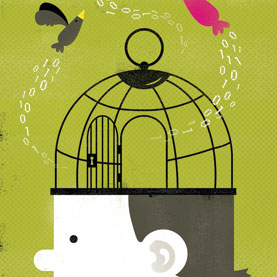
    Now we have the ability to look up any information at the touch of a screen. If we don’t remember something right away, we don’t have to struggle for that tidbit to rise to the top of our brains-we can just ‘Google’ it. Some scholars suggest memorization is simply not a part of the modern student’s duty. Has this asset now become irrelevant?
    Image

    Image: Shaw Nielsen

    The Shallows, written by Nicholas Carr, analyzes the impact technology has on our brains and our thinking processes. We may not be able to measure if there have been long-term consequences of being glued to technology but some short-term alarms have been noted. Carr and other researchers have noticed technology’s impact on our attention spans. We are unable to sit to stay concentrated on one thing for a substantial amount of time with flipping to different webpages, checking our phone and flipping through TV channels…and all at the same time. The debate is whether we are learning more simultaneously or losing something we once valued: our memory. Carr comes to the conclusion that, although technology makes us smarter in certain areas, it makes us less intelligent in others. Is one impact of the rise of technology on mankind the loss the art of memorization? Or is this simply technology opening our minds for other tasks? The Sophists are surely turning over in their graves.

    -Rachel Edwards

  • PlayStation Lights Up the UK

    If one were to look at the Oxo Tower in London at night over the past few days, they might notice a striking difference in the lighting of the prominent building.  Covering the side of the tower are the famous control buttons of the PlayStation brand that replaced the usual OXO that can be seen on the tower.  In regards to the holiday season and the release of their newest PlayStation 4 product, the brand decided to take their advertising to new heights. Sony paired with Manning Gottlieb OMD media agency to change the letters for the first time in the building’s eighty-five year history.

    Image

    When relating this recent event to Kenneth Burke’s Theory of Identification, we can see a clear connection between the consumer’s ability to recognize the PlayStation symbols, and the persuasive technique used by the brand.  Burke’s theory states that persuasion can only be communicated effectively when the two parties (the consumer and the brand sharing the product) have something in common. This means that only people who know what the symbols represent will be able to understand that this is an advertisement for one of the largest gaming systems in the world.

    This form of brand advertising seeks to create excitement and anticipation for the upcoming PS4 release on November 28th in the United Kingdom. Consumers are unconsciously motivated to have the PlayStation product on their minds when they see the symbols lit up every night.  This could lead to consumers talking about the product to friends or on social media or even purchasing the product when it is released.  In fact, 14.3 million people had tweeted about the lights within the first 24 hours that they were used.

    Image

    Overall the strategy used by PlayStation to advertise and motivate their publics to think about this new product was a creative and original way to reach potential customers.  This is a method not commonly used and created a large amount of social media buzz that was beneficial to the brand.  What are some original and uncommon ways that you have seen brands advertise? Have you seen any brands advertise in uncommon places?

    -Aaron Love, Kara Zimmerman, Rachel Clay, Rebecca Hobbs

  • Are you indispensable?

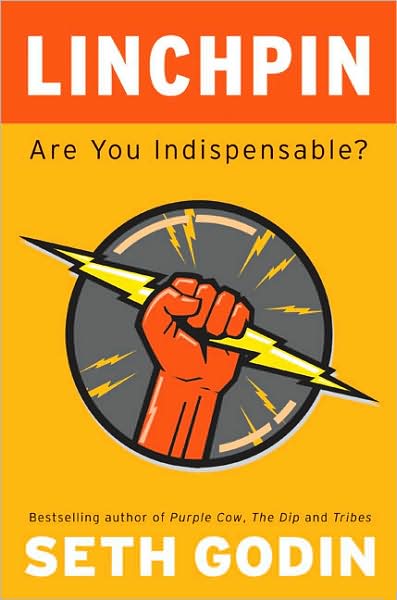
    Are you indispensable?

    Seth Godin asks this question in his new book, Linchpin.  And one response is “no, I’m not indispensable, I’m part of a bigger story that will go on without me.”

    But this is not what Godin is saying. He’s not waiting for you to be deemed indispensable by others. He’s asking you to see how acting as a linchpin makes you inherently indispensable, not because of who you are but what you do.

    Full disclosure: I require my Intro to IMC class to follow Seth’s Blog. I don’t do this because I’m a blind Seth Godin parroter who thinks every word he utters is chocolate-covered goodness.  I require my IMC class to follow him so that they are introduced to a new way of thinking, to see the possibilities of a productive, virtue-driven life. Agreeing or disagreeing with Seth is not the issue. What is the issue is that he makes plain what he believes, and he tries to deliver on that every day. This coherence between word and deed is what makes him worth following and reading. Of course you should question what Seth says. I would think he’d be disappointed if you didn’t.

    Back to Linchpin. Reading it is like reading his blog; it’s brimming with short, manageable bites of observation.  He observes that being a cog in a machine is what we’ve been trained to do through school society, culture – what he calls “the industrial machine” (6). Being a linchpin, however, is a process through which we can break free from mediocrity.

    The most applicable parts of this book for undergraduate students are when he talks about how to become a linchpin while in college.  Getting passing grades, finding the easy way through school, and partying all the time are not – surprise!- the ways through which you become a linchpin.

    However, Godin gets a little heavy-handed when he talks about teachers who do nothing more than keep students quiet and unquestioning. I’m sure there are teachers who fit this profile, but I personally don’t know any. I’d like to offer a different perspective – and students, take note: most of the teachers and professors I know are trying to stimulate their students’ intellectual curiosity in every way possible.

    Every academic conference I attend offers formal and informal spaces for sharing teaching ideas that encourage active and engaged learning. We are officially assessed by our institutions in performance reviews for teaching capability, and we are unofficially assessed by students every day, online and off.  We have Centers for Teaching Excellence on campus whose staff offer us training, inspiration, and encouragement to teach, delight, and move our students. I have met faculty at other universities who promote the theory and practice of our field through their online presence. My colleagues in my department and my professors in my graduate program model this commitment to helping students become linchpins. Godin got it almost right in Linchpin; I thought I’d offer a more textured account of what is going on in the academy from a front-row seat.

    To conclude IMC-Hawks Book Week, I’d like to recommend everyone – especially students – read Linchpin and the other four books we’ve reviewed this week. Keep demonstrating the intellectual curiosity that will help you become a linchpin in a productive life.

    Jeanne Persuit, Ph.D.

  • A Lesson in the Art of Persuasion: Tim Tebow’s Controversial Super Bowl Ad

    This year’s recipe for Super Bowl Sunday:  the Colts versus the Saints, chicken wings, Carrie Underwood and Bud Light.  Good football, good food, good lookin’ women and booze—perfection—until Tim Tebow and his mother grace the presence of your 52 inch, high definition flat screen talking about anti-abortion and the importance of family values.  Needless to say, the irony of it all will leave you…well, it may be a buzz kill.

    Despite the current economic state, CBS has sold out of commercial advertisement airtime for Super Bowl XLIV.  However, there are a number of big name corporations such as Pespi, General Motors and Fedex who’ve decided against dropping $2 million and some change for a 30-second ad during America’s most watched sporting event of the year.  Yet many are questioning the motives behind CBS’s approval of the Tebow’s anti-abortion ad.

    Is the network just in it for the money, or are they simply embracing their conservatism?  Either way, CBS is getting sacked left and right from pro-choice organizations whom are not at all pleased the decision.  Regardless of the network’s motives, the real threat to these disgruntled pro-choice groups is not that Tim Tebow, the youngest Heisman Trophy winner ever, is endorsing pro-life and family values.  It is that Tim Tebow, the youngest Heisman Trophy winner ever, is endorsing pro-life and family values with more than a slew of stats to back him up.

    The conservative christian group, Focus on the Family, is sponsoring the ad in hopes to spread the message, “Celebrate family, Celebrate life.”  The Tebows are the perfect poster family for this message seeing as Tim Tebow would not be here today if his mother, Pam, had followed doctor recommendations and gotten an abortion because her pregnancy with Tim was high-risk.  The ad does not mention abortion, although the underlying message is obvious; however, the persuasion tactics used in this ad are, hypothetically speaking, money.

    Rhetorical theory 101: ethos, pathos and logos.

    Tebow’s endorsement of this message is powerful and frankly, is very threatening to those who support women having the right to choose.  On Sunday, for those 30 seconds that this ad airs, audiences nationwide are going to stop, put down their beers and listen to what this well-respected and talented athlete has to say.  People trust Tim Tebow.  He is a credible source, with a logical message and an emotional appeal that will more than likely bring tears to hundreds of eyes.

    However, the bottom line here is not pro-life, pro-choice or even family values.  It is the strength of the strategy behind this advertisement.  The message is controversial and will grab the audiences’ attention.  The ad is airing during the Super Bowl, so there is no doubt viewership will be in the millions.  And the message is convincing because it is an outline of the art of persuasion with an emphasis on emotion, but does not lack in credibility and logic.  So screw the football, chicken, babes and beer.  Tim Tebow’s endorsement may be the closest thing to perfection we may find this Sunday.

    Laura Ann Klinedinst