Tag: product placement

  • Product Placement: Relatable or Repulsive?

    Product placement is a very powerful tool that has been used by companies since the late 19th century. Believe it or not product placement was first used in novels, one of which was Jules Verne’s “Around the World in 80 Days” where shipping companies paid so that they may be mentioned in the novel. Later we see the use of product placement in film and today product placement can even be seen in video games.

    It seems like product placement in American films has gone from something companies used to raise awareness about their brand, to movie producers’ main way to generate revenue before the motion picture is even released. This is something that has been going on since the early 1900’s, but has reached new levels of ridiculousness in the past twenty years or so. While it began as subtle background mentions and clever references, many believe product placement to just be too aggressive now. A few years ago, “Transformers” set the record of product placements with over 47 different brands getting exposure throughout the film. Seems a bit much, right? Well box office hit “Man of Steel” has broken the record with over 100 different companies paying for product placements and promotional tie ins. He film had grossed around $160 million before it even hit the theatres!

    Here we have a quick and interesting video giving the brief history of product placement in movies. While the video is just a few years outdated, it is very informational and effective in bringing light to this ongoing trend in our media.

    http://thesocietypages.org/socimages/2011/03/22/a-history-of-product-placement/

    One side of the argument would state that this is a great way to keep money rolling through our media channels, and that the more recognizable products we see in our movies or programs, the more realistic and believable those programs are. In a way, the product placement makes the program more relatable for the viewers.

    On the other side, many viewers see this as blatant advertising that may very well disrupt the narrative of the program they are trying to enjoy. The last thing someone wants to see in the middle of an intense or intriguing scene is some unashamed reference to a product or service that has nothing to do with the situation anyways.

    Does product placement make movies seem more realistic and relatable to you, or is the excessive amount of product placement a turn off from what you watch?

    -Austin Johnson, Jade Lester, Jami Rogers, Ty Thomas
  • What’s That Doing There?

    After a long day of work or school most of us like to sit down and shut off the batteries. Some people (including myself) do this by
    enjoying a nice beverage and turning on the Netflix. The appeal of a service like
    Netflix is, of course, the elimination of the commercials that disrupt our viewing
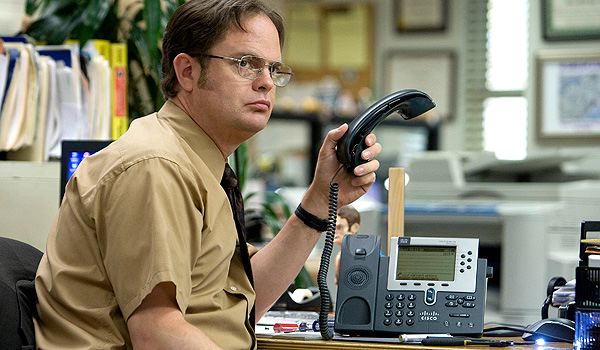
    pleasure on live T.V. One night, I sat down and turned on The Office, I was
    instantly bombarded with company logos and products. As the actors go about
    their typical work day, the camera conveniently focuses on the Cisco Systems
    Telephone on Dwight’s desk and the HP logo on the computer that Pam uses as she
    hides behind her desk. These logos are not in the frame by coincidence, but
    rather they have been carefully positioned by the show’s producers. This discreet
    advertising strategy is known as product placement.

    Business dictionary defines product placement as “an advertising technique used by companies to subtly promote their products through a non-traditional advertising technique, usually through appearances in film, television, or other media.” This form of advertising is initiated through an agreement between a product manufacturer and whichever media company owns the program featuring the product. In the vast majority of product placement agreements the media company receives economic benefit as the manufacturers often pay a fee to have their product (or brand name) used, mentioned, or significantly featured in a program.

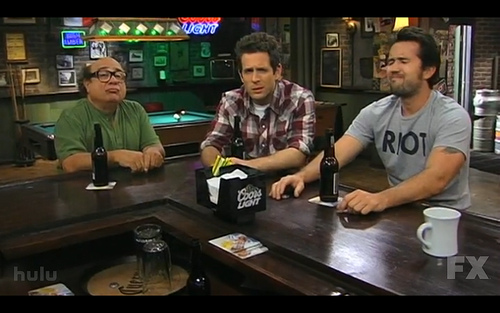
    Product placement is everywhere. A few notable shows that are known proponents of this technique are American Idol (Coca-Cola cups for all judges), It’s Always Sunny in Philadelphia (Coors Light consumption and signs prominently placed in the bar), and 30 Rock (which features multiple Apple products.) This form of advertising has been around for years and will continue to thrive as long as people keep consuming media. In this way, companies continue to ensure that viewers have plenty of exposure to their product, even if certain audience members have learned to maneuver around those pesky commercials.


    Michael Nunes, Daniel Schaefer, Lexie Huss, Zach Abramo, Callie FenlonDann Williams, Lauren Habig

  • What’s the Real Show?

    During a regulation NFL game there is a 15 minute break between the 2nd and 3rd quarters. This halftime break was originally instituted so the participants of the game could catch their breath and re-energize. During the Super Bowl, halftime lasts for a minimum of 30 minutes. Not only is that plenty of time for a player to catch his breath, that could allow him an opportunity to take a nap and check some emails. The mid-game break is actually long enough that coaches usually alter practices leading up to the big game in order to prepare their players for dealing with the extended down time. Despite this, there has never been a serious motion to shorten the length of the break. On the contrary, every few years halftime will run a little long to better accommodate the length of more extravagant halftime shows.

    This presents an interesting phenomenon. The Super Bowl, the game that decides who the best team is in the highest level of the most popular sport in America, is consistently interrupted for at least 15 minutes more than is necessary so an assortment of washed up and unknown artists can perform for a crowd that has paid at least double the average monthly income for a ticket to the game. It is widely known that companies spend millions of dollars for a chance to slip a commercial in between the biggest football game of the year, but this event has become so large that the game itself is being postponed in order to make room for the event that surrounds it. That’s the kind of marketing that is normally reserved for religious holidays and national celebrations.

    So what makes the Super Bowl half-time show so special? It is the second most anticipated part of the event, besides of course, who wins the championship.  The hype of who is performing is always a boost for the performers publicity, but what if Madonna blows it like the Black Eyed Peas did last year?  What will that do to her brand as being Madonna, the Queen of pop? There is a lot at stake when involving yourself in the biggest event of the year.  Let’s just hope there are no wardrobe malfunctions or fumbled lyrics this year.

    Read more about the halftime show here!

  • When the Going Gets Tough the Tough Get Going

    Although the economy is looking brighter than it has been in recent years, the marketing world is still facing two major problems: people are still feeling the effects of lay offs and are not quite in the position to spend money frivolously and companies are also feeling the wrath of the economy and don’t have the money to spend on expensive and elaborate ad campaigns. So what are they doing in order to get their message out? An age old trick in the marketing books and what most of us in IMC like to call, guerrilla marketing.
    It is more important than ever for companies to make their brand stand out and to develop loyal consumers who are actually able to come in contact with the brand. Guerrilla marketing provides both local and national companies that opportunity and gives them the chance to break though all the clutter and noise of traditional marketing.
    We all are familiar with the game Clue, right? Well take a look at how they are using guerrilla marketing to remind all of us of a favorite childhood game.

    And Clue isn’t the only one hopping on this train. Many companies and non-profit organizations are increasing their guerrilla marketing strategies in order to save money and gain direct contact with their consumers. What this innovative strategy and the downing economy have in common is that it’s forcing a lot of us to do something we haven’t done since elementary school: think outside of the box.

    -Alaethea Hensley, Jessica Kingman, and Lauren Phelps

  • College Reps: The True Meaning of Product Placement

    As we know, product placement usually gets associates it with the entertainment industry; the obvious examples are seen in movies, on television, found in song lyrics, or simply connected with celebrities. In movies and television shows, it appears that the most effective uses of product placement are when the presence of the product doesn’t take away from the story.  Although many brands have been using this strategy for years, other companies have started to play off of this model as they determine the new way to practice subtle product placement: college reps.

    You might be wondering, what is a college rep? A college, or campus, representative, commonly known as a “college rep”, is a university student directly associated with a brand whose job is to promote that brand around their campus.  Brands who use college reps, such as Apple, Playboy, Red Bull and clothing companies like COAST Apparel and Emma Graham Designs, all realize that their products appeal to the college market. And who better to reach out to the college market than a college student?

    It might seem risky targeting college kids, but companies know that this market’s members aren’t as broke as they seem. They know that students are at a point in their lives when they are beginning to make many decisions on their own, including what brands they want to be loyal to.  But like most consumers, college students won’t believe it till they see it—this is why the idea of hiring a student representative, who can effectively promote a brand by simply making others see it.  These reps are subtle, yet influential among their peers; they wear the clothes, they use the products, and they are educated on the brand.  These students are the epitome of a walking billboard, and they have been placed in the heart of their target market. And while they do a lot of promotion, they also report feedback to their brand as a representative for their campus.

    The idea of the college rep is a creative and effective strategy that challenges guerilla marketing tactics.  Especially with the rapid growth of the social media scene, it only takes one person with a large network of friends to promote a brand that he or she believes in and if all works out that brand can instantly go “viral”.

    -LaPuasa, Dillard, Reinhardt

  • Wonka Vision

    Have you ever gone out and bought something simply for the
    fact that you saw your favorite celebrity or athlete endorsing it? Or, have you
    watched your favorite show or football team-play on TV and be mesmerized by a
    product?

    Many companies use product placement on television shows to
    advertise their brand. A lot of times, the company will sponsor a certain show,
    and in return their brand may be used in various ways throughout an episode; it
    may be used as a product in the episode or the company’s commercial will play
    during a break. For instance, have you ever wondered why all three judges on American Idol are always sitting behind
    large glasses of Coca-Cola? It is not because they cannot get enough
    daily-intake of Coke; it is because American Idol is sponsored by the Coca-Cola
    brand. Television shows are a major source of advertisement. The reality show The Kardashians is a show focused
    around the life of the Kardashian brand and family. They now have a clothing
    line through the Sears Company which is marketed on the show, a boutique
    clothing and accessory store Dash, and even market perfumes because who doesn’t
    want to smell just like a Kardashian!

    Product placement is a way for companies to inject their
    products to be endorsed by celebrities so the product will then be “cool” and
    acceptable for everyone else to buy. The show The Restaurant, on the Bravo network, starring the high-end
    restaurant chef Rocco, was paid by the show’s three main sponsors: American
    Express, Mitsubishi Motors and Coors Brewing. Bravo
    did not pay a single penny of
    license fee to have the show made. To justify its investment, each of the shows’
    sponsors has received a prominent place in the show: American Express provides
    the financing for the restaurant and the show.

    Of course, in the early days of television, such
    integration between advertiser and show was quite common. Such links persisted
    into the 1970s from the movie Willie Wonka and the Chocolate Factory, which was entirely funded by Quaker Oats. The
    Quaker Oats brand used the movie to promote its new “Wonka” brand of
    candy and sweets. Beware and conscious of what you are buying.

    – Jordan Hill, Michela Noreski, Ashley Nelson

  • IMC Minus the C: The World Behind IMM

    With questions in my mind about product placement and how the book “The Authenticity Hoax” relates, we eagerly write this blog post.  Though there were many great points in the book, we were particularly interested in status seeking and materialism.  Do we want things because we really want them, or do we want things because we perceive them to be desirable?  What is our motive for buying?  Do these $250 Dylan George jeans do the job better than Wranglers… or are we seeking exclusivity? We think the answer has much to do with simple competition.

    We don’t think people were born with the inherent proclivity to seek out high priced designer fashions, We think their behaviors were molded by society saying, “These things make you important and envied.”  This brings us to the title of the post, IMM, Integrated Marketing Materialism.
    There is nothing wrong with promoting products; however, we have been wondering lately how early certain niche luxury markets are starting to target their audiences.  Of course, children of the stars have custom made Salvatore Ferragamo shoes, but it seems like serious materialism is rapidly affecting younger demographics even outside of Hollywood.
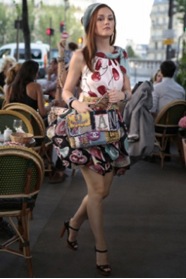
    Certain television shows like “Gossip Girl” are aimed at teens, but the characters always wear over the top, Haute couture only available at high end stores for outlandish prices.  Are these television shows telling our teens that it’s time to kick it up a notch and take a trip to Neiman Marcus for some Oscar de la Renta?  You can be the judge of that after you check out this picture of Blair Waldorf from “Gossip Girl.” Blair has a $2,100 dress by Moschino, $900 Quepi Reci platforms by Christian Louboutin and a $3,400 Chanel patchwork purse.  All together, her ensemble costs $6,400 plus tax and shipping (since most of us do not have access to such retailers).

    To people who are remotely knowledgeable about fashion, those products are easy to identify (especially because of the red soles on the shoes).  They are easy to recognize because they have been shoved in our faces for years now.  To our surprise, when we investigated these products, many retailers were sold out!  Obviously, their marketing strategy is working, which one do you think it is?

    -Stephanie Bakolia, Claire Outlaw, David Glaubach