Tag: NC

  • The Race to be First

    Reporting any new information to the public can be risky, especially when it is a headlining topic.  As any social media expert, one should always make sure that the information they are providing the public is 100% accurate.  Any false information can put you and your company’s reputation at risk.

    With overwhelming attention surrounding the football program at Penn State, every tweet, wall post and blog comment brings more and more Internet traffic to the school and community.  In a society that completely thrives and relies on Internet access, acquiring information has never been easier or faster.  Along with the ability to supply millions with information via Twitter, Facebook or other social media sites, comes the responsibility to maintain an ethical mindset when sharing information.

    Joe Paterno, the recently released Penn State head football coach who served for 42 years, passed away at 9:25 am this past Sunday. On Saturday night, several hours before Paterno’s death, Onward State, a student-run news organization, reported through a tweet that the community icon had passed. The Onward State managing editor, Devon Edwards claims the tweet was based on an email hoax and has since resigned.

    It is shocking that a student organization (which presumably is more focused than professional organizations on performing tasks “by the book”) that is tied to an institution which has been so heavily shrouded in controversy recently, would fail to perform such a basic and necessary task as confirming information, especially when dealing with such an emotionally charged topic as the passing of Joe Paterno. Unfortunately, this is just the latest occurrence in what seems to be an ongoing problem with many forms of media.

    Managing Editor of Onward State’s Apology

  • Another Day, Another “Gunman”

    It was not our plan to write another blog post about university safety communication however, for the second day in a row, one of North Carolina’s universities was faced with a crisis as a reported gunman was spotted on campus. Much like how the University of North Carolina Wilmington alerted their students, East Carolina University also utilized all tools necessary in order to notify their students. Officials issued a complete lockdown and notified students via e-mail, phone calls, text messaging and social media sites. However, the role social media played in UNCW’s crisis is far different from what happened at ECU.

    Reports of a gunman walking through campus started circulating around 10 am this morning and there was surveillance of a man with a cowboy hat carrying what looked like a large riffle walking on a 5th Street, a road that runs through the campus. As students were locked up in class, tweets began to flood in reporting the incident and some even saying that they saw the gunman and that there were hostages. However, after three hours of searching the Greenville Police tracked down the suspect and found that the “rifle” was in fact an umbrella. Greenville police Sgt. Carlton Williams stated that rumors circulating on social media sites such as Facebook and Twitter caused authorities to “chase ghosts” and follow leads that were false.

    Although yesterday’s post focused on how social media has allowed us to share and cooperate in moments of crisis, there is also a negative side to the impact it has on the crisis communication. Officials utilize the tweets and posts on social media sites in order to gain information and as you can see from today, often have to take those tweets at face value. There’s always that “better safe than sorry” feeling, especially in the wake of the Virgina Tech massacre, but to what extent should authorities follow-up on information provided through social media?

    -Alaethea Hensley, Jessica Kingman, & Lauren Phelps

  • Moogfest 2011

    While most of North Carolina will be adding the finishing touches to their Halloween costumes next weekend, Asheville will be jamming out to some of the hottest artists in electronic music.  The second annual Moogfest will be taking place at various venues throughout the north side of downtown Asheville on October 28th-30th.  Although this is only the festival’s second year,  there is a lot of buzz about its highly anticipated lineup of over 70 artists from around the world, including big names such as Flaming Lips, Moby, and Passion Pit, just to name a few.

     The three-day festival was created to honor one of electronic music’s pioneers Bob Moog—the inventor of the Moog synthesizer.  This legendary instrument has changed modern music forever and has been used by hundreds of artists, from legends like the Beatles, the Rolling Stones, and Stevie Wonder, to some of today’s all-stars like Daft Punk, Dr. Dre, and even Michael Jackson. The celebration of Moog’s legacy will even go beyond the music; there will also be visual art exhibitions, film screenings, a costume contest, and some of the wildest installations created from Bob Moog’s own imagination.

     What sets Moogfest apart from other music festivals?  At Moogfest, attendees have the opportunity to interact with some of the artists in panel sessions, and workshops.  There are even workshops that allow festival-goers to actually learn how to play some of the different Moog instruments. This is a perfect example of audience-brand interaction and experiential marketing.  What better way to create brand awareness than to let consumers experience your products?  Or in this case, create an experience for them?

    Here’s a little taste of how and why last years artists created that experience at Moogfest 2010

    The best part about Moogfest is that there are still tickets available!
    For more information about tickets or the festival itself, check out the Moogfest Facebook, Twitter, or website: www.moogfest.com .

    To learn more about Bob Moog and Moog instruments, you can visit his website: www.moogmusic.com.

    -LaPuasa, Dillard, Reinhardt

  • Rock for the Cure


    UNCW Communication Studies Society is rocking out this Friday evening for a great cause. October is Breast Cancer Awareness month and to make our mark in fighting for the cause, UNCW students and faculty invite everyone to participate in Rock for the Cure Friday, October 21st, 2011 on the second floor of Reel Café, downtown Wilmington N.C. at 7:00pm. The admission to this event is $5 and all proceeds will go to New Hanover Regional Medical Center’s Pink Ribbon Project. The profits will help fund uninsured women in the greater Wilmington area to receive free mammogram screening and also provide “comfort bags” with items that include a pink fleece blanket to be used to warm patients as they receive treatments, a satin pillowcase for comfort after hair loss and an herbal eye pillow to help with relaxation during this time. Rock for the Cure will also raise money through a silent auction and raffle. With the help from you and others we can make a difference for the incredible success of the Pink Ribbon Project and help provide early diagnosis and comfort to women in our area.

    -Michela Noreski, Jordan Hill, Ashley Nelson

  • Beer Fest 2011

    Today’s consumer market has been dominated by large mergers in the corporate world that have taken over the competition at the height of what capitalism has created. However, we can look at one industry that has been resisting change in this area.

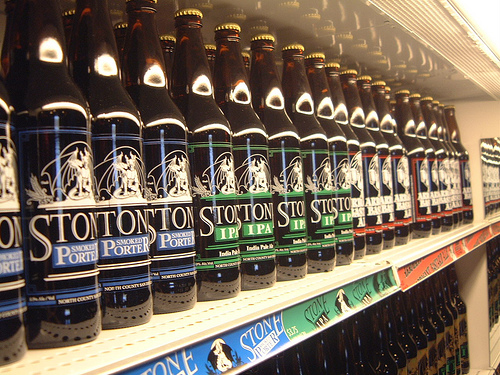
    Beer.  It is a commodity that Americans have relied on forever.  Anheuser-Busch, Miller and Coors are the three corporate heads that have dominated the American beer industry since the end of Prohibition.  It has only been in the past decade or so that there has been a new component to the industry.  The phenomenon of the microbrewery has taken off nationwide.  People love the variety of taste that light beer clearly does not offer.  Back in the 70s and 80s there was no variety other than the imports we get and now the business has swung a totally different direction than most industries.  Instead of the industry fusing together, which we see more and more of today, independent brewing companies are at an all time high with over 1400 breweries in the country. 

    This past weekend marked the 10th annual Beer Fest in Wilmington, NC.  Lighthouse Beer & Wine has always been the host of the event since 2001.  Lighthouse is located on Wrightsville beach and has been opened only since 1998. The success of Beer Fest is a prime example of the fulfillment of a fast growing trend in craft and microbrews.  These new brands of beers are not exactly comparable in taste.  They are all unique, something that the American public has found very appealing.  Beer has risen to a new level of connoisseurship, one that rivals wine.

    The Beer market has clearly shifted and continues to change.  Honing in on what now defines the niche market of beer is something that marketers have had to really start to invest time into.  Building brand awareness has shown success through simply having a quality product.  The three corporate heads of the industry have had to scramble in the last few years as they have seen a decrease in sales.  People don’t necessarily want one light beer that tastes exactly like the other.  They want variety in what they drink and knowing the effort and thoroughness that goes into the beer at an independent brewery is a good target buying incentive for customers that are looking for a new beers to purchase.  Anheuser –Busch, Coors, and Miller have started to catch on to this trend and have basically bought into various independent breweries without putting their name on the beer.  Their way into the microbrew trend that has risen is almost to conceal their brand name and emphasize the microbrewery in order to maintain their credibility.  This sub branding of breweries seems to be the future for the corporate beer industry where people authenticate it on a personal level based on quality of the product rather than basing their choices on the traditional mass media advertising campaigns that we are used to seeing on television.

    Beer Fest was a great way to advertise small breweries because sampling the product is one of the most effective way give incentive to customers and gain brand loyalty.

    By: Oliver Evans, Sally Shupe, Jared Sales

  • Benson’s Mule Days Brings Home Southern Charm


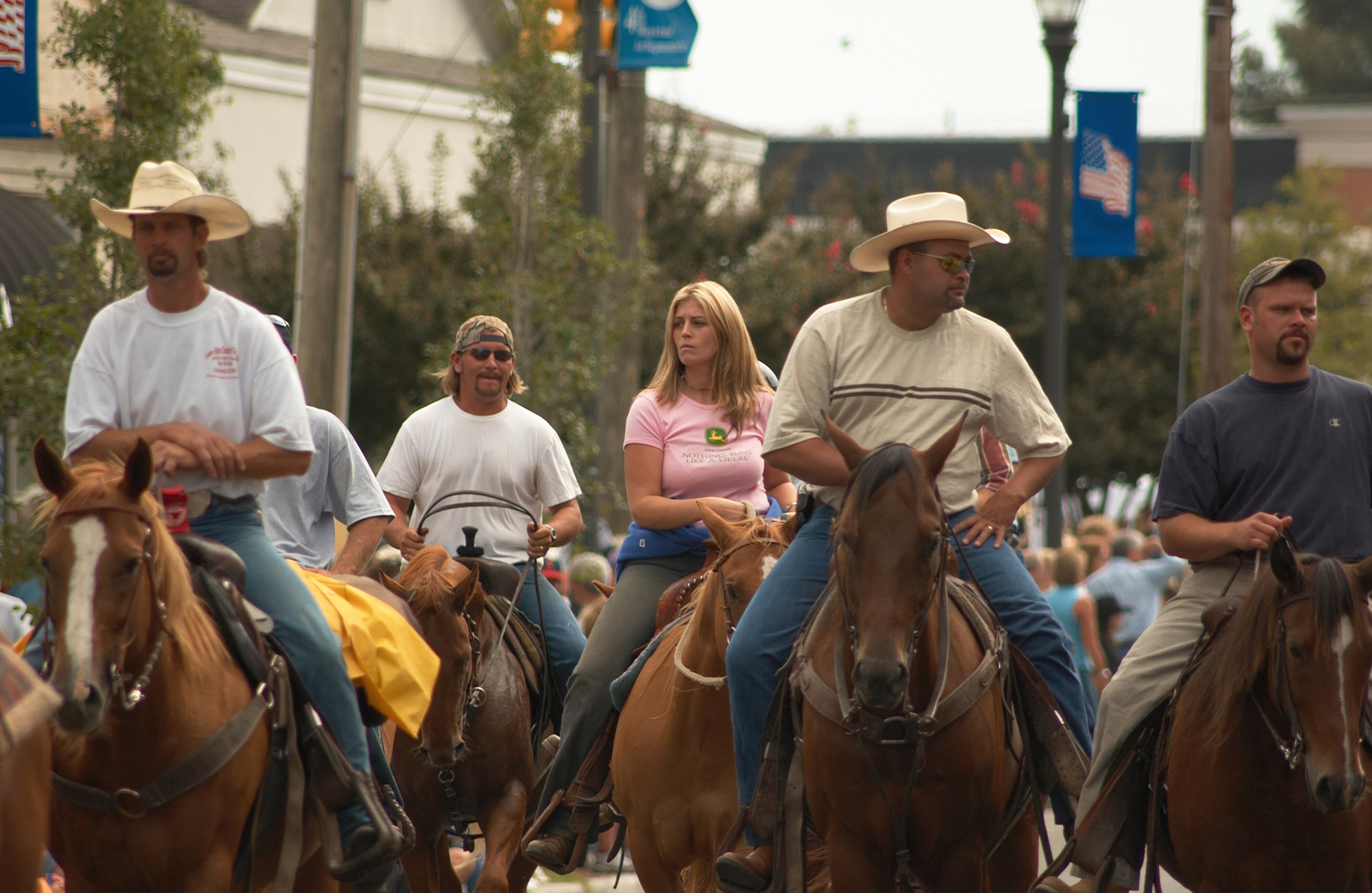
    Every year 60-70,000 people go to the small town of Benson, North Carolina.  Why would this many people go to a town of only 3,569? For nothing other than Benson Mule Days!  The event takes place at the end of September every year and includes rodeos, a mule pulling contest, arts and crafts, vendors, music, a parade that attracts 20,000 on its own, and more!  Festival goers can be seen around Benson on their horses, and people from as far as Wilmington travel on horse back to celebrate the event.

    It may seem like such a festival wouldn’t draw the crowds that it does, but Benson’s Mule Days has become one of the largest festivals in North Carolina.  Travelers from Alaska, Germany, and California make their way to Johnston County in order to experience the small town, southern feel of this festival.  Benson is the perfect place to hold a festival like this because it is so small and has a historical downtown area.  When visitors walk through the aisles of arts and crafts and street vendors while hearing bluegrass music play in the background, they feel just as they should while in a small North Carolinian town.  There is plenty for people of all ages to enjoy while experiencing southern hospitality.

    North Carolina’s image is perfectly illustrated by Benson’s Mule Days.  Those not from the south trying to get the experience of all that it has to offer need to look no further than Mule Days.

    -Brie Golden, Micaela Fouhy, Will Cosden, Lindsey Baggett, Andrew Mayer