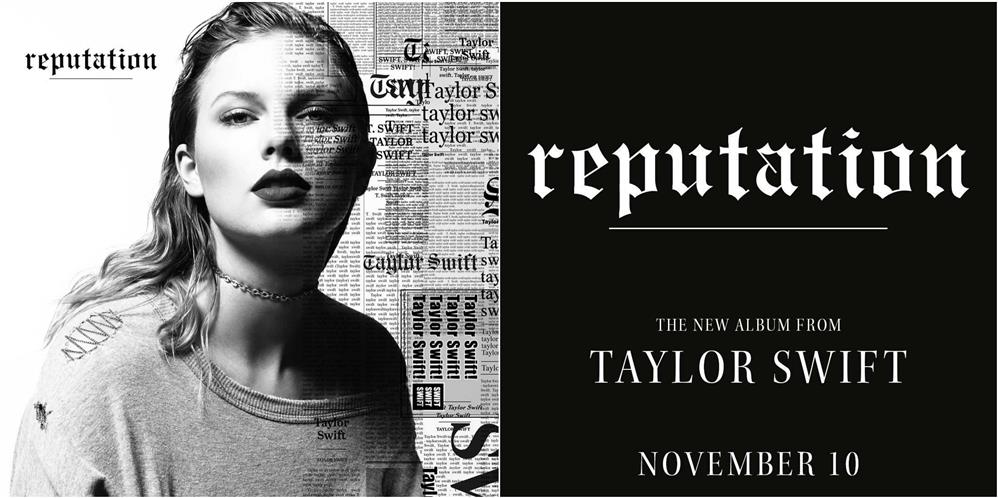
Taylor Swift, a global pop culture icon and musician, was known as a sweet innocent country artist. When she began her career, her songs quickly gained recognition and she immediately assimilated a loyal fan base. Since the release of her third studio album, Red, the music sensation has transformed her musical style and the way she brands herself.
The media targeted Swift shortly after her rise in popularity. She became known as a ‘heartbreaker’ because she seemingly generated tragic romances, which were the inspiration for many of her songs. She used the media coverage of her unfortunate circumstances, to make a transition from innocent country singer to unapologetic pop sensation.
Her latest album, Reputation, which released on November 10th, is a musical expression of her fight against the media chatter, which, coincidentally, was self-inflicted most of the time.
In her attempt to hang on to the musical trends, has Taylor Swift abandoned her true self, or is she just now showing it to the world? How authentic is Taylor Swift’s brand?
This year’s Super Bowl showdown between the Atlanta Falcons and New England Patriots is just days away. More than 100 million people tune in to the football game annually, but many of these people only care about the iconic halftime show performance. Over the last few decades, some of the world’s biggest stars have hit the stage, drawing in viewers from all walks of life. This year’s Super Bowl halftime performer is the one and only Lady Gaga.
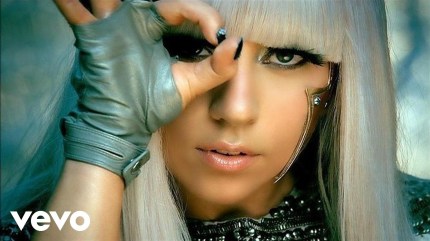
When Lady Gaga came onto the pop music scene in 2008 with her hit single “Just Dance”, the world did know that a pop culture icon was being born. Over the next few years, she would go on to release single after single that topped the charts. Her fame grew exponentially and she gained a loyal fan following that would praise her every move. Lady Gaga began to refer to herself as “Mother Monster.” Gaga sent a message to the world that she embraces the weird in people rather than criticizing them, and encourages her fans to not be afraid of being a little different.
Aside from her music, one of the most iconic aspects of her brand image would have to be her out-of-this-world fashion choices. Fashion critics and fans alike would anxiously await for Gaga to arrive at red carpet because there was no telling what she would wear next. Lady Gaga’s raw meat dress from the 2010 VMA’s was arguably (but really there is no argument) one of the most memorable fashion statements ever made.
While Gaga’s fashion choices seem to be a little less extreme in recent years, her advocacy for LGBT rights, women’s rights, and against sexual violence have certainly not slowed down. Lady Gaga has used her voice and massive following to fight for the rights of so many people. She has cemented her brand image as someone who advocates tirelessly for equality.
With that being said, there is no doubt that Lady Gaga’s half time performance this Sunday will be anything short of iconic. What will she do with this massive platform? I think it is safe to say that a statement will be made. Do you think Lady Gaga will send a social message? Bring back the (now very very aged) meat dress? Or will she just captivate the world with her amazing vocals?
Leave a comment down below telling us your 2017 Super Bowl half time performance predictions.
With beers like Belgian Triples, Indian Pale Ales, Oatmeal Stouts- one can get lost in the logistical nightmare of creating an individual brand. Dogfish Head and Flying Dog breweries created slogans, “off-centered ales for off-centered people since 1995” and “good people drink good beer”. Fortunately for local Lighthouse Beer and Wine, the hard part is no longer the beer, but bringing individuals together.
This year’s 14th Annual Lighthouse Beer and Wine Festival will continue uniting breweries with beer-loving consumers- overlooking beautiful Downtown Wilmington. According to NC Beer Guys, more than 120 breweries will be present on October 24. The festival runs from 1pm-5pm, with the option to purchase VIP tickets, allowing for early entry. Paired with craft beer and wine, the event will host local food trucks and live music, featuring Greensboro natives, Holy Ghost Tent. The festival does not stop there! A portion of proceeds are donated to The Carousel Center, “a non-profit organization committed to assisting victims of child abuse, providing critical care services throughout Southeastern North Carolina”. The combined thirteen Beer and Wine Festivals, donated $150,000 to the cause.
Lighthouse takes to social media, outreaching to communities and consumers, past Wrightsville Beach. Promoting the 14th Annual Festival through the normal social media contenders:Facebook, Twitter, and Instagram– as well as a website. Each outlet allows Lighthouse to reach their consumer base and audience- with obvious overlap. The seamless flow from platform to platform, and from consumer to provider, bolsters the brand immensely. The identity that Lighthouse Beer and Wine has developed, is the result of careful social media management- and dedication to a specific brand image.
Lighthouse Beer and Wine Festival has been at the top of every beer-lover’s fall to-do list for nearly a decade and a half, it has done a great job at remaining relevant with the new ways of integrated marketing. When one explores their social media accounts along with its website and blog, their identity is consistent and tailored to their audience. Lighthouse beer and Wine is very active on social media, especially so on their Instagram account. They share regular updates about:
New craft beers, wine, and sake
Information about the festival
Friendly reminders to purchase festival ticket(s).
Lighthouse promotes the festival within the store itself. It provides the opportunity to walk into the store, purchase a case of beer or bottle of wine and grab a ticket to the festival. How easy is that!
“The traditional marketing plan can do no more than give us a snapshot of a point in time. It doesn’t help us make the right decisions as we move forward in a complex and constantly changing marketplace” (Shiffman, 2008). The Engagement Theory discusses the importance of moving away from the traditional marketing approach, which only focused on profit of the business, and on toward the bigger picture: building the brand and engaging with your publics. As long as Lighthouse Beer and Wine Festival continues to keep this outlook at the forefront of their marketing strategy, they will remain a trademark of fall in Wilmington!
Now that you have heard what we have to say, what do you think? Does Lighthouse Beer and Wine reach their fullest potential with their approach to social media and customer interactions? Or does it leave something to be desired?
-Jonathan Callahan, Erin Fouhy, Julia George, Joseph Hines, and Sarah Suggs
A round of applause for the Seattle Seahawks as the champions of the Super Bowl XLVIII. Even if you were not a fan of either the Broncos or the Seahawks, it almost a sure bet you tuned into the game. Every year over 100 million people observe what is arguably the sporting event of the year.
The Super Bowl, however, is known for more than a fierce round of football – it’s known for the commercials. Here is time where advertisers pull out all the stops. Audiences expect commercials of both artistic and humorous grandeur. Prices for spots annually rise, this year topping at $4 million for a 30 second spot.
Yet companies don’t spend millions for spots merely to entertain viewers. Unlike in decades past, advertisers are no longer in the business of explaining, but in the business of convincing and reinforcing. This is often the purpose of commercials we see every day. So, other than the guaranteed viewership, what is the worth of a Super Bowl spot?
Credibility, claims Joe Glennon, assistant professor of advertising at Temple’s School of Media and Mass Communication. In an article for the Philadelphia Business Journal, Glennon explains that many advertisers walk away from the exorbitant price tag due to the simple financial standpoint that $4 million for 30 seconds is a largely impossible return on investment. He explains that of those who do justify the expense there are two primary advertisers – large, well known, companies who use the spots to reinforce brand propensities among current users, and smaller companies who use the spot as a means to launch into the market by gaining notoriety.
So, in the myriad of last night’s entertainment, we have selected four commercials that beautifully represent the two credibility building categories Glennon noted; some attempting cut into, or further into the market, others reinforcing brand attitudes.
Squarespace created a spot that was a humorous, but accurate depiction of what the Internet is like – cluttered. Personifying memes, obnoxious advertisements, and the “duck face”, Squarespace offered to consumers that when using their services for website building and maintenance, the company could alleviate such distraction. So, why did Squarespace make it onto the list today? Simple, the Squarespace commercial introduced the company values and brand in a creative, weird, funny, and somewhat true way. Justifying the $4 million dollar expenditure seems to working so far – we are talking about – there’s probably a good chance other people are too.
Although the ad was neither humorous nor heart-warming, WeatherTech’s commercial built on a sacred theme in the Super Bowl: American pride. Their slogan, “American Factories, American Raw Materials, and American Workers”, was enough to draw people’s interest and introduce their company as a defying the odds, sticking with their gut, and overcoming obstacles many American companies have faced. During a time when many gripe about US jobs becoming outsourced, it’s hard to say that WeatherTech didn’t prove their credibility with their national pride.
Yes, the adorable little girl is back and this time she is getting a brother. This 30-second ad wraps up what all of us remember of Cheerios and what the Cheerios brand wants us to remember about them; families coming together over love. Here Cheerios is showing how they are continuing to be a hearty and healthy part of growing families.
What does this commercial not do? It introduces U2’s new song “Invisible” (there is still time to get your free download if you haven’t done it), it highlights and raises money for the charity (RED), increases knowledge of AIDS/HIV, and shows Bank of America’s humanitarian efforts. Reinforcing their slogan, “Life is better when your connected”, Bank of America is giving a chance for its customers and the world to connect by helping to end an epidemic.
What is your opinion? Do you think these commercials deserve a spot in these categories? What other commercials did you see that introduce the brand or reinforce existing brand propensities?
Nowadays it is almost impossible to escape the sounds of music. Beginning with your morning alarm, music can be heard throughout the day whether through a ringtone, car stereo, speakers, or even advertisements. Many companies are harping on this trend by finding ways to integrate particular artists, bands and up-and-coming music groups into their brands.
The use of music is a strategic marketing tactic because it helps to bridge the gap between companies and consumers by allowing them to share similar lifestyles. If the music used in advertisements positively resonates with the audience, then it is likely that the product will, in-turn, be portrayed positively. According to Simmons and Simmons, “Consumers who live part of their lives through music are passionate people who care about the content they chose to engage in.” This is why the use of music must match the purpose of the message in order to be memorable and thus successful.
The Uses and Gratifications Theory can also be incorporated into this idea of music and branding. This theory deals with how people use media to their advantage, either to gain something or form some sort of image/relationship with something else. Consumers are also able to use the media for reference to gain knowledge about a brand and their products. In this case, brands are using music to help form their image and how they want to be seen by their publics. By purposefully incorporating artists that they think will further their particular commercial, campaign or even runway show, brands can use music to solidify their message and image.
Taco Bell’s commercial for Doritos Locos Tacos incorporates the use of music by featuring “Take a Walk” by Passion Pit. The commercial features the quick paced song along with multiple snapshots of tacos piling up on top of each other while moving across the screen. At the end of the ad, the voiceover says “Taking tacos where no one thought they would go.” This is a small but memorable connection to the title of the song played in the background and would be noticeable to anyone who knew the title or heard the lyrics. The message Taco Bell was trying to send their audience was that their tacos are easy to take on-the-go and are able to be eaten everywhere.
Can you think of any examples of how a brand has used a popular artist in their commercial? How has the music affected the way you think of the brand or company?
-Aaron Love, Kara Zimmerman, Rachel Clay, Rebecca Hobbs
The digital world of iTunes and social media has given the music industry both high and low notes. While the Internet offers accessibility, it also caters to specificity. Most predominantly, the Internet offers an array of platforms for artists to upload, share, and send their music. However, while music junkies may be constantly searching for new digs, most people eventually acquire a particular taste for what they choose to send through their ear buds. Internet music services such as Pandora, Spotify, and iHeartRadio allow users to handpick and listen to an endless variety of artists and genres. This narrowcasting of music leaves artists waging campaigns to try to reach listeners. As a result, clutter prevails.
Like in advertising, clutter has become a big problem in music promotion. As Douglas Rushkoff pointed out in The Persuaders, “The more messages they create, the more they have to create to reach us.”
The more opportunity social media platforms – YouTube, MySpace Music, and most recently Vine – offer artist to share their music, the more competitive and important promotion of music and musician become.
So how does a music artist break through all the online music clutter without breaking budget? The answer is: great music, a little luck, and a publicity stunt.
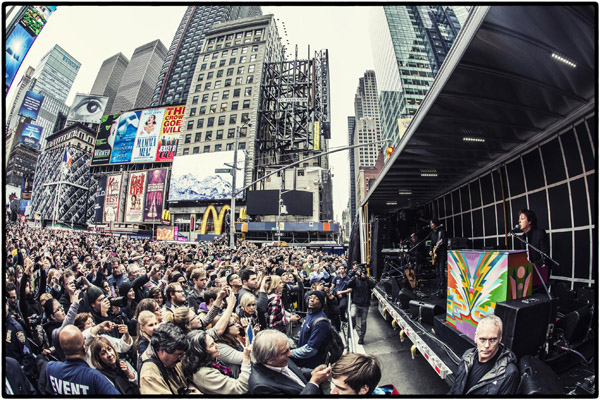
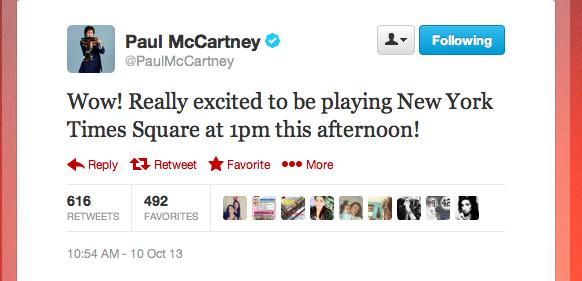
Not new to the music arena are surprise gigs on rooftops or buses in the middle of big cities, events known in the public relations world as a publicity stunts. This past October, music legend Sir Paul McCartney promoted his recently released album, NEW, by doing just such a thing – performing a surprise concert in the middle of Times Square.
Telling fans only hours before – via Twitter – he played a 15-minute long show featuring the single “New”, as well as music from the (not at the time released) album. McCartney was not only able to give NYC fans a concert, but fans from around the world could tune in through Times Square live webcast and watch the performance.
The surprise gig resulted in social media buzz and major news coverage, all promoting the NEW album for free. The stunt was so successful; exactly a week later he performed another surprise concert in London.
Sir Paul McCartney proved how to conquer the masses. Not only did he succeed in making his fans happy, but also he succeeded in executing a publicity stunt that generated both word of mouth and media coverage that ended up promoting his music at no cost to him.
Currently, one of the biggest trends in music is the presence of music festivals. These festivals host a number of bands from all different genres, pulling large audiences of varied consumers in to enjoy the shows. Festivals are generally a couple of days long and promote a laid-back lifestyle complete with camping tents and hammocks. We can thank Woodstock for this specified musical platform. However, is it also a platform for something else? In recent years, music festivals have also hosted a number of sponsors, who market their brands by simply surrounding festival goers with advertisements and products.
But what is the benefit for companies that sponsor these events? Since companies spend time and money to become an integral part of the festival atmosphere there must be some sort of profitable gain. The major draw for companies is the audience. Generally speaking, attendees are in their late teens to late 20’s. This generational demographic, once targeted, are often very loyal consumers to their favorite brands. Companies hope to capitalize on this while festival-goers are having a good time, enjoying the music, and are open-minded. This audience is also very important because they have a larger disposable income than most. The ability to spend upwards of $400 for a two day music festival, says to companies that this demographic is, for the most part, either affluent or avid consumers.
However, there is also a downside to being a sponsor at one of these events. Companies have to be very aware that if the audience does not perceive their product as one that coincides with the overall experience and atmosphere of the festival then they will either be completely ignored or considered an annoyance. For instance, a brewing company will do a lot better and be viewed much more positively than a law firm or insurance agency. In order to be successful as a sponsor you have to ensure that your product will enhance the mood, environment and fit the audience profile.
One of the best examples of sponsorships working harmoniously with the specific nature of music festivals is Firefly, which was held for the first time this summer in Delaware. Firefly made all of their vendors and sponsors local companies who brought a higher class of food and drink to the campsites. Instead of bombarding attendees with big named company sponsors Firefly chose to keep the music festival experience more authentic. Dogfish Head, their beer sponsor, even unveiled a new brew named the “Firefly Brew.” The event also had a TOMS Shoes tent, where you could purchase a pair of canvas slip-ons to be painted on-site by a local artist.
Firefly was successful because they accompanied their musical line-ups with relevant sponsors, which in the end created a newer, more evolved and authentic version of a music festival experience.








 IMC Hawks Blog