Tag: Marketing

  • Less Cancer, More Birthdays

    “Imagine a world with more birthdays.” Everyone loves a birthday. Birthdays mean parties, presents, cake, maybe a few libations followed by the possible dancing, and just overall merriment. Birthdays celebrate life and represent another year in the world. It is pretty agreeable that birthdays insinuate a good thing and have an overall positive connotation. The American Cancer Society, which hosts Relay for Life-a walking event that is held across the nation and raises millions a year for cancer research and resources, has taken this phrase and integrated it into their marketing campaign to make people rally behind their cause. Now the phrase, “Imagine a world with more birthdays” has an even greater, even tear-jerking message. Imagine a world with less loved ones passing away from cancer and more people being able to be merry and on earth for another year.

    As the designated “Official Sponsor of Birthdays” the American Cancer Society takes hold of the emotional appeal of connecting their cause to everyday life.  The American Cancer Society uses slogans such as “Happy Birthday is a victory song,”  “A world with less cancer is a world with more birthdays” and many others to very effectively draw people into raising funds for the events.  Connecting something scary, like the often terminal illness of cancer, to the happy annual event of celebrating a birthday, something that everyone has, is a very innovative way to put the American Cancer Society’s cause at a relatable level for all.  Everyone may not have cancer, but everyone has a birthday.

    The fact that the American Cancer Society markets their events as a general celebration of life in general makes it appealing to those with cancer or those who have survived cancer because they are fighting and have fought to live and have more birthdays.  It also makes it appealing to those who haven’t had cancer because they get a chance to really celebrate, be grateful for their health, and the fact that they have been able to celebrate their birthdays without fear of them being shorthanded by cancer.  Finally, the message really digs emotionally when it comes to a person who has had a loved one pass away from cancer.  How amazing would it be to be able to celebrate one more birthday with that special person?


    As a society, we understand that messages are being thrown every which way to try to get us to do something.  While the American Cancer Society could use a percentage or amount of money to help get people to support the cause of cancer prevention and awareness, instead they opt to display their organization as one that can bring an immense amount of hope to all audiences.  It’s safe to say the proof is in the pudding.  The American Cancer Society’s Relay for Life had an astonishing 4 million participants and raises about 400 million dollars a year.  With a marketed identity of one that sponsors overall joy, the American Cancer Society has struck a chord causing a strong continued success that many charitable organizations long for.  Happy Birthday must be victory song after all.

    – Alexandra HussCaroline MerrillAlyssa MorrelloLauren Van TrigtDann Williams

  • Remember When… “Apple” Was Just A Fruit?

    Who could forget the first time we were able to hold hundreds of songs from our entire CD collection in the palm of our hand?  Or how about the first time we could browse through every artist in our musical arsenal with a gentle swipe of the thumb?  Today, Apple has taken the world by storm with a variety of products that all date back to the original iPod MP3 player, which was released on October 23, 2001.  This sleek invention took the world by storm by allowing people to store hours upon hours of music into a relatively small device that could easily fit in your pocket.  The era of cassette tapes and Walkman CD players had reached an end after the iPod hit the shelves.

    Image

    Almost six years later, on June 29, 2007, Apple had another technological breakthrough with the release of the highly anticipated iPhone.  The iPhone was a combination of an iPod, phone, camera, and mini computer and gave consumers a more media based alternative to the then popular Blackberry.  People were now able to make phone calls, listen to music, take pictures and surf the web with one sleek, pocket-sized device.

    Since then, Apple has consistently raised the bar by releasing new versions of the iPod and iPhone with new features and abilities that keep people wondering, “what will they do next?”

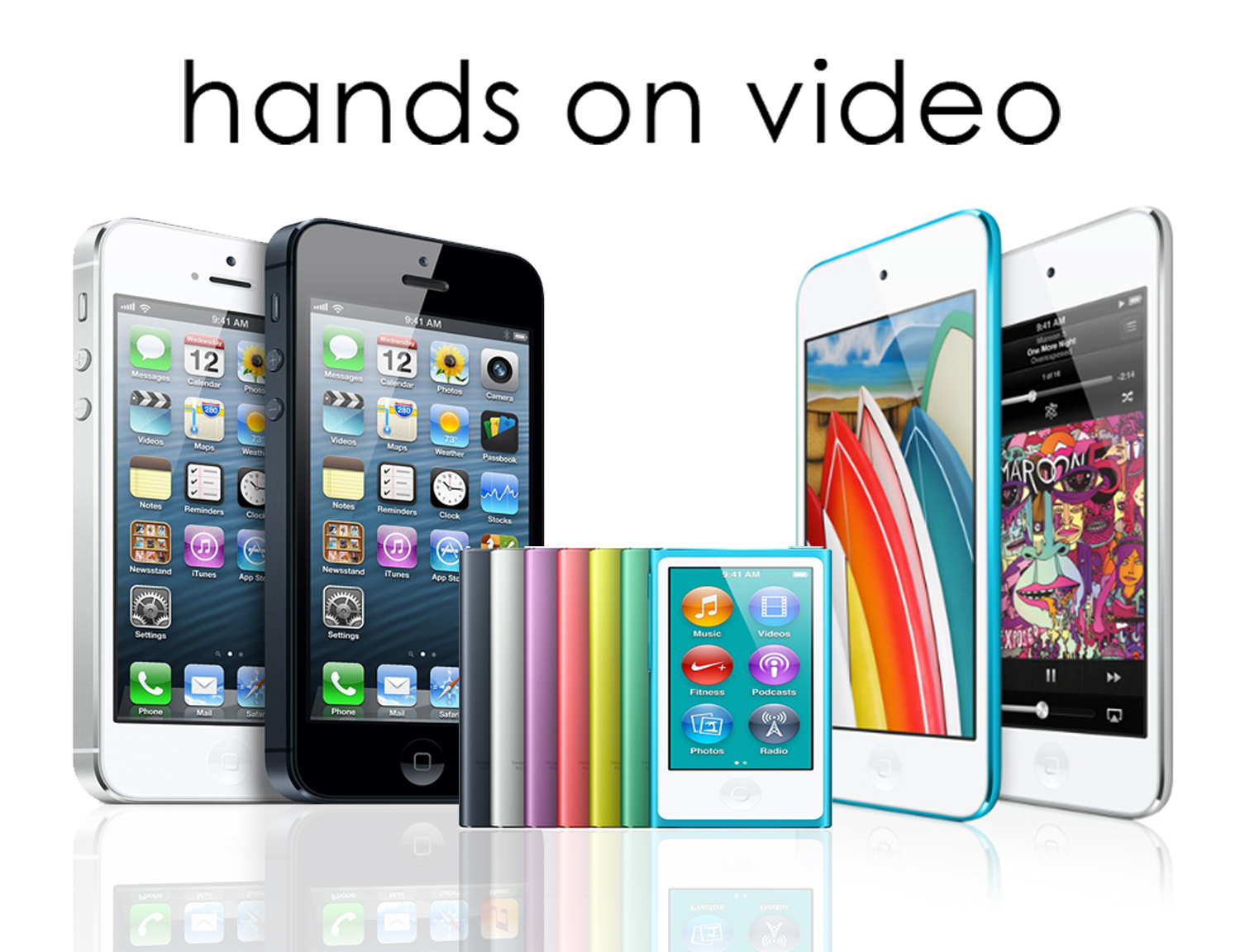
    On Wednesday, Apple unveiled the newest generations of the iPod touch, iPod nano, and the iPhone 5 to a public who was highly anticipating the “next big thing” in the technology market. Although the new iPod touch and nano caught a lot of attention with their new sleek, colorful design and advances in features such as the camera and the display, the iPhone 5 was the hottest topic.Image

    Over the past year, Apple fanatics have been wondering how the iPhone 4s could ever be topped. Before the unveiling, there were rumors that the iPhone 5 would come in many different colors, have a larger screen, and be made of liquid metal. After all of the hype, everyone fell silent around 10:00am on Wednesday, September 12, 2012 and finally caught a glimpse of the newest iPhone. Although it does not come in colors or liquid metal, the iPhone 5 has some notable changes in appearance.  At 7.6 mm thin, the iPhone is the thinnest and lightest smart phone on the market. In order to make the phone even lighter, the touch screen has also been altered and layers have been removed, increasing the clarity of the screen. Although the phone is thinner, it is a bit taller than the iPhone 4 and iPhone 4s.  Borrowing from the extremely popular MacBook, Apple has chosen to make the iPhone 5 from a combination of aluminum and glass.

    The sleek, sexy new design is not the only advantage of the newest iPhone.  For the photographer, Apple has included a camera with the ability to take panoramic shots, record HD video, and make edits.  Everyone’s favorite celebrity, Siri, has gotten even smarter than before and is capable of answering more questions.  A new application, called Passbook, is there to keep all of your tickets, boarding passes, and gift cards in one easy to reach spot.

    The iPhone 5 certainly has major developments, but will it be enough for people to trade in their iPhone 4s? Apple is marketing their newest creation as “the biggest thing to happen to iPhone since iPhone.” Many people believe that Apple has a tendency to sell society things they never realized they really needed and wanted until Apple told them it was important. Will their marketing techniques work? Or will people settle for holding on to their iPhone 4s for a little while longer?

    Jessie Butner, Meaghan Beam, Zach Abramo, Jack Lane

  • Time Flies Faster Then You Think

    Our three years here at UNCW has been a nonstop learning experience. We have not only gained knowledge in classes, but have also gained valuable and unforgettable life experiences. Laura transferred to UNCW after her freshman year and since she has been in Wilmington has had three very valuable internships. The key to getting a job in this market is to have experience in your field of interest and being able to effectively market yourself to potential employers. In our IMC 1 class we had an assignment where we had to market our personal brand and why we should be hired over our competitors. It is crucial to understand how and why your brand is better than the kids sitting next to you. It is not only important to know why your brand is the best, but you also need to understand how to market your experiences and internships to fit the qualities for your potential employer. Taking advantage of internship opportunities, especially for credit through the Department of Communication Studies, is a great idea for anyone and everyone. Without those experiences we would not be as prepared or as knowledgeable about our field of interest as we are now. So, when you’re thinking of what to do with all your time during the beautiful summer in Wilmington, think about taking an internship or think about how you can make your brand stand out among others.

    Another important piece of advice is to get involved on campus. Once you are a student, UNCW becomes your home away from home. The best way to find comfort is meeting and bonding with other students who are in your exact situation. UNCW has over 200 clubs and organizations for students to become involved in. The only hard decision you have to make is: which club should I join? Tennis, TealTV, Communication Studies Society, the choices are endless. The moral of the story is this: get involved on campus and make your presence known. You only have four years, which believe me, flies by in a blink of an eye. The friends you make in college become your friends for life. It is important to make your college journey memorable, exciting, and one that you can laugh about 40 years down the road reminiscing with your old college friends.

    Lastly, as a college student, one of the most important things you do is research. Whether it’s writing a report, putting together a presentation, or simply watching the news on TV to catch the latest events, you are gathering information to analyze. Some of this information will be forgotten shortly after graduation, if not before you even cross the stage to get your diploma. However, some information you have gathered through your college career will stick with you for a lifetime and will become helpful in future career situations.  Learning doesn’t just stop when you get your diploma. The research skills you learn to use as a student can be used for the rest of your life, as you strive to be an informed individual.

    So just remember, time flies. Before you know it you will be walking across the stage to receive your diploma.  Don’t just be a beach bum, at least, not all the time. Do something that will show your future employers that you did something with your short time here to make a difference.

    -Laura Simmons, Brooke Keller, Ashley Oliver

  • Going Green, Brings Green

    Brands can promote themselves through almost any medium nowadays. Pens, stickers, posters, billboards, you name it, you can put your brand on it. Planet Earth Promotions is a company that is designed to help brands promote themselves in an eco-friendly way. There is constantly increasing awareness about environmental protection and a greater consciousness about how important it is to protect these environmental and natural resources. Planet Earth Promotions is leading the way for this “EcoSmart” promotional item trend.

    Planet Earth Promotions’ mission statement indicates that their “goal is to help companies and corporations around the nation proactively enhance their brand through the use of environmentally conscious and educational promotional items”. They have certainly delivered in this respect. This company has been ranked #1 in promotional advertising for the past ten consecutive years. Not only are they paving the way for other companies, they have become a greatly successful brand that is little to no impact on the environment. Planet Earth Promotions has built a successful brand on a trend that is becoming increasingly important as time goes on. This brand is very strong considering they have remained at the top of the list from Arizona Magazine for the last ten years and they are here to help other brands.

    They are able to offer many alternatives for companies to help cut back on environmental damage by providing recycled goods, information about recycling and environmental days in the USA and tips to bring pollution down. With so many companies shifting focus to being the “EcoSmart” companies and LEED (Low-energy electron diffraction) certified, it is a challenge to stay on top. Planet Earth Promotions has paired up with other environment-friendly companies such as AWEA (American Wind Energy Association) and Women’s Business Enterprise to built a very powerful and successful brand and continue to pave the way for other companies looking to create environment-friendly products and solutions for all varieties of businesses.

    – Julius Roberts, Leanna Marshall, Leslie Tyler and Bryce Koonts

  • Barefoot? Not with TOMS Shoes!


    Many of us are familiar with the shoe brand TOMS. The company, started by Blake Mycoskie, commits itself to donating one pair of shoes to a child living in poor conditions for every pair of shoes it sells. TOMS’s program of giving was the result of its owner traveling to South America and finding that many children were contracting diseases through their bare feet, as they were unable to afford or obtain shoes. Mycoskie decided to manufacture his company’s shoes in an eco-friendly and vegan manner. TOMS are made using supplies from an organization, Livity, specializing in “low environment impact materials” (information based on a 2008 interview between Mycoskie and San Diego Loves Green reporter Allie Bullock Kagamaster).

    Not only does TOMS market their product as a philanthropic exercise, but it also markets itself as an organization dedicated to environmentally sound products. The company is able to create establish integrity for its product among potential customers who are concerned with social and environmental issues. Partnering social and environmental values, allows TOMS products to stand out amongst competitors.

    TOMS has gone a step further than its usual shoe donation program; by implements its “One Day Without Shoes” campaign. This campaign is meant to raise awareness of the dangers faced by individuals who do not have shoes to walk in, in areas where environmental conditions, such as chemical contamination and littering of glass, syringes and debris, can cause multiple diseases. “One Day Without Shoes” also encourages individuals to buy shoes from the company so that TOMS can donate shoes to these individuals.

    The “One Day Without Shoes” campaign is designed in a way that the company’s customers and followers can actively participate in it. When going to the company’s website, a person can email the page to their friends and family, post it on Facebook, or follow the campaign on Twitter. This implementation of social media shows that TOMS Shoes is aware of the powerful impact individuals can have when marketing a message, just by sharing information with friends on social media they are already using, and that can be viewed by mass numbers of friends and peers.

    Also on the campaign’s website, TOMS Shoes encourages individuals to share videos and photos of themselves without shoes and an explanation of what the experience meant to them. Followers can find their own marketing devices to spread the word of the campaign on the website. Rally signs, street stencils, pocket info cards, stickers, profile pins and banners, DIY t-shirts, and displays can be downloaded from the campaign’s website for the event.

    “One Day Without Shoes” has also found many corporate partners to participate in its campaign. These partners are Aol., Discovery, essie, flickr, just wink by American Greetings, Kiehl’s, Kind Healthy Snacks, and SIMS. The “One Day Without Shoes” campaign shows the ways in which organizations rely on various societal values and corporate marketing techniques to draw attention to their brand or promotion.

    -Ashley Oliver,Hunter Wilson, Josh Vester, Molly Jacques

  • An “Augmented” Look Into the Future of Advertising

    Last week Google unveiled Project Glass, their latest developmental project set out to design and build augmented reality eyeglasses. Google upload a video to YouTube entitled “Project Glass: One day…”, which shows viewers what Project Glass could potentially look like. Project Glass would allow you to communicate with friends, schedule appointments, get directions, take pictures, and even hold video conferences all by using the augmented reality interface and voice commands. While this technology is in the earliest stages of development, Project Glass has the potential to be a realistic and marketable product in the future.

    While the announcement of Project Glass is only a week old, there is already concern about user privacy and advertisements. Google already uses search terms to customize advertisements, and are even beginning to push ads based on your location, so just how far would Project Glass go? Would advertisements pop-up in front of you if you are close enough to a store? Could marketers use where you go and what you look at throughout the day to better understand what type of consumer you are? The parody video below shows how pop-up ads with Project Glass might look if they were implemented:

    While this idea of “forced advertising” seems a bit extreme, it’s already happening with several other projects. Twitter now adds Promoted Tweets to your timeline, which are sponsored announcements from businesses that merge together with the other tweets from people you follow. Pop-up ads are common with free Android and iPhone apps, and some applications even send ads as a notification. Amazon sells discounted Kindle e-Readers with “special offer” advertisements that appear on your screen. It seems that with every new piece of technology, the first idea that is addressed is how to advertise on it. With Project Glass, the possibilities for customized advertising are much more personal. How will marketers adapt to changing technology? Will consumers be willing to sacrifice their privacy and accept interruptive advertisements in order to use Project Glass? Only the future will tell.

    -Hunter Wilson, Joshua Vester, Ashley Oliver, Molly Jacques

  • So is it not hip to be hip anymore?

    “Hipster”. By now, I’m sure everyone reading has probably heard this word thrown around to describe someone. It has a great deal of meanings now, some more relatable than others. Urbandictionary.com defines a hipster as ” a subculture of men and women typically in their 20’s and 30’s that value independent thinking, counter-culture, progressive politics, an appreciation of art and indie-rock, creativity, intelligence, and witty banter”. What sounds like a common description for a large group of people has been boiled down now into an image, one which companies and a select group of consumers have been embracing recently.

    So what makes a “hipster”? Some people believe it’s the type of music you listen to, or the clothes you choose to wear. Other people think it’s the attitude about the music and clothes you have also chosen to wear. “Skinny jeans, cardigan sweater, and listening to Neutral Milk Hotel…yeah, that guy’s a hipster”. Ironic sayings on t-shirts, listening to obscure music on their vinyl records, and drinking home-brewed fair trade blend coffee. These seem to be the most common conceptions of what classifies a person as a “hipster”. With such a large trend being developed, of course fashion companies are going to developing products appealing to the trend.

    Like many fads from the past, "hipsters" are just an evolution from the previous popular trends.

    Urban Outfitters and American Apparel are both companies that cater to a more “hip” lifestyle. Carrying a large variety of plaids, cardigan sweaters, and tight jeans, both companies have been considered a “hipster haven”. Both companies know this, have accepted it and are now running away with it. Urban Outfitters now sells 35mm cameras and Holga copies, because there is a common interest in those who some would call a “hipster” and their interest in photography. Also on their site, you can make your own screen prints, and even build your own fixed gear bicycle, both things targeting directly to those who are attempting to follow the “hipster” trend.

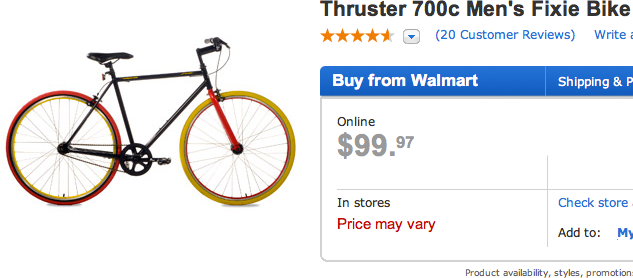
    Walmart attempts to capitalize on the fixed-gear craze by offering a low-priced bike called "The Fixie".

    Companies today are smart. They realize that the trend of “hipsters” including their fashion sense and their interests have been on the rise, and are adjusting to the demand in order to deliver what sells best. They also are targeting this demographic through their advertisements via email and internet ads featuring models who roughly resemble “hipster fashion”. The trend does not seem to be dying out any time soon, as more and more people are starting to embrace it for themselves, so we can expect to see more and more companies reaching out to these consumers in an attempt to show how “hip” they can be in order to sway them into buying from them. What it simply boils down to is another label for another trend that is ripe for the capitalization on, and it seems like many companies are doing just that.


    -Joshua Vester, Hunter Wilson, Ashley Oliver, Molly Jacques