Tag: IMC

  • What was that word again?

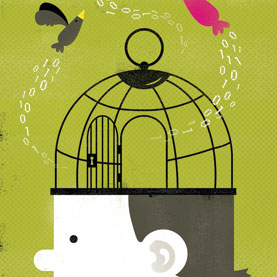
    “Four score and seven years ago our fathers brought forth…” and the rest I can’t remember. I know I’m not alone in the painstaking task of memorizing the Gettysburg Address, but are current junior high students the first generation to not participate in this tedious tradition? Dating back to 5th century BCE Sophists, memorization has been considered a great asset for rhetoricians. Sophists are known for their emphasis on teaching effective dialectics. One aspect of their teachings included encouraging their students to memorize long discourses to persuade their audiences. Sophists, who were masters of persuasion, considered memorization an art form of delivery.

    Now we have the ability to look up any information at the touch of a screen. If we don’t remember something right away, we don’t have to struggle for that tidbit to rise to the top of our brains-we can just ‘Google’ it. Some scholars suggest memorization is simply not a part of the modern student’s duty. Has this asset now become irrelevant?
    Image

    Image: Shaw Nielsen

    The Shallows, written by Nicholas Carr, analyzes the impact technology has on our brains and our thinking processes. We may not be able to measure if there have been long-term consequences of being glued to technology but some short-term alarms have been noted. Carr and other researchers have noticed technology’s impact on our attention spans. We are unable to sit to stay concentrated on one thing for a substantial amount of time with flipping to different webpages, checking our phone and flipping through TV channels…and all at the same time. The debate is whether we are learning more simultaneously or losing something we once valued: our memory. Carr comes to the conclusion that, although technology makes us smarter in certain areas, it makes us less intelligent in others. Is one impact of the rise of technology on mankind the loss the art of memorization? Or is this simply technology opening our minds for other tasks? The Sophists are surely turning over in their graves.

    -Rachel Edwards

  • PlayStation Lights Up the UK

    If one were to look at the Oxo Tower in London at night over the past few days, they might notice a striking difference in the lighting of the prominent building.  Covering the side of the tower are the famous control buttons of the PlayStation brand that replaced the usual OXO that can be seen on the tower.  In regards to the holiday season and the release of their newest PlayStation 4 product, the brand decided to take their advertising to new heights. Sony paired with Manning Gottlieb OMD media agency to change the letters for the first time in the building’s eighty-five year history.

    Image

    When relating this recent event to Kenneth Burke’s Theory of Identification, we can see a clear connection between the consumer’s ability to recognize the PlayStation symbols, and the persuasive technique used by the brand.  Burke’s theory states that persuasion can only be communicated effectively when the two parties (the consumer and the brand sharing the product) have something in common. This means that only people who know what the symbols represent will be able to understand that this is an advertisement for one of the largest gaming systems in the world.

    This form of brand advertising seeks to create excitement and anticipation for the upcoming PS4 release on November 28th in the United Kingdom. Consumers are unconsciously motivated to have the PlayStation product on their minds when they see the symbols lit up every night.  This could lead to consumers talking about the product to friends or on social media or even purchasing the product when it is released.  In fact, 14.3 million people had tweeted about the lights within the first 24 hours that they were used.

    Image

    Overall the strategy used by PlayStation to advertise and motivate their publics to think about this new product was a creative and original way to reach potential customers.  This is a method not commonly used and created a large amount of social media buzz that was beneficial to the brand.  What are some original and uncommon ways that you have seen brands advertise? Have you seen any brands advertise in uncommon places?

    -Aaron Love, Kara Zimmerman, Rachel Clay, Rebecca Hobbs

  • Averting Crisis In San Fransisco

    For most companies, an intern can be a great asset to the inner workings of an organization. However, for one Oakland TV station, KTVU, a single intern from the National Transportation Safety Board (NTSB) managed to put them right in the middle of a national crisis. On July 6th 2013, after an Asiana Airlines flight crashed during its landing in San Francisco, news stations jumped at the opportunity to be the first to report on the crash and have the most up to date information. Sadly, in the rush to get information to the public, producers at the KTVU station verified false information from an intern regarding the names of the pilots on board the flight. The names provided to the news anchor were not only racist but very disrespectful.

    Image

    The negligence of the TV station and their failure to confirm sources and exercise careful editing resulted in negative worldwide media attention. KTVU confirmed incorrect names that were given to them by an intern working at NTSB. Careless editing must have occurred for the producers to think that these were probable names of the pilots. Also, the producers should have done further fact checking because the source ended up being unreliable and unofficial.  The intern at the NTSB who provided the false information was consequently fired from their position.

    Image

    When publishing a news story, it is crucial to not act with a reckless disregard for whether the information shared is false or not because the station could be sued for actual malice. Asiana Airlines could have opted to sue KTVU for defamation but did not to do so. This particular situation portrays why the media has laws such as these in place to prevent false and damaging claims being published publicly. The airplane company Boeing also attempted to manage the crisis through social media, stating in a tweet that “Our thoughts are with everyone affected by today’s incident at SFO.  We stand ready to assist the NTSB.” Boeing stood by the NTSB and supported them because although they had nothing to do with the racist remarks, they knew that the incident was the effect of careless editing and negligence.

    As part of their crisis management plan, the Office of Public Affairs issued a press release on behalf of the NTSB formally apologizing for the “inaccurate and offensive names.” They issued a statement of regret followed by corrective action, “We work hard to ensure that only appropriate factual information regarding an investigation is released and deeply regret today’s incident. Appropriate actions will be taken to ensure that such a serious error is not repeated.”

    Do you feel that the NTSB and KTVU handled this crisis to the best of their ability?  What other incidents have you seen in the news that have resulted in a formal public apology?

    -Aaron Love, Kara Zimmerman, Rachel Clay, Rebecca Hobbs

  • Her Butt Says What?

    We have all seen bands passing out flyers on the streets and flooding social media with their music trying to create a brand image, but when does this go too far? Self-promotion is the most inexpensive and quickest way for musicians to gain followers, but to make this work you have to differentiate yourself from others and attempt to be “heard by the masses” through all the clutter around you.

    The first person who came to mind was Macy Gray at the 2001 MTV Video Music Awards. She was wearing a dress stating when her album dropped and “buy it!” written across her backside. Was this a fashion faux pas or genius advertisement? Since Gray was already a well-known musician she knew she was going to be photographed in this dress, which of course would end up all over TV and magazines. Unfortunately, people must have felt some dissonance with this approach because this album only sold 593,000 copies in the US, compared to her On How Life Is album which has sold 3.2 million.

    macy-gray

    More recently, a female artist by the name of Amanda Palmer has promoted herself on the website Kickstarter. This is a website where projects of all kind are brought to life through the direct support of others. Kickstarter states, “Since our launch on April 28, 2009, over $800 million has been pledged by more than 4 million people, funding more than 45,000 creative projects.”

    Here, you can see the video that Palmer made for the site, asking for money to create her first album after breaking away from a major label. While her original goal was only $100,000 she ended up with $1 million and counting. Palmer was successful because she broke through the clutter on the internet and did something different that people noticed. She is also fulfilling her fans needs by letting them contribute to the success of her music.

    Musicians will keep using self-promotion weather it is passing out flyers, using social media, wearing dresses with album dates or even receiving money off Kickstarter. There will always be newer and better methods to promote music, and people like Macy Gray and Amanda Palmer have paved the way for these innovative ways.

    -Ashley Creps

  • Branding Through Your Speakers

    Nowadays it is almost impossible to escape the sounds of music. Beginning with your morning alarm, music can be heard throughout the day whether through a ringtone, car stereo, speakers, or even advertisements. Many companies are harping on this trend by finding ways to integrate particular artists, bands and up-and-coming music groups into their brands.

    The use of music is a strategic marketing tactic because it helps to bridge the gap between companies and consumers by allowing them to share similar lifestyles. If the music used in advertisements positively resonates with the audience, then it is likely that the product will, in-turn, be portrayed positively. According to Simmons and Simmons, “Consumers who live part of their lives through music are passionate people who care about the content they chose to engage in.” This is why the use of music must match the purpose of the message in order to be memorable and thus successful.

    The Uses and Gratifications Theory can also be incorporated into this idea of music and branding. This theory deals with how people use media to their advantage, either to gain something or form some sort of image/relationship with something else. Consumers are also able to use the media for reference to gain knowledge about a brand and their products.  In this case, brands are using music to help form their image and how they want to be seen by their publics.  By purposefully incorporating artists that they think will further their particular commercial, campaign or even runway show, brands can use music to solidify their message and image.

    Taco Bell’s commercial for Doritos Locos Tacos incorporates the use of music by featuring “Take a Walk” by Passion Pit. The commercial features the quick paced song along with multiple snapshots of tacos piling up on top of each other while moving across the screen.  At the end of the ad, the voiceover says “Taking tacos where no one thought they would go.”  This is a small but memorable connection to the title of the song played in the background and would be noticeable to anyone who knew the title or heard the lyrics.  The message Taco Bell was trying to send their audience was that their tacos are easy to take on-the-go and are able to be eaten everywhere.

    Can you think of any examples of how a brand has used a popular artist in their commercial?  How has the music affected the way you think of the brand or company?

     -Aaron Love, Kara Zimmerman, Rachel Clay, Rebecca Hobbs
  • Paul McCartney’s NEW Publicity Stunt

    The digital world of iTunes and social media has given the music industry both high and low notes. While the Internet offers accessibility, it also caters to specificity. Most predominantly, the Internet offers an array of platforms for artists to upload, share, and send their music.  However, while music junkies may be constantly searching for new digs, most people eventually acquire a particular taste for what they choose to send through their ear buds.  Internet music services such as Pandora, Spotify, and iHeartRadio allow users to handpick and listen to an endless variety of artists and genres. This narrowcasting of music leaves artists waging campaigns to try to reach listeners. As a result, clutter prevails.

    Like in advertising, clutter has become a big problem in music promotion. As Douglas Rushkoff pointed out in The Persuaders, “The more messages they create, the more they have to create to reach us.”

    The more opportunity social media platforms – YouTube, MySpace Music, and most recently Vine – offer artist to share their music, the more competitive and important promotion of music and musician become.

    So how does a music artist break through all the online music clutter without breaking budget? The answer is: great music, a little luck, and a publicity stunt.

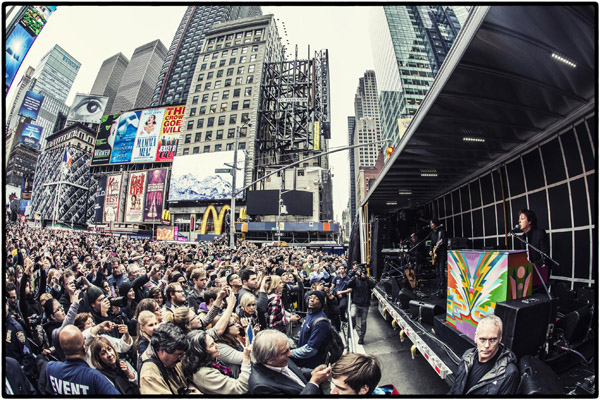
    Not new to the music arena are surprise gigs on rooftops or buses in the middle of big cities, events known in the public relations world as a publicity stunts. This past October, music legend Sir Paul McCartney promoted his recently released album, NEW, by doing just such a thing – performing a surprise concert in the middle of Times Square.

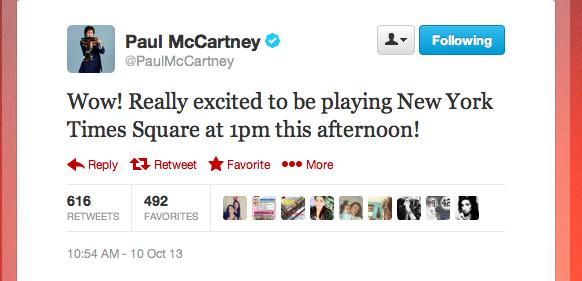
    Paul McCartney at performs at the Times SquareTelling fans only hours before – via Twitter – he played a 15-minute long show featuring the single “New”, as well as music from the (not at the time released) album. McCartney was not only able to give NYC fans a concert, but fans from around the world could tune in through Times Square live webcast and watch the performance.

    pm tweet nyThe surprise gig resulted in social media buzz and major news coverage, all promoting the NEW album for free. The stunt was so successful; exactly a week later he performed another surprise concert in London.

    pm tweet loSir Paul McCartney proved how to conquer the masses. Not only did he succeed in making his fans happy, but also he succeeded in executing a publicity stunt that generated both word of mouth and media coverage that ended up promoting his music at no cost to him.

    Caroline Robinson, Savannah Valade 

  • Artichoke Buttercups, Anyone?

    October 31st is the one day of the year that kids get the chance to dress up in their favorite costumes, carve pumpkins, trick-or-treat, and most importantly eat excessive amounts of sugar. This Halloween season, Crest and Oral-B have teamed up to make a commercial that portrays a child’s greatest nightmare- a Halloween without candy. This innovative and hilarious commercial titled, “Halloween Treats Gone Wrong,” is an unofficial experiment that captures how kids act when they find out healthy treats are replacing candy. This playful scare-tactic is one that parents are sure to appreciate as they attempt to find ways to motivate kids to brush and floss this Halloween.

    Companies consider many different appeals when creating advertisements to grab the attention of current and future consumers. Appeals are often used to influence consumers to purchase a product as well as speaking to their interests.  One appeal that is used often, and in this particular advertisement, is humor. If applied correctly, humor can be extremely successful in marketing a brand. Humor is used in this commercial through the use of children and their innocence and tendency to be blunt regarding their own opinions. The appeal to humor is effective at gaining and retaining the attention of audiences because humor results in better recall. Crest and Oral-B do a good job of effectively keeping their audiences engaged in their commercial while marketing their brands at a time of the year when you would least expect it.  By turning this campaign into a positive and laughable viewing experience, Oral-B and Crest have kept themselves relevant during Halloween and have shown that they too can relate to what parents everywhere are thinking.

    By establishing humor in their commercial, Crest and Oral-B have possibly widened their potential customer bases by creating a memorable narrative to leave with audiences. This emotional link that Crest and Oral-B created with their audiences increases the intent for consumers to purchase their products for themselves and their children. Some appeals to humor are not as successful as the Crest and Oral-B campaign have been.  While this commercial is being shared not only on television but also on social networking sites, other marketing attempts have not been as lucrative. If the humor is not received well by the audience the ad can backfire and create a negative image surrounding the brand.

    Image

    Have you seen any other examples of brands using the holiday season to promote their products? Do you think the use of humor in this ad was successful? What are some examples of humor used in ads that have resulted in you purchasing their product(s)?

    -Aaron Love, Kara Zimmerman, Rachel Clay, Rebecca Hobbs