Tag: IMC

  • Marc’s Makeover: Marc Jacobs’ decision to rebrand… is it the right one?

    Deciding whether or not to rebrand your company is an immense decision. Your brand is the face and personality of your company. It is what viewers connect with. Changing this identity will greatly affect your company, but if done right the market can soar.

    Fashion designer Marc Jacobs has decided it is time for his company, Marc Jacobs International to rebrand. In an interview with David Amsden from W Magazine Jacobs explains the troubles the Marc Jacobs brand had encountered. Describing the brand as having been “diluted” from his lack of creative supervision and merchandisers pushing his design team.

    In order to fix this Jacobs decided to leave his position at Louis Vuitton to grow his company, which includes boutiques, clothing lines such as Marc by Marc Jacobs and Little Marc Jacobs (a children’s clothing line), Bookmarc (a bookstore), and more.

    Some changes have already taken place such as his decision to move his offices from Manhattan to London and his decision to part with longtime campaign photographer Juergen Teller after he creatively disagreed on the Spring 2014 ad campaign which features Miley Cyrus. 

    marcmiley

    So what is Jacobs looking to do? He’s looking to redesign the logo and packaging, to build his shoe and handbag lines, and maybe even change the name, which he told W Magazine that he had always hated.

    Rebranding can be daunting between redefining research, audiences, creative campaigns, and even products, but for those experiencing continuous losses, it is often the best way to launch back into the market.

    In recent years, another clothing line, Burberry, underwent a widely recognized successful rebranding campaign. Over the years, the British line went from being known for its historically iconic outwear, to being associated with cheapest form of high fashion, and even gang wear.

    In 2006, the company hired Angela Ahrendts and in the next six years, she turned the ubiquitous brand back to luxurious. First, Ahrendts did what she called “buying back the company.” Reigning in the 23 licenses Burberry had around the world, control was brought back to the company with centralized executive and creative offices that could maintain product authenticity and exclusivity.

    Secondly, Ahrendts recognized we are in the age of digital consumption and a digital generation – tapping into the resources social media and technology offers. In stores, sale assistants are equipped with iPads, and mirrors transform into screens displaying catwalk images. Online, the company continues to grow its presence, attracting over 16 million fans on Facebook, and over 2 million followers on Twitter. Burberry also uses YouTube to broadcast campaigns, events, music, and even corporate news. 

    However, rebranding is not exclusive to high profile companies, the challenges above are things that can be experienced in all types of companies: personal, mid, or large. So how do you know if you should rebrand your own company? From Katie Morrell’s article “10 Signs You Should/Should not Rebrand” here are some warming signs that your company should rebrand.

    Macro problems

    Maria Ross, author of Branding Basics for Small Business: How to Create an Irresistible Brand on Any Budget (2010, Norlights Press) suggests that if a company notices that their target customers are choosing the competition over their own company and if a decrease in sales is also trending, rebranding should be considered.

    Look and function don’t match

    Another element that should be considered when having a decrease in customers is “From a cosmetic point of view, when you look old and your looks don’t reflect what you are or what you deliver, it may be time to rebrand,” said Susan Betts, senior strategy director for New York-based FutureBrand North America.

    Attracting the wrong customers

    Rebranding is beneficial when a company wants to change their target customers. It gives a company an opportunity to create a new brand identity that the new target audience has the chance to connect too.

    Management change

    When a company changes management, it is normal that policies and values change as well. When a companies values change, rebranding is a good idea.

    Philosophy/function change

    When a company changes it’s direction, rebranding can showcase to customers what they may or may not be aware of concerning this change. Betts also mentions rebranding should be considered when a company has a “New philosophy or a changed philosophy”.

    These signs are great examples to take heed from, but it is important to note rebranding should not be done unless it has been proven your brand identity is the root of your problems. Branding is the largest initial investment for a company, it sets the spring board for your identity, association, and customers. Rebranding is an even bigger investment – an attempt to reintroduce ideas to already established and preconceived perceptions is no easy task, it is one that must be thoroughly strategized. For Burberry, reigning in and refining their identity proved to be the best decision the company has made. For Jacobs, we will see what his creative vision produces.

    What companies do you think have faltered recently or over the years? Who needs to rebrand?

    Caroline Robinson, Savannah Valade, Elizabeth Harrington

  • You can’t have your Coke and drink it too

    It’s one of the pillars of successful marketing, target your audience. Individualizing ads to particulars groups or regions of consumers ensure that messages have the most impact. But what happens when a company features a controversial scene in a spot, then removes it for some audiences and not others? Good marketing move or failure to take a stance?

    In its newest global campaign, “Reasons to Believe” Coca-Cola set out to inspire consumers that no matter what happens in life, it’s those small happy moments that make life worth living.

    Check out the commercial below.

    In most European countries the ad contains a scene of two gay men holding hands in front of their wedding party. However, in the Irish version (the video below) the scene has been replaced to feature a bride and groom.

    The Irish LGBT publication, EILE Magazine, brought attention to the issue, calling the removal an “inexplicable move”. In response to the criticism, Coca-Cola said that the advertisement had been tailored to individual markets so that the ad resonates with the people in each country where it is shown. The company defends the decisions saying that grooms were excluded from the Irish version because gay marriage is not legal in the country. EILE Magazine claims the Coca-Cola reasoning moot. The footage of the two grooms is known to be a video clip from a same-sex union ceremony in Australia – equivalent to a civil partnership in Ireland. Yet gay marriage is also illegal in Australia, but shown there. EILE claims the spot should have been suitable for Ireland as well.

    Coca-Cola has unequivocally made public their supporting stance on same sex marriage. Since 2006, the Human Rights Campaign continues to award Coca-Cola with a 100 percent ranking of their company polices and practices regarding LGBT. The Coca-Cola Company notes on their website, “To achieve a perfect score, companies must have fully inclusive equal employment opportunity policies, provide equal employment benefits, demonstrate their commitment to equality publicly and exercise responsible citizenship”

    Many are saying that Coca-Cola’s recent actions were hypocritical. Coca-Cola claims to support gay marriage, but their choice to remove a gay marriage scene from a commercial in Ireland, in which law does not prohibit such imagery, is misleading of the company’s values. Similarly, another beverage icon, Starbucks, has also gained attention for their hypocritical actions.

    Bryant Simon discusses the company Starbucks in his book Everything But the Coffee. Through his research he comes to discover that Starbucks isn’t delivering what they are promising in their brand – good coffee with little environmental impact. Claiming to buy fair-trade coffee from Rwanda and Nicaragua farmers, Starbucks was actually buying from bigger farmers and only buying 5-6 percent of fair-trade out of all the total coffee purchases.

    Much like Starbucks claiming to be environmentally friendly yet not taking the necessary steps in order to be green, Coca-Cola’s actions were just as misleading; claiming to support gay marriage yet removing a scene from one version of a commercial for the sole purpose of trying to please everyone.

    As future and current brand ambassadors we have to remember that every decision we make, including company policy decisions, become an integral part of brand, and when decisions are made that contradicts that it hurts the brand.

    On the other side of things, as consumers (and as Simon states in his book) we have to remember pursuing “solutions to highly complex social problems through buying and buying alone” doesn’t fix the problem or change the ideology. We have to stop relying and believing that buying certain brands is going to change a social issue.

    So, does Coke’s decision to take out the gay marriage scene hurt its brand identity? Should companies take stances on social issues? What practices do you follow to make sure this brand conflict doesn’t occur in your company or with your clients?

    Savannah Valade, Caroline Robinson, Elizabeth Harrington

  • “How REAL Will American Idol Get This Season?”

    It’s that time of year again! All our favorite shows are returning, after a seemingly long-awaited hiatus. The longest running singing competition, American Idol, has returned for its thirteenth season. But this season, Idol has been forced to change things up. The show is taking on a fresh, new approach to increase the amount of viewers by revamping their marketing schemes.

    In previous seasons, the show directed promotions towards the judges, featured cities, and upcoming drama. The initial aspirations of the show to seek out raw talent has slipped within the past seasons and in return, turned away viewers. At the shows peak, American Idol attracted 30.4 million viewers in season eight. Since then, viewer ratings have only decreased and reached an all time low with 14.3 million viewers for season twelve. As a result, Fox has decided to rebrand the show by bringing in a new team of producers, less drama-filled judges, and a more heartwarming advertising campaign.

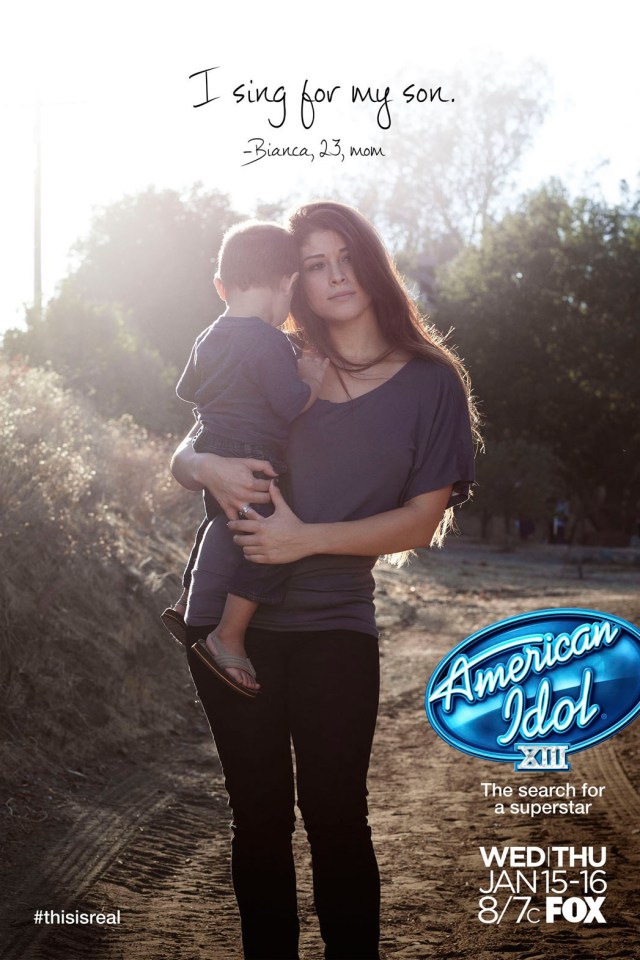
    Within the past seasons, focuses of promoting the show featured drama among the judging panel rather than the actual talent of the contestants. Producers recently have realized the show has drifted away from the heart and original purpose of the show–discovering real people with real talent around the country. In an effort to rebrand their image, season thirteen marketers began focusing on the background stories of the contestants in hopes to return Idol to its initial purpose.
    American-Idol-2014-spoilers-480x265

    American Idol

    One component of the new advertising campaign features eight contestants in their hometowns sharing their personal motivations as to why they sing. Producers felt this new type of advertisement would help viewers identify with the stories and be able to relate to the contestants. Viewers are invited to participate in the hopeful journey of the “average Joe’s” transformation into a superstar.

    American Idol’s new video promotion of the upcoming season also focuses on introducing new contestants and excluding any drama or glamour of the judges (hallelujah). In addition to highlighting real contestants, marketers have incorporated social media by producing a new tag line for the show, #ThisIsReal, to encourage audience conversations on Twitter. Producers hope that the incorporation of social media marketing will increase the show’s ratings and reputation. The advertising of real people and their real aspirations are designed to appeal to a variety of audiences on social media platforms, especially the younger demographics.

    By incorporating a variety of platforms such as television, print and social media, American Idol hopes to attract a wide array of audiences through this new and improved IMC campaign. Do you think this new campaign will be effective in increasing and engaging audiences? Or will American Idol continue its downward spiral?

    -Briana McWhirter, Emily Foulke, Hannah Turner

  • The Tassle’s Worth the Hassle

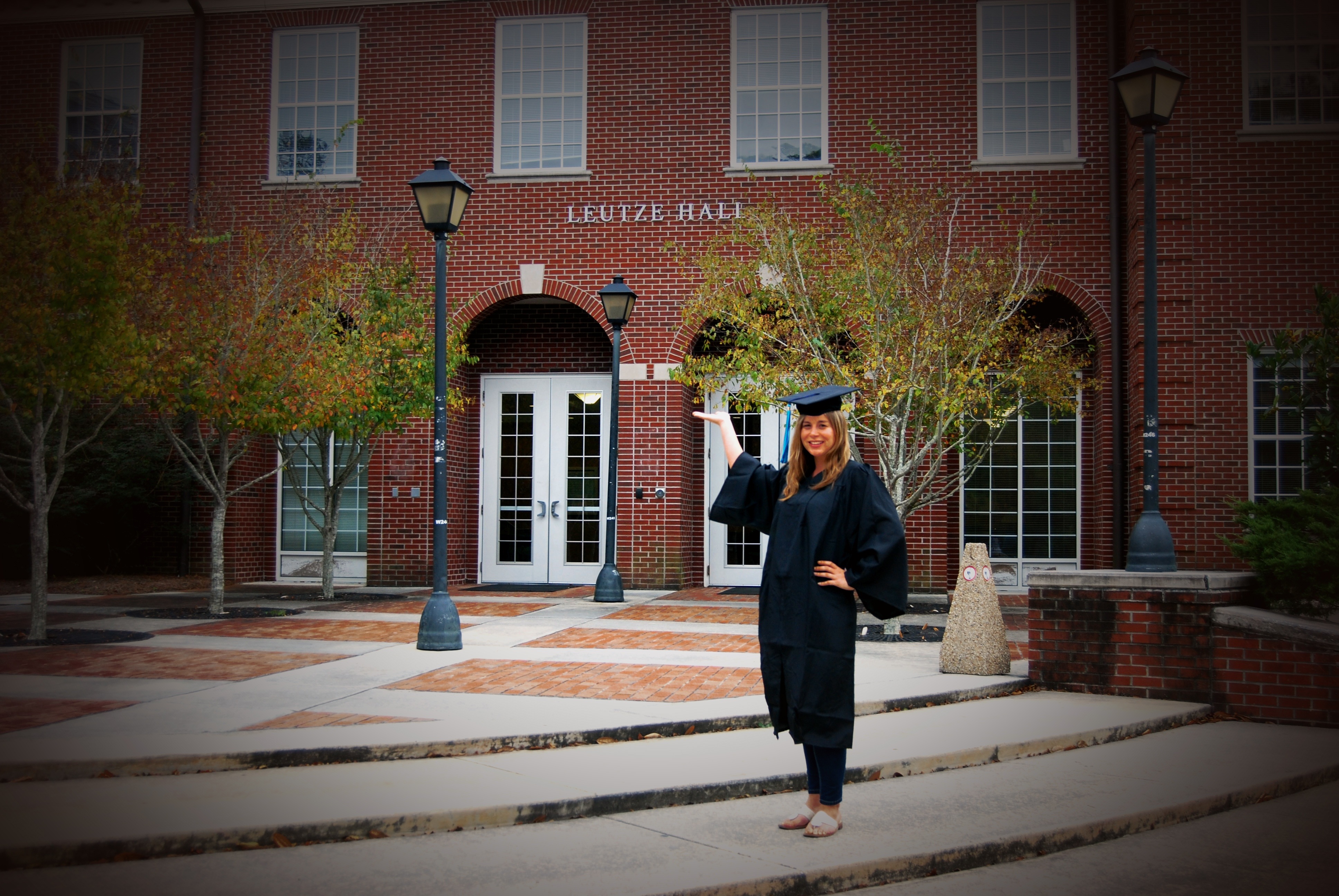
    As of late, I have been so consumed with final papers, projects, preparing for final exams and getting everything in order to graduate that I pretty much haven’t had any time to breathe. These assignments combined with forethoughts of graduation and what will become of my life in the days, months and years following graduation have been drastically weighing down on me, and quite honestly stressing me out. These past few weeks I have been keeping a running countdown until graduation day. I am currently 8 days and 12 hours away from putting my time as an undergrad in the rearview mirror. I am constantly reminding myself that this is my final semester and to “finish up strong”. This has proven to be my motivation over the duration of the semester. Perhaps this briefly illustrates how anxious I am to make the next-step transitions in my life or how ready I am to be done with school forever.

    Nonetheless, in my time spent cursing assignments and longing to graduate this semester I neglected to appreciate what the University of North Carolina Wilmington has done for me. It wasn’t until earlier this week that I had the time to clear and categorize all of my thoughts and emotions. It was in this instance that I had the opportunity to reflect and reminisce on my past four and a half years here at UNCW. After navigating through such significant memories I immediately kicked myself for being so quick to want to forget about them all. In my time here, I have established numerous relationships, friendships and have truly learned a great deal of information…and also forgot a lot. Whoops.

    Image

    After bouncing around a few different majors my Freshman and Sophomore years I found the perfect fit when my advisor recommended that The Department of Communication Studies may be an appropriate pathway for me. I was hooked from the first day of COM 105 when Dr. Weber announced that a “Communication Studies major is fit/qualified for nearly any profession he/she desires”. This notion reassured me that a field in marketing wasn’t entirely out of the question seeing how I initially did not meet the GPA requirements for the Cameron School of Business.

    I am grateful for all of the COM faculty here at UNCW. They have helped make my college experience informative and memorable while keeping things fun. Dr. Olsen’s COM 200 course taught me quantitative research methods which are essential skills to master as a marketing specialist and an effective communicator. Dr. Persuit’s Integrated Marketing Communication courses not only increased my awareness of the prevalence of brands in the world around us but also ensured me that a field in marketing is appropriate for me. The decision to take COM 400 (the Capstone Course) with professor Trimble, proved to be the most beneficial in helping me prepare for my professional track after college. Professor Trimble helped me get out of my comfort zone when it came to interviewing and in regards to the job application process. With these professors, and all other professors efforts I consider myself a truly well-rounded communication specialist. I wouldn’t have been able to do it without them!

    The communication studies department not only provided me with a “home away from home” in Wilmington but also furnished me with the knowledge that will allow me to excel in any of my next step endeavors. For that I am extremely grateful and excited to spread my wings, take flight and soar like a seahawk!

    -Parker Farfour

  • I Believe I Can Fly

    It’s hard to believe that a week and a half from today, I will be in my cap and gown, and the life I know as a student will be over. I will be graduating from the University of North Carolina Wilmington as a Communication Major, focusing in Advertising and Public Relations! It has taken me 5 ½ years, 4 schools, and 3 different majors to get to where I am now (let’s just say I like to experience new things…often). Wilmington, UNCW, and the Communication Studies department specifically has been the perfect fit for me and I finally feel at home, a place to stay. Although I no longer feel that I have the mental or financial capacity to stay a student, UNCW will always feel like home to me and Wilmington is where I hope to start my career!

    20131204-162923.jpg

    So at the moment, in between juggling my final projects for the six courses I am taking, I am also applying to jobs in Wilmington within the marketing field. I have always said that I would move away from Wilmington for the perfect job, but they would have to pay me enough so that I could travel back whenever I want! I hope to work for a marketing agency or firm, but an in-house position at a company is something I will consider as well. Unlike many other Seahawk peers I do feel ready to enter the “real world” and soar!

    20131204-163542.jpg

    Being a student in the Department of Communication Studies of UNCW is where I have grown and continue to grow into the young professional that I aspire to become. When I transferred to UNCW, I had most of my general courses out of the way so I jumped right into the steps to become a COM major! This included taking Introduction to Communication (COM 150) with Dr. Weber and Research Methods (COM 200) with Dr. Olsen at the same time, which didn’t intimidate me at all. It only confirmed I was in the right department with the right professors. What makes the Communication Department at UNCW so successful is the professors. Through my Public Relation courses with Professor Chin, I have learned how to keep pushing harder to get the results I want under strict deadlines. Through my Capstone course with Professor Trimble, I can professionally present myself to (and impress) employers with an outstanding resume, cover letter, portfolio and interview skills.

    The most influential professor that has made a huge impact on my life here is Dr. Persuit. From the moment I stepped in my transfer orientation, she caught my interest with this concept called IMC (Integrated Marketing Communication… duh), I took her class and I am hooked! Through the multiple courses I have taken with her she has not only taught me great insights on the many aspects of marketing but also on life in general. Ultimately she has inspired my creative passion for marketing! One quote from Dr. Persuit that I will never forget is “IMC’s goal isn’t to change attitude, it is to change behavior”; I have not only incorporated this within my marketing classes but throughout my life.

    20131204-151550.jpg

    So my experience at UNCW has been a little bit different than most. I didn’t enter as a freshman so I don’t have crazy dorm memories nor did I make my best friends here at UNCW. The experience UNCW did give me was a chance to expand my knowledge and practice what I would like to do with my life; and that is something that no one can ever take away from me! So thank you to everyone who helped me along the way here at UNCW, whether you are have been my professor, classmate, or just the barista at Port City Java in Randall, I appreciate it. I will always be a Seahawk at heart, I’m just spreading my wings and ready to fly!

    -Kelsey Raskob

  • Marketing for a Cause: One Pair of Shoes at a Time

    Whether or not you know what cause marketing is, there is a good chance that you have participated in it in one way or another.  Since cause marketing is the collaboration of a company with a specific organization or cause, which is something that many brands participate in, we have decided to focus on one particular well known company that uses this tactic. The specific brand that many people, maybe even you, have supported through cause marketing is TOMS.  TOMS is a shoe company that provides a pair of shoes to a child in need around the world every time that a pair is purchased.

    TOMS

    The idea of TOMS shoes came about when founder, Blake Mycoskie, visited Argentina and discovered children within the village were walking around barefoot. Determined to help, Mycoskie created the campaign “One for One,” that would “match every pair of shoes purchased with a pair of new shoes given to a child in need.” The company has had outstanding success, becoming nationally appraised and known for their good deeds. According to their website, TOMS has given 10 million pairs of shoes spanning over 60 countries. A motivating factor behind the TOMS brand is their demonstration of corporate responsibility through their desire to help others in need.

    The Theory of Reasoned Action makes a good connection with TOMS and cause marketing because it states that attitude drives intention which overall drives the desired behavior. The Theory of Reasoned Action also states that, “If the outcome seems beneficial to the individual, he or she may then intend to or actually participate in a particular behavior.” TOMS’ mission drives consumers to have a positive attitude towards the brand and an inclination to purchase their products because the outcome is helping children in need.  Peer groups, friends, family, role models, and celebrities also play an active role in influencing consumers to participate in a desired behavior. Consumers who have a positive attitude about a celebrity that advocates TOMS may in turn have a positive attitude about TOMS, which will increase their intention and actual behavior of purchasing their products.
    What are some other instances where you have seen companies and brands use cause marketing to sell their products?  Do you think people’s motivation to purchase TOMS shoes is more for the fashion statement and to look like a good person or to genuinely donate?

    -Aaron Love, Kara Zimmerman, Rachel Clay, Rebecca Hobbs

  • A Soda With A Cause

    Are you shopping for a cause this holiday season?

    They don’t call it the giving season for nothing. Around the holidays you see and hear it everywhere “Would you like to donate a dollar to ______ to help sick children today? It only takes a $5 donation to _______! Or, shop here! We’re a good organization! We support ________. ” That _____ has a name: cause marketing.

    According to The Nonprofit Times, cause marketing, in a broad sense, is when  “a nonprofit and for profit corporation partner together with the purpose of advancing the mission-related work of the nonprofit, and the marketing goals of the corporation.” We regularly see this through traditional cause-related marketing on a day-to-day basis (donation-with-purchase of a product/service), but it seems as though cause marketing during the holidays is especially pertinent.

    Do you feel as though companies that don’t partake in cause marketing are more rare than those who do? This holiday season, Coca-cola is doing the opposite of advertising, while still partaking in cause-marketing. Confusing right? Well check this out.

    Starting November 18th, Coca-Cola decided to cut all advertisement funds and donate the money that would be used for relief efforts in the Philippines from Typhoon Haiyan. The company still plans to partake in holiday ads soon, but the pathos link that the company is creating by helping out those devastated by the disaster is sure to boost sales. The company has raised $2.5 million for the relief already. Way to go, Coke.

    So how about you? Does the pathos-oriented approach presented by cause-marketing make you more vulnerable to purchasing a product, or is it just expected now-a-days?

    Morgan Jones, Jade Lester