Tag: IMC

  • “Checking In” to Spring Break

    Happy Spring Break! Many students have spent the last couple months (or longer) trying to figure out where their Spring Break time is best spent. If you’re like me, this preparation may have involved a thorough internet search to find the perfect hotel for your week off. An increasing number of hotel chains have discovered the perks of social media use and are developing ways to satisfy the needs and wants of their customers on an increasingly personal level.

    Social media sites such as Foursquare, Twitter and Facebook Places, allow a user to “check in” or log their current location. While some companies may be skeptical about the relevance of such tools to the business that they do, the hotel industry has discovered that these services create a greater feeling of inclusion and personalization to their guests. Now hotels can invite guests to “check in” both literally and virtually, completely committing to their stay. Another added benefit of location-based check-in tools is the ability to track and incentivize a guest’s stay. Hotels participating in incentive programs for social media have been known to use a variety of rewards to reach out to their social media circle; examples include anything from a discounted meal in the hotel restaurant to late checkout times for the final night of your stay. Some hotels have gone so far as to collaborate with airlines or credit card companies to create an unofficial “rewards program”; offering discounts and frequent flier miles for using your American Express card or staying at the Hilton.

    Of course with programs such as these, there can (and will) arise questions of security and privacy. Many savvy social media users are hesitant to place their exact location online. The flip side of this is that many users don’t want the world to know where they are NOT (for instance at home…protecting their belongings). While safety and security concerns are understandable, potential thieves and “bad guys” are not the only party with a vested interest in your location and personal information. Some of the aforementioned hotels have begun tracking mentions of their brand to create a more customized experience. For instance, say you book a night at a Marriott and tweet about how excited you are to stay there for your anniversary. With the use of these tools it’s not unlikely that you will open the door to find a chilled bottle of Champagne with a note from the staff wishing you a “Happy Anniversary”. Or, on a creepier note, a woman on the local radio the other day described checking into a hotel to find a wrapped dog bone and a note saying “Snickers misses you”, a response to her Facebook status the day before where she stated that she “ hate(s) to leave Snickers (her dog) at home when she goes on vacation”… To me, this was a little bit too personalized.

    As is typical with this type of marketing, it is necessary to find a happy medium between discovering a guest’s needs and invading their privacy. How far is too far and is there such thing as too personal? While this may not be a topic that concerns you too much while lounging on the beach in Florida or soaking up the culture in a foreign country, it’s important to keep in mind that while logging your location, you may be signing up for more than you recognize. So what do you think? Will you be
    “checking in” before you checkout this Spring Break?

    Lauren Habig

  • S.O.S.

    The night has progressed and you are about to make your move when the inevitable question arises, “do you have a condom?” This is the premise that Durex has based their new campaign on. The S.O.S. campaign is an “app powered” one-hour condom delivery service discreetly operating between 4pm and 4am. When one first runs across this ad they may think it is a parody, but this is a service that already exists in certain cities, such as Dubai. The company plans to further expand the campaign to more cities. In today’s busy world, everyone loves a delivery service. How else would we get our last-minute pizzas, packages, flowers…condoms? The new Durex campaign, launched by the Buzzman firm, is ingenious and definitely outside the realm of normal advertising. The unique aspects of this campaign clearly exemplify why this firm has been credited with the development of captivating campaigns in the past. Future endeavors should not be far behind when examining their exciting new usages of message, labels, and systems.

    S.O.S. (short for “Save Our Souls”) is globally recognized as a distress signal. Viewing the YouTube commercial on Durex condoms it is evident that the sense of urgency, emergency, distress (if you will) associated with an S.O.S can easily be transferred to something less immediately life-threatening.  It was genius to associate their entire campaign on the premise that this product and service is not only a service people may want, but a good they most definitely NEED!  The name itself alerts potential consumers of this product to the fact that it could be important for their lives.  Buzzman of Paris is the firm credited for the original development of this campaign, which may explain why Paris is the leading city in votes for implementation of delivery service (or is it because Paris is truly the city of love)?  Either way there is definitely potential for geographic growth.

    sos_condoms

    http://www.sos-condoms.com/

    Not surprisingly, YouTube is a vehicle for advertising both the product and service.  Social media is being adopted by most modern businesses as a way to connect with audiences on a personal level which allows them to identify and solve the needs and wants of their target audience. The sensual and provocative usage of filming in the commercial fits perfectly the “edginess” that the campaign strives for, while remaining appropriate to the standards of social media. Not only does this medium provide unlimited amounts of information, it builds brand image and is yet another way to gain valuable information about its consumer.  A win-win for Buzzman,Durex and the customer!

    Retailing is the sales of goods and services from businesses to the end users. Durex, in this retail plan, concentrates on its brand image and loyal consumers for selling the product itself (the condom) but this plan furthers the retailing process by integration of a new supply chain of their product.  Rather than purchasing their products by the counter at a pharmacy, or even online, the timeliness and personal service is considered.  Why should pizzas be the only show in town?  Condoms have hit the big time in this retail venture.  It should be interesting to see how this takes off.  The worst-case scenario is that Durex gets people talking, and their condoms “protect” Buzzman’s reputation for fresh ideas.

    – Zach AbramoCallie FenlonLauren Habig,  Alexandra HussMichael Nunes,Daniel Schaefer

  • Get Your Vote On!

    From commercials to infomercials, advertising and marketing in this day and age has become a completely different game than in the past. Lately, between the Super Bowl and Valentine’s Day, many Americans have been overwhelmed with advertisements and promotions that are attempting to make their company stand out from the competition. Whether it was simply trying to convince you to buy their soft drink or attempting to convince you to buy your girlfriend’s engagement ring from their jewelry store, sometimes it seems a little too forced.

    http://www.stikkymedia.com/blog/pepsis-20-million-dollar-social-media-campaign

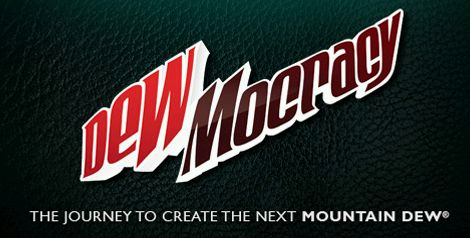
    In response to this tension,  marketers are always looking for innovative new ways to involve consumers in the production, promotion and selection of the product itself. This method has been used effectively before and proved quite fruitful for certain companies. In 2007, Mountain Dew began their “DewMocracy” promotion where customers get the chance to vote on new flavors, graphics, colors and names. To this day, Mountain Dew continues to create opportunity for customer interaction in their promotions and advertisements.

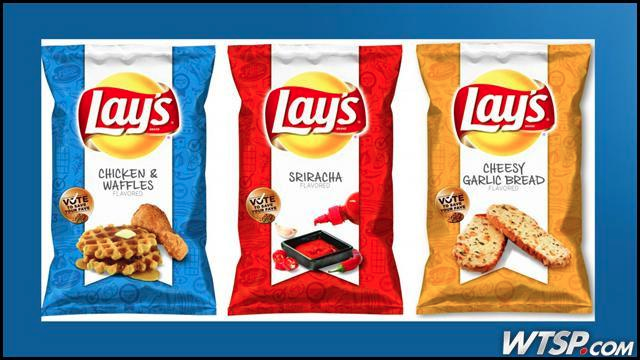
    Interactive promotional campaigns are ideally designed to benefit both the customer and the company. Lays potato chips are the most recent corporation to take this creative strategy and run with it. Lays has put together a multi-step process for establishing their newest flavor of chip. Originally, Lays invited consumers to submit their flavor ideas and let the public vote on these flavors on Facebook. At this point, the public has voted and Lays has narrowed the competition down to the top 3 public favorites. These flavors have actually been produced and are available for purchase for a limited time. While these flavors are available the voting will continue on Facebook and eventually one will be voted in and named the newest member of the Lays family.

    http://www.wtsp.com/news/article/297982/81/You-get-to-pick-the-new-Lays-potato-chip-flavor

    Taking a step back and evaluating this marketing strategy utilized by Lays, Mountain Dew and many other large corporations, it is clear that it is effective not only as a result of the customer interaction, but in a handful of other ways. Obviously if voting and discussion is taking place on social media, this is driving a ton of Internet traffic to each of the respective websites. Also, the customer involvement builds a relationship with the consumers and gives them the feeling that they are a part of the company and making important decisions. Finally, specifically for Lays and other promotions that offer the product for a limited time, this strategy causes a boom in sales with everyone trying the new product.

    Now that this promotion idea of customer involvement has been tried and proven many large companies are adopting these campaigns. Doritos, along with a few other companies, ran campaigns before the Super Bowl to have the consumers make and vote for which commercial would be shown during the big game. So despite the fact that we are still being consistently and constantly advertised to (and that’s not likely to change any time soon!) the benefits of running these promotions are clearly beyond the obvious boost in sales, this is relationship building at its finest!

    Zach Abramo, Callie Fenlon, Lauren HabigAlexandra Huss, Michael Nunes, Daniel Schaefer, Dann Williams

  • What’s That Doing There?

    After a long day of work or school most of us like to sit down and shut off the batteries. Some people (including myself) do this by
    enjoying a nice beverage and turning on the Netflix. The appeal of a service like
    Netflix is, of course, the elimination of the commercials that disrupt our viewing
    pleasure on live T.V. One night, I sat down and turned on The Office, I was
    instantly bombarded with company logos and products. As the actors go about
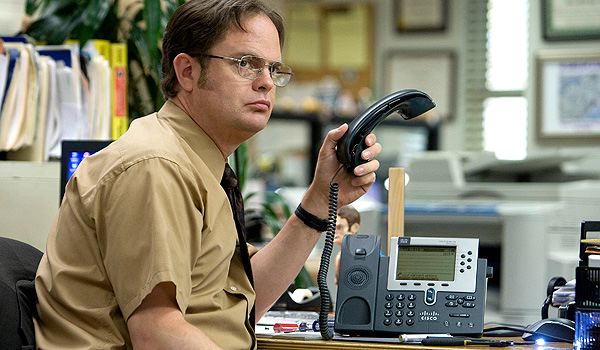
    their typical work day, the camera conveniently focuses on the Cisco Systems
    Telephone on Dwight’s desk and the HP logo on the computer that Pam uses as she
    hides behind her desk. These logos are not in the frame by coincidence, but
    rather they have been carefully positioned by the show’s producers. This discreet
    advertising strategy is known as product placement.

    Business dictionary defines product placement as “an advertising technique used by companies to subtly promote their products through a non-traditional advertising technique, usually through appearances in film, television, or other media.” This form of advertising is initiated through an agreement between a product manufacturer and whichever media company owns the program featuring the product. In the vast majority of product placement agreements the media company receives economic benefit as the manufacturers often pay a fee to have their product (or brand name) used, mentioned, or significantly featured in a program.

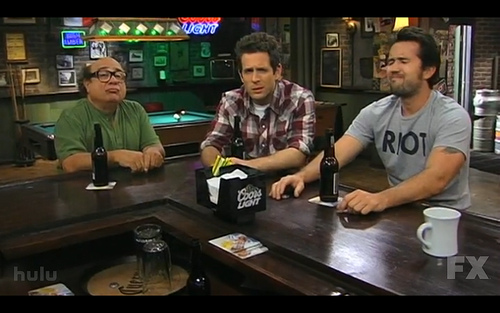
    Product placement is everywhere. A few notable shows that are known proponents of this technique are American Idol (Coca-Cola cups for all judges), It’s Always Sunny in Philadelphia (Coors Light consumption and signs prominently placed in the bar), and 30 Rock (which features multiple Apple products.) This form of advertising has been around for years and will continue to thrive as long as people keep consuming media. In this way, companies continue to ensure that viewers have plenty of exposure to their product, even if certain audience members have learned to maneuver around those pesky commercials.


    Michael Nunes, Daniel Schaefer, Lexie Huss, Zach Abramo, Callie FenlonDann Williams, Lauren Habig

  • The “Face” Behind the Letters

    Game night has long been a valued tradition in families across the globe, but with new technology some of the long-standing board games have been pushed to the side for virtual games on systems such as Wii and Xbox Kinect. Scrabble, for example, has been a part of the game world for over 60 years, but how often do families still bring out their Scrabble boards?

    Earlier this year, the advertising agency Pereira & O’Dell took over Mattel’s games account. This November, Pereira & O’Dell have released several 30-second spots in several different countries to bring back the association of Scrabble and fun. These advertisements bring personalities to three of the Scrabble squares: P, Q, and Blank. At first, the image of Scrabble pieces as faces on human bodies may seem a little strange. However, after viewing the advertisements a person may find themselves attached to the pieces.

    Each of the Scrabble pieces has their own unique personality. When you “meet Blank” you might notice that he seems to be a bit arrogant and definitely the life of the party. After all, everyone always wants to draw the blank square during the game, right?

    Q, on the other hand, is a bit of a loner. He has his heart broken by U and seems to be a bit timid. What is there not to love about the bashful, lonely Q? A viewer may almost feel guilty for hating the Q piece in the Scrabble game. It is heart-warming to see that, in the end, Q gets the girl.

    Pereira & O’Dell definitely get points for being clever with these advertisements. The strange image of the pieces having personalities seems to work, however, the question is: will the viewers relate to the pieces? Mattel wants to bring people together over their Scrabble game board for decades to come but only time will tell if it will actually work.

  • Have You Experienced the Rainbow?

    If you haven’t been to the Skittles website in a while (or perhaps, ever) now would be a good time to take a peek.  What you might expect to be a typical site, designed to provide advertisement and purchase opportunities, has undergone quite a facelift.  Unlike most sites, the website for Skittles has been reborn as a social media machine disguised as a blog.  Near the top of the page is the familiar Skittles slogan, “Taste the Rainbow.”  Scroll down a bit, and you’ll find an entirely irrelevant tweet from the Skittles Twitter account. @Skittles says, “It’s all fun and games until the chinchillas show up with the karaoke machine.” Next come a few phrases like “lace the train slow,” “trace the vein bro,” and “encase the faint glow,” all with coordinating pictures and all rhyming with the original slogan of “taste the rainbow.” Add a few quirky videos, more interesting tweets from fans, and many opportunities to share things via social media, and  you’ve pretty much summed up Skittles’ entire online marketing tactic.

    The Skittles commercials take on a similar level of oddity as their website.  Whether it’s a teenager catching “Skittles pox” from a “highly infected” friend with the message to “contract the rainbow,” or a guidance counselor eating Skittles out of a student’s unibrow with the message to “pluck the rainbow,” these commercials seem to be getting stranger and more extreme year to year.  So, do these weird messages work to promote their product?  Their 23 million Facebook fans, 47,000 followers on Twitter, and nearly 10 million views on YouTube would suggest that they do.

    As a product that has been a favorite with candy-lovers since their appearance in 1979, Skittles has little need for getting their brand noticed so much as keeping their brand relevant.  That’s exactly the idea behind their weird marketing.  By showcasing their social media followers on their website, and giving fans something different to talk about, Skittles is making people rethink what they already know about Skittles and driving them back to their brand.  The genius behind this tactic is that the product hasn’t changed.  What they are changing is stated right at the top of their site.  “Experience the rainbow.”  Skittles is changing the whole experience associated with their little chewy candies in a colorful shell to be more exciting and hilarious than before.

    What seems to appeal to consumers these days, especially to Skittles’ target market of pre-teens and adolescents, is the eccentric and the humorous.  Skittles has mastered both of these arts.  Not only are they staying relevant, they’re staying interesting.  As advertising trends continue to shift, Skittles will doubtless continue to meet the needs of their consumers and remain a favorite fruity snack to all.  The only question now, is what comes next.

    Ally Walton, Hannah Eure, Gene Lee, Lauren Habig, Erin Kiffmeyer

  • Starburst: A Pack of Contradictions

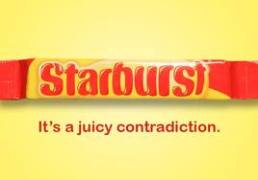
    The latest news on the Starburst brand is that Starburst has launched a new campaign where it focuses on “contradictions.” The most recent Starburst commercial plays on the candy’s “contradiction” of solid, yet with a juicy consistency. The company’s new commercials come off to be very strange, which is exactly the point. With all of the commercials that are constantly played throughout the world, more specifically the United States, it is getting increasingly difficult for advertisements to stand out among the others. In an effort to stand out, companies are creating commercials that seem to be strange but memorable. An example of one of these weird Starburst commercials is the commercial where a Korean man is portrayed as a Scottish man due to the bagpipes and kilt he is wearing. This man is standing with a child who is dressed the same way but eating a Starburst and states, “One contradiction eating another!” Another commercial consists of a screaming mime that is supposed to portray a contradiction. Clearly mimes are not supposed to talk. The most famous of these Starburst commercials though, is a commercial where a dog is riding in the car with a group of men. The dog has its back side sticking out of the window of the moving car, and one guy in the car claims that the dog is a contradiction for doing so, since normal dogs stick their heads out of windows. It is clear that this commercial was effective in at least making a memorable impact on consumers, whether the impact was positive or negative. The commercial’s growing popularity is displayed through the 43,900 results that appear on Google after searching “Starburst your dog is a contradiction”.

    ImageThis Starburst commercial was very successful; however there is much scrutiny that is coming from it. There are many articles and blogs published about how the people shown in these Starburst ­­commercials are not actually a contradiction. One article specifically, titled “Ass-Backwards Starburst Dog Isn’t Really a Contradiction” discusses how the people in these commercials have traits that deem to be opposites, but are not actual contradictions. Author Tim Nudd states, “Now, we get this new spot with a dog who likes to hang his ass out a car window—and he’s called a contradiction. Isn’t he really just a dog with an unusual preference?” There are numerous articles similar to Nudd’s, claiming that these commercials do not actually portray contradictions at all. Therefore, their whole message is distorted and their credibility is in question. Both sides can be argued extensively due to the fact that the word contradiction has many different definitions.
    Under the Dictionary.com definition, a contradiction is a “person, thing, or situation in which inconsistent elements are present”. Based off of this definition, these commercials would correctly portray contradictions. However, under other definitions such as, “a contradiction is two propositions used in combination where one makes the other impossible. It is something that is A and non-A at the same time. A contradiction, therefore, cannot exist in reality, since existence exists” would not consider the people or the dog in the Starburst commercials to be contradictions. These commercials are being closely examined for the accurate or inaccurate usage of the word “contradiction” by many viewers all over the world; however, this brand of candy’s new campaign theme, “Celebrating the contradictions that make life so interesting,” is capturing thousands and thousands of fans daily. The Starburst brand has also created an online “Contradictions Project,” which is seeking to involve fans all around the nation to log on to the Starburst Facebook page and submit common contradictions of their choice. For every contradiction a fan lists, that person will be added to the $250,000 donation, which is partnered with VH1’s Save the Music Foundation, to restore music programs across the country. Whether these new Starburst commercials are considered to be weird, incorrect, humorous, or just plain stupid, the reality of it is, their new theme is making the Starburst brand even more popular than it already was.

    Image

    Sasha De Vecchi, Lindsay Gallagher, Jay Reilly, Cary Welborn