Tag: Google

  • An “Augmented” Look Into the Future of Advertising

    Last week Google unveiled Project Glass, their latest developmental project set out to design and build augmented reality eyeglasses. Google upload a video to YouTube entitled “Project Glass: One day…”, which shows viewers what Project Glass could potentially look like. Project Glass would allow you to communicate with friends, schedule appointments, get directions, take pictures, and even hold video conferences all by using the augmented reality interface and voice commands. While this technology is in the earliest stages of development, Project Glass has the potential to be a realistic and marketable product in the future.

    While the announcement of Project Glass is only a week old, there is already concern about user privacy and advertisements. Google already uses search terms to customize advertisements, and are even beginning to push ads based on your location, so just how far would Project Glass go? Would advertisements pop-up in front of you if you are close enough to a store? Could marketers use where you go and what you look at throughout the day to better understand what type of consumer you are? The parody video below shows how pop-up ads with Project Glass might look if they were implemented:

    While this idea of “forced advertising” seems a bit extreme, it’s already happening with several other projects. Twitter now adds Promoted Tweets to your timeline, which are sponsored announcements from businesses that merge together with the other tweets from people you follow. Pop-up ads are common with free Android and iPhone apps, and some applications even send ads as a notification. Amazon sells discounted Kindle e-Readers with “special offer” advertisements that appear on your screen. It seems that with every new piece of technology, the first idea that is addressed is how to advertise on it. With Project Glass, the possibilities for customized advertising are much more personal. How will marketers adapt to changing technology? Will consumers be willing to sacrifice their privacy and accept interruptive advertisements in order to use Project Glass? Only the future will tell.

    -Hunter Wilson, Joshua Vester, Ashley Oliver, Molly Jacques

  • Don’t Abuse the Green

    Going Green. Go Green. Green Initiative. Green. Everything seems to be green these days. If a product isn’t “going green,” then that company might lose a certain respect from their market. But do the consumers even know why something might be called “green?”

    A company could easily call themselves green, but it could apply to so many different things. It could apply to their products, the amount of resources that they recycle, or even the lack of resources that they utilize in order to better the environment, and so on. Before a company does this though, they’re going to need to take a look at their customers from an integrated marketing perspective. Do their customers have a need for a product going green? How knowledgeable is their customer base on what it means to go green? Not only that, but what does going green mean to the company itself?

    When one really thinks about it, going green goes back to social capital and generalized reciprocity. Generalized reciprocity is as simple as picking up some trash that you see floating in the street before it goes into your neighbor’s lawn, or watching your friend’s belongings while they may use the restroom in an airport. Basically, the effects of the return might not be seen for a long time, and sometimes may be seen in a short amount of time. What drives customers to purchase green products may be because they feel they can do their part in trying to preserve the environment in which they live in. It’s that feeling of empowerment; the feeling of being able to make a difference.

    When it comes to making a difference, Google never seems to miss the opportunity. Google steps up to deliver a green movement that most people might not predict from the tech savvy company. To tackle their overgrown field at their headquarters in Mountain View, California, Google brought in 200 goats from California Grazing. The goats stayed for over a week eating away at the grass in an attempt to reduce the emissions brought on from mowers, reduce noise pollution, restore various plant species, and even fertilize while grazing. Not only does Google take an interesting perspective of going green, but their efforts certainly do coincide with general reciprocity.

    As we continue to use the limited resources that this planet has, it’s going to be interesting to see how different companies and organizations change their habits to sync with the minds of environmentally conscious consumers. However, they just may want to consider their reasoning before they abuse the idea.

    -Deji Adeleke, Carissa Niederkorn, Anna Kate Babnik, Tiffany Evans, & Katie Eagle

  • Super Brand: Chrysler’s Super Bowl Success

    Though the Super Bowl commercials are known for their celebrity appearances and (sometimes) hilarious gimmicks, rarely do the viewers get a look into the heart & identity of a company while also being entertained. Last year, Google’s “Search Stories: Parisian Love” set a new standard for showing Super Bowl viewers what a company’s product actually did while also making a touching commercial that triggered an emotional response.

    Google didn’t have a spot in this year’s game, but one company capitalized on using the ad time to set a definition for their brand and that company was Chrysler.  Chrysler’s lengthy 2-minute spot focused on defining the building blocks of their brand’s identity.  Although the commercial was essentially a straight minute of voice-over narration, the use of the urban backdrop of Detroit and celebrity endorser Eminem’s riff for his mega-hit “Lose Yourself” still provided viewers with a chilling emotional response.  Chrysler may have been using the commercial to announce its new 200 model, a “luxury” car, but the ad focused primarily on the American grit and hard work that goes into each and every one of its vehicles.

    During a time when America is constantly being classified by how behind we are in the global marketplace, Chrysler chose to define its brand as purely American. Everything from the visuals, to the voice over, to Detroit born & raised celebrity Eminem provided a united identity for Chrysler that culminated in the company’s new tag line: “Imported from Detroit”.

    Anna Kate Babnik, Katie Eagle, Deji Adeleke, Tiffany Evans, and Carissa Niederkorn

  • Not So Fast Apple

    Believe it or not, Google is nipping at the heels of Apple in smart phones and tablets. While in some circles Apple has won the popularity contest with Blackberry they have had some serious competition from Google’s Android network. According to Eweek.com 2,200 application developers were polled by Appcelerator and IDC. The polling revealed that 87 percent of responders were very interested in writing apps for smart phones compared to 92 percent for the iPhone. The iPhone is still king in the market place we are starting to find that application developers are eager to work with the Android network. There is still growth for the Android in the tablet market.

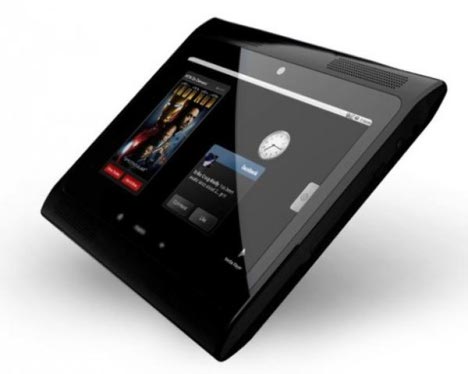
    The Google Android 3.0 Honeycomb was introduced at the 2011 Consumer Electronics show and is going to make a splash in March 2011. Respondents from the Appcelerator-IDC say they are very interested in developing for the Android tablets. They claimed that price was the most important factor, and most want to develop for the Android 3.0 Honeycomb. As you can see the Honeycomb’s popularity keeps growing daily before its release. The most impressive part about the Honeycomb is the tab browsing which you can sync with your Google Crome Bookmarks. The selling point for the New Android tablet is multi-tasking.

    It seems that 2011 is ushering in new competition for Apple. Google is growing by the minute and while I love the versatility of my Blackberry the Android phones seem to have a lot of potential. Apple is on top of the market, for now, but this could be a big year for Android. The brand competition between Apple and Android is something we will be focusing on all semester, and as Google continues to grow I expect Apple will adapt to its market.