Tag: Ethics

  • Personal Preferences vs. Employer Requirements

    Six weeks until graduation here at UNCW. Ask any senior what’s on their mind and I can almost guarantee it has something to do with employment – resumes, cover letters, interviews, portfolios.

    It is our goal to make a good impression on our potential employers in every form – in person, on paper, and increasingly important, online. Searching someone’s name can yield a lot of information – sometimes too much information.

    In the COM Department, many students will enter fields where managing an online presence is part of their job responsibility. Here is where we enter the public versus private debate. We have been told that our social network sites should be kept public so that prospective employers, especially those in the marketing field, can see what we post about, how often we post, and if we’re keeping up with the latest trends. But what if companies aren’t making the public or private view a personal preference? What if they are demanding access to your accounts? Other than directly asking for your log in information, employers are also asking applicants to friend a human resources manager, or log in to a company computer during an interview.

    American Civil Liberties Union (ACLU) attorney, Catherine Crump said: “It’s an invasion of privacy for private employers to insist on looking at people’s private Facebook pages as a condition of employment or consideration in an application process.  People are entitled to their private lives. You’d be appalled if your employer insisted on opening up your postal mail to see if there was anything of interest inside. It’s equally out of bounds for an employer to go on a fishing expedition through a person’s private social media account.”

    Facebook’s privacy officer, Erin Egan, also weighed in on the issue: “In recent months, we’ve seen a distressing increase in reports of employers or others seeking to gain inappropriate access to people’s Facebook profiles or private information. This practice undermines the privacy expectations and the security of both the user and the user’s friends. It also potentially exposes the employer who seeks this access to anticipated legal liability.”

    Much of what these employers are doing could be illegal. When interviewing, every human resource staff member knows that some topics are strictly off limits. Asking one of these off limits questions could put your company at serious risk for being sued for discrimination. Yet by using to social media investigation or review, this kind of off limits information can be collected about a potential employee even before their interview.

    Here are some examples of questions employers cannot ask:

    –   Are you married?
    –   How old are you?
    –   Do you have children? If so how many and how old are they?
    –   What church do you attend?
    –   Do you belong to any social or political groups?
    –   Do you suffer from an illness or disability?
    –   Are you taking any prescribed drugs?

    And for women specifically:

    –  Do you plan to get married?
    –  Do you intend to start a family?
    –  Are you likely to take time off under the Family and Medical Leave Act?

    McNees Wallace & Nurick LLC describe the issue as “Tempting Fruit from a Poisonous Tree”. They give the following example:
    Applicant – Alex Jackson – catches your eye. Excellent resume, degree from a New York Ivy League school, published in trade magazine, active in community, and has excellent references. You decide to pull their Facebook page to get a better feel for the applicant. You find Alex is a 42 year old female, active in the Catholic Church, recently married, and has one year old son. A recent posts says “Please pray for my mother as she recovers from her most recent bout with cancer.”

    Just like Alex’s, your profile probably reveals a lot of the same information. In just a matter of a few clicks, race, age, religion, gender, and medical history have all been revealed – and are all illegal questions for an employer to ask. In a worst case scenario, an employer could even get sued under a variety of Acts if one felt such factors contributed to swaying a hiring decision.

    Social media continues to blur the lines of public and private. Be prepared for your interview – know what questions are likely to be asked, but also know what questions you don’t have to answer. How do you feel about employers requiring to see your accounts? Acceptable or infringing? Where should the line be drawn? Is there a compromise that can be made?

    – Savannah Valade

    Make sure to keep up with the blog this week as the team explores more employment trends in preparation for COM Studies Day this Friday. Students and alumni are encouraged to attend the informational panels, fashion, and networking events that will take place throughout the day. This is a great opportunity to learn, ask questions, and get advice . For those who cannot attend the events, follow the IMC Hawks here on Twitter as we will be live tweeting, as well as live blogging, throughout the day’s events.


  • Igniting Your Inner Marlboro Man

    Image

    On January 10, Eric Lawson, an actor who played the “Marlboro Man” in print and outdoor advertising for the cigarette brand from 1978 to 1981, died from chronic obstructive pulmonary disease, commonly known as COPD—a disease frequently caused by smoking. Lawson was 72.

    Lawson isn’t the first Marlboro Man to die from a smoking-related disease. At least three other men who acted in the iconic campaign died due to causes linked to smoking cigarettes. David Millar died from emphysema in 1987, Wayne McLaren from lung cancer in 1992, and David McLean from lung cancer in 1995. McLean’s widow sued Philip Morris in 1996, claiming McLean had to smoke up to five packs of cigarettes per TV commercial filming. TV commercials for cigarettes were banned in 1971.

    The rugged, masculine Marlboro Man campaign was introduced in 1955 to market Marlboro to men, because at the time, filter cigarettes were regarded as feminine. The campaign ended in 1999, when the use of humans and cartoons (see Joe Camel) were banned as a result of the 1998 Master Settlement between tobacco companies and the state attorneys general. Today, cigarette advertising is primarily in magazines and retailers.

    Now, the very product the Marlboro Man advertised is ultimately taking away the actors’ lives. After he hung up his hat for Marlboro, Eric Lawson was an anti-smoking advocate, appearing in a public service announcement and a segment on Entertainment Tonight about the negative effects of smoking.

    Image

    Looking back at the cigarette ads of yesteryear, they definitely weren’t ethical, but they sold a lot of cigarettes. The Lucky Strike ad from 1930 claims a pack of Luckies protects against obesity. Today, we are more educated and know the real harm cigarettes cause. The percentage of adult smokers in the U.S. has dropped from 43 percent in 1964 to 18 percent today. (http://www.pbs.org/newshour/bb/health/jan-june14/lushniak_01-12.html)

    With the rising popularity of e-cigarettes, brands such as Blu are taking a “tough and masculine” approach. Does this ad remind you of something?

    Image

    Advertising for e-cigarettes does not fall under the same regulations as tobacco advertising because the product does not contain tobacco. However, e-cigs have not been proven safer than traditional cigarettes. Did Blu make an ethical choice by channeling Marlboro’s now-infamous campaign that made Marlboro the most popular cigarette brand in the country? Blu is a young brand that is advertising in a fashion similar to Marlboro did when it was new. If e-cigs are found to be not at all safer than tobacco cigarettes, should they be subject to the same regulations? What will it take to regulate e-cigarette advertising? These are questions to ask about the ethical implications of cigarette advertising today.

    -Nathan Evers

  • You can’t have your Coke and drink it too

    It’s one of the pillars of successful marketing, target your audience. Individualizing ads to particulars groups or regions of consumers ensure that messages have the most impact. But what happens when a company features a controversial scene in a spot, then removes it for some audiences and not others? Good marketing move or failure to take a stance?

    In its newest global campaign, “Reasons to Believe” Coca-Cola set out to inspire consumers that no matter what happens in life, it’s those small happy moments that make life worth living.

    Check out the commercial below.

    In most European countries the ad contains a scene of two gay men holding hands in front of their wedding party. However, in the Irish version (the video below) the scene has been replaced to feature a bride and groom.

    The Irish LGBT publication, EILE Magazine, brought attention to the issue, calling the removal an “inexplicable move”. In response to the criticism, Coca-Cola said that the advertisement had been tailored to individual markets so that the ad resonates with the people in each country where it is shown. The company defends the decisions saying that grooms were excluded from the Irish version because gay marriage is not legal in the country. EILE Magazine claims the Coca-Cola reasoning moot. The footage of the two grooms is known to be a video clip from a same-sex union ceremony in Australia – equivalent to a civil partnership in Ireland. Yet gay marriage is also illegal in Australia, but shown there. EILE claims the spot should have been suitable for Ireland as well.

    Coca-Cola has unequivocally made public their supporting stance on same sex marriage. Since 2006, the Human Rights Campaign continues to award Coca-Cola with a 100 percent ranking of their company polices and practices regarding LGBT. The Coca-Cola Company notes on their website, “To achieve a perfect score, companies must have fully inclusive equal employment opportunity policies, provide equal employment benefits, demonstrate their commitment to equality publicly and exercise responsible citizenship”

    Many are saying that Coca-Cola’s recent actions were hypocritical. Coca-Cola claims to support gay marriage, but their choice to remove a gay marriage scene from a commercial in Ireland, in which law does not prohibit such imagery, is misleading of the company’s values. Similarly, another beverage icon, Starbucks, has also gained attention for their hypocritical actions.

    Bryant Simon discusses the company Starbucks in his book Everything But the Coffee. Through his research he comes to discover that Starbucks isn’t delivering what they are promising in their brand – good coffee with little environmental impact. Claiming to buy fair-trade coffee from Rwanda and Nicaragua farmers, Starbucks was actually buying from bigger farmers and only buying 5-6 percent of fair-trade out of all the total coffee purchases.

    Much like Starbucks claiming to be environmentally friendly yet not taking the necessary steps in order to be green, Coca-Cola’s actions were just as misleading; claiming to support gay marriage yet removing a scene from one version of a commercial for the sole purpose of trying to please everyone.

    As future and current brand ambassadors we have to remember that every decision we make, including company policy decisions, become an integral part of brand, and when decisions are made that contradicts that it hurts the brand.

    On the other side of things, as consumers (and as Simon states in his book) we have to remember pursuing “solutions to highly complex social problems through buying and buying alone” doesn’t fix the problem or change the ideology. We have to stop relying and believing that buying certain brands is going to change a social issue.

    So, does Coke’s decision to take out the gay marriage scene hurt its brand identity? Should companies take stances on social issues? What practices do you follow to make sure this brand conflict doesn’t occur in your company or with your clients?

    Savannah Valade, Caroline Robinson, Elizabeth Harrington

  • The New American “Diet”

    If you haven’t dined out, visited the drive through, or stocked up on packaged foods in the past week, I applaud you.  For the rest of us, with too little time, too much to do, and tight budgets, these can make up the majority of our diets.  Let’s face it, eating and cooking fresh can be pricey, and watching your produce waste away in the refrigerator is a little bit depressing.  In a country overrun with obesity and simultaneously fascinated with eating better, lighter options in stores and restaurants have become relatively commonplace.  So if we’re all buying the low-calorie options, why aren’t we getting thinner?

    Diet Coke, turkey burgers, and yogurt parfaits are only a few of the products often advertised and consumed as healthy alternatives to their higher calorie counterparts, but items like these can be the downfall of our healthy lifestyles.  Coca-Cola is a large offender, especially with their “all calories count” message in a recent anti-obesity ad campaign.  This campaign essentially highlights the improvements to Coca-Cola products and frames their beverages in a way that attempts to diminish their reputation as one of the biggest causes of obesity.

    Along with this beverage super-star, fast-food chains like McDonalds have focused ads on their lighter fare, restaurants advertise low-calorie menus, and snacks are packaged in smaller servings. The problem is, not all calories are equal, and not all low-calorie foods are healthy.  These companies position these products for the average American, looking to make improvements to their diet without much hassle, and it works.  Why you might ask?  It’s not because we don’t think about the choices we make, or are easily fooled.  It’s because advertisers utilize the fundamentals to communicate their messages.

    Advertisers are truly the kings and queens of Aristotle’s appeals of ethos, pathos, and logos.  They appear credible with FDA nutrition facts printed clearly on each label, appeal to our emotions by loading their ads with language and messages about healthy living or weight loss, and petition our logic with facts about what goes into different items and how the calories add up.

    This isn’t to say that most people will be quick to believe that a McDonald’s hamburger is part of a healthy diet because it’s part of the “under 400 calories” menu.  However, for those of us looking to do the best we can with the time and budgets we have, these ads can play powerful roles in decision-making.

    The big question about these types of ads, is whether or not it’s ethical to allow unhealthy products to be represented as the means to a healthier life.  For many people, shopping and eating well is a guessing game, largely impacted by packaging, print, and television ads.  In a world where being overweight or obese can cause health problems, social anxiety, and even death, should companies be required to avoid misleading their consumers?  It’s an age-old question unlikely to be answered anytime soon.

    Ally Walton

  • Losing It All After Winning Big

    Last week the U.S Anti-Doping Agency released a thousand page report on Lance Armstrong’s doping scandal.  The now retired cyclist hit headlines hard in late August when he was stripped of all seven of his Tour de France medals and was issued a lifetime ban from cycling. Since the story released, Armstrong’s four major lucrative sponsors have taken away their sponsorships one by one.

    Nike dropped Armstrong earlier this week due to his disgrace.  Nike released this statement “Due to the seemingly insurmountable evidence that Lance Armstrong participated in doping and misled Nike for more than a decade, it is with great sadness that we have terminated our contract with him.”

    Image

    The brewing company Anheuser-Busch also said it was ending its relationship with Armstrong when his contract expires at the end of this year.  Oakley Inc. and Radio Shack are waiting for the final decision from sport’s international authorities before conducting their final decision.  The other two sponsors that have immediately ended their relationships with Armstrong are Trek Bicycles and FRS, the energy drink maker.

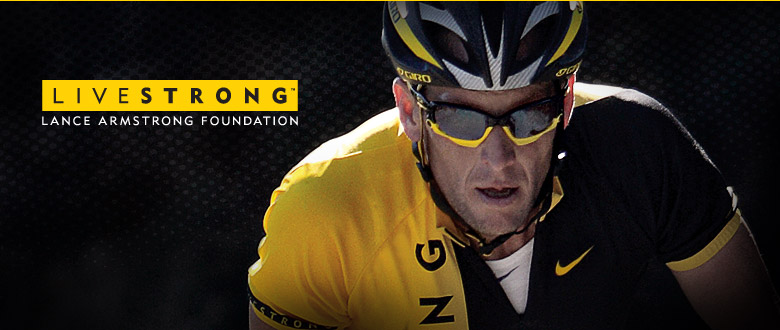
    Lance Armstrong has stepped down as chairman of the Livestrong cancer support charity that he founded.  His foundation is widely known for the 70 million yellow wristbands that were distributed worldwide.  His charity raises money not for research but to help cancer survivors with employment, financial obligations, insurance problems, and access to care, especially in third world countries.

    Image

    So far, donations have increased despite the Armstrong’s scandal.  Lance Armstrong released a statement on Wednesday stating “To spare the foundation any negative effects as a result of controversy surrounding my cycling career, I will conclude my chairmanship.”

    The road for Armstrong seems far from over.  Currently, the Olympic Committee is considering taking away Armstrong’s 2000 Olympic bronze medal, which will surely endure more loss and humiliation for him.  Predictions say he will continue to lose more sponsorships and countless lawsuits will be released of breach of contract between the companies and Armstrong.

    Meaghan Beam, Jessie Butner, Zach Abramo, Jack Lane