Tag: Business

  • A.C.E. – Your Source for Campus Entertainment

    Please nod your head if you have ever taken another route to class pretending to be on your cell phone or completely ignoring someone who was trying to give you an event flyer. If you give your computer screen a nod, we applaud you.  However, if you are like 99% of the student population at UNCW and nodded your head–we understand.

    There are over 250 student organizations vying for our attention, membership and time so how do we pick what to attend? Our choices depend on how, or if, we hear about the event and how creative the marketing is. The Association for Campus Entertainment is the university’s student programming board Did you enjoy Hoddie Allen last year? That was ACE. What about when Maci Bookout from Teen Mom was here in the spring? That was ACE too.

    In the midst of everything college kids have going on, ACE provides an outlet for free entrainment. But just like every other student organization, they have to compete for your time as well. Integrated Marketing Communication, IMC,  allows us to diversify the means by which we achieve our marketing goals. A public relations campaign? Check. Social media presence? Also check. Cool and engaging advertising? Also IMC.

    ACE does this through an array of promotional tools each year, the first being through giveaways what college student doesn’t like free things? This year ACE gave phone wallets, Croakies, car USB adapters and staplers. This may seem like a mishmash of items but each one served a purpose: to be seen and get the ACE name known. Whether it is letting a classmate use the ACE braded stapler, or paying for food in Wag as you pull your OneCard out of your ACE branded phone wallet, ACE is marketing their brand. The goal is to increase the number of times a student sees a brand and how they associate it—hopefully in a positive light.

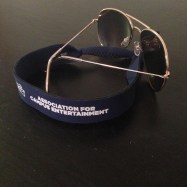
    image1

    There is more to promotions than simply getting a name out; ACE must also promote their events. There are the standard campus marketing methods such as banner, chalking and flyers, but in order to infiltrate the calendars of college students, you must take efforts farther. ACE is a brand that thrives on creative promotions, whether this be acting out a scene from an upcoming movie in the campus theatre or handing out paint brushes across campus for a Cheerwine and Design event. There is always something being passed out.

    A successful marketing campaign goes beyond creating and implementing the campaign. The ultimate goal of IMC, is to not only change one’s beliefs, but to change his or her actions. Whether this be successfully convincing students to change their plans and attend an event or sign up for ACE, we want them to act on our suggestions. So how do you think ACE stacks up, do you hear about their events through traditional means of advertising or through creative promotions across campus? Furthermore – how do you prefer to be wooed into coming to an organization’s event or do you organically decide to attend? Let us hear your thoughts and comments blow!

    -Amanda, Daniel, Kendall, Meleah and Luke
  • Wilmington: Just Brand It

    Beginning last summer, the City of Wilmington along with New Hanover County and the surrounding beach towns have attempted to develop a brand for Wilmington. Various groups within the community might have different perspectives on what this southeastern North Carolina town is all about, but officials involved believe there must be a common theme amongst the groups. They also have mentioned that the goal is not to “re-brand.” They have clearly stated that it is a first time effort to create an effective message of what Wilmington is to outsiders.

    Beth Schrader, strategy and policy manager for the county believes that branding the town gives you an initiative you can sell. Once there is an established brand, outsiders will know what exactly sets Wilmington apart from other southern historic towns.

    UNCW business and marketing students and professors have played a huge role in this process. They have aided in research and surveys, which has been an exciting opportunity for them to engage in applied learning.

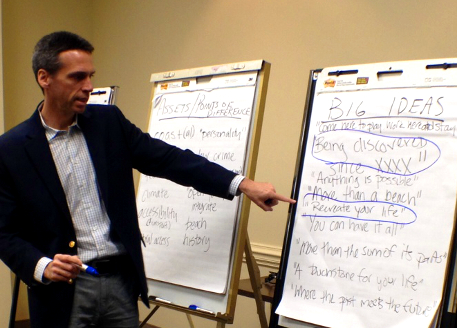
    Recently, the Brand Identity Leadership Team met to continue the mission of branding the Wilmington area. Newer ideas include Wilmington being a place to “discover” as well as the idea to market Wilmington as a “hidden treasure.”

    Image
    Tom Porter, chairman of the marketing department at the UNCW Cameron School of Business, presents rough ideas for the mission to brand Wilmington. (Photo from PortCityDaily.com)

    The idea of attempting to brand an entire town might seem strange at first glance. But according to CEOs for Cities article, “Branding Your City,” cities have always been brands. When you think of our globalized world, every place has to compete with every other place for attention, which creates the need for a brand identity. Cities need to set themselves apart from other cities in order to attract the world to that city. Branding is a tool cities can use to define themselves, which is necessary to have a long-lasting impact. The brand will influence and shape the world’s perception of a town.

    Branding a city is an important and commonly used tool, but the question that remains is does Wilmington already have a brand? Will the initiative be able to successfully brand something that has already existed for so long?

    What is the Wilmington brand to you? Comment and let us know!

    – Rachel Gracy

  • Reaching New Heights in Creativity

    How many billboards do you take notice to on your daily commute? I honestly could not recall the last one I saw or what it was promoting. I am sure I am not alone in this realization. These strategic advertisements are lined down the highway like dominoes, yet many do not even double take to see what they have to offer. That is the point, right? To be noticed? I am sure that advertisers do not spend thousands of dollars on outdoor advertising just to have it passed by without a second thought. However, surprisingly 71% of drivers notice billboard ads according to an article entitled The Strange Impact of Billboard Advertising. With that being said, agencies have some ammunition for their brands if executed correctly. Even though we may not remember every advertisement we pass, we are subconsciously taking it in. The challenge is to effectively present your brand so that they work as effectively as they are intended to. Here are a few that are quite bold and competitive:

    Okay, so we know, statistically speaking, they work well but the question is: what makes billboard advertising effective enough? The whole purpose in this choice of advertising is not to be informative, I mean we only have about 4 seconds in the drive by to take it all in, but rather to create a lasting impression of the brand. Stephen Littlejohn puts it well in his textbook on “Theories of Communication.” In chapter 7 he discusses the idea of ‘Message Reception and Processing.’ This theory implies that a communicator has 2 levels of intent: informative intention and communicative intention. Informative intention hopes that the audience is made aware of something and communicative intention being that the audience realizes the purpose of it. That is the goal with outdoor advertising. Within a matter of seconds the viewer should be visually made aware of the brand or product. Then, the advertiser has hopes that they made a big enough statement that they remember the brand, even if it is triggered in the depth of our sub-conscious somehow.

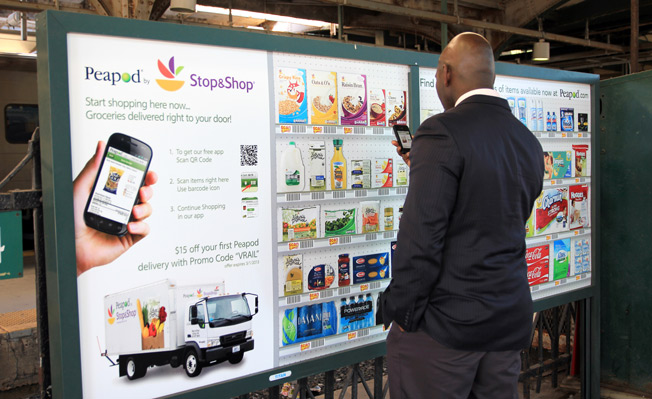
    What does this mean for advertising? In order to make the impression on people that they hope for, advertisers have to aim to be engaging, bold and informative all at the same time. The brands and products are resting on a visual representation…telling a story. Some of the ones seen today have accomplished just that and have been very beneficial to maintaining their brand names.  For example, the creative “Peapod” allows those on foot to access an interactive screen when they need to complete a quick grocery shop. Shopping on the go has never been easier. Image

    The target audience for this display is those who lead busy lifestyles and don’t permit much time to complete daily necessities. This type of shopping is entertaining and even seems enjoyable. The user-friendly screen only requires a smartphone, the free ‘Peapod’ app, and a quick wave over the bar code to scan the image above it. Instant groceries are right there, only a scan away.

    Needless to say, advertising is making some huge improvements in their promotion of products via billboard ads. The article 40 Absolutely Brilliant Billboard Ads displays images of some of the most recently developed billboards which have been highly effective.It seems that Outdoor Advertising is finally reaching new heights in creative presentation, communicating to the public that they are something worth looking at!

    -Katelyn Alston

  • Going Green, Brings Green

    Brands can promote themselves through almost any medium nowadays. Pens, stickers, posters, billboards, you name it, you can put your brand on it. Planet Earth Promotions is a company that is designed to help brands promote themselves in an eco-friendly way. There is constantly increasing awareness about environmental protection and a greater consciousness about how important it is to protect these environmental and natural resources. Planet Earth Promotions is leading the way for this “EcoSmart” promotional item trend.

    Planet Earth Promotions’ mission statement indicates that their “goal is to help companies and corporations around the nation proactively enhance their brand through the use of environmentally conscious and educational promotional items”. They have certainly delivered in this respect. This company has been ranked #1 in promotional advertising for the past ten consecutive years. Not only are they paving the way for other companies, they have become a greatly successful brand that is little to no impact on the environment. Planet Earth Promotions has built a successful brand on a trend that is becoming increasingly important as time goes on. This brand is very strong considering they have remained at the top of the list from Arizona Magazine for the last ten years and they are here to help other brands.

    They are able to offer many alternatives for companies to help cut back on environmental damage by providing recycled goods, information about recycling and environmental days in the USA and tips to bring pollution down. With so many companies shifting focus to being the “EcoSmart” companies and LEED (Low-energy electron diffraction) certified, it is a challenge to stay on top. Planet Earth Promotions has paired up with other environment-friendly companies such as AWEA (American Wind Energy Association) and Women’s Business Enterprise to built a very powerful and successful brand and continue to pave the way for other companies looking to create environment-friendly products and solutions for all varieties of businesses.

    – Julius Roberts, Leanna Marshall, Leslie Tyler and Bryce Koonts

  • Get your Fuzzy on!

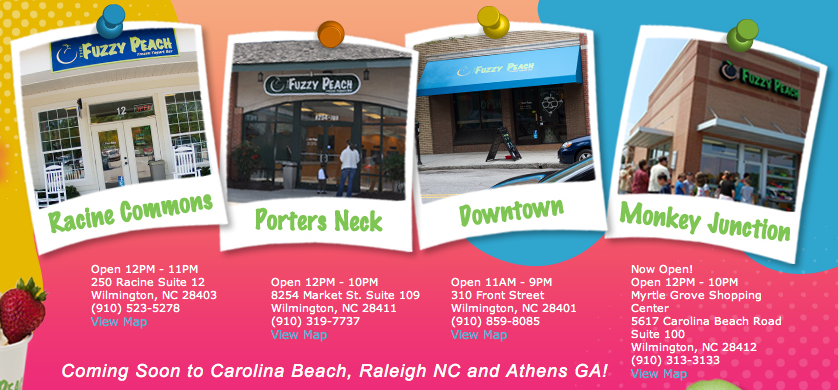
    Looking for something new and exciting in your life?  The Fuzzy Peach is a self-serve frozen yogurt bar that allows their customers to be as creative as they’d like. Located in Racine Commons, and in three other sections of Wilmington, The Fuzzy Peach offers eight different flavors of frozen yogurt each day. Also available are rows full of toppings including fresh fruit and candy to make each yogurt creation unique. The Fuzzy Peach is a healthy alternative to dessert, but still satisfies the sweet tooth that we all have. Customers pay by the ounce, so they’re in control. Add on ten toppings, or maybe just one, but in the end the customers will have exactly what they’ve been wanting. Rocco Quaranto, Wells Struble and Jason Nista graduated from the Cameron School of Business from the University of North Carolina Wilmington in 2008. The trio met their freshman year in the dorms and ran track together. They graduated and continued on to peruse employment in the corporate field, but it didn’t take long before they were bored with their jobs and wanted something new and fresh. The young entrepreneurs came back to Wilmington, NC two years after graduation and decided to start their own business named The Fuzzy Peach. They got the idea of a frozen yogurt dessert bar from California and thought it would be a business that would be successful in the Wilmington market.  Needless to say they found a niche and have struck gold in the Wilmington area.   Did these young entrepreneurs place their yogurt shop in Wilmington by chance, or was it a strategic planned marketing move?  Their knowledge of the Wilmington area and their locations for their stores leads us to believe it was a strategic move on their part.  Their placement of the first Fuzzy Peach store is conveniently located close to UNCW, and their probable target audience is college students.  Through word of mouth and advertising, this location became a popular spot for college students in Wilmington craving frozen yogurt.  Once that location became a hit, they opened up their second location in downtown Wilmington.  This location offers free frozen yogurt to a different company downtown and their employees on certain Fridays advertised by the store.  This second store’s target audience is businesses and professionals working in the downtown Wilmington area. However, they are also still open late for young students wandering downtown.  Their Monkey Junction location is their third, and attracts people from the surrounding areas much like their newest location in Porter’s Neck.  A Fuzzy Peach yogurt store will be coming soon to Carolina Beach, which will further expand their target market.  Each location offers specials, such as T-Shirt Tuesday where customers wearing a Fuzzy Peach shirt into the store will receive 10% off their frozen yogurt purchase.  The future seems very bright for the three entrepreneurs who have brought a frozen yogurt empire to the Wilmington area. -Kelsey Bendig, Brooke Keller, Andrea Blanton, Brian Burch

  • Foursquare U

    Back before texting and tweeting, students on college campuses relied on announcement boards and gossip floating in the student center to find the popular hang out spots or know about the latest buzz. Today, news about and around campus is instant. Most major universities have embraced social media over the past decade and are using it to reach college students in a unique way. But how can universities gain access to real-time social trends on campus? Welcome to the new and evolving world of geosocial networks.
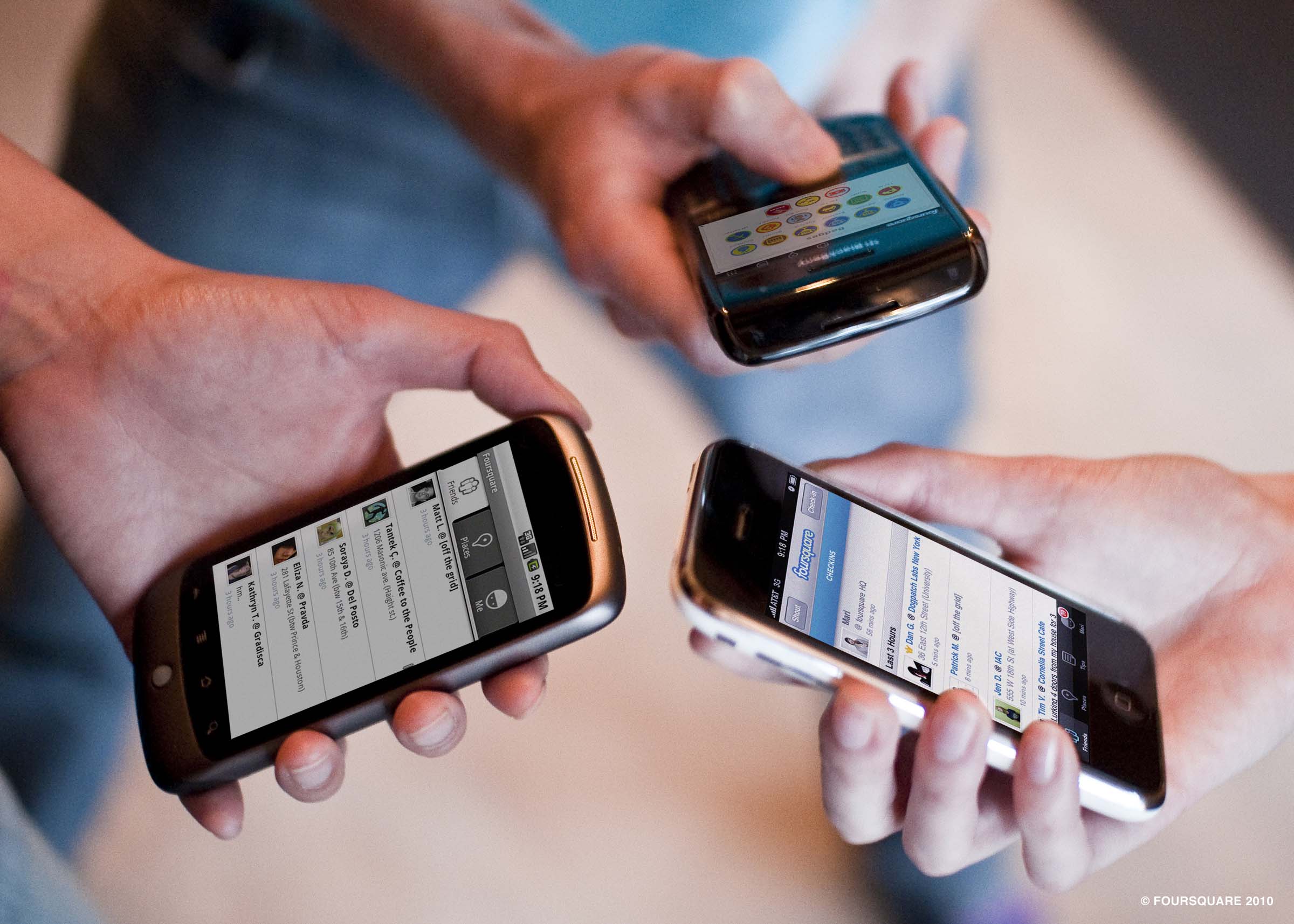
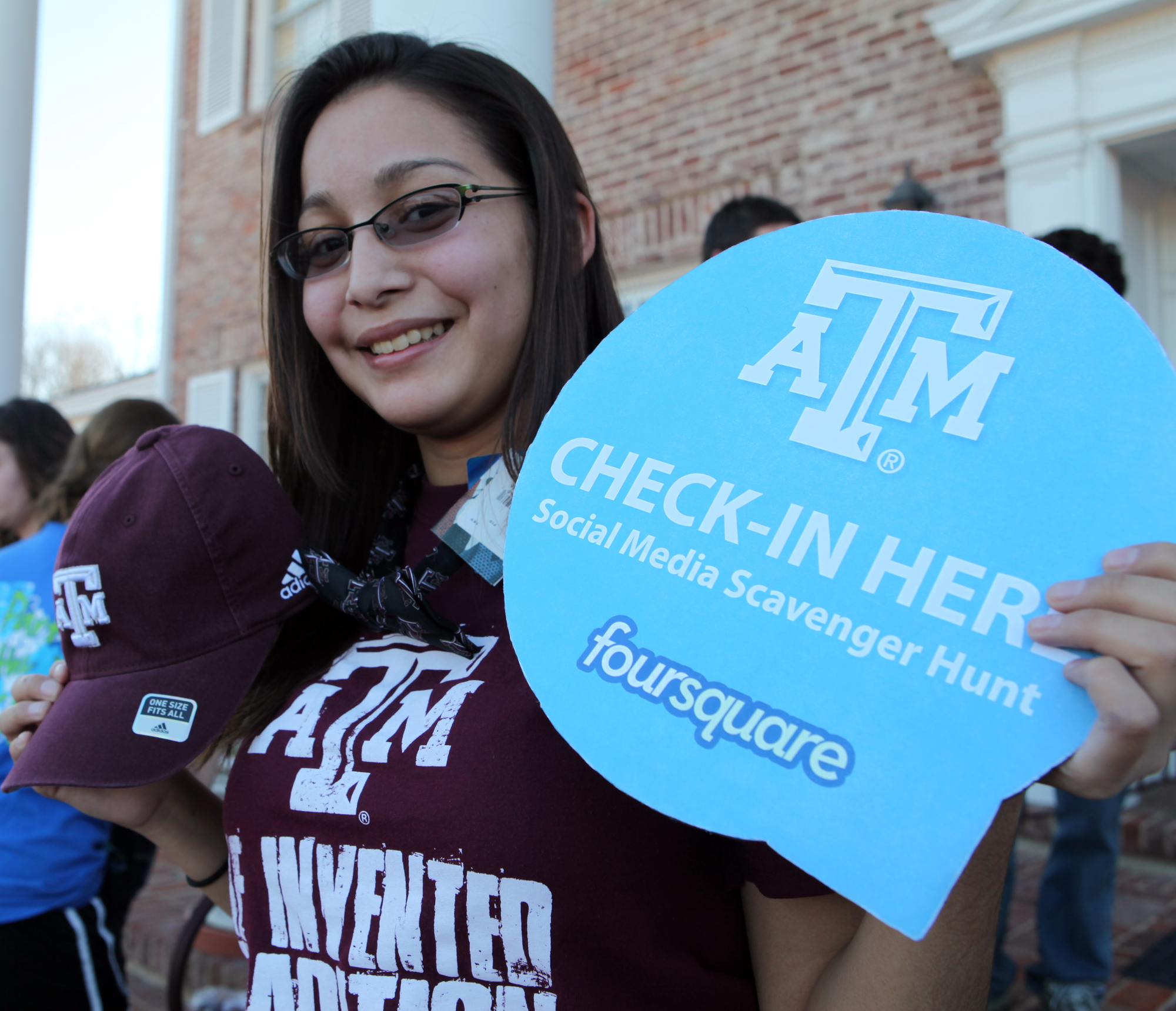
    Geosocial or “location-based” social networks are on the rise, with the forerunner being foursquare, a mobile app launched in 2009 that allows users to “check-in” to various locations and share where they are and what they are doing with their friends. Access to real-time location data from foursquare allows marketers and businesses to know what locations are “trending” as well as the demographics of users checking-in to their establishment. With the growing momentum of foursquare, universities are hopping onto the “check-in” train and recognizing foursquare on campus.
    Why should universities be interested in foursquare? For starters, foursquare currently has 15 million users and over 1.5 billion check-ins worldwide, with a growth rate of 3400% in 2010. Chances are that your business or venue is already on foursquare and users have probably checked in and maybe even left some tips. Information that users enter when creating a venue may be incorrect, but universities that claim their venues can add appropriate information to academic buildings to ensure the best overall experience for faculty, students, and guest.
    Universities are beginning to recognize the potential value of information gathered using geosocial networks. What does 4pm look like on campus? Is the library packed? Are students working out? Applications like foursquare can also attract visitors on campus by offering “check-in” deals (ex. 10% off a shirt when you check-in to the campus bookstore), creating a self guided mobile tour of academic venues, and leaving historic information or helpful tips for different locations.

    Most importantly, foursquare is free advertising (for now). Not only that, but it can be interactive and rewarding for users, perhaps by giving away free university gear for going to the library, attending a campus event, or staying healthy at the gym. The possibilities for university marketing are endless.

    By: Hunter Wilson, Josh Vester, Ashley Oliver, Molly Jacques

  • All The Single Ladies

    Valentine’s Day is a holiday dreaded by a great deal of people, both male and female, for various reasons. There is pressure on both genders to perform, declare emotions, and out-do previous years or expectations. Those who fail at this task of grandstanding may in fact find themselves without a date for next year. Okay, so there’s a ton of pressure on people in relationships, but what about those of us who are single? While some take pride in their solitude, others wish they had someone to be their valentine, and a few twitch at the mere thought of being in a relationship.

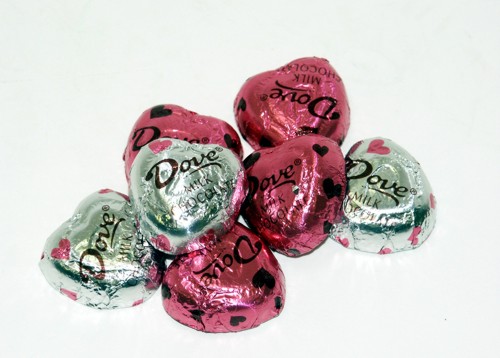
    According to an article in the New York Times, being single is a prevalent occurrence these days with 59.9 million single women in America. This staggering rate may surprise some, but companies like Dove chocolate see these table-for-one ladies as a prime marketing demographic. They hope to strike a chord with this growing independent group by catering their advertising to the women who are without companions. That is why this year Dove has made a campaign to remind women Valentine’s Day isn’t just about romance.

    Dove is banking on the stereotype that single women will turn to chocolate this year on Valentine’s Day. Instead of the standard “Call me” or “I’m yours” found on the candy hearts we used to share with our playground crush, Dove has created a host of witty comments and placed them on the inside of their chocolate wrappers. Some of the best include, “You’re gorgeous,” “Sometimes I buy flowers for myself,” “My flaws are fabulous” and even the ever so uplifting, “Love yourself in a moment.” The new commercial features women sharing their Dove chocolates with everyone from their barista to their neighbor, and most importantly, themselves. Is this a message of independence for the strong woman? Or rather, a cheap ploy based upon the assumption that women alone on Valentine’s Day will inevitably console themselves with chocolate? Either way it’s hard to dislike chocolate, especially when it’s making single girls smile and promising not to judge if we have more than one.

    By: Alexis Kapczynski, Kacy Cox, Josh Bowman, and Sara Kaloudis