Tag: Branding

  • Super Bowl Mixed With Red and Pink Flowers?

    Super Bowl XLV had 111 million viewers throughout the entire game, but it doesn’t stop there.  “A record-breaking 169.2 million people tuned in to the program for at least a portion of the game” according to Fox News.  With this many people, and a majority of the audience being male, what else could be better than reminding men about Valentine’s Day?  The game is played a week before V-day, still allowing the men with crushes, significant others, and spouses to order flowers and various other red and pink gifts.

    The Super Bowl submerges men into drinking beer with their buddies, talking about football and, thanks to Go-Daddy commercials, hot chicks.  Teleflora was able to combine all these aspects into an effective, realistic and catchy commercial.  Speaking on behalf of the female population, men are stereotyped into not knowing how to express their feelings, especially around Saint Valentine’s Day.  In the commercial, the guy expresses his feelings for Kim in a not-so-romantic way; “your rack is unreal” doesn’t really scream romance.

    Teleflora’s effectiveness of this commercial is outstanding.  Targeting men and illustrating a guys perspective on Valentine’s Day and translating that into the beauty of flowers is what the overall audience of the Super Bowl will enjoy.  Comical, yet true, this commercial and Teleflora as a company, will be remembered.

    -Lauren DeHart

  • Super Brand: Chrysler’s Super Bowl Success

    Though the Super Bowl commercials are known for their celebrity appearances and (sometimes) hilarious gimmicks, rarely do the viewers get a look into the heart & identity of a company while also being entertained. Last year, Google’s “Search Stories: Parisian Love” set a new standard for showing Super Bowl viewers what a company’s product actually did while also making a touching commercial that triggered an emotional response.

    Google didn’t have a spot in this year’s game, but one company capitalized on using the ad time to set a definition for their brand and that company was Chrysler.  Chrysler’s lengthy 2-minute spot focused on defining the building blocks of their brand’s identity.  Although the commercial was essentially a straight minute of voice-over narration, the use of the urban backdrop of Detroit and celebrity endorser Eminem’s riff for his mega-hit “Lose Yourself” still provided viewers with a chilling emotional response.  Chrysler may have been using the commercial to announce its new 200 model, a “luxury” car, but the ad focused primarily on the American grit and hard work that goes into each and every one of its vehicles.

    During a time when America is constantly being classified by how behind we are in the global marketplace, Chrysler chose to define its brand as purely American. Everything from the visuals, to the voice over, to Detroit born & raised celebrity Eminem provided a united identity for Chrysler that culminated in the company’s new tag line: “Imported from Detroit”.

    Anna Kate Babnik, Katie Eagle, Deji Adeleke, Tiffany Evans, and Carissa Niederkorn

  • Battle of the Blues

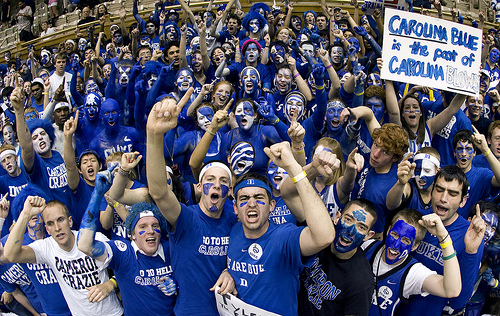
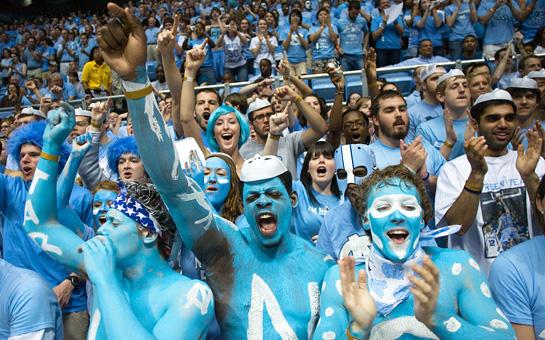
    How do you market one of the most watched sports programs when it doesn’t have as grand advertising sponsorships as the Super Bowl? The answer is you let the fans advertise for you. The historic game I’m referring to is the infamous and arguably most intense rivalry in college basketball- the UNC Tarheels vs. Duke University Blue Devils. At least twice a basketball season, these two juggernaut teams battle it out for who is King of Tobacco Road (the literal 8 miles of road that separate each university).

    The feuded rivalry between both schools is long and exhausting but no one has taken it any more serious than the fans and the schools’ students. These fans through word-of-mouth advertising taunt their opposing fans to the point where no matter what the current team’s ranking or accomplishments, everyone must watch the game between Carolina and Duke that will shut their rival’s jabbering faces. To some die hard fans it doesn’t even matter how great the season, if Duke didn’t beat Carolina or if Carolina didn’t beat Duke, the rest of the season hardly matters.

    It also doesn’t help that not only bragging rights between fans are on the line, but each school’s newspaper gets in on the action and goads one another. This is truly the best representation of how the game should be advertised, capturing the essence of each school’s spirit. The day before each match Duke’s newspaper, The Chronicle, runs a phony page titled “The Daily Tar Hole” to ridicule UNC’s The Daily Tar Heel. To punch back, The Daily Tar Heel, publishes the “Insider’s Guide to Hating Duke” by Ian Williams. Also, to add gasoline to the flames, each newspaper has agreed on a bet to if their school loses they will place the logo of the winning team in their newspaper announcing that they are “still the best” and change their newspaper’s masthead to the opposing school’s color. Nothing could entice fans anymore to watch the big game than knowing that if their opposing team loses, that loss will be sensationalized in print.

    The Duke and Carolina opposition is one of the best illustrations of competition itself and the definition of rivalry in college basketball. It is no surprise that it is one of ESPN’s most watched sports games each year. Next Wednesday, February 9th, when the Tarheels and Blue Devils face again for the Battle of the Blues the ultimate reward for the winning school’s students will not only be the bragging rights, but to take part in the performance of their school’s celebration ritual (the massive crowding of people on Franklin Street in Chapel Hill or the bonfire of burning benches at Duke University). However, luckily for whatever team loses, both schools always meet at least twice each season, and the next matchup after February is scheduled for March 5th.

    – JC Salter

  • Who markets the best ice cream in town?

    As a smaller town, Wilmington has a lot of competition between businesses. Kilwin’s has always been known as a “go-to” location for ice cream in Wilmington and a popular tourist spot.  This past summer the ice cream industry grew by one, adding the Fuzzy Peach into the choices for a cool treat on a hot day. The Fuzzy Peach is located less than a mile from UNCW and this is their only location. Both Coldstone and Kilwin’s are chains and have locations across America.

    Coldstone is the largest of the three and it has stores internationally. Their marketing strategy involves television commercials, promotional coupons, direct marketing at UNCW events like the Involvement Carnival. They are a sponsor for the UNCW Athletic Department. On our basketball tickets, you will find a coupon provided by Coldstone. They set themselves apart from the competition because they have lots of different combinations such as “Cookie Doughn’t You Want Some” and “That’s How I Roll”.  You can see their entire signature creations made right in front of you and they have pictures of each combo on their website. Their portion sizes are called “Like It” “Love It” and “Gotta Have It”. They also sell ice cream sundaes, smoothies, and pre-made ice cream cakes. This company is also known for their quirky songs that they sing when you walk in the door and when you leave them a tip. You can hear the same songs at each location, so you know that you’re walking into a Coldstone when you open the door.

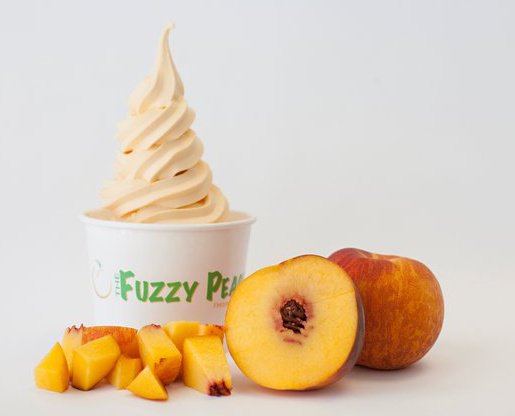
    The Fuzzy Peach opened in May of 2010 and already has a lot of brand recognition. Their t-shirts and facebook page are almost as popular as their low fat yogurt.  The frozen yogurt bar allows you to choose the toppings that you want and how much of each topping you want on your yogurt.  The Fuzzy Peach is the only frozen yogurt bar in Wilmington, so that makes them stand out from their completion. The price is calculated by the weight of your bowl and toppings. Their slogan is, “Providing Wilmington with a healthy dessert alternative.  On the website, they have a comparison of why they are better than their competition, which includes Dairy Queen and Baskin Robbins.  Their marketing strategies include t-shirts with their logo, which allows people to recognize the brand since the logo is a peach. They also use direct marketing by passing out coupons, stickers, and shot glasses at events.  They come to UNCW’s Involvement Carnival in the beginning of the year and give out samples.

    Kilwin’s is a downtown Wilmington classic. It is a common tourist location. They sell ice cream, chocolates, caramel apples, fudge, and more. Kilwin’s makes their own traditional waffle cones, which lures customers in from their scent. Kilwin’s creates an exciting experience by creating the cones right in front of you. It ads a personal element of trust, since you can see the people hard at work on your waffle cone. They rely mostly on word of mouth marketing, as well as social media and their website. They draw people into the store because they bake their own waffle cones and the aroma drags people in by their noses. They are not as big as Cold Stone, only located in 15 states with only 9 locations in North Carolina.

    Who do you think has the best marketing strategy? The winner is…….The Fuzzy Peach! We think this because they employ the most promotional strategies. They handed out coupons and got customer input on what the best flavor is at UNCW’s 2010 Beach Blast. The store has been open for less than a year and a second location is already in the making. We look forward to seeing how much The Fuzzy Peach grows in the coming years.

  • Is Apple taking over the world?

    As you might have read over the past few weeks, there has been a media frenzy regarding Verizon Wireless receiving the iPhone 4. This has further added fuel to the cutthroat marketing campaigns of both AT&T and Verizon. With this in mind, the real question is how this will affect the marketing and brand image of the iPhone.

    By utilizing two wireless networks, the constant battle for customers by Verizon and AT&T may actually have a negative image on the Apple brand.  Apple, known for its superior technologies, has an overall positive brand image.  With both companies airing commercials attacking one another, how can Apple maintain their image? This is the most controversial issue that Apple has had to take on to date.

    Below is the most recent commercial for the iPhone 4 released by Apple.

    In the commercial, Apple is remaining neutral with AT&T and Verizon. This is keeping both companies on an even playing field, while not portraying one as better than the other.  This may change once Verizon’s iPhone is released in stores and a new slew of Verizon and AT&T ads hit the airways.  Will Apple continue to remain neutral or eventually choose a side? The future is uncertain, but on January 19,, 2011, Apple became the largest mobile phone vendor in the world by revenue. If this upward trend continues, they will continue to dominate the market share, regardless of which company carries the iPhone.

    -Allison Day, Jessica Berinson, Megan Canny, Melissa Gagliardi, Scott Burgess

  • Seasons Greetings (For Whom, Actually?)

    The Yuletide season is drawing closer, as stores begin displaying decorations and Christmas music makes its seasonal debut on the radio. Some would say that the holiday spirit is in the air, but what is truly being celebrated? Is it a time of giving and charity, or a testament to our nation’s consumerism and emphasis on material possessions? As our earlier posts pointed out, advertising and marketing campaigns equate holidays to buying products and spending money. This deflects from the real meaning of the season of giving, and even excludes some less recognized holidays. These corporations need to realize that the holidays retain different meanings to different groups of people.

    Most people tend to categorize the month of December as the month of Christmas. Often times, the mainstream audiences overlook other holidays such as Hanukkah and Kwanzaa. This could result from the lack of media attention given to these holidays. Currently, the greeting card industry offers cards celebrating these events, but that is about as far as it goes. The attention is almost always directed towards Christmas. This could be because Christmas is more marketable, thus turning a larger profit for companies. In the end, a company’s main goal is to earn a profit, no matter what it takes.

    These corporate practices are not exclusive to Christmas. Other holidays display the same profit-minded trend as well. With the creation of Black Friday, Thanksgiving has become less about giving thanks, and more about marking the beginning of the shopping season. Valentine’s Day and Mother’s Day are synonymous with showing someone how much you care about them by purchasing a gift for them. Halloween advertises costumes and candy. Almost every holiday has some kind of themed product linked to it (clothing, party supplies, decorations, etc.), all in the name of profit. It could be argued that society has become so wrapped up in consumerism and receiving gifts, that the true meaning of holidays can become lost in the translation. In the corporate sense, holidays are about generating income and creating innovative new products. So who is really experiencing “Happy Holidays” around this time? Is it the corporations gaining substantial revenue, or is it the consumers providing the revenue?

    Sarah McIntosh, Eliza Wadson, Jocelyn Walson, Sean O’Connell

  • Branding, It’s Not Just For The Cows!

    When we think of branding, yes we can think of cows that are marked to receive their distinction, but in the business world it’s a company’s trademark. In communication, we typically think of the term in regards to businesses. Branding is a necessity for businesses, but it’s also important for professional individuals. Our theme this week is careers in corporate communication. Now that the end of the semester is in close sight and many are looking at graduating, we thought self-branding would be a good topic to discuss.

    According to the U.S. Department of Labor, people change careers approximately 3-6 times during a lifetime for various reasons. Our world is constantly changing and evolving and a career-oriented professional has to keep up with the times. Generations before us found a job after college and it was considered the norm for a person to stay with the same company and in the same field until they retired. Not many people do that now. This is one reason why it is important for us to brand ourselves. As most of us begin to carve out a career path over the next few months, there has been a lot of talk about what we want to do with our lives. The main focus is what we are passionate about and where are strengths lie. An interesting article points out that self-branding is the difference between “just a job” and a career. It can make you employable in a profession you are passionate about and open doors you never thought existed.

    There are many steps to self-branding and the first step for the college graduate is to discover what you are passionate about and where your strengths are within that passion. This brings to mind a chapter in one of our textbooks entitled, “Good to Great” by Jim Collins. He finds that the great companies follow the Hedgehog Concept. In short, the Hedgehog Concept is about aligning

    1) What you are deeply passionate about?
    2) What can you be the best at?
    3) What drives your economic engine?

    As you see, self-branding sets us apart from the rest of the cattle out there. Let’s go make it happen!

    Sarah McIntosh, Sean O’Connell, Eliza Wadson, Jocelyn Walson