Tag: Branding

  • IMC Minus the C: The World Behind IMM

    With questions in my mind about product placement and how the book “The Authenticity Hoax” relates, we eagerly write this blog post.  Though there were many great points in the book, we were particularly interested in status seeking and materialism.  Do we want things because we really want them, or do we want things because we perceive them to be desirable?  What is our motive for buying?  Do these $250 Dylan George jeans do the job better than Wranglers… or are we seeking exclusivity? We think the answer has much to do with simple competition.

    We don’t think people were born with the inherent proclivity to seek out high priced designer fashions, We think their behaviors were molded by society saying, “These things make you important and envied.”  This brings us to the title of the post, IMM, Integrated Marketing Materialism.
    There is nothing wrong with promoting products; however, we have been wondering lately how early certain niche luxury markets are starting to target their audiences.  Of course, children of the stars have custom made Salvatore Ferragamo shoes, but it seems like serious materialism is rapidly affecting younger demographics even outside of Hollywood.

    Certain television shows like “Gossip Girl” are aimed at teens, but the characters always wear over the top, Haute couture only available at high end stores for outlandish prices.  Are these television shows telling our teens that it’s time to kick it up a notch and take a trip to Neiman Marcus for some Oscar de la Renta?  You can be the judge of that after you check out this picture of Blair Waldorf from “Gossip Girl.” Blair has a $2,100 dress by Moschino, $900 Quepi Reci platforms by Christian Louboutin and a $3,400 Chanel patchwork purse.  All together, her ensemble costs $6,400 plus tax and shipping (since most of us do not have access to such retailers).

    To people who are remotely knowledgeable about fashion, those products are easy to identify (especially because of the red soles on the shoes).  They are easy to recognize because they have been shoved in our faces for years now.  To our surprise, when we investigated these products, many retailers were sold out!  Obviously, their marketing strategy is working, which one do you think it is?

    -Stephanie Bakolia, Claire Outlaw, David Glaubach


  • Product Placement: The 90’s and Today

    Growing up in the 90’s was quite a rich experience. Alongside the bright colors, turtle necks, and psychedelic patterns that we all wore, an amazing new shoe graced the decade that had all of the kids talking. It was marketed as a shoe that could make any kid run faster, jump higher, and practically defeat gravity.

    It was the PF Flyer.

    These particular shoes were worn by Benny “THE JET” Rodriguez; the star of the movie, The Sandlot, who became the instant role model for every young boy dreaming of a baseball career. While wearing these shoes, Benny caught a baseball that was signed by the world famous player, Babe Ruth; diving for it against the clutches of a monstrous guard dog.
    After this movie hit screens, kids in the 90’s just had to get their hands on these PF Flyers. These shoes were marketed as something magical, all because of one slow-motion movie scene. They could not only make you run and jump higher, but these shoes were also instantly associated with the heroic catch made by Benny Rodriguez. If Benny could catch that ball, so could you. But only if you had your pair of PF Flyers.
    At the time, kids did not have the knowledge to dissociate Benny’s success among his friends and baseball from mere product placement. The placement of these shoes during such a critical point in The Sandlot was no mistake. Marketers from the brand knew very well what they were doing, and they did it well. The PF Flyers became a staple sneaker for every young kid in the 90’s. Perhaps the successful sales numbers were not solely because of the appearance on Benny Rodriguez’s feet, but it was simple placements such as this that made the brand attractive to families across America.
    Today, we see this kind of marketing everywhere we look. Movies and television programs lace their characters and settings with products as a result of eager marketers trying to solicit their image. When the marketer has the opportunity to take advantage of a hopeful, entertained audience through something as simple as product placement, they are diving into more than they may have originally intended. They are not only selling a product, but they are selling a brand message. By choosing which scene, character and setting to place products, the marketers are aiming to take advantage of a relationship that has been built between the audience and the movie. In doing so, they can only hope that the audience will feel so related to the movie that they will be reminded and persuaded about the “value” the product had in the film.
    So, would Benny Rodriguez have caught the infamous catch if he was wearing LA GEARS or NIKES? The marketers of PF Flyers want you to think not.

    Sally Shupe, Jared Sales, Oliver Evans

  • What Are You Watching?

    It’s that time of year again when all of the major television networks bring back our favorite shows with the premier of new episodes that we have been anticipating since May.  Whether or not you are a frequent viewer of network television, you most likely know the excitement that comes from the end of summer reruns and the fresh series that awaits.  NBC, CBS, ABC, and FOX are considered the top four major networks; each competing for the top spot as their most popular shows return to television this week.  In addition to the return of the popular shows, these networks invest millions of dollars in the premier of new series that hope to get their viewer ratings among the highest.

    One of the most beneficial ways to get the viewer anticipation flaming is through the persistent use of advertising that each network uses to promote these new episodes.  They build the viewer into believing that the show will be a suitable part of their weekly routine through advertising strategies such as time slots, commercials, clips, sound bites, and many more.  The importance of advertising is to bring the consumer in; while the importance of programming and commercial ads is to keep them coming back each and every week. If an advertisement is presented to us on a persistent level, it can successfully send messages to different aspects of our lives that we feel can relate to the show. For example, reality shows advertise their “genuine”, “real” experiences; family comedies advertise their ability to bring families together; dramas advertise towards our emotional appeals.  In realizing these types of advertisement strategies, we should be conscientious about what we watch in today’s vastly well marketed society. Because where our interests are targeted, our willingness to watch these upcoming premiers follows.  This week will not only reveal the new episodes that these major networks have in store, but will also reveal the kind of connection viewers hope to achieve with the programs they choose to watch.

    By: Oliver Evans, Sally Shupe, and Jared Sales

  • Breaking the Brand Bank

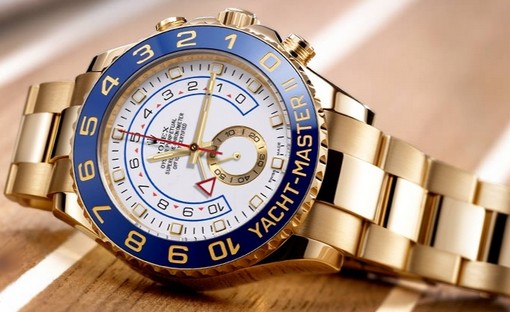
    It’s just a watch right? Wrong. It’s a representation of who you are as a person, an insight into your success and a statement of your style and character. It’s a Rolex and it costs a ridiculous amount of money.

    What do customers look for when shopping for a product? Quality? Price? For most people, this depends on the product. I am sure everyone can think of at least one consumer good in which you are loyal to a single brand. For me, this is my shampoo. Why pay twice as much for a bottle of John Frieda when I can easily get the knock off and save a buck? Because I have developed a brand loyalty; an unwavering devotion to John Frieda hair products and I don’t care if it’s on sale or not. I’m choosing this brand. For most other things in my life, I am content with generics or off brands that generally work as well as the name brands they imitate but when it comes to my hair care I never compromise.

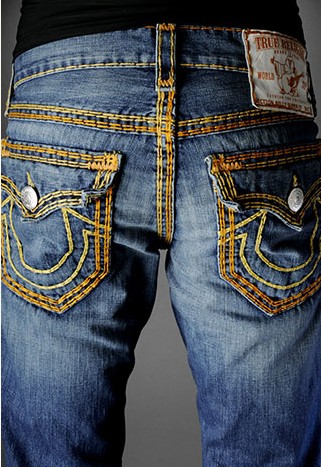
    What phenomenon is it that gets us to pay exponentially more for something that works just marginally more effectively? Does the $8000 Louis Vuitton suitcase really do the job better than your army issue canvas duffel bag? Do the $400 True Religion jeans really make your hips look smaller? The truth is it doesn’t matter. What matters is how we feel. Like the feeling that results from when out of the corner of your eye you notice someone taking an appreciative glance at your checked bag or the “Nice Trues!” from the guy at The Dirty Martini when you come off the dance floor…it’s all about feelings…and feelings matter…to the tune of over 4 trillion dollars domestically in 2009 alone.

    The theories behind brand loyalty run far and wide with arguably one of the more interesting being religion.  An article from futurepundit.com shares that Prof. Ron Shachar of Tel Aviv University’s Leon Recanati Graduate School of Business Administration says that a consumer’s religiosity has a large impact on his likelihood for choosing particular brands. Consumers who are deeply religious are less likely to display an explicit preference for a particular brand, while more secular populations are more prone to define their self-worth through loyalty to corporate brands instead of religious denominations.  Whether it’s religion, feelings, need or just plain greed motivating us, Americans consume labels and brands voraciously.  Perhaps we could all use a little less of both.

  • Wear your favorite shirt, and get paid for it too!

    Do you have random t-shirts in your closet from equally random companies or events? Or, do you have a favorite t-shirt, such as one from Sanitary Restaurant in Morehead City, NC, that you wear as if it were your job? While wearing that favorite t-shirt, have you made the comment “I should get paid for this! ”

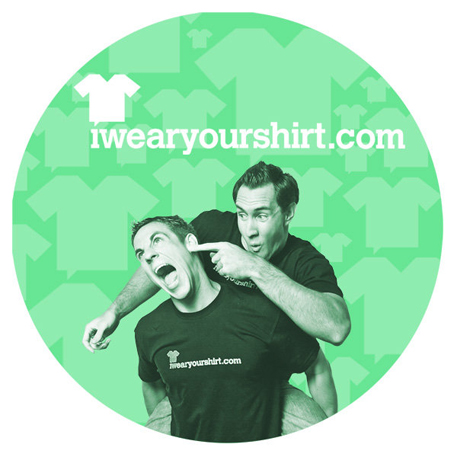
    Across the United States, a group of 5 individuals run a company where you pay them to wear your company’s logo; they brand your brand. On their website, iwearyourshirt.com, this group of people post live-streaming videos, pictures, Youtube videos, and share it across the social networks and web. For the nominal fee of $1,550-$1,640 any company can expand their brand via this unique way of advertising. GoToMeeting, a recent client of the t-shirt team recognized this innovative branding opportunity as “a great way to bring humanity to your brand, with great charisma, humor and authenticity.” What could be better than to be successful and authentic?

    One of the many companies that pay the iwearyourshirt.com team to act as a virtual billboard is the apparel company, Life is Crap. The iwearyourshirt team’s approach to driving followers to Lifeiscrap.com involved crazy, yet creative videos and live video chats with the audience where the potential customer for the brand can ask questions and talk to the t-shirt team.

    “Don’t be fooled. These guys aren’t just sitting around gathering dust in your shirt. Your shirt will be worn with pride, given sunshine along with tender loving care. Your shirt will be happy. And so will you.”– Gowalla iPhone app

    The iwearyourshirt team has proved that you don’t have to wear a tie to be successful. Their creative company has exploded into a force to be reckoned with.

    – Michela Noreski, Ashley Nelson, Jordan Hill

  • Marketing’s New Superhero

    In a world where most of the general public has been inundated by the vast amount of advertising on every realm of media, advertisers are struggling to connect with one of their prime markets – the college student. College students are a principal market for corporate marketers with their discretionary spending, having a $2 billion gain from 2009 to 2010. Along with their spending habits, these young adults are beginning to shop for themselves for the very first time, thus beginning to form brand loyalties that marketers strive to form in their target audiences. Herein lays the problem: since we are prone to ignoring most forms of traditional media marketing on television, radio, or newspapers, recent studies have shown that college students are no more likely to open an Internet ad than the rest of the population.

    Introducing corporate marketing’s new superhero: the student brand ambassador. Large corporations are starting to tap campus leaders with a wide sphere of social influence, not to mention the people skills to go along with marketing the brand to a variety of students across their campuses. They also paper bulletin boards, chalk sidewalks, and have constant Facebook or Twitter updates promoting their brand. “The student ambassador tactic embraces all the elements that corporations find [have the] most effect,” states Matt Briton, managing partner of Mr. Youth, a firm that specializes in college marketing, “It’s peer-to-peer, it’s word of mouth, it’s flexible and it breaks through the clutter of the media.” As a market that generally tends to distrust corporate messages, having a peer spin the praises of a certain brand can certainly turn more heads than an ad placed in the correct time slot on MTV.  Marketers are finally beginning to realize something WE all already knew, the best way to sell students something is for other students to be talking about it.                                                                              

    – Jessica Kingman, Alaethea Hensley, & Lauren Phelps

  • Blaming based on Naming


    While we remember the tenth anniversary of the 9/11 attacks, we recall the sadness and despair felt nationwide when the lives of nearly 3,000 people were lost.  The murder of the many innocent bystanders shocked the world, and resulted in distrust among certain races and religions.  Is it human nature to want to place blame in the wake of such tragic circumstances?  Maybe so, but it is very important to be sure that the blame goes to the rightful place.

    The attacks of 9/11 were the doings of extremist terrorist groups, in particular, Al-Quada.  Sadly, many people who do not stay abreast of current events and political issues associate the attacks with all Middle Easterners and/or all Muslims.
    Al-Quada is NOT representative of all Middle Easterners or all Muslims, and thinking so is an appalling mistake that some people have been making over the last ten years.   This act of stereotyping someone based on their religion or appearance can be associated with branding.  Some think that branding is about how you present yourself, but branding is really about how other people see you. Unfortunately, in many parts of the world, instances of intolerance, discrimination, and acts of violence occur based solely on discrimination against ethnicity and appearance.

    In the book, “The Authenticity Hoax” by Andrew Potter, he explains the difference between actual truths and perceived truths.  Since the media is such a powerful force in our society, they may inadvertently allude to something that changes the truth in your mind from the actual truth to a perceived truth.  Another problem is that we live in communities with members who share the same beliefs and motives.If your community tends to think ill of a certain group, religion, race, etc. you are prone to such beliefs as well.  Unfortunately, the only way to avoid being persuaded by the media and your community is to disconnect yourself from society, according to Potter.  As PR and IMC students,we agree with Mr. Potter, but we have also learned that there are ways to filter information to stay as close to the “actual truth” as possible.

    We must always look at both sides of the story, and question everything.  For each possible scenario, ask yourself every question that it could be associated with.  All Americans are not members of hate groups like the KKK.  All Christians are not gay hating anti-progressive activists, and all Muslims are not terrorists.

    – Stephanie, Claire, & David