Tag: Advertising

  • Grey’s Culture of Creativity

    Who knew it was possible to turn a small retail shop into one of the world’s most respected advertising agencies? Larry Valenstein and Arthur Fatt found this was possible when they turned their one-room retail store in the garment district of New York City into what is now known as Grey Advertising Agency, one of the most popular creative advertising agencies in the world. Since being founded in 1917, Grey has established a 96-country network as well as a second headquarter location in San Francisco. Grey is often recognized for the strength of their creative ideas. The agency was recently named Global Agency of the Year in 2013.

    So, what is the key to keeping the creative team at Grey inspired? Culture. An official statement from the agency reads, “From where we are and how we work to who we admire and what inspires us, everything at Grey reflects a culture of creativity.” The agency supports a creative culture to encourage creativity among those who work at Grey.

    One of the most unique events that Grey holds in their offices is the quarterly distribution of a Heroic Failures award. The award is given to someone who made a miraculous attempt at achieving a creative goal and has failed. Grey promotes the idea that it is better to attempt at doing something incredible and fail rather than not try anything at all. The creative culture embraces failure in order to emphasize the importance of getting back up and trying again and again. Persistence is a key to success.

    In addition to the Heroic Failures award, Grey has several other ways in which they express the importance of the creative friendly culture in their agency. For example, on Thursday mornings from 9 a.m. to 12 p.m. there will be no meetings held during that time. Those three hours are encouraged to be spent doing something new, challenging and creative. Any and all ideas can be posted on a giant corkboard in the office known as “the corkwall” in order to share the creativity with team members.

    Other locations at Grey where people may go to conjure up some inspiration include the rooftop terrace, the health and wellness center and even a bed. There is a bed located inside of a glass room in the middle of Grey’s busiest work space. Some people do their best brainstorming while comfortably resting!

    Grey works to maintain a creative culture so that people feel inspired to think outside of the box and share their creative ideas. Do you think working in this type of environment would spark your creativity?

    – Hannah Turner

  • So You Want To Be A Media Planner?

    Everyday a city dweller is exposed to 5,000 advertisements. With this many advertisements it is amazing that we actually remember some of them. Part of the remembrance is due to the work of media planners.

    Media planning is the science of message dissemination. It specifically “refers to the process of selecting media time and space to disseminate advertising messages”. In order to find out more about this division and the work they do our blog group reached out to Zimmerman Advertising Assistant Media Planner Mariel Oweida.

    mariel photo

    Oweida, a May 2013 graduate of the UNCW Cameron School of Business, began working for Zimmerman Advertising in December of 2013. She referred to media planning as,

    “…finding appropriate media platforms for a client’s brand/product to use by determining the best combination of media to achieve the client’s marketing objective; media could include print, TV, radio, digital, OOH (out of home advertising- billboards, bus wraps, etc.)”

     Media planning begins with a Media Action Request (MAR) and ends with a media buy. Although the media planning division doesn’t actually negotiate the buying, they do work closely with buyers and account executives to make sure the plan is well executed.

    Media planning is fast paced. Owieda explains she was surprised at the quick turn around. Having concentrated in marketing as an undergraduate, media planning was a new career path for her. Usually you need specific degree for advertising or experience from another ad agency but, she says, ad agencies look for candidates that are willing to learn and grow with the company.

    Specifically, Zimmerman Advertising is a full-service agency that focuses on building national retail brands. Over the past 30 years it has become 14th largest advertising agency in the world and they currently bring in revenue of $100 million a year.

    zimmerman photo

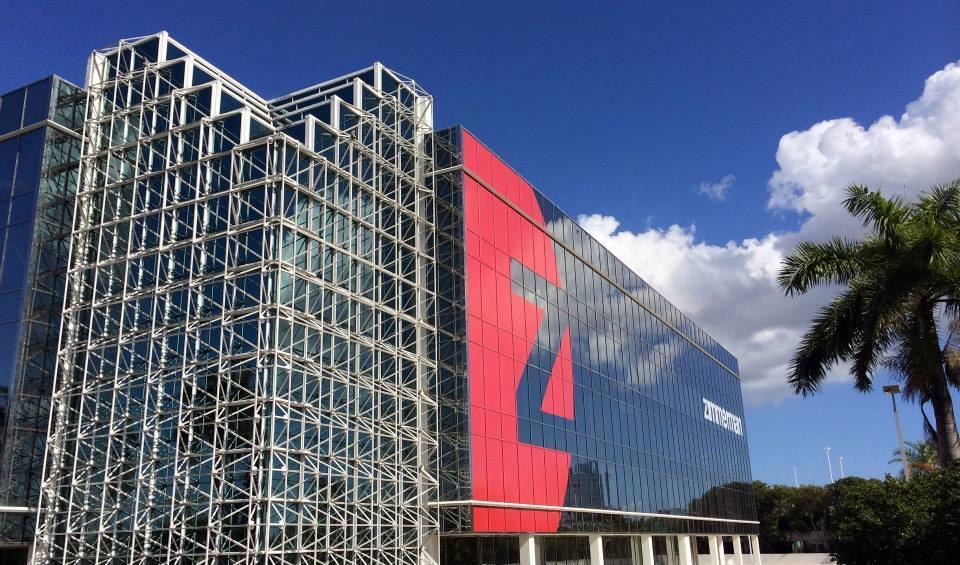
    Recently they moved their headquarters to Ft. Lauderdale, FL. Their brand new office is beautifully constructed to promote a more casual, creative, and collaborative environment. Although this brand new building seems friendly and relaxed, it is full of hardworking individuals who go above and beyond to help clients meet their advertising objectives. In a previous interview with Elizabeth Harrington, Oweida described her typical workday as untypical. “You should never expect to go in at 8 a.m. or leave at 5 p.m. [You] almost always end up going in early and leaving later- that extra dedication is unpaid.”

    Zimmerman photo of building

    During her day Oweida works on budgeting clients money, conducting market research, and media placement. Already she has worked on accounts for Ashley Furniture, Boston Market and AC Moore. “The most challenging part of being an assistant media planner is paying attention to detail, executing the plan we provide, and dealing with clients,” Oweida says. “As a media planner it is your job to let clients know why they are spending their money the way you are telling them. It is important to keep up with research from Nielsen ratings, to demographics, income, and even how long people have owned homes. They all help you plan the media and explain the why to the clients.”

    So as soon to be graduates we asked for the inside scoop on what to do if you want a career as a media planner. She said work on knowing Excel and basic Excel math, but most importantly have great communication skills. She also told us to be up to date on the newest and important trends in the field, which as of right now are social and digital media.

    We would like to thank Ms. Oweida for taking the time to speak with us. If you have any questions or advice about media planning comment below!

    Caroline Robinson, Elizabeth Harrington , Savannah Valade

  • Wilmington Appreciates Advertising: Local Marketing

    In the Wilmington community, local advertising agencies offer their services to all of the town’s local businesses. Our small beach town is filled with local companies that are in need of advertising agencies that are familiar with the area and the target audience. Fortunately Wilmington is the home to several advertising agencies that are willing to go the extra mile to provide effective services for our small businesses in the area.

    Colonial Marketing Group is one of Wilmington’s own award-winning advertising agencies. Colonial Marketing provides TV, print and radio advertising for 72 local businesses in Wilmington. Founded and based in our town of Wilmington, this firm aims to develop the relationship between the brand and the consumer for each of their clients. The strategy of their agency can be explained in three words: consult, create and connect. They will first form a close bond with their client so that they will gain a good understanding of the business. Then they will dive into the creative process to convey the company’s brand effectively to the target audience. Colonial Marketing will finish of their process by combining their marketing knowledge and qualitative data to ensure effective advertisements will be executed to reach the target audience. Before a company chooses to work with Colonial Marketing, they have the opportunity to see the firm’s previous work for other businesses. The agency is especially eager to help businesses that like themselves, are Wilmington based.

    One advertising agency that has been a huge local success is Ford Design Group. This agency has developed into being one of the most utilized ad agencies in Wilmington, North Carolina and their work can be found all throughout the city. Ford Design is a multi-faceted advertising agency that offers a wide range of branding, marketing services, print media, logo design, SEO services, and website design. Ford Design Groups goal is to always exceed their clients’ expectations. Their philosophy proudly states, “We’re only as good as our last project.

    “BRAND. MARKET. IMPACT!”.

    “Isn’t it interesting how definitions of words have evolved over the years? Each of these words can either be a noun or a verb, and stand on their own totally unrelated to one another. But, for our team at Ford Design Group, they are all equally important to perform best used in conjunction with one another”. -Greg Ford

    images30E9KW5F

    Greg Ford, founder of Ford Design Group, began running this agency from his own bedroom as a one-man business in 1992. He graduated with a Communication Studies degree from East Carolina University in 1987. Over the past twenty-two years, Greg Ford has turned his one man firm into a talented team of expert programmers, designers, copywriters, photographers and many more to add to the success of this local business. Ford Design Group has customers throughout the southeast and across the country! Their clientele are very diverse, from small business owners to large corporations.

    In the city of Wilmington, Ford Design Group has worked with clients from The Blockade Runner, Hibachi Bistro, Wilmington Development Group, YoSake Downtown Sushi Lounge, to K38 Baja Grill. They have designed logos, print ads, and websites for all of these companies and many more.

    FDG_Port_LOGO_br1Ford Design Group

    A company that focuses on quality keeps clients happy, and Ford Design Group has done just that. Below are some testimonials from some of Ford Design Groups satisfied clients.

    “Greg and his group have been very creative in supplying the designs we need. From web site design to t-shirts, they can do it all.”

    -Blockade Runner Resort

    “Greg Ford and his team coached us through the whole process including developing a new logo for our 50-year-old company. They were technically excellent, creative and very customer focused. They listened to what we told them about our industry and developed a customized approach; no “cookie cutter” components. I would use them again!”

    -John S. Clark Co.,LLC

    “Eyecare Center’s corporate identity dated back to the late 1970’s and it looked it.  Ford Design Group took our company into the new millennium with an entire new identity makeover.  Their professionalism, talent and attention to detail were a perfect fit for our company.”

    -Eyecare Center

    With a plethora of local advertising firms in the port city, small businesses in Wilmington have the chance to work directly with companies that are concerned with their success. Not only do they have the chance to meet in person to be able to communicate their wants/expectations effectively, they also have the benefit of assisting fellow local businesses. These advertising firms depend on the support from local businesses, just as the small companies depend on Wilmington’s firms to market their content. What other benefits do you think small, local advertising firms experience? Do you think the recent economic recession affected their business?

    Hannah Turner, Emily Foulke, Briana McWhirter

  • FDA Takes on Tobacco

    After the discovery of the harmful health effects tobacco products can have on the body, the method of selling and promoting tobacco has sparked many debates. Those in opposition to the advertising of tobacco question how companies can legally advertise their products that have been proven to cause damage to the body. In addition, children, who may not understand the grave danger these products can cause, could potentially view these advertisements and be persuaded to use tobacco products. In order to regulate the advertising of tobacco, Congress began censoring the advertising of cigarettes by banning promotions on television and radio in 1969. The censoring of advertisements continued in 1989 when Congress prohibited advertising directly to children. However, Congress did not stop there. New regulations have been released that further force the censorship of marketing tobacco products.

    While some agree to the censorship laws imposed on tobacco advertising, others posit that these regulations encroach on the company’s freedom of speech. Their main argument states that although it is commercial speech, it is still the company’s freedom of speech. Two large tobacco companies have already filed suit against the new laws on grounds of the First Amendment. Those in opposition see this as limiting the company’s freedom of expression by controlling what content they can release, and where. They also see it as the government not trusting individuals to make smart, informed decisions on their own.

    The U.S. Food and Drug Administration (FDA) issued  a broad set of censorship rules that affected the advertising and promotion of tobacco as well a set of new requirements relating to sales distribution of the product.  On June 22, 2010, the chosen rules were implemented into the law.

    cigs

    There are three primary requirements relating to the selling and advertising of tobacco. First, the rule banned tobacco brand names from sponsoring any athletic, musical, social or cultural event. The brand is also restricted from sponsoring a specific athlete or team at such events. Second, any audio advertisements were also required to use only words with no music or sound effects playing in the background. Lastly, the rule prohibits the selling of any items such as hats and tee shirts sporting tobacco brands or logos.

    Since the initial rule was issued by the FDA, another requirement was passed. Outdoor advertising on platforms such as billboards is also prohibited. Rules are continuously being presented to the court, attempting to create even more restrictions for tobacco advertising. Most recently, a rule was presented that would limit tobacco advertisements to using only black text with no graphics at all. This rule was denied.

    Tobacco sales have decreased significantly within the past 3 years. Do you think this is a result of the censorship laws the FDA imposed on the advertising of tobacco?

    – Hannah Turner, Emily Foulke, Briana McWhirter

  • SOPA to end online advertising

    The internet today is an extremely powerful tool with almost limitless applications and opportunities for innovation. In the world of capitalism it can be argued that the internet has become the single most powerful tool used to market towards consumers. Online ad campaigns can drastically cut costs while potentially reaching a massive audience, especially if it happens to go viral. The analysis and interpretation of Big Data has enabled companies to quantify extremely specific trends amongst the everyday consumer. As the internet continues to evolve, so does the way in which Advertisers utilize it to market their products.

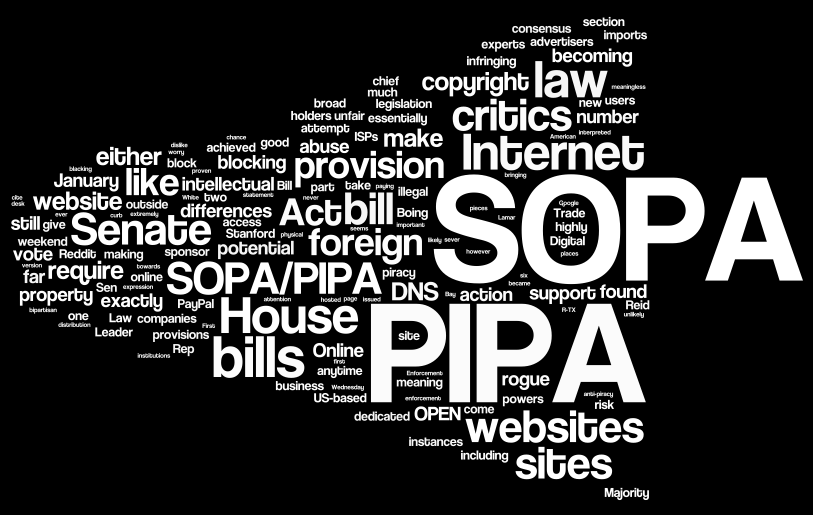
    Recently congress has yet again brought up the infamous SOPA bill challenging the liberty the internet provides and forcing all information online to be copyrighted and accounted for. SOPA is an acronym that stands for the Stop Online Piracy Act. This bill’s purpose is to crack down on online copyright infringement, by limiting access to sites popular for the trading of pirated content. You have most likely heard the saying that pirating is not a victimless crime, and we all know that is the truth. The question is, is this the way to go about solving the problem?

    Picture-33

    Now in theory this may seem like a good idea, but once we delve further into this topic it becomes apparent that there are much deeper ramifications. Now this does not merely affect owners/creators of internet websites, but also the online advertisers that cater to these websites as well. Rex Harris with Techli.com points out a potential threat to advertisers:

    “ For those that are unfamiliar, this is what happens when a publisher is unable to deliver in full on a contract (for instance, a guaranteed number of online impressions). When this happens, the publisher must “make it good” for the advertiser with either a cash credit, or by offering even more ad inventory that was initially contracted. Can you imagine what will happen when sites are temporarily being shut down on a regular basis or when sites are blocked from running their clients’ advertisements? Impression guarantees will be nearly impossible to keep, and SOPA will turn online advertising into an unstable, grossly inefficient business for everyone involved.”

    The overabundance of censorship will hinder online advertisers from doing their jobs, thus producing lower revenue for online advertising.

    Austin Johnson, Jade Johnson-Grant, Jami Rogers, Ty Thomas

  • Banking on Bracketology

    Even if you’re not a fan of college basketball, you’ve likely heard friends and colleagues exclaim about their “busted brackets” as of late. The NCAA Division I men’s basketball tournament, billed as “March Madness” runs throughout the month of March and is one of the most popular spring sporting events. The tournament begins with 64 teams and ends with the championship game in April. Part of the fun of March Madness, is Bracketology, the science of pitting teams against each other to predict the outcome of the tournament. It gets pretty serious–billionaire Warren Buffett of Berkshire Hathaway even offered $1 billion to whoever fills out the perfect bracket.

    Where does Bracketology intersect with IMC? The answer lies in the “good hands” of Allstate. 2014 is the insurance company’s third year as official sponsor of the NCAA tournament. This year, Allstate’s antagonistic character, Mayhem, is breaking brackets in a series of Tweets, Facebook updates, and Vines. While Mayhem is infamously known for causing car wrecks and burglaries, the Leo Burnett-created “March Mayhem” campaign makes light of Bracketology. Watch as Mayhem breaks, bends, and even blends busted brackets.

    March is Mayhem

    “March Mayhem” is Allstate’s social media component of its NCAA tournament campaign. During TV coverage of the tournament, the company sponsors the “Good Hands Play of the Game” and is rolling out increased advertising for its homeowners insurance. Pam Hollander, Allstate’s senior IMC director, points out that the campaign goes on as the tournament progresses, taking into account how different teams perform in the tournament. She says the campaign features direct engagement with fans. Mayhem acts as a direct engagement tool to connect and learn more about Allstate’s social media-savvy audience. With Mayhem, interpersonal communication takes place in an ad campaign, personifying the brand’s relationship with the consumer.

    Mayhem isn’t the only insurance character with social media presence. Representing insurance companies big and small: the Gecko, Flo, Jake, and J.J. Hightail each interact with their Twitter followers. One of the strong points of the March Mayhem campaign is how it takes advantage of the Bracketology phenomenon to establish a connection with the consumer. Using a popular social trend in a social media campaign exemplifies the personification of brands.

    Do you believe using Bracketology in advertising is effective? How have you seen other brands use social phenomena in their advertising?

    Nathan Evers

  • Luxurious Advertising

    Gucci. Prada. Versace. These three symbols of “luxury” are high-end fashion companies that are flaunted around the world as brands of desire, wealth, and success. According to Forbes, luxury retail brands can be worth as much as 23 billion dollars. That amount shows the price consumers are willing to pay to feel as glamorous as the models who showcase the clothes, both through Advertisements and Mercedes-Benz Fashion Week, a buzz worthy week in New York City that features the spring collection of the most luxurious fashion brands in the world.

    1200x seenaroundlincolncenterday0mercedesdxpjhhhexa-l

    The hype of Fashion Week and the brands that are luxurious enough to present themselves there share the same quality: they give consumers a sense of desire. Rohit Arora, Strategic Planning Director of Bates Pan Gulf (BPG Group), studied the various reasons consumers’ desire these brands. One of the main reasons is notably the exclusivity to afford such brands, which changes over time as objects become less exclusive and more fiscally available.

    Similar to the four P’s we learn about in IMC and marketing, Arora revealed a list of eight shared “P’s”- Pillars in Luxury Brand Marketing:

    1.)   Performance

    2.)   Pedigree

    3.)   Paucity

    4.)   Persona

    5.)   Public Figures

    6.)   Placement

    7.)   Public Relations

    8.)   Pricing

    Each of these “P’s” must be highly considered by the brand’s marketing team in order to brand itself as luxurious while also justifying itself in price. Arora placed emphasis on the importance of both the pricing and placement phase, which can make or break a luxurious item as either desirable or unnecessary. “It is important for luxury brands to price themselves right – as setting the price lower than the consumer expectation and willingness to pay can potentially harm the brand value, whereas the reverse can potentially not give enough justification for consumers to go ahead and buy.” The marketing team of these brands has a lot to wrestle with in justifying their value, whereas less flashy brands are able to triumph off of their practical prices and convenience.

    Cara-Delevingne-Mulberry-Fall-Winter-2013

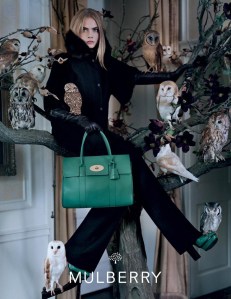
    Following Fashion Week this spring, many luxury brands executed campaigns featuring public figures that were popular in both the fashion industry AND social media outlets. Luxury brand “Mulberry” selected 21 year old Cara Delevingne, currently one of the world’s most famous super models, as the new face for their campaign. The fact that Delevingne has nearly 5 million followers on Instagram helps give widespread exposure to Mulberry, which is a part of the “placement” phase of the marketing campaign. It doesn’t hurt that endorsements from popular top 40 tracks are always on the luxurious side of the spectrum. When is the last time you heard Drake talk about his reasonably priced jacket from TJ Maxx?

    fashion_brand_luxury

    Luxury brands not only compete with the more cost efficient brands, but they also compete with one another to be the top selection among consumers. In 2010, “Louis Vuitton spent more than $22 million on advertising across all channels between January and June, compared to slightly more than $14 million during the same period last year, a 57 percent increase.”  A year later, Marc Jacobs president Robert Duffy told the New York Times that Jacobs’ fall 2011 show cost at least $1,000,000 (or $1,750 per second). These painfully expensive prices are paid in order to keep status as a high-end fashion brand when winter fashion blooms into spring clothing. With the price of living going up just a few years beyond 2010 and 2011, one can’t fathom the funds needed to market luxury clothing items in 2014. As the temperature gets higher, the cost of advertising gets higher for these luxurious fashion brands!

    Austin Johnson, Jade Johnson-Grant, Jami Rogers, Ty Thomas