Blog

  • This Is Home

    This Is Home

    A transfer student and only at UNCW for 2 years, I decided to take advantage of my time here and be as involved as much as I could. I got plugged in with a campus ministry where I met some of my best friends, and eventually become a student leader. I had the opportunity to work with a team that brought the Monster Energy Music Festival to Wilmington three times. I also managed one of the largest social media accounts in Wilmington. I can definitely say I have made the most of my time here and don’t regret a second.

    IMG_3210

    However, there have definitely been some stressful times for me at UNCW. Let’s start with how both fall semesters, in the 2 years I have been here, were put on pause for a period of time because of a hurricane. Or how about a global pandemic stealing my last 2 months of college and the cancelation of Graduation. If life at UNCW has taught me anything, it is to expect the unexpected and don’t let adversity stand in the way of your dreams. Just keep your head up and a smile on your face because tomorrow is going to be way better than today.

    I decided to stay in Wilmington over the summer to take classes and I think it was one of the best decisions I could have made. The summer classes were not easy and they were very time consuming but I got through them. I got a job working in Wrightsville Beach at the largest boat dealership in the world. I made new friends that were local to the area. But, most of all, I fell in love with Wilmington.

    To future UNCW students, I’d say to take any opportunity that presents itself. Your time here is short and believe it or not, it goes by very fast. So look for ways to make your time meaningful. Join a club, make new friends, skip class to go on day trips, go too cookout at 2am, hit up Islands after 5pm, serve your community. Just find something you love and stick with it!

                 You have the opportunity to make an impact at UNCW, take it!

                                                 Thrive! Don’t just survive.


    Jay Carr, UNCW COM Class of Spring 2020

  • An open letter to UNCW…

    An open letter to UNCW…

    I spent my whole life dreaming of going to NC State, I wanted to be a veterinarian. During my senior year of high school when it came time for decisions to go out, I got deferred from my dream school. At the moment I was extremely devastated, my plans were not going accordingly but at the same time, God had other plans for me. Shortly after receiving my deferred notification from NC State, I got my acceptance letter to UNCW and that’s where it all began.

    UNCW was my second choice but looking back on it, it’s been the best choice. My time here at UNCW has been nothing short of interesting, from hurricanes and worldwide pandemics to becoming an RA on campus. My freshman year I knew I was where I was supposed to be because of the friends I met and the experiences I had gained. Sophomore year felt the exact opposite, my friends made new friends and I thought I was going to change my career path and have to transfer schools, it was a mess. However, junior year I applied and was given the offer as a Resident Assistant on campus which changed my life. The people I met, the lessons I learned, the life experience I gained, and the responsibility I held is something I will never forget.

    I am a first generation student and the baby of the family, I had no clue what I was doing when I got to college. I just felt it was necessary to go with the motions and follow along with everyone else, but I began to discover that most people were like me – didn’t know what they wanted to do. My whole life I wanted to be a veterinarian, but as I went through my years of high school I realized how bad at science and math I was. So it was up to me to decide on what I wanted to do as a career, or so I thought. I thought I was alone. I started my journey in the Communication Studies department my freshman year with COM 101 – Public Speaking. The UNCW Communication Studies department has some of the most caring professors I have ever seen. I grew up in a small town and my high school teachers cared about our success, but college seemed so big to me that I thought we’d be treated like numbers. The COM professors have been nothing but awesome. They genuinely have cared about my success and have given me the tools necessary to do what I want to do. They have pushed me to be a better version of myself and to get out of my comfort zone. The advice they have given me and the questions they have helped me answer has been such a huge help for my personal and professional development.

    Now going back to the idea that my four years here at UNCW have been nothing short of interesting. I remember my freshman year when hurricane Matthew rolled through and classes were canceled for a day or two. Then my sophomore year there was a “snowstorm” that caused us to miss a week of classes. Junior year was hurricane Florence and man that was quite the adventure. This was my first year as an RA and we had to do a campus wide evacuation to get the students out as quickly and safely as possible to beat the storm. The uncertainty of not knowing what was happening to campus or when we’d be allowed to return had all of us going crazy. I had a fairly smooth transition when coming back to campus after Florence, it wasn’t hard for me to get back into the swing of things besides all of the maintenance that was going on around campus. The devastation that struck people who had countless hours of research in Dobo Hall, the residents who lived in the University Apartments, the homes in Wilmington that got destroyed, it was just heartbreaking to see. But the comradery of the people of Wilmington was so overwhelming, everyone banded together to recover. Then senior year rolled around and Hurricane Dorian struck meaning another mandatory evacuation. This time around the University was a bit more prepared about updates and the “next steps” of what to do. But then the unexpected… Covid19, a worldwide pandemic. This is something that no one could have predicted and that no one is even sure how to handle, yet here we are at our own homes finishing out our year online. All I’m going to say about that is that there’s a reason that I didn’t sign up for 4-5 college courses online.

    With Covid19, graduation has been postponed, classes are online, campus is closed, my hometown is in lockdown and I can’t  sneeze in public without getting a death stare. I have lost the opportunity to live out my last year of college, to get to the point we have worked so hard for the past three years. I won’t get my senior experiences. I had to leave my friends earlier than I had planned for. I was let go from my RA position because we were no longer needed. It’s just a whole lot of “new” in a very strange time.

    Despite these challenges though, I will always be proud to be a Seahawk. The pros outweigh the cons in every aspect of all four years during my time at UNCW. If I could talk to myself as a senior in high school, I would’ve said not to worry about NC State, not to have been so closed minded because it was about to be some of the best four years of your life. I will always bleed teal and always have my wings up.

    seahawk

    Casey Buchanan, UNCW COM Class of Spring 2020

  • Tight Gripped Goodbyes

    Tight Gripped Goodbyes

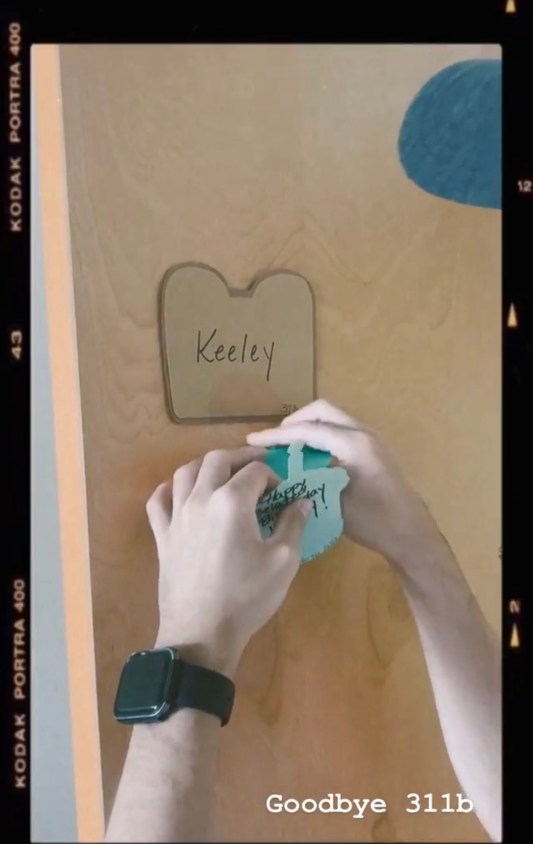
    I’ve read dozens of pages of fellow students’ “goodbye blogs” and listened to countless stories of people reliving their glorious college days. At the end of every story, you’ll find little tidbits of advice and takeaways for those who still have time left in their college journey – some practical, some fun – and maybe even hear some college regrets. I’ve laughed with these seniors and empathized with them as they mourned the loss of their college experience. However, I realized that my “goodbye blog” sounds starkly different than everyone else’s before me. Currently a junior at UNCW, I’m not bidding goodbyes to this wonderful university quite yet. Instead, I’m saying goodbye to my traditional college experience. Moreover, no advice from any alumni could prepare me for this departure.

    Nearing the height of the COVID-19 pandemic in the United States, my college experience has taken a drastic turn in the span of four weeks. I packed up my dorm and turned in my key – no inspection needed – in one hour on a Saturday morning. The move-out weather was much more bearable in March than it typically is in May. No sweat, no fuss, no smiles. As I drove off campus with my car stacked high with boxes and bins, I made sure to take in every building, every crosswalk, every pesky speedbump. As I passed Leutze Hall, I audibly said a goodbye and turned to my boyfriend to express my petty sadness that I wouldn’t get to carry out my end-of-year tradition – one large mocha shake from Port City Java. He swiftly took a right to the closest PCJ in a resound understanding that college just wouldn’t feel like college for the next few months – and there was nothing petty about those feelings that accompanied that fact after all. With a mocha shake in my hand and car heavy with uncertainty, I departed Wilmington and UNCW with no real assurance of when I would return.

    IMG_4738

    It’s been two weeks since that day, and the uncertainty remains heavy in the air. As the university transitioned to online classes for the remainder of the semester, I’ve found this new college life to be one that is much more difficult to manage, despite the convenience of attending class in my pajamas. The work is relatively the same, yet I’ve lost a real connection to the meaning behind it. Day in and day out, I reach a consensus that my enthusiasm and drive behind my work is directly related to the passion in the voices of my professors. Though I get to hear them via Zoom and other mediums, it’s simply not the same without the added jokes, pop-culture talk and Dr. Pullum asking me every Monday if I got married over the weekend. Maybe it’s not their passion alone after all that keeps me inspired, but rather these professors’ constant acknowledgment that the little things really are the biggest. They are the heart of the Department of Communication Studies and they hold us up well – and more than ever, I think they’re right about those little things.

    My UNCW experience is entirely made up of a litany of little things. Beyond lectures, homework and exams, it’s walking in a torrential downpour to class, seeing the spring flowers bloom, airdropping funny pictures to random people in the library, having that extra shot of espresso and getting your whole class to beg Dr. Weber to give you those extra exam points via email at 2:00am (it worked). It’s the laughs, the cries, the stress and the joy – all with each other. I have to say goodbye to all of that for the foreseeable future. It’s a tight gripped, don’t-want-to-let-you-go goodbye, but with a hopeful “I’ll see you soon” on the other end.

    Processed with VSCO with hb1 preset

    Keeley Brown, UNCW COM Class of 2021

    Goodbye Friends Photo by Jan Tinneberg on Unsplash

  • Subjective Social Inclusion & Its Growing Importance

    Subjective Social Inclusion & Its Growing Importance

    In recent years many companies have made strides in increasing social inclusion in marketing. While these efforts are appreciated it begs the question: how is social inclusion defined when practicing inclusive marketing? Social inclusion has various definitions each an iteration of words such as improved opportunity and acceptance. 

    In the 2018 article “Subjective Social Inclusion: A Conceptual Critique for Socially Inclusive Marketing” authors Licsandru and Chi Cui chronicled what the full extent of social inclusion entails. The article focuses on the example of ethnic marketing which can be split into two categories: mono and multi-ethnic. Mono-ethnic marketing communication utilizes “cultural representations from one ethnic background to reach a narrowly defined ethnic audience.” In contrast, multi-ethnic marketing communication represents multiple ethnic backgrounds to reach an ethnically diverse target audience. The present lack of social inclusion within ethnic marketing demonstrates its importance as an increasingly relevant subject considering the ethnic minority population are projected to be the numerical majority by 2044. This estimate indicates that companies and organizations will very soon need to gain a better understanding of how to properly market to a more diverse audience. 

    To effectively market to multi-ethnic consumers, companies must first recognize the meaning of social inclusion. Licsandru and Chi Cui evaluated and expanded on extant literature concerning perspectives of inclusion on mental health, disability, sociology, poverty, feminism, and education. These areas of analysis aided in developing an all-encompassing definition of subjective social inclusion(SSI). The authors define SSI as an “individual’s feelings of belongingness to a host society in which he/she feels accepted, empowered, respected and fully recognized as an equal member.” The definition was developed through extensive research on the terms above and evolved from understanding the definitions of the following words: 

    Empowerment increasing personal and interpersonal power that allows people to take action to improve their life situations  

    Social Acceptance- other people signal that they wish to include you in their groups and relationships 

     Equalityconcerning fairness, justice, balance, and sameness being equal before the law and having equal opportunities to having equal social relationships with a non-vulnerable individual 

    Respectsomething to which we should presume every human being has a claim, namely in full recognition as a person with the same basic moral worth as any other 

    The understanding of these individual words coupled together in relation to SSI helps craft the newly developed definition. Now that the meaning of SSI is clear, there is a more accurate picture of how social inclusion should be marketed. There is no denying that a semblance of inclusivity has been integrated into marketing in recent years however, it appears in a fairly broad context. In terms of ethnic marketing, broad inclusion disregards variety. The danger of mono-ethnic marketing communication is that it often mistakes stereotyping for inclusion. While any presence of attempted inclusion is valued, the intention of such is counterproductive. Being inclusive of only one ethnic background leads others to feel misrepresented within their community. Social exclusion has a multitude of negative effects on an individual’s behaviors. The desire to withdraw from the cause of social exclusion is just one example of its effect. Therefore, companies that exclude individuals can lose their association almost entirely. The exclusion of individuals in target markets can affect their “self-perception, self-esteem and social status.” The lack of portrayal results in a loss of buying power from those individuals. Not only does this exclusion negatively impact those left out but it can depict companies and their represented target market as “prejudicial and non-inclusionary.” This calls for an overhaul of mono-ethnic marketing in favor of utilizing the benefits of multi-ethnic marketing.  

    While SSI may not be a core value in the practice of marketing for companies at present, in the coming years its importance will become increasingly significant. By employing subjective social inclusion in marketing, companies can expand their consumer base. When consumers feel represented in marketing efforts their loyalty to the brand increases. Beyond being what’s right, the inclusion of multi-ethnic consumers in marketing will be necessary due to the projection of the ethnic minority consumer base becoming the majority by 2044. Inclusion is a subjective word but understanding its meaning completely will allow companies to acknowledge where their efforts of inclusion are lacking and how to adjust to incorporate this newfound definition. 

    Kaitlyn Schissler is a senior at UNCW majoring in Communication Studies with a concentration in IMC and is working toward her business minor. She hopes to utilize her knowledge of IMC to guide clientele into furthering their reach beyond what is expected by focusing on inclusivity within branding. 

     References:

    Licsandru, T. C., & Cui, C. C. (2018). Subjective social inclusion: A conceptual critique for 

    socially inclusive marketing. Journal of Business Research, 82, 330–339. doi: 

    10.1016/j.jbusres.2017.08.036 


  • Branding Flips: The Role of History in Corporate Brand Strategy

    Branding Flips: The Role of History in Corporate Brand Strategy

    I’m sure that we’re all familiar with the ideas and associations that come along with the corporate world and its marketing tactics or strategies. Maybe you’d use the words fast paced and evolving, or perhaps reinventing and expanding. Whatever words you choose to use in describing the corporate realm and corporate branding, it’s no secret that brands consistently aim to use current, popular topics to aid them in their marketing and brand strategy. We’ve seen it happen on social media through brand’s meme usage, celebrity endorsements and even through brand embodiment of social inclusivity movements. In looking at our positions in the field of Integrated Marketing Communication (IMC) and the work that we have completed, we’ve come to understand why relevancy is vital to corporate branding strategy, as well as the overlooking of past brand identities and flops in marketing tactics. However, what if delving back into corporate brand history, failures and all, could actually aide and become beneficial to the brand as a whole? Well, this is exactly what brand researchers have implied recently 

    In a 2019 article published in Business Horizons magazine, Iglesias et al. states, “Managers are constantly looking to the future, identifying the emerging needs of consumers, anticipating the actions of their competitors, and innovating new products and services. However, because of this focus on the future, managers can forget or even reject a brand’s history.” According to the article, large corporate brands such as Adidas, Burberry and Apple have all gone through branding periods in which they overlooked their brand’s rich history and past branding in efforts of being more relevant and futuristic. Subsequently, because of these history-rejectionperiods, brands saw a huge loss of strategic focus, the pursuit of brand extensions, unstructured innovations and diminished employee engagement – all because of the desire to keep pushing their company forward and leave the past behind. However, after suffering these losses, the article notes that these corporate brands decided to utilize their unique and rich history in order to refocus and re-strategize their companies and brands (Iglesias et al., 2019). So, a brand’s history can improve their future? Exactly! 

    Looking at past case studies and arguments regarding history in brand strategy, the researchers have provided us with several points in regard to why history is an integral part to brand strategy.  

    1. History enriches the understanding of organizations as located in time; 
    1. History inspires future strategy and corporate brand identity by drawing on those historical elements and resources; and 
    1. History can make the case for change, motivate people to overcome challenges and help them enact strategies (Iglesias et al., 2019).  

    Let’s think about this for a second. Can you think of any corporations (besides the aforementioned examples) that use their histories to brand themselves and benefit their marketing strategies? How about banks and insurance companies? Wells Fargo uses a tagline stating, “A proud history, a strong future together,” Allstate Life Insurance Company is famous for saying “You’re in good hands, and Nationwide says, “We’ve been helping people protect what’s important for more than 90 years.” Banks and insurance companies are prime examples of how brand history aids in current and future marketing strategies. Afterall, we trust these “history-embracing” companies with the most critical things in our lives. In the article, Iglesias et al. contends big corporations like these demonstrate “how history can be a valuable resource in defining and implementing a corporate brand strategy.” 

    Based on the research results, the authors propose a systematic model that can “enable the progressive institutionalization of history in corporate brand strategy making”. The model consists of four stages tailored towards brand managers: 

    1. Managers should uncover history and bring it from latency to focus;  
    1. Managers should promote those organizational structures and processes that help history to be remembered;  
    1. Managers should promote the curation of history in order to make it relevant for the current context; and  
    1. Managers should embed history to support the future strategy (Iglesias et al., 2019). 

    Overall, the Iglesias et al. model of history corporate brand strategy lays out a clear and direct path for corporations and their managerial teams to build their branding on, ensuring that the foundations of a brand and its peoples are included in marketing communication. Even more so, with working in IMC, the model provides us with a systematic base for future brand strategy needs and revisioning processes that may be needed as time and trends progress forward. While people say the phrase “history repeats itself” in oftentimes negative connotations, we can turn the phrase into an IMC brand strategy slogan that will benefit companies for years to come! 

    Keeley Brown is a junior at the University of North Carolina Wilmington, majoring in Communication Studies with a concentration in Integrated Marketing Communication. She was born and raised in Fayetteville, NC and plans to return home after graduating in 2021. Currently, she is interested in finding a job in advertising post-graduation. 

    When she isn’t in school, you can find Keeley with a large cup of coffee in hand, strolling around local shops, or working on freelance design projects.  

     References:

    Iglesias, O., Ind, N., & Schultz, M. (2019). History matters: The role of history in corporate brand strategy. Business Horizons, 63(1), 51–60. doi: 10.1016/j.bushor.2019.09.005 

  • Social Media: A Brand Experience Marketing Tool

    Social Media: A Brand Experience Marketing Tool

    Written By: Casey Buchanan


    Has a big name brand ever liked your comment on their post? Or comment back to you? Maybe they even gave you a follow? Social Media interactions can help to make or break a brand experience. 

    Along with the internet came the introduction and evolution of social media. Social media has been seen as a marketing tool for companies and organizations to promote events, services and for branding. But how can a brand utilize social media to create a positive branding experience for its consumers? The brand experience can be explained as a subjective, individualistic consumer response to a product, service, or brand. Categorized into four different response types; sensory, affective/feelings, behavioral, and intellectual. A study conducted by Faseeh Amin Beig, a research scholar of Central University of Kashmir, helped to identify the top two ways brands can create those positive experiences through their social media accounts; content sharing & interaction.

    The main objective of Beig’s study was to “investigate the impact of content sharing and interaction on [the] four dimensions of brand experience (sensory, affective, behavioral, and intellectual)” (Beig, 2018). Beig focused on 10 big name brands; Puma, Adidas, Spykar, Levis, Nike, Wrangler, John Players, Peter England, US Polo and United Colors of Benetton, and only studied their Facebook pages. In order to create a baseline, a pretest was done via a Google Form to 100 recipients to judge their recent activity with these brands. After analysis and baseline testing, Beig conducted a mall-intercept survey using systematic random sampling, every seventh mall shopper was targeted. Out of 300 people approached, there were 205 total complete responses, a 68.3% response rate.

    The results of Beig’s study show that content sharing & interaction does indeed influence the four dimensions of brand experiences. This can help brands understand that their social media presence has a great impact on consumer choice in brand names. From the survey results, Beig concluded that “content sharing & interaction positively impacts all the dimensions of brand experience… Interactions has the strongest influence on the sensory dimension… content sharing has the strongest influence on the intellectual component.” With this information, it is now feasible for brands to justify that social media marketing is a critical anecdote to provide a positive brand experience for its clients.


    Content Sharing

    For social media, content can be considered as anything from just a photo to a flyer for an event. It is created by marketers within organizations to promote, inform and brand their company on social media channels such as Facebook, Instagram, Twitter, and LinkedIn. The purpose of content sharing is to build engagement and social interaction between current and potential clients, as well as other brands. In Beig’s study, content sharing had the most influence on the intellectual component of brand experience, followed closely behind by the affective dimension. Under the intellectual component, clients do not have to think about what the brand’s message is trying to get across. It promotes critical thinking and curiosity but the main message is in plain sight for the client. Affective and intellectual dimensions can cause the client to be more inclined to choose that specific brand over another due to seeing that brand’s content and activity on social media.


    Interactions

    Brands also have the opportunity through social media to interact with their followers, current and potential clients. When a follower comments on a post made by the brand, it is proven that if the brand is to “like” or comment back, that follower is more likely to choose that brand. Showing emotion and care through interactions on social media has a positive impact for brands, especially the big names like Nike, Puma, Wrangler, Apple, etc. The results of Beig’s study shows that interaction has the greatest influence on the sensory dimension of brand experiences. This means that the brands who utilize interactions leave a strong impression on their clients. Getting a like, a comment, or even a follow from one of your favorite brands can cause a positive reaction and keep you coming to buy their products, making you a loyal customer.

    All of this goes to say how important social media marketing is in the integrated marketing communication world. Social media is becoming such a prominent thing within the future generations daily lives, meaning that a presence on social media is crucial for brands to survive. Clients resort to social media to get feedback, reviews, information, and photos about brands in order to decide on which one to choose.

  • Marketing takes on Mommy Bloggers

    Marketing takes on Mommy Bloggers

    Social media influencers use their personal brand to sell products through their social media following. And there’s no exception for moms. Mommy blogging has grown tremendously popular over the last few years. Sharing their experiences and motherly tips has landed many of them financial support through sponsorships or paid content. This form of social media marketing is extremely successful as followers trust their favorite bloggers opinions. These mommy bloggers (or mombloggers) are seen as influencers in their own community and rewarded with high dollar sponsorships. “We Connect With People Through Stories” examines the frequency of commercial content and personal branding tactics used by mombloggers.

    The Method 

    The research was conducted in Malaysia and focused on mother bloggers. They used BlogAdNet, which is Malaysia and Singapore’s largest blog advertising network to discover the top mommy bloggers at that time. The standards of sample were based on if the blogger wrote in English, made money from social media, used social media frequently, and posted about their children. After discovering the most popular mommy bloggers, they reached out for interviews followed by conducting content analysis from their social media. They investigated four women, Magdalene, Amanda, Yvonne, and Wendy. Magdalene and Amanda were more popular than Yvonne and Wendy. All participants were middle class with further education and supported by their husbands who worked full time. The content analysis determined different categories to separate posts into. These categories were: commercial (ads, paid links, business), family related, personal, children, parenting, outfit of the day, consumer, and miscellaneous. They later narrowed these categories in to four main, broad categories: commercial, family, personal, and other.

    The Results

    They discovered that commercial content was the second highest form of content posted on the mommy bloggers’ social media. Magdalene and Amanda utilized Instagram and Facebook to successfully create a monetizable audience. Yvonne and Wendy only used Facebook and their blogs to feature sponsored content. The article also exemplified how the mommy bloggers cultivated and relied on their personal brand. Amanda describes how she used her online boutique to market herself as an entrepreneur. Likewise, she is in a dual income relationship as many of her followers are in as well, so she targets women who have “spending power” and prioritizes the quality of her child’s products. She also encourages consistency in posts to create an aesthetic experience for users. Magdalene discussed how she uses fashion and authenticity to highlight her brand. Their bands are threatened when it comes to featuring sponsored content as they must balance personal and commercial content appropriately. Mombloggers must remain authentic when accepting brand deals to avoid losing followers.

    Mommy’s Money 

    Mommy bloggers are strategically marketing their personalities to gain supporters. They share their stories about being a mother to connect with their followers. By doing so, they can quit their 9-5 job, spend more time with their children, and make substantial income. Magdalene and Amanda were both making income that equates to a full-time job. However, being a full-time blogger didn’t happen overnight. To grow a social media career, one must be privileged enough to dedicate a mass of their time to boosting their online presence. All the mommy bloggers discussed in the article relied on their husband’s income to jumpstart their blogging career. Once their career starts earning money, they’re set as long as they continue posting about their life.

    Personal Branding 

    The rise of social media marketing has allowed mothers to express themselves creatively through the monetization of personalized content. They spend time creating their personal brand, which they can later sell in return for sponsored content. If they can maintain their brand image, social media influencers will remain successful in selling products to their supporters.

    The Future of IMC

    Anyone can make money online nowadays. Social media influencers are one of the newest job fields and are quickly rising due to its impressive paycheck and remote work. Mommy blogging is just one example of social media niches. Beauty gurus, gamers, and finance specialists are among the social media influencers on the rise. As proven in this article, these influencers are constantly thinking of their brand. Consumers trust influencers will provide honest reviews of products and endorse high-quality items. Employing a social media influencer establishes the trust between producer and consumer many companies desire. Integrating social media influencers into marketing campaigns will increase brand awareness and positively impact purchasing behaviors. Ensuring your product aligns with the social media influencer’s niche is essential. While followers trust their favorite influencer, the product must appeal to the influencer’s audience.

    Written By: Allison Phillips 

    References:

    Hopkins, J. (2019). “We Connect With People Through Stories”: Gender and Affective Labor in Momblogging. International journal of communication [Online], 4702+. Retrieved from https://link-gale-com.liblink.uncw.edu/apps/doc/A610367781/PPCM?u=wilm99594&sid=PPCM&xid=9aaf4a7b