Blog

  • Marketing for Vacationers


    Sun tans, sand between our toes and palm trees are images that come to our minds when thinking about spring break. For many college students, spring break is a chance to escape the monotony of the academic lifestyle. This escape often incorporates tropical beaches and fun times with friends. Spring break is about getting away for a little while before the stress associated with the end of the semester creeps up on us.

    Since so many students decide to travel during their spring break, travel agencies take notice of this huge resource of customers and tailor a variety of packages to students. These agencies are aware that students are traveling on a restricted budget, and therefore market cheap packages to them.  Popular packages include flights and rooms is hotels  for five nights (because spring break is usually Monday through Friday).

    One travel agency in particular is cashing in on the huge revenue associated with the student demographic, StudentUniverse. The agency’s website promotes the company as a resource for students to find travel deals catered to them. On the website students can search prices for flights going to their potential spring break travel destinations, activities to do while on vacation,  and cheap hotel rooms. StudentUniverse creates travel packages to popular spring break destinations, such as Panama City and Cancun.

    All though StudentUniverse markets itself as a travel agency for students, it also provides profitable advertising and marketing tactics for companies. The StudentUniverse website shares the benefits of marketing to students with companies. The website also tells companies how they can connect with students without the internet.

    It is apparent that StudentUniverse works with other companies when looking at the activities and events it suggests for its student customers.   The website promotes specific restaurants, parties and other things for travelers. Companies are aware that StudentUniverse can connect them with thousands of potential customers. These customers are looking to go on vacation, have fun and spend money.

    StudentUniverse is an excellent example of the ways companies are marketing to us, without us ever being aware of it. Maybe the next time you are planning your trip you will take a  minute to consider the locations and activities your travel agency is promoting and why.

    ~Hunter, Josh, Molly and Ashley

  • Don’t Forget to Wear Your Sunscreen!

    When you hear the words “spring break”, what are the first things you think of?  I can almost guarantee that among the first few thoughts that float into your head, beach, tan, fruity cocktails, and parties are among them.  For college students, spring break comes at a time when the semester is just beginning to take its toll: classes are becoming more difficult, spring weather is making the thought of skipping class even more tempting, and everyone is getting even more impatient for summer.  Basically, spring break is a time to relax and let loose.

    Some college students, however, take this meaning of “letting loose” a little too far.  While on vacation, they may find themselves letting down their guard and making horrible, life altering decisions.  More than a few college-aged women have been abducted from tropical spring break destinations such as Aruba and the Bahamas, and many students are coming home with a few “it was spring break, so it was okay” excuses, and colleges are beginning to take a stance.

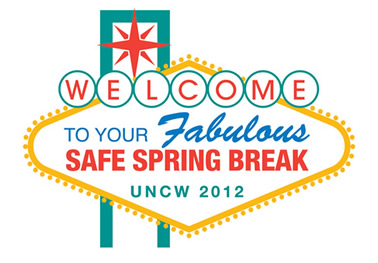
    Many universities around the nation are recognizing that spring break can be a dangerous time in a student’s life and For example, the University of North Carolina Wilmington holds a Safe Spring Break program every year through Crossroads, a substance abuse prevention and education program.  They held events such as “What Happens in Vegas”, where you are taught the dangers of random hook-ups that are so publicized by the media as happening in Vegas, “Don’t Burn Your Poker Face”, where you learn how to get a healthy tan, and “Pillow Talk: Hooking Up”, where the subjects of sex and alcohol are brought up and discussed at length.  Crossroads uses the promise of free t-shirts, food, drinks, and prizes to bring together hoards of students who will bring this useful information with them on spring break.

    Don’t get me wrong, I’m not saying that spring break isn’t the time to let loose and have a fun, I’m just saying that everyone should have fun responsibly.  Enjoying spring

    break doesn’t mean you have to lose your inhibitions, it just means you have to forget about that assignment due next Monday, and let the pressures of the semester roll out with the waves.  So sit back in your beach chair, spread on some SPF 30, and relax, because I know that’s what I’ll be doing!


    Have a safe spring break all!

    – Christina Stevenson, Mollie Berthold, Dorothy Conley, & Laura Simmons

  • Spring Break on a Budget

    Spring Break means so much more than just five days off for college students; Spring Break is a beacon of light adeptly guiding students through the midterm haze. After we’ve finally clawed our way to the edge of the homework whirlpool, the vacation days are there to rejuvenate us and get us ready to tackle the final stretch of the semester. For weeks before the actual break finally arrives, everyone discusses their big plans of basking in the sun on sandy beaches and finally indulging in some much needed relaxation. Spring Break allows all of us to give in to our wanderlust and escape with our friends to various alluring destinations. One company that has tapped into this specific demographic is Student Travel Services. They recognize this college cultural phenomenon and run their entire company around accommodating and appealing to student needs.

    Student Travel Services (STS) was founded in 1984 by two recent college graduates that aimed “to specialize in the marketing and operation of travel services designed specifically for students” (ststravel.com). What sets their company apart from any regular travel service is their specifically tailored student deals and packages. STS is trying to win over the student market by offering massive amounts of incentives, including the ever sought after complimentary t-shirt. Their logo thoughtfully attempts to reach their demographic by featuring a bear lounging around in sunglasses sipping a refreshing drink complete with a tiny umbrella. Their event pictures look much like those posted on one’s Facebook page and their destinations include all of the now classic spring break locations, from the Bahamas to Mexico to Florida. These familiar elements exist to make the students feel comfortable navigating the site and bring up associations and expectations of the now traditional Spring Break adventure.

    While the company claims to be completely student-centric they do not ignore where the customers’ funds may be filtering down from and even include a nice blurb to the parents on their website. They invite the parents on all of their excursions but they must stay in a separate location from their offspring, because only students are eligible for the discounted rates and rooms. The company also promotes safety abroad and details their protocol for concerned trip goers and their families, promising that their hotels/services/and event managers cater specifically to well-trained young adults. STS also gives out further discounts to those who go through their “become a rep program” where one has the opportunity to “sell trips, earn cash…go free.”

    The company uses tactics similar to guerilla marketing to make sure their message is the loudest amongst their target audience. STS has infiltrated almost every area where a college (and now high school) student may seek out or stumble upon their services utilizing everything from their blog, Twitter, Facebook, YouTube, and interactive campus information sessions. Student Travel Services strives to be as relevant as possible with the young adult crowd and molds their messages and product to fit in the consistently flux niche. Their only flaw is that they are banking on the idea that college kids all want the same sun drenched, MTV, novelty experience, and while this may work for now, it is good to keep in mind that even TRL eventually got cancelled.

  • Working For Change

    Many people hear the word entrepreneur and assume a person makes a ton of money, but being an entrepreneur doesn’t necessarily mean you are trying to make the big bucks.  Many entrepreneurs create organizations that are non-profit in order to use their ideas for the greater good. With few exceptions, these entrepreneurs have the task of accomplishing big things with relatively few resources.  For example, the  KONY2012 campaign that is currently sweeping across Facebook, Twitter, Pinterest and other social media networks to raise awareness of the Invisible Children in Uganda .

    This is a campaign not meant to make money, but to make change. Not many people would know about Joseph Kony, I know I didn’t before seeing the 30 minute video blowing up on my Facebook feed, but the economical, informative, and instant attributes of grass-roots marketing has transformed Joseph Kony from relative obscurity into a household name in a matter of days. Using posters, videos, t-shirts and other advertisements are an excellent way to educate people, but Facebook can educate 750 million people in a matter of days. So, by bringing these channels of marketing together and understanding the benefits of each individual resource, Tri has brought about an impressive start to their Kony 2012 campaign.


    Their items for the April 20, 2012 take action night where everyone is asked to purchase the Kony kit to paint their cities KONY, are completely sold out of everything.  The effects of the viral campaign have reached astronomical numbers. 55 million views in just a matter of days for a thirty minute video on YouTube is almost unheard of.


    Authors’ note: While the purpose of this blog is to explore the ways in which IMC is used in “real world” situations, we would like to urge those that are interested to follow the following links regarding the message behind Kony 2012.

    http://www.youtube.com/watch?v=Y4MnpzG5Sqc
    http://kony2012.s3-website-us-east-1.amazonaws.com/

    Leanna Marshall, Bryce Koonts, Leslie Tyler, Julius Roberts

    Here is the live blog!

  • Get your Fuzzy on!

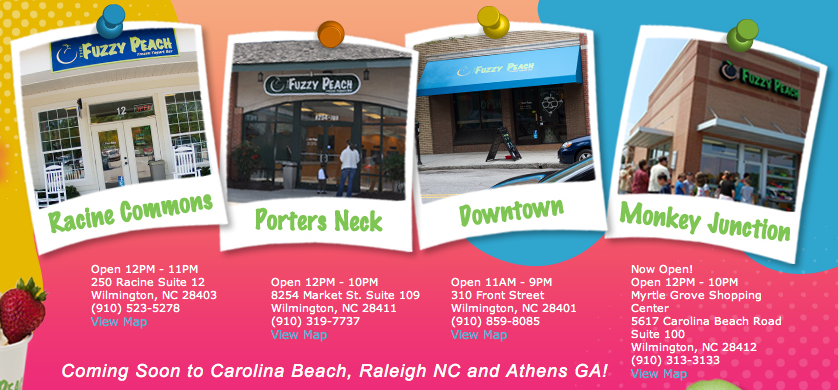
    Looking for something new and exciting in your life?  The Fuzzy Peach is a self-serve frozen yogurt bar that allows their customers to be as creative as they’d like. Located in Racine Commons, and in three other sections of Wilmington, The Fuzzy Peach offers eight different flavors of frozen yogurt each day. Also available are rows full of toppings including fresh fruit and candy to make each yogurt creation unique. The Fuzzy Peach is a healthy alternative to dessert, but still satisfies the sweet tooth that we all have. Customers pay by the ounce, so they’re in control. Add on ten toppings, or maybe just one, but in the end the customers will have exactly what they’ve been wanting. Rocco Quaranto, Wells Struble and Jason Nista graduated from the Cameron School of Business from the University of North Carolina Wilmington in 2008. The trio met their freshman year in the dorms and ran track together. They graduated and continued on to peruse employment in the corporate field, but it didn’t take long before they were bored with their jobs and wanted something new and fresh. The young entrepreneurs came back to Wilmington, NC two years after graduation and decided to start their own business named The Fuzzy Peach. They got the idea of a frozen yogurt dessert bar from California and thought it would be a business that would be successful in the Wilmington market.  Needless to say they found a niche and have struck gold in the Wilmington area.   Did these young entrepreneurs place their yogurt shop in Wilmington by chance, or was it a strategic planned marketing move?  Their knowledge of the Wilmington area and their locations for their stores leads us to believe it was a strategic move on their part.  Their placement of the first Fuzzy Peach store is conveniently located close to UNCW, and their probable target audience is college students.  Through word of mouth and advertising, this location became a popular spot for college students in Wilmington craving frozen yogurt.  Once that location became a hit, they opened up their second location in downtown Wilmington.  This location offers free frozen yogurt to a different company downtown and their employees on certain Fridays advertised by the store.  This second store’s target audience is businesses and professionals working in the downtown Wilmington area. However, they are also still open late for young students wandering downtown.  Their Monkey Junction location is their third, and attracts people from the surrounding areas much like their newest location in Porter’s Neck.  A Fuzzy Peach yogurt store will be coming soon to Carolina Beach, which will further expand their target market.  Each location offers specials, such as T-Shirt Tuesday where customers wearing a Fuzzy Peach shirt into the store will receive 10% off their frozen yogurt purchase.  The future seems very bright for the three entrepreneurs who have brought a frozen yogurt empire to the Wilmington area. -Kelsey Bendig, Brooke Keller, Andrea Blanton, Brian Burch

  • Shave Time. Shave Money. Go Viral.

    You may have seen the latest viral ad campaign that has surged through the Internet and created quite the buzz. It’s a video from DollarShaveClub.com, a recent startup company that ships high quality razors for as little as $1 a month. The video has reached close to 700,000 views on YouTube in just two days.

    The video features Michael Dublin, founder and CEO of Dollar Shave Club, leading the viewer through the company’s warehouse. Michael claims that their blades aren’t just good, they’re “f***ing great”. Michael continues by bashing the competition and “fancy razors” with high-tech gear, saying how handsome your grandfather was with just one razor. The level of absurdity in the video has been compared to the success of the Old Spice campaign, which features deadpan humor and ridiculous situations.

    The marketing campaign may have been more than Dollar Shave Club bargained for. The reaction was so strong that the company’s website crashed soon after the video launched due to the amount of traffic they were receiving. With the website shut down, Dollar Shave Club potentially lost revenue from the overwhelming demand. In the world of modern business, success can literally happen over night, as displayed by Dollar Shave Club’s huge viral impact. With startup companies trying to get their name out there in the fastest and cheapest way possible, creating a hit video may be the way to go, as long as your prepared for the traffic flow afterwards.

    The popularity of the campaign raises some questions regarding the changes in modern advertising. Having your CEO star in a video where you pronounce that your blades are “f***ing great” is risky,  but it seems that the risk, blatant honesty, and the ability for a company to poke fun at itself is what drives a business to viral success. In comparison to the Old Spice campaign, Isaiah Mustafa’s character became so popular that Old Spice went beyond TV adverts and began answering viewer questions on YouTube. While this is still just a character that sells deodorant, it became much more than that to viewers because it didn’t feel like a commercial. If commercials have a self-awareness of what they are, the audience recognizes that awareness and is more lenient to simply enjoy an advertisement as entertainment. Perhaps this is what Dollar Shave Club was going for, simply telling people what they are in the most honest, exciting, and fun way that they knew how.

    By: Hunter Wilson, Josh Vester, Ashley Oliver, Molly Jacques

  • Surfing Your Way to Success

    Entrepreneurs, as well as many other companies, rely on Integrated Marketing Communication to get the word of their business out to the public with multiple methods. A fellow UNCW Senior in the Communication Studies department, James Connolley, has been an entrepreneur using IMC to promote his business, JC Surf Camp. James has been teaching people of all ages how to surf for 8 years and has been an entrepreneur, owning JC Surf Camp for 6 years. His decision to start his own surf camp business started with a conversation with his high school bible study leader. James has a love for surfing, kids, and Jesus and decided the best way to combine all the things he loves into his surf camp. He likes to share his message through his surf camp by the quality and professionalism in his every day work.

    When the surf camp started in 2006, the only way James was communicating with his publics was by posting fliers in the storefront of a local surf shop. His business quickly started to grow and in 2007, James decided he wanted to market his business to a broader audience. He paid someone to build his own website and just recently added new content and features. James uses many other ways to communicate to his public by using mass emails, direct mailing, brochures, website, and social media. The best marketing overall with JC Surf Camp is word of mouth advertising and partnerships with other local camps in Wilmington. More recently, James was able to advertise his business through the local news station WECT.

    Link to WECT Live bit on JC Surf Camp

    The JC Surf Camp team considers surfing one of the greatest blessings in life and goes to great lengths to ensure others see it the same way. Each instructor at JC Surf Camp has gone through an extensive SurfInstruct Training Program before becoming a surf instructor. This program was developed to ensure every instructor knows ocean safety, surf safety, CPR and First Aid certified, and knowledge of different teaching methods for all levels, such as, kids, teens, groups, or private lessons. Another way James and his team ensure safety is by providing UV protected rash guards and soft-top surfboards. Safety is very important to all the JC Surf Camp instructors to make sure they are providing a safe learning environment. James stated it perfectly when he said if people feel safe, they are able to have fun. This is one of the messages James tries to communicate to retain and maintain customers.

    Many times entrepreneurs start from the ground up and have to take what they have and make the most of it. Since James is in the communication studies department at UNCW, he has been able to take the knowledge learned in communication classes and IMC classes and implement that in his business. James, as a student and entrepreneur, thinks of entrepreneurship as an adventure and has far exceeded what many entrepreneurs his age are capable of.

    Learn how to surf today!

    By: Laura Simmons, Dorothy Conley, Christina Stevenson, Mollie Berthold