When I tell most people what my plans are for my 21st birthday, the first thing out of their mouth is: “are you serious?” I don’t plan to be with my friends getting wasted, I plan to be with my family. For any other birthday, this wouldn’t be odd. The 21st birthday, however, no longer belongs to the family. It belongs to friends, alcohol, and the bathroom floor.
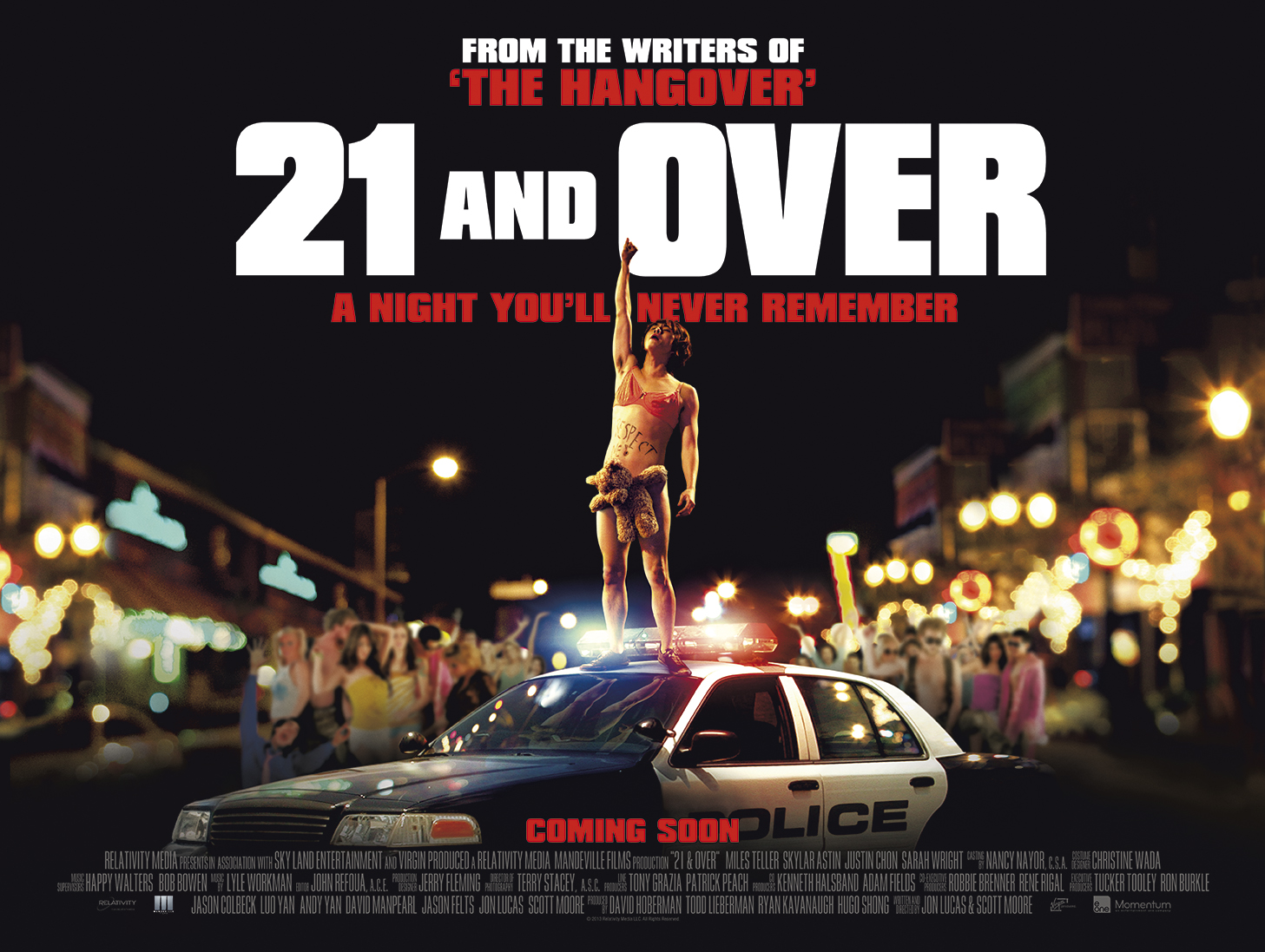
Movies like The Hangover, Project X, and Superbad have become household names… especially in a college town on a Friday or Saturday night. The newest contender trying to add its name to the list is “21 and Over.” While I was watching the trailer, I couldn’t help but roll my eyes a little bit. Albeit the movie looks hilarious, the cultural stereotypes it perpetuates are getting a little old.
The three main characters are a set of best friends. One happens to be turning 21 and has been forbidden to party by his father. The other two boys convince him to disobey his father and celebrate in true, over-exaggerated, Hollywood fashion. During the trailer one of the boys exclaims “As his best friends on Earth, we have a moral obligation to get him drunk as f***.” That statement sums up what upsets me the most about this particular genre of movies. The message these movies are sending is that the most important thing in life is getting wasted, partying, and dodging responsibilities. Rather than creating a culture centered on harvesting the potential within an individual, Hollywood is creating a culture centered on the effect drugs can have. These movies add to the multitude of pressure young adults are already facing in regards to alcohol, drug use, and partying.
As educated consumers and college students, these movies present a difficult challenge. It is one thing to watch the movie, it is another to allow the cultural expectations it perpetuates to dictate how you spend your free time. Don’t get me wrong, there is nothing wrong with letting loose every once in a while but we don’t have to prioritize partying over everything.
Advertising can virtually take place through any medium, but today the forerunners are through television and the Internet/social media. With all sorts of different technologies available to us, other forms of advertising have nearly become obsolete. So the question is: how do these mediums stay relevant in a culture dominated by technology/digital advertising? When I was deciding what I wanted to write this post on, I did some scanning on the Internet (I know… ) to get some ideas. I came across some really interesting articles that sparked this notion in my head.
The first article I came across was about a billboard in Lima. Lima is situated right next to a desert, and the average rainfall per year is only about 1.1 inches. Being a coastal city, Lima does have one good source of water in the air, which can reach up to 98% saturation some days. Given this information, scientists and advertisers in Lima teamed up to create a billboard that would harness this damp air and convert it into drinking water for the citizens of Lima. The billboard is able to generate about 25 gallons of clean drinking water a day. So not only is the billboard receiving high traffic, but it is also providing the service of clean water.
On a completely different note, across the world in Dubai, Fanta and advertising agency OgilvyOne created the world’s first ‘tastable’ print advertisement. The advertisement encourages the consumer to quite literally tear a piece of the advertisement off and take a taste, in order to promote the new orangey flavor of their soda. Although some may be hesitant to actually taste the advertisement for a number of different reasons (germs, etc.), it is certainly receiving an abundance of attention throughout various other mediums, such as articles, blogs, and word-of-mouth.
And lastly, bringing it back home to the United States, a few weeks ago HBO placed an advertisement in the New York Times promoting their television show “Game of Thrones”. The advertisement covers two full pages and features the shadow of a dragon over ‘fake’ stories that are actually relevant to the show. HBO placed similar advertisements on their own building in Los Angeles and on websites such as IMDB.com.
It is refreshing to see that there are companies out there still using other advertising mediums besides just television and the Internet/social media. Also, I am relieved to see there is still some creativity and thinking outside of the box left in the world. In the end, it will be these advertisements that will be remembered, regardless if they were successful or not, because of their uniqueness.
Happy Spring Break! Many students have spent the last couple months (or longer) trying to figure out where their Spring Break time is best spent. If you’re like me, this preparation may have involved a thorough internet search to find the perfect hotel for your week off. An increasing number of hotel chains have discovered the perks of social media use and are developing ways to satisfy the needs and wants of their customers on an increasingly personal level.
Social media sites such as Foursquare, Twitter and Facebook Places, allow a user to “check in” or log their current location. While some companies may be skeptical about the relevance of such tools to the business that they do, the hotel industry has discovered that these services create a greater feeling of inclusion and personalization to their guests. Now hotels can invite guests to “check in” both literally and virtually, completely committing to their stay. Another added benefit of location-based check-in tools is the ability to track and incentivize a guest’s stay. Hotels participating in incentive programs for social media have been known to use a variety of rewards to reach out to their social media circle; examples include anything from a discounted meal in the hotel restaurant to late checkout times for the final night of your stay. Some hotels have gone so far as to collaborate with airlines or credit card companies to create an unofficial “rewards program”; offering discounts and frequent flier miles for using your American Express card or staying at the Hilton.
Of course with programs such as these, there can (and will) arise questions of security and privacy. Many savvy social media users are hesitant to place their exact location online. The flip side of this is that many users don’t want the world to know where they are NOT (for instance at home…protecting their belongings). While safety and security concerns are understandable, potential thieves and “bad guys” are not the only party with a vested interest in your location and personal information. Some of the aforementioned hotels have begun tracking mentions of their brand to create a more customized experience. For instance, say you book a night at a Marriott and tweet about how excited you are to stay there for your anniversary. With the use of these tools it’s not unlikely that you will open the door to find a chilled bottle of Champagne with a note from the staff wishing you a “Happy Anniversary”. Or, on a creepier note, a woman on the local radio the other day described checking into a hotel to find a wrapped dog bone and a note saying “Snickers misses you”, a response to her Facebook status the day before where she stated that she “ hate(s) to leave Snickers (her dog) at home when she goes on vacation”… To me, this was a little bit too personalized.
As is typical with this type of marketing, it is necessary to find a happy medium between discovering a guest’s needs and invading their privacy. How far is too far and is there such thing as too personal? While this may not be a topic that concerns you too much while lounging on the beach in Florida or soaking up the culture in a foreign country, it’s important to keep in mind that while logging your location, you may be signing up for more than you recognize. So what do you think? Will you be
“checking in” before you checkout this Spring Break?
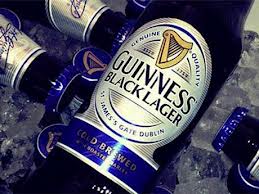
I, like most other bar patrons around the world, enjoy a nice pint of Guinness every once in a while. Yet the Irish company has now come out with a new product known as Guinness Black Lager. I have never tasted this beer but I am already not a fan of it due to the advertising plan the brewery has decided to employ. The commercial entitled “Seamless” focuses on a young adult male who seems to be living a sophisticated lifestyle. I do not have any problems with this setting or the character itself but the dialogue used in order to promote the drink.
When questioned “how can Guinness Black Lager be black and refreshing,” the actor chooses only to focus on other products to prove his point. The first example brought up is iced coffee and the main character states “iced coffee is black and has a delicious roasted flavor and delicious taste.” The second example used is cola and it is “also delicious and refreshing.” Using the attribution theory, the company is trying to persuade consumers that since these two other drinks are black and refreshing then their beer must be as well. Personally I think this is a cop-out from the company as it trying to compare itself to other drinks, so their product has to be the same.
Black is also a color used to portray a cool and mysterious tone, which is why I believe the company chose to name its newest product a black lager. Black has this coolness due to symbolic interactionism, where people assign behaviors on the basis of meanings they assign to them. This is clearly portrayed in the commercial itself as the main character (as previously mentioned) is presented as a high-class bachelor.
Thanks to this commercial, I will not try this beverage unless it is out of sheer necessity or desperation. Entitled “Seamless” this campaign seems spineless as they try to gain credibility through other examples. Trust yourself and not the work of others, you’re Guinness Brewing Company.
When thinking of the city of Boston, MA a few things come to most people’s minds: the Red Sox, cold weather, clam chowder, the word “wicked”, and, of course, that horrible Boston accent. For those of you who may be unaware of this accent, it’s the same one that has been pouring out of TV’s for the past year thanks to DISH’s ad campaign for the Hopper.
In January 2012, DISH Network released their new DVR system known simply as the “Hopper.” The system allowed viewers to record up to 6 shows at the same time, included AutoHop, which would let you skip over commercials, and had a program called PrimeTime Anytime, which allowed the owner to record every primetime show from the four major networks for eight days.
With such an amazing system, DISH had to come through with a hit ad campaign. The campaign they came up with, which introduced the “Boston Guys,” was an instant hit. The campaign featured a family from Boston, all of whom had extremely thick accents, who just sat around watching TV. The first ad that hit the airways featured the “Boston Guys” sitting around saying “the hawpah” over and over again. Take a look:
The commercial was such a hit that DISH decided to make a whole series of commercials featuring the Boston Guys. The commercials spread like wild-fire and soon everyone was talking about the Hopper.
This campaign ties into Kenneth Burke’s theory of dramatism. In all of the commercials the agents and the scene are the same. The commercials all contain the Boston Guys and always take place in their house. On the other hand, the act, agency and purpose continually change.
This past January, DISH improved the Hopper by adding Sling technology, which allows customers to view the shows they recorded on mobile devices. DISH decided to bring the Boston Guys back for the new version but slightly shook up the campaign. In this campaign, the agents still stay the same and the act, agency, and purpose still differ with every commercial, but now the scene changes as well. The campaign takes the Boston Guys out of the house to show how the new sling technology works.
So far, this years campaign has been just as successful as last years. Multiple commercials featuring the Boston Guys have come out since the campaign started in January, and as of now, the campaign shows no signs of slowing down. All we can do now is wait and see where DISH takes the Boston Guys next.
This little piggy went to market. This little piggy went home. This little piggy had roast beef. This little piggy had none. This little piggy went to… Geico?
That’s right. Maxwell, the little piggy who cried “Wee Wee Wee” all the way home in the 2010 Geico commercial is now one of the most recognizable characters in the media today. Simply putting a name to one of the little pigs from the “This Little Piggy” song (that most Americans are familiar with) gave many viewers a chance to reflect on their childhood and build a connection with the viewer.
Kenneth Burke, an American theorist and philosopher, would refer to Maxwell as the agent in the series of commercials. Using Maxwell as a constant character in these commercials is an aligned way to tie the series of advertisements all together. Despite the various acts, scenes, purposes, and agencies used throughout the series of advertisements, Maxwell is always present throughout and that offers the viewers the opportunity to classify him as a sort of mascot. Similar to the Geico Gecko, despite what he is doing, many viewers will now instantly link Maxwell with Geico because of the conduciveness of the ads.
Geico now has a series of at least 5 commercials all starring Maxwell. He is shown participating in a range of acts and in an array of different settings throughout the various commercials. From zip lining down a mountain to driving a convertible all the way to a romantic night on a secluded mountaintop, Geico has stopped at nothing to incorporate their little piggy and keep their marketing consistent. Sometimes, Gieco also takes the opportunity to crack a quick joke and or pull in a well-known cultural saying. For example, in one of their most recent commercials, Maxwell is on a plane and they seize the opportunity to tie in the old saying of ‘I will believe it when pigs fly.’
With that being said, many other companies are now utilizing a similar method. Commercials featuring characters that parallel to those of the big bad wolf, little red riding hood, and the three bears have rushed the media. Clearly, the use of recalling characters from cultural fairy tales and our past experiences is an effective way to set a product ahead of its competition. Furthermore, using a consistent character, although it could get annoying, is also an effective way of building an advertising campaign and creating a name or face for the company.
It is no secret that women in America are under extreme pressure to be slim. Products like Slim-Fast, QuickTrim, and Hydroxycut are just a few examples of what women are buying to live up to this cultural expectation. I’ve seen these items and have simply written them off as another weight loss scheme. Nothing about them really struck me as odd, or even unhealthy. However, the other day I heard a commercial that made my jaw hit the floor. That commercial was for Slimful. Take a look for yourself.
I honestly thought it was a parody commercial that was making fun of how idiotic some products are, but, oh, how wrong I was! I immediately began researching this product to see if it was really as ridiculous as it sounded. The commercial ends with the statement “eating less is a beautiful thing,” and this is exactly what the product promises and promotes. The idea is simple: eat a Slimful chew, drink a glass of water, and you won’t be hungry for hours.
There is no mention of combining the product with an exercise program or a healthy diet. The website does say that the idea is to eat less, not to stop eating at all. However, it is no secret that many girls and women struggle daily with eating disorders. What message is a commercial like this sending to those struggling with anorexia or bulimia? It sounds an awful lot like encouragement to me. The commercial blatantly says it is not only okay to eat less but that actually it is a beautiful thing to eat less. Looking at this advertising campaign from a health communication perspective, it becomes increasingly hard to ignore how dangerous a commercial and product like this could be. In advertising, the meaning of the message is often defined by the audience receiving it. Ignoring the impression this commercial could make on someone struggling with an eating disorder is heinous. The campaign helps to perpetuate the idea that thinness, and therefore frailty is beautiful in women, not strength. The commercial also further extends the idea that eating less, rather than doing more is the way to achieve a desired weight or look.
Advertisements like this are just one of the many factors that play a large role in the creation of the cultural expectations women are held to. The rise of social media sites such as Twitter, Pinterest, and Tumblr, have accelerated the spread of these unrealistic expectations to a new level. Media still sets the tone for cultural stereotypes, but social networking sites have the power to expand and develop them unlike any tool in the past. Individuals are able to chime in with their opinions and like-minded groups begin to form.
What troubles me the most about this advertising campaign is the life it could potentially take on in the Pro-Anorexia (Pro-Ana), and Pro-Bulimia (Pro-Mia) social media communities. This article from the Huffington Post begins to explain the debate currently happening on Twitter and in these online communities. The hashtags “#proana” and “#promia” are used on Twitter to indicate support and encouragement for those with eating disorders. These hashtags raise concerns because often the users are not trying to help each other beat the disease but rather they exchange advice on how to become a more “successful” anorexic or bulimic. As the article explains, this is truly a complicated issue. Some people are calling for a ban on this type of communication and support. Tumblr and Pinterest, which are largely centered around visual content, have already begun to take steps to slow down the spread of Pro-Ana and Pro-Mia content. However, censoring Twitter content quickly brings up arguments over the first amendment which will slow down any ban decisions in progress.
Additionally, as this article from the New York Daily News discusses, some people argue that these communities can actually provide support for girls trying to recover. This argument grew out of a study published in Health Communication. The study interviewed bloggers that write for Pro-Ana websites. The bloggers explained that the online communities provide a place where they can be understood. Eating disorders are a stigmatized illness that can often lead to feelings of isolation. If these online communities can provide emotional support for those suffering from an eating disorder that is unavailable elsewhere, how can destroying them be justified?
The Slimful commercial was released only a month ago and hasn’t received much attention yet. Only time will tell if the results will be as detrimental as one may imagine. There is no simple answer to the questions I’ve raised in this post. I’ve only touched the tip of the iceberg. It seems that more vicious circles are being created as social media continues to evolve, and this could be just the beginning.
 ividual, Hollywood is creating a culture centered on the effect drugs can have. These movies add to the multitude of pressure young adults are already facing in regards to alcohol, drug use, and partying.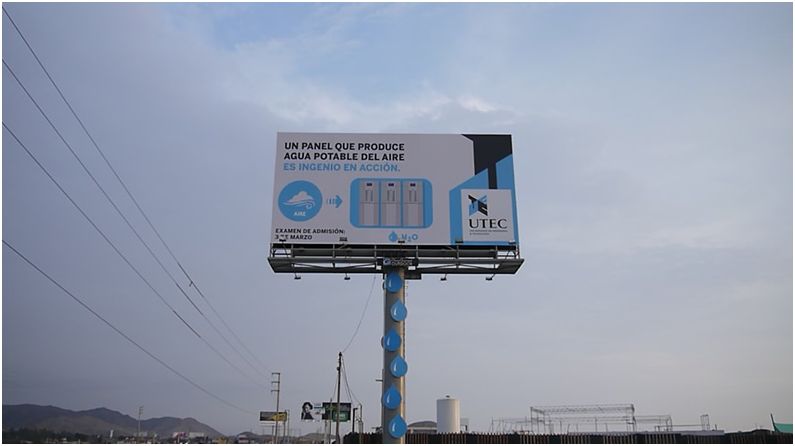





 IMC Hawks Blog