Blog

  • The Social Media Analytics Process: More Important Than You Would Expect

    By: Evan Jones

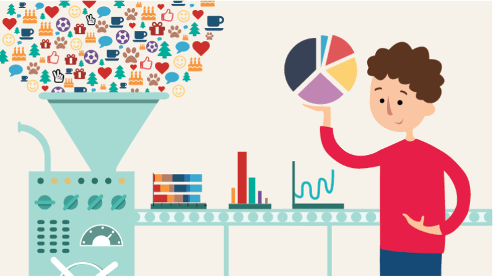
    I’m sure many of you reading this are involved in social media in one way or another. Given its importance within our society, it can sometimes feel impossible to avoid, especially as digital connection becomes an important tool to create new lines of communication between parties. Since social media has become increasingly used throughout daily life for the majority of the average population, data from social media is analyzed for numerous reasons that help one understand the content that drives more user acceptance. Social media analytics—the process of collecting and analyzing data from social networks, like Twitter, Facebook, or Instagram—can be used to evaluate marketing strategies, assess social media or business/firm channel development, analyze trends, get a better understanding of a client, or to give one a competitive edge.

    Within the social media analytics process, there are four definite steps: data discovery, data collection, data preparation, and data analysis. While there is a substantial amount of literature that explains the possible problems or obstacles regarding different methods of the data analysis process, Stefan Stieglitz in his journal article Social Media Analytics — Challenges in Topic Discovery, Data Collection, and Data Preparation points out that “there hardly exists research on the stages of data discovery, collection, and preparation” (Stieglitz, 2018). Because social media as a means to communicate has grown wildly within the past decade, new opportunities and ways to use social media platforms have grown as well as new patterns of communication—meaning more ways to use, and more of a need to use, social media analytics.

    One example that Stieglitz uses in his article is how two professors from Cornell University, Scott Golder and Michael Walton Macy, were able to analyze data found from Twitter to study the changes in peoples’ moods over different expanses of time from day to day, week to week, and throughout different seasons—all because of data analytics collected from Twitter. Projects like Golder’s and Macy’s are common in many different ways to analyze social media data. The existing research papers [regarding or using social media analytics] are isolated case studies that collect a large dataset during a specific time frame on a specific subject and analyze it quantitatively. (Stieglitz, 2018). The processes needed in order to get data and to turn it into useful information are usually like this, and why the “Social Media Analytics” field’s purpose is to “combine, extend, and adapt methods” for the goal of analyzing social media data.
    Despite all of this, general models and approaches when it comes to analyzing social media data still come up short… To fight this, Sinan Aral, Chrysanthos Dellarocas, and David Godes came up with a basic framework with the purpose of organizing social media research and “to stimulate innovative investigations of the relationship between social media and business transformation” (Aral, 2013). Along with the framework, others were created in order to fill gaps in the general models and approaches. Wietske van Osch, Professor of Economics at the University of Amsterdam, and Constantinos K. Coursaris, Professor at Michigan State University, came up with a framework, as well as a research agenda, that is limited to only using organizational social media. While both frameworks were created in order to classify different areas of social media analytics research, they don’t actually help or instruct readers and researchers how exactly to collect the social media data to be analyzed—which is where Stieglitz points out challenges within this process will come to happen.

    So, the real question is; what are the challenges that we face during the data discovery, data collection, and data preparation stages of the social media analytics process? When drawing on literature regarding “big data”—meaning data that has more complex data sets in a larger variety—researchers argue that many different characteristics are shared between social media data and big data. What sets big data apart from traditional analytics however are four main factors (or the four “V’s”) that were created by IBM data scientists:

    • Volume, the storage space required for the data
    • Velocity, the time it takes for the data to be created
    • Variety, the aspect of data being in different forms
    • Veracity, the uncertainty that comes with what the quality of the data is.

    A fifth factor is sometimes used which is value, referring to “financial benefits generated by big data for an organization” (Stieglitz, 2018). The four V’s parallel only to technical difficulties that happen immediately when collecting data, so using big data as a comparison to social media data is not the only, or best solution.

    Consumers and businesses alike are always continuing to find ways (new and existing) of collecting meaningful information from social media, but also sometimes have to face (new and existing) challenges when collecting this type of data. Because social media analytics is still a fairly new area of research, and because social media is constantly growing in our age of technology, many questions have still not been answered fully and researchers are constantly looking for new and improved—and simpler—ways to collect social media data.

    References

    Aral, Sinan, et al. “Introduction to the Special Issue—Social Media and Business Transformation: A Framework for Research.” Information Systems Research, vol. 24, no. 1, 2013, pp. 3–13., doi:10.1287/isre.1120.0470. 

    DSX Hub. “The Four V’s of Big DATA Explained by IBM.” DSX Hub, 15 Oct. 2020, http://www.dsxhub.org/infographie-the-four-vs-of-big-data-explained-by-ibm/. 

    Stieglitz, Stefan, et al. “Social Media Analytics – Challenges in Topic Discovery, Data Collection, and Data Preparation.” International Journal of Information Management, vol. 39, 2018, pp. 156–168., doi:10.1016/j.ijinfomgt.2017.12.002.

  • Symmetry in Brand Personality

    By: Aanya Mohiuddin

    Photo from Deal Designs

    What attracts us, as consumers to certain brands? Sometimes it’s the catchy advertisements we hear on T.V and other times, we notice a reoccurring ad on our Instagram feed. Maybe we’ve heard multiple friends discuss a unique campaign. Amongst other eye-catching artifacts, consumers are attracted to specific brands because of their logos.

    Brand Personality
    Brand logos are important because they immediately affect brand personality and how consumers view a brand. This subsequently influences brand equity, determining how successful a brand is. It is necessary to create a positive brand personality that leaves a lasting effect on consumers. If consumers associate a brand with an exciting personality, they are more likely to show brand loyalty and higher levels of satisfaction when receiving products from the said brand (Luffarelli et al., 2019). Having a strong brand personality can help consumers connect to a brand, building that consumer relationship all IMC practitioners strive for.  

    Brand Logo            
    A company’s logos help solidify a company’s brand personality. Now, what makes logos noticeable to the average consumer? One could argue that bright colors and bold lettering do. Research shows that symmetry has a great influence on logo effectiveness (Luffarelli et al., 2019). Symmetrical logos have design aspects that prove equality and equivalence. Contrarily, asymmetrical logos’ design aspects lack equivalence. According to Luffarelli et al. (2019), symmetrical logos are not as notable to the consumer’s eye as asymmetrical logos. This means that symmetrical logos will not have a long-lasting impact on a consumer. With social media, we are constantly bombarded with advertisements, so it is important for a company to stick out. The goal is to create excitement in consumers. The emotion of excitement refers to consumers viewing a logo and feeling enthused or passionate about the brand or what the brand is selling. Excitement can cause people to discuss the brand that is making them feel that emotion with other people. This creates more organic traffic surrounding the brand.

    Asymmetry vs. Symmetry
    Asymmetrical logos can create the feeling of excitement within consumers (Luffarelli et al., 2019). The science behind this is that symmetrical logos are simply easy for our eyes to look at and our brains to process. Asymmetrical logos, however, are more complex to look at for our eyes, making it slightly more challenging for our brains to understand. This phenomenon leads to the visual asymmetry effect, coined by Luffarelli et al. (2019). The visual asymmetry effect refers to consumers having higher regard for brands with asymmetrical logos. This circles back to asymmetrical logos being exciting to consumers. Consumers have a higher regard for brands that make them feel excited. The visual asymmetry effect only boosts customers’ perception of a brand if the brand personality is exciting. If the brand wants to have a different personality other than exciting, such as somber or relaxing, asymmetrical logos will most likely not make their consumers feel excited about the brand. Therefore, companies who embody an exciting brand personality should have asymmetrical logos. Not all brands need to have logos that cause excitement in their consumers. It is up to the IMC practitioner to decide what personality the company should incorporate, based on their values and attributes.

    McDonald’s
    The McDonald’s company is more than well-known, and its logo is classic, iconic, and symmetrical. The company describes its brand personality as, “lighthearted, unpretentious, welcoming, and dependable” (Our Mission and Values, 2017-2019). Since these are the characteristics McDonald’s wants to bring alive, a symmetrical logo makes sense for them. They are not intending to be ‘exciting’ so the symmetry in their logo relays their brand personality well.


    Photo from Vexels Blog

    Nike
    Contrarily, Nike is a brand that self-identifies as exciting. Overall, their brand personality can be described as exciting, cool, innovative, and durable (Dvornechuck, 2021). Their logo showcases this. The simple, cool, iconic check mark is an asymmetrical logo that they use to make consumers feel excited about their Nike products and the brand itself.  

    Photo from Highsnobiety

    Nintendo Switch
    An interesting logo that has a fusion of symmetry and asymmetry is the Nintendo Switch logo. The logo shows what the Nintendo Switch product actually looks like. We can see the symmetry in that there are two halves of a rounded square. However, the asymmetry comes into play when we notice the two circles within the halves are not symmetrical to each other (Vexels, 2020). Also, because of the way the halves are outlines, they are seen as different sizes (Vexels, 2020). This logo has a unique balance of symmetry and asymmetry because on the surface it is seen as symmetrical, but when looked at closely, we can see how it has asymmetrical features. Now, Nintendo Switch does not need to make their logo asymmetrical, because they are not trying to communicate excitement to their consumers. Rather, their brand personality involves longevity and the ability to adapt (Duran, 2017). This is an important distinction for the brand to make because they want to represent their brand personality well. Brand’s personalities are built with their target audience in mind as well as their brand values. For this reason, it is essential for brands to show consumers what their brand stands for.

    Photo from Vexels Blog

    There are clear effects on brand equity through the interaction of brand personality and logo design. Through research, we can see it is necessary for brands to design their logos as asymmetrical if they want consumers to view their brand as exciting. Asymmetry and symmetry are fun elements to play with for brand logos when trying to communicate brand personality.

    References

    Duran, H. B. (2017, January 13). Nintendo’s brand Messaging SHOWS longevity, ability to evolve. AList. https://www.alistdaily.com/strategy/nintendos-brand-messaging-shows-longevity-ability-to-evolve/.  

    Dvornechuck, A. (2021, March 24). Brand personality: Traits of top brands. Medium. https://medium.com/ebaqdesign/brand-personality-traits-of-top-brands-19c58890770f

    Luffarelli, J., Stamatogiannakis, A., & Yang, H. (2019). The Visual Asymmetry Effect: An
                Interplay of Logo Design and Brand Personality on Brand Equity. Journal of Marketing
                Research
    , 56(1), 89–103. https://doi.org/10.1177/0022243718820548

    “Our Mission and Values” (2017-2019). https://corporate.mcdonalds.com/corpmcd/our-
                company/who-we-are/our-values.html
     

    Vexels. (2020, February 27). The use of symmetry in famous logo designs. Vexels Blog. https://www.vexels.com/blog/the-use-of-symmetry-in-famous-logo-designs/.  

  • Advertising Invasion

    By: Emily Wood

    Photo by @ademay via Unsplash

    Social media users are constantly flooded with advertisements during their daily scrolls through their timelines, whether it be a sponsored post from an influencer or a post from a company promoting their products or brand. These advertisements often correlate with consumers’ activity on other websites, including brands they have recently visited, products they have viewed, and suggested brands. Users have also noticed that sometimes these sites even pick up information about items or companies you talk about and promote them to you on social media.

    Most people have a negative association with these advertisements, and as a result, they are often avoided by consumers. A recent study found that “62% of Americans ignore SMA, and 73% ignore online banner advertising” (Niu et al., 2021). People find social media as a place to interact with individuals, not a place to interact with advertisements, especially those with whom they have no relationship or brand loyalty to. In other words, users feel as though their social media is their territory, and when social media advertising comes into play, lines are crossed, and the effects of social influence are weakened (Niu et al., 2021). Without this influence, communication from brands through their advertising will not be effective.

    A convenience survey in a 2021 study found the following hypotheses to be true:

    “H1: Advertising irritation is positively related to advertising avoidance. Yes

    H2a: Attention invasiveness is positively related to advertising irritation. Yes

     H2b: Space invasiveness is positively related to advertising irritation. Yes

    H3a: Social influence is negatively related to attention invasiveness. Yes

    H3b: Social influence is negatively related to space invasiveness. Yes

    H4a: Psychological ownership moderates the relationship between social influence and attention invasiveness, such that the effect of social influence is lower when psychological ownership is higher. No

    H4b: Psychological ownership moderates the relationship between social influence and space invasiveness, such that the effect of social influence is lower when psychological ownership is higher. Yes” (Niu et al., 2021).

    It can be convenient to have these advertisements that are personalized to individual consumers for both the company and the buyer; however, social media users tend to view their pages as a private place. As a result, users feel as though these companies are invading this personal space by having their information tracked and used as a way to be targeted by brands. They also feel these posts distract them from their daily scrolls on these sites. This invasion of personal space is known as “space invasiveness” and the interruption of the user’s attention is referred to as “attention invasiveness” (Niu et al., 2021). These types of posts from companies are very easy for users to spot since the formatting is different from what a regular user would post; therefore, these posts are also easy for users to quickly scroll past and ignore.

    However, it only takes one person to change how an advertisement is perceived. For example, if a user’s friend shares a social media advertisement with another, that person is most likely going to have a different perception of the communication. The user will feel their personal space is not being invaded when the advertisement comes from someone they trust while coming from a brand itself in a promoted post feels much more invasive which makes users more irritated by these advertisements and therefore, users tend to avoid the brand messaging.

    So, what does this mean for advertisers and integrated marketing communication practitioners since posting this type of content is not effective and somewhat counterintuitive? “Companies need to collaborate with social media providers to reduce the space invasiveness from SMA. For example, to reduce space invasiveness, SMA can add social information (e.g., how many friends view and like certain SMA). Companies can also create enterprise accounts, so that when consumers add those enterprise accounts into their “contacts,” the companies can post their SMA in the same format as posts from other consumers, thereby reducing the perception of space invasiveness” (Niu et al., 2021). Even by finding an influencer that a lot of users trust feels less invasive to consumers than promotional content from companies. By reducing the volume of these types of advertisements or presenting them in a or format similar to a post of a regular user, brands are more likely to reach consumers.

    Reference

    Niu, X., Wang, X., & Liu, Z. (Jan. 2021). When i feel invaded, i will avoid it: The effect of advertising invasiveness on consumers’ avoidance of social media advertising. Journal of Retailing and Consumer Services, 58, 102320. https://doi.org/10.1016/j.jretconser.2020.102320

  • Consumer-Brand Identity: Its Effects and Why It’s Important

    Photo credit: Unsplash, Brett Jordan.

    If you’re active on social media, chances are you’ve seen companies, especially ones with large followings, with distinct brand presences online. Maybe you’ve stumbled across the Twitter altercations between Wendy’s® and Burger King®, and it’s made you want to purchase from one of the brands since their wit and humor align with your own. Believe it or not, but this is because you see yourself in these restaurants. You find Wendy’s® and Burger King® to be relatable.

    Personally, I had never craved Wendy’s® until I consistently started to notice how they used their Twitter platform to roast their competitors. Did their comebacks make their food any more delicious or their service any better? No. Instead, I wanted to purchase from Wendy’s® because I admired their marketing and admittedly thought their branding was brilliant, and I really liked the brand image that the food chain had built online. Wendy’s® definitely has successful branding, because their online activity made me go from nearly forgetting the restaurant exists, to waiting in a line of cars to receive my four-for-four at their drive-through window.

    The desire to purchase from brands whose values align with our own is not new. This could be understood as a result of consumers’ perception that our own self-image overlaps with that of the brand (Graham & Wilder, 2020).  If you see yourself in the brand, you’re more likely to want to purchase from the brand.

    Photo credit: Unsplash, Pickawood.

    The Customer’s Self-Image and Brand’s Messaging

    Since self-image plays a role in purchasing decisions, and as brands continue to increase their investment in online advertising channels and their presence in the online marketplace, it is imperative that they understand how to mitigate and defend against the impact of negative online messages in all its forms (Graham & Wilder, 2020). If there’s an increase in activity and messaging on social media and advertising platforms, then brands have to be diligent and careful in the messaging that they spread and ensure that none of their content can be misinterpreted from how they intended it to be spread. For example, in 2017, Pepsi released a controversial ad campaign featuring Kendell Jenner that immediately sparked backlash for trivializing the Black Lives Matter movement. The advertisement showed a police officer accepting a can of Pepsi from Kendell Jenner, a white woman, in the middle of a protest. After the ad was posted, commentators on social media accused Pepsi of “appropriating imagery from serious protests to sell its product, while minimizing the danger protesters encounter and the frustration they feel” (Victor, 2017). The company made a statement saying, “Pepsi was trying to project a global message of unity, peace, and understanding” (Victor, 2017).

    Besides having to be prepared for negative reactions to negative messaging, you also have to be aware of backlash you might receive from opinionated advertisements where you take a stance. Increasingly, consumers have expectations of brands and their leaders to take clear stands on social and political issues in large part because consumers prefer purchasing from brands whose values align with their own (Graham & Wilder, 2020). Although some consumers might feel more connected to your brand for taking a public stance and therefore might have more loyalty, there’s still the unavoidable group of consumers who will oppose your stance and in turn, will no longer invest in your brand.

    Consumer-Brand Identification and Brand Attitude

    Consumer-brand identification (CBI) is defined as the “extent to which the consumer sees his or her own self-image as overlapping with the brand’s image” (Graham & Wilder, 2020, p. 112). Based on CBI, consumers “who perceive a low level of personality incongruity with a brand are more likely to tolerate a lower level of perceived quality and still identify with the brand” (Graham & Wilder, 2020, p. 115). This process of resisting negative brand information by choosing to cognitively disengage allows consumers with high CBI to maintain their positive attitudes toward the brand (Graham & Wilder, 2020, p. 115). Effects of advertising are cumulative; thus, the impact of negative brand messaging may have a greater effect on consumers that highly identify with specific brands over time. This may explain why loyal Pepsi customers quickly reprimanded the brand after the controversial ad campaign.

    Relevance to IMC

    This research is relevant to the practice of IMC because it focuses on establishing brand identity and how to represent your brand to keep consumers engaged. Consumer-brand identity is influenced by advertising messages, and consumers need to feel like they can identify with the brand to remain loyal to the brand. Some brands are able to recover after unsuccessful ads or messaging, but not all of them are so lucky. Messaging is important and it’s critical that a lot of thought is put into the execution of advertising. Customers with high consumer-brand identity will feel a sense of belonging to a brand, which is crucial to the success of any brand.

    References

    Graham, K. W., & Wilder, K. M. (2020). Consumer-brand identity and online advertising message elaboration. Journal of Research in Interactive Marketing14(1), 111–132. https://doi.org/10.1108/jrim-01-2019-0011 

    Victor, D. (2017, April 5). Pepsi Pulls Ad Accused of Trivializing Black Lives Matter. The New York Times. Retrieved September 13, 2021, from https://www.nytimes.com/2017/04/05/business/kendall-jenner-pepsi-ad.html. 

  • The Importance of Primary Research in IMC

    By: Virginia Parker

    Thinking back to classes early in college or even before, in grade school, the types of research, primary and secondary, and their importance in our education have been drilled into our heads. We know what they are and depending on where we are in our college career, we have conducted our own primary research and certainly done plenty of secondary research. In this discussion, I will be revealing results from a study and how their results are significant to the study of IMC and us as Communication Studies majors, potentially going into IMC.

    Is knowledge power?

    The accessibility of health and wellness information has reached all-time highs with the present-day marketing of wellness-related products, services, and ideas promoting healthier lifestyles in a broad spectrum of Integrated Marketing Communication (IMC) campaigns across multiple platforms and channels (Costanzo, Costanzo, 2019, pp. 43). However, approximately 29.6% of the adult population self-identified as obese in 2017 (Costanzo, Costanzo, 2019, pp. 43). This is a 17.6% increase since 1990 (Costanzo, Costanzo, 2019, pp. 43).

    Paul J. Costanzo and Cynthia P. Costanzo (2019) conducted a study to address two questions that are challenging health care professionals: 1) With the current accessibility of health and wellness information, why are Americans not becoming healthier? 2) What can be done to promote healthier lifestyle choices for the average American? (pp. 43)

    Preliminary Research of their study

    In 2005, the US food industry was criticized for its role in escalating childhood obesity, and advertisers announced new programming policies aimed at reducing children’s exposure to unhealthy food and beverages, however, these policy changes were ineffective in reducing obesity because of the insignificant differences between television programming and advertising content (Costanzo & Costanzo, 2019, pp. 43). There has not been a cause-and-effect relationship established between watching television and obesity (Costanzo, Costanzo, 2019, pp. 43).                Unhealthy eating patterns are trends fueled by promotional campaigns of fast-food restaurants and the absence of empirical evidence on how consumers perceive and value health information, according to the authors (Costanzo, Costanzo, 2019, pp. 45). The concern of the consumption of unhealthy foods has been recognized by several local, regional, and national health promotion campaigns, as well as politicians, government agencies, and public health officials, and that has resulted in obesity being identified as a human epidemic (Costanzo, Costanzo, 2019, pp. 45).

    Recent research has also demonstrated that consumers of health care information (HCI) may prefer certain types of preventative HCI (Costanzo, Costanzo, 2019, pp. 45). Costanzo and Costanzo found that users do not rely on all sources of Internet information equally and Facebook and Twitter were the least popular sources for Preventative Health Care Information (PHCI) (2019, pp. 45)

    Method and Hypothesis of their study

    Their study examined seven market dominated (magazine advertisements, television advertisements, books, newspapers, radio, internet, and direct mail) and three non-market dominated sources (health care provider, friends, and family members) and specifically focused on gender differences (Costanzo, Costanzo, 2019, pp. 43). They also reported gender differences in subjects’ knowledge and importance ratings of childhood obesity, healthy nutrition, and regular exercise (Costanzo, Costanzo, 2019, pp. 43). The authors hypothesize that enhanced knowledge of how consumers respond to marketer/non-marketer-dominated sources of health and wellness information is critical to the creation and implementation of effective sustainable promotional strategies and tactics (Costanzo, Costanzo, 2019, pp. 43).

    Their Results

    The significant findings from the study conducted by P.J. Costanzo and C.P. Costanzo (2019) reveal that females’ usage for three marketer-dominated sources (magazines, books, and newspapers) were significantly higher than males (pp. 48). Women also used three non-marketer sources, health care providers (pediatrician, nurse practitioner), friends, and family members significantly more than did men (Costanzo, Costanzo, 2019, pp. 48). Women’s ratings of the importance of childhood obesity, healthy nutrition, and regular exercise were significantly higher than men’s ratings (Costanzo, Costanzo, 2019, pp. 48).

    Relevance to the Practice of IMC

    The purpose of their study is to explore how men and women view Preventative Health Care messages differently (Costanzo, Costanzo, 2019, pp. 48). While their study explores both market-dominated and non-market-dominated sources, their study highlights the importance of research in IMC and illustrates the importance of the research process in the general practice of IMC in evaluating the effectiveness of campaigns and in providing an understanding or explanation of the campaign.

    The importance of primary research is that it generates new knowledge and secondary research applies that new knowledge (Bartsiokas & Smith, 2019). In IMC, the research process gives a brand or company a better picture of what your buyers need, and how you can better address unique challenges (Marketing Eye Atlanta, 2021); In this case, where the buyer is an American that consumes PHCI and their view on those messages, and the unique challenges involve whether the consumer “buys” into the message or information.

    The results of this study are relevant to the practice of IMC specifically for health care marketing professionals and future wellness IMC campaigns as secondary research (Costanzo, Costanzo, 2019, pp. 49). The authors believe “significant steps are achievable with a concerted effort of those actively engaged in research on how consumers respond to PHCI and the sustainable promotional strategy and tactics that lead to healthy lifestyle choices for a better future” for the United States (Costanzo, Costanzo, 2019, pp. 49). They also believe “More knowledge about which sources of HCI are rated higher by gender may be a step in the right direction” and “Knowledge about gender differences of health and wellness topics is another area that the authors believe will lead to the adoption of healthier lifelong learning” (Costanzo, Costanzo, 2019, pp. 44).

    To me, their research implies, for the practice of IMC, the possibility of infinite unknowns, in regard to audience responses to campaigns. Primary research allows professionals and companies to determine an explanation as to why a failure (or success) has occurred or is occurring and allows them to assess for future action. Given their results, and as students potentially going into IMC, it is important to keep in mind the possibility of explanation through primary research. Can you recall a time in which you conducted primary research and had significant results? Were they the results you expected? While research takes time and patience, it can provide key information to expand knowledge or understanding of your target audience, the company of your future job, or even your future business.

    References

    Bartsiokas, T., & Jordan S., (2019). “Communication @ Work.” Senca,     pressbooks.senecacollege.ca/buscomm/part/chapter-1-professional-communications-2/.

    Costanzo, P. & Costanzo, C., (2019). Gender differences in marketer and non-marketer-   dominated sources of sustainable health and wellness information. Journal of Global          Scholars of Marketing Science, [online] 29(1), pp.42-50. Available at: <https://web-b-    &nbsp; ebscohost-com.liblink.uncw.edu/ehost/pdfviewer/pdfviewer?vid=1&sid=7e071f39-61bc-      498d-8518-9ac315bf2886%40sessionmgr103>.

    Marketing Eye Atlanta. (2021). “The Importance of Conducting Market Research – Marketing     Eye Atlanta.” Marketing Eye Atlanta – Branding, Web & PR Consulting Agency,          Marketing Eye Atlanta, 8 Feb. 2021, www.marketingeyeatlanta.com/blog/marketing/the- importance-of-conducting-market-research.html.

  • The Parasocial Relationship Between Influencers and You: Yay or Nay?

    By: Zima Nguyen

    Have you ever noticed a friend who idolizes an Instagram influencer a little too much? There is a line between enjoying the content and becoming obsessed, but that line can often become blurred when you don’t know where you stand. After reading Fernanda Leite and Paulo de Paula Baptista’s study on “The Effects of Social Media Influencers’ Self-disclosure on Behavioral Intentions: The Role of Source Credibility, Parasocial Relationships, and Brand Trust,” what I used to think is now confirmed. Influencers are paid to do exactly that, influence. Their professional job is to maintain their brand image, which ultimately is received by their fans. In the study, they talk about how an influencer’s intimate self-disclosure can affect their audience through source credibility, brand trust, and perception of their parasocial relationship with the influencer.

    What Does This Mean?

    Intimate self-disclosure (ISD) is a kind of communication where individuals share intimate personal information about themselves with others. Self-disclosure intimacy and influencer marketing can potentially enhance the feelings of a connection and perceived closeness. So, when an influencer communicates personal details that is not public information, fans can receive this information as a symbol of trust and friendship. A parasocial relationship is one experienced by an outside audience in mediated interactions with those in mass media, such as an influencer.

    You might be thinking “That’s silly,” or “That’s not me,” and you’re absolutely right! But there are individuals who perceive this type of interaction as confirmation of a relationship that doesn’t exist. Not every influencer experiences obsessed fan behavior, especially micro-influencers. But for those that do, we have to consider where we draw the line before anyone’s safety becomes a serious concern. Unconditional support may not always be a good thing if with the wrong intention! According to the study, another downside is that high levels of ISD can also lead to a negative outcome like reduced attraction, which is bad for business.

    BUT…

    Not every situation is identical. Many influencers have a healthy relationship with their followers and receive constructive criticism that leads to a supportive fanbase.

    Internet personality and streamer TimTheTatMan has successfully curated a healthy relationship with his followers, so much so that he has created new YouTube channels specific to his followers’ wants. He began his journey with gaming and streaming on a YouTube channel that resulted in success, which encouraged him to give back to people who helped him get there: his fans. Tim asked his followers if they would like to see different forms of content from him, and if so, what kind. His relationship with a loyal fanbase has led him to create two new channels specific to his fans’ wants, which are food and lifestyle accounts.

    If oversharing can lead to fewer fans, influencers should consider how much is enough before it’s too much. Sometimes we need to realize that influencers are still people and have a life outside of social media. Not everything needs to be documented or made public, especially when you grow old, look back, and maybe wish you had kept parts of your life private. I personally couldn’t even imagine the pressures of being in the public eye, so I know there is more that goes on behind the scenes than we know.

    The Good News…

    Although there are many risks to entertaining the relationship between an influencer and the normal social media user, you can also find benefits to it. Influencers always get brand deals, merch, and giveaways, so who else would it be best to share with? The FANS. Influencers know a large part of their success is from their fans, so in order to keep that momentum, they have to give something in return. The most common example we see today are brand deals between big-name companies and influencers, which then leads to discount codes for everyone!

    So, what do you think? Is the relationship dynamic between a public figure and a normal social media user worth the or are we overcomplicating the concept? Let us know!

    References

    Leite, F. P., & Baptista, P. de. (2021). The effects of social media influencers’ self-disclosure on behavioral intentions: The role of source credibility, parasocial relationships, and brand trust. Journal of Marketing Theory and Practice, 1–17. https://doi.org/10.1080/10696679.2021.1935275

  • Healthcare, The New Unexpected Career Path for IMC Students 

    By: Lindsey Matthews

    Healthcare is quickly becoming a new career path for IMC students post-graduation. While they aren’t enrolling in medical school, they are taking notice of the marketing needs throughout the medical field. Marketing is required for businesses of all kinds and healthcare is no exception, especially during a global pandemic. Going to the hospital or visiting your doctor may not seem like something you have much of a choice in, but you do, and healthcare providers know this. What makes you choose one hospital over another? Outside of distance, many patients would cite trustworthy care and hospitality as their main deciding factors. Fortunately, healthcare providers are eager to build a strong relationship with patients to make this choice an obvious one.

    A strong rapport with both new and existing patients is the difference between a mother choosing to have her baby at one hospital versus another or deciding where to take a loved one when they need saving. This is where a skilled IMC student steps into the picture. Adequate marketing can help make a visit to a hospital or healthcare provider a little less scary and a lot more welcoming. They can highlight the experienced and caring team waiting to help them through photos and statistics that support their claims. This can help patients envision a person with a smile and warm heart rather than just a nurse with a needle.

    It is important for healthcare providers to continue to gain new patients and further relationships with existing ones in order to create more revenue. Patients are a necessary evil in order for healthcare providers to have the funding to complete research and obtain the equipment needed to save lives. While it may sound strange to create an Instagram page for a hospital or doctor’s office, just like any other business looking to generate more revenue, they need to be on top of evolving media and advertising trends. Every form of advertising from social media platforms to billboards and print ads will need to be taken into consideration and put into action. Because many people do not think of healthcare until they need it, it will be especially important to reach new audiences outside of the existing following. When a potential patient is asked what hospital they would like to be taken to in a crisis, they will think of the one with the best ads, whether they realize it or not. Many of us do not go through our day planning which hospital we’d like to go to, so when the time comes, we chose the one we have a positive correlation with.

    Finding and narrowing your target audience will be tricky since everyone from all walks of life will need healthcare at some point in their life. It will be vital to narrow in on the specialties of your hospital or provider, in particular, to create what they are specifically known for. For example, if your hospital is home to the number one pediatric wing on the east coast, use that to your advantage in advertising. Brand recognition is especially important when lives are on the line and patients are in a vulnerable state. An IMC specialist can help manage the story being told by healthcare and help patients choose the best options for safe and reliable care.

    While healthcare may not be the first career path students think of when exploring IMC jobs after graduation, it is a lucrative choice. Unlike a small business or marketing firm, a hospital is highly unlikely to go out of business. In other words, they will always need marketing and if employed, you could have a high level of job security. Marketing in healthcare has become especially prevalent since the start of the pandemic. Hospitals and doctor’s offices across the globe are being put in the limelight. An IMC specialist can ensure that the extra attention is in working to the advantage of the providers rather than hurting them. Additionally, many IMC majors might have an extra interest in the healthcare industry which would make this an especially fitting career path. A career in healthcare, whether you’re on the front lines or in the advertising department, is an admirable profession that helps others and is an important role for every community.

    References

    Elrod, J. K., & Fortenberry, J. L. (2020). Advertising in health and medicine: Using mass media to communicate with patients. BMC Health Services Research20(S1). https://doi.org/10.1186/s12913-020-05599-3