Blog

  • NFL Won’t Go Green

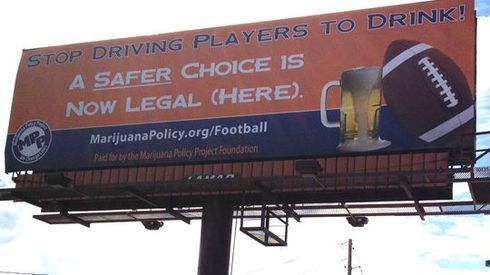
    The Marijuana Policy Project advocates the use of marijuana for everybody, evidently. An issue arose when they decided to put a pro-marijuana, anti-alcohol billboard right outside the Denver Broncos stadium for the opening game of the 2013 NFL season. The billboard, pictured below, reads “Stop driving players to drink! A safer choice is now legal (here).”

    The group gained national attention for their effort, but garnered no more reaction from the NFL than being ignored. No doubt a PR pro in a dark suit stepped out of the limo and calmly said, “We do not plan on changing our policies” to nobody in particular, before disappearing behind the fireworks, blinding stadium lights and logo of his employer to wait for the next NFL public relations hiccup.

    But it is on the table now: How will the NFL react if marijuana becomes completely commercialized in America?
    L169_CIFRe0aa912e6add72ba7d5a35cd2d2d3b01

    The billboard illustrates the cognitive dissonance that must resonate somewhere within the NFL right now, if only within the players who use the drug. Presumably, the NFL doesn’t allow its players to use marijuana because it is illegal, but if we remember, there was a time when alcohol was illegal, and many NFL players love that stuff. Look at what alcohol means to the NFL now. Anheuser-Busch spends hundreds of millions of dollars in NFL advertising every year. No one can watch a football game without seeing groups of guys and gals guzzling beers between plays, commenting on its many boons. Replays are brought to us by Coors Light, Miller, or Bud, and they even pay for “plays-of-the-game” to show after the games are over. Alcohol is imbedded in American football culture as deeply as the National Anthem. Beer is so prevalent in football it could be the background of a video playing the National Anthem at the start of the game, while people stand with one hand over their heart, and another on their bottle, sobbing sudsy tears of intoxicated satisfaction.

    But it used to be illegal.

    Maybe nobody in the NFL remembers that besides Dan Rooney, but the dissonance must have been there back then. It was probably much easier to deal with, there being so few media outlets and so much less media intrusion into players’ lives.

    Alcohol prohibition ended before televisions appeared in about 100% of American households, but it may be deduced that another NFL (or AFL, back then) spokesperson said, in response to letting players drink after prohibition ended, “We do not plan on changing our policies.” But the policies changed. Social cognitive theory, and its application to football and the law, grew new roots and laid down new rules. If the rules change this time around, and marijuana becomes legal, and organizations start letting manufacturers of marijuana advertise, the NFL is going to hop right into that hurricane of dollars to get a piece. Will they do it first? Or will they watch others do it before jumping in? Social cognitive theory, and knowledge of the NFL’s motivators, suggest that they will either lead or be led in adopting the change, but we know they will definitely be a part of it.

    If players who have been punished for marijuana are around when that happens, what will the NFL tell them?

    Von Miller, a linebacker for the Denver Broncos, has been suspended for the first six games of the 2013 season for diluting a sample during NFL drug testing. The NFL’s substance abuse policy is extensive, but with enough digging, one can find that Miller failed to comply twice in the second stage of intervention, after having tested positive for marijuana. The takeaway message is that Von Miller likes to smoke marijuana. He may even have seen the billboard from the bus, experiencing some cognitive dissonance himself, waiting to go and sit on the sidelines, in his pajamas, for the big game.

    Miller, who shows loyalty to the Mile-High city in his public relations efforts, has at least one of the same habits as the Detroit Lions’ players Nick Fairley, Johnny Culbreath, and Mikel Leshoure: smoking marijuana, which is a synonym for what they were charged with, “possession.” According to former NFL offensive tackle Lomas Brown, who played eighteen seasons in the league across five teams, this is nothing new. Lomas says at least half of NFL players are known to take (marijuana) smoke breaks from time to time. He says this is down from the at least 90% who used the drug when he joined in 1985. No one is suggesting that players should be doing bong rips on the sidelines, but is it possible that the NFL ought to revise its policy on marijuana to avoid future complications?

    Legislation regarding marijuana is shifting more towards leniency than sanction in many states, and the drug is now legal to use in Washington and Colorado, but it has not fully caught on across the country. If it is legalized in most or all of the 50 states, what is the NFL going to do about it in regards to its players?

    The commercial sale of marijuana becomes a reality in Colorado on January 1, 2014, and no one is really sure how it is going to go. But if history is any indicator, it will be picked up by manufacturers, branded, and sold to as many people as possible, like alcohol. When the NFL hears “sold to as many people as possible,” dollar signs flash, jingle, and dance like fire across its eyes, and they start the bidding on air time in their finest suits. What they are now punishing players for, they are likely to embrace if the time comes.

    Most of us were not around to see what happened before and after prohibition in the realm of policies and marketing. But if we stay tuned, we might get a good look at what it was like if the NFL, the biggest outlet for advertising in America, is forced to turn the table on its marijuana stance.

    Can you envision the day where Bud, Coors, and Miller are replaced by Bud, Cannabis, and Mota during commercial breaks? A day where NFL beer advertising takes a backseat to marijuana advertising?

    I can’t imagine it, but some people in the Mile-High city can.

    – Chad Darrah

  • Flacco’s “Lovin’ It”

    From his first infamous trip to purchase a 10 piece nugget meal, to now being featured in a full scale McDonald’s advertisement, Joe Flacco is now not only representing the NFL scene, but the fast food scene. Many companies have harnessed and benefitted from the use of the pathos and emotion in their advertising campaigns to attract current and future consumers. McDonald’s has started a new advertisement campaign with Ravens’ quarterback and recent Super Bowl XLVII MVP, Joe Flacco. With the Ravens’ latest win in Super Bowl XLVII, Flacco has become a household name, contributing to a rise in Ravens’ supporters and fans. As the new football season revs up, McDonald’s is appealing to the crazed fans young and old alike who have a passion for their team and what it believes in.

    Although Flacco is a respectable and genuine role model who is described by many as humble and “the guy next door,” this is not just a question of the effect of pathos being used in this campaign, but also ethos. By doing the commercial for McDonald’s, which is well known for their appeal to younger consumers, Flacco could be seen as ethically responsibly for the image he puts out for young children. Young boys and girls may look up to him because of his celebrity appeal and athletic status and think they should eat McDonald’s because he does. In the advertisement, Flacco is shown eating McDonald’s new “Mighty Wings” which are (480 calories and  31 fat grams). As a well known sports icon, Flacco is constantly in the limelight. He is a fit and healthy individual, which will create the image of eating McDonald’s as an attractive and healthy option. This may cause misleading perceptions about the health benefits of McDonald’s and in Flacco losing credibility as a professional athlete.

    Logic (Logos) may be factored in when looking at the obvious benefits that McDonald’s will gain from having Flacco in their advertisements.  Having a well known athlete sponsor your brand is a sure fire way to bring in revenue and was a good marketing move by McDonald’s.  On the other hand, logic also tells us that McDonald’s does not provide the healthiest food that we can put into our bodies.  The nutrition facts cannot be hidden by a super fit athlete.  Do you feel as though Flacco lost or gained credibility by endorsing McDonald’s?  How do you think McDonald’s credibility has changed or stayed the same, knowing the type of people they feature in their advertisements (particularly athletes)?

    We can almost be certain that aside from the ethical questions that this ad brings up, there will be a rise in support of McDonald’s by a deeply rooted Ravens’ fan base. This brings about a win-win situation for McDonald’s and Flacco off the field.  So, who knew that a simple 10 piece nugget meal from McDonald’s would land him yet another win?

    -Aaron Love, Kara Zimmerman, Rachel Clay, Rebecca Hobbs

  • Name Changer

    Tailgating, body paint, jerseys, good luck rituals, and an unparalleled fraternity all exist as part of sports fandom. People love their teams – and love anyone else who also loves their team. Such loyalty has become an integrated part of sports culture sociology.

    Social Identity Theory states that by wearing team colors, attending games, knowing the players’ names, positions and stats, a fan begins to feel as if they are an integral part of the team – they connect with the team as if they were playing the game themselves. This connection explains why even poor performing teams have avid supporters. However, it is ultimately marketing that fosters fan identity. After all teams are brands; encompassing colors, logos, and mascots.

    fans, blog 3

    Fan loyalty has elevated sports to become part of our commodity culture; a product to be bought and sold, meaning big bucks for team owners. High-level sport has been transformed into a commercialized, commodified, and massified phenomenon. Therefore, fan identification and brand commitment become two key factors in managing and marketing a team. Building a brand is hard, but building and maintaining a culture of fans is much harder.

    As we transition into fall, we know that means one thing in sports,  football is king. With the NFL season in bloom, one team in particular, the Washington Redskins, are off to a rough start. The return of RG III has been very anti-climactic and on top of the team’s poor performance, a greater worry looms in the background: the franchise is under pressure to change the team name.

    Many believe the team’s name, “redskins”, is derogatory and racist due to its historical connotation and use to alienate and belittle Native Americans. The acclaimed Peter King from sports illustrated has even decided to stop using the name, saying, “I don’t want to add to the offensiveness.” Pressure to change the team’s name has been mounting for years and this past spring 10 congress members sent letters to the team owner and NFL requesting them to change the name. One Native American group, the Oneida Indian Nation, has started to take action and run ads in D.C. about the offensive name in hopes of rallying up support.

    rs logo, blog 3

    Whether you are an avid supporter for the name change, an avid supporter of the Redskins, or just don’t care, you can’t deny that team names mean a lot in the sports industry. Which leads us to the question: does a new name mean a new team? Does the team culture change when a team redesigns?

    These are exactly the questions the NBA juggled this past summer when they chose to revert the Charlotte Bobcats back to their former team name, the Charlotte Hornets. Coming onto the basketball scene in the ’90s, the Charlotte Hornets created a unique culture. With Hugo the Hornet as the mascot and teal uniforms, the Charlotte Hornets were a recognizable brand. So when the NBA decided to change the team name it was a hard transition for many loyal and devoted fans. Unable to identify with the new team and culture the fans gave up support and the fall of the Bobcat brand ensued.

    Reverting back to the original team name rejuvenated Charlotte fans. There was an immediate increase in the amount of ticket sales; quantitative proof that the Hornet name had been sorely missed. By keeping the team name consistent with what the fans wanted, the Charlotte basketball team re-strengthened their brand significantly.

    However, Washington, unlike the Bobcats, doesn’t have a sorely missed brand. In fact, the Redskins name is so beloved the proposition of changing the team’s name is being met with great opposition. Owner Daniel Snyder commented he would never change the name saying, “the Redskins’ fans understand the great tradition and what it’s all about and what it means.” Even NFL Commissioner, Roger Goodell, described the team name as a “unifying force that stands for strength, courage, pride, and respect.”

    Even if Snyder wanted to change the name it would be hard to change the minds of brand followers who have spent years identifying with the team, purchasing the merchandise, rooting for the players, and most importantly making memories. Ditching the derogatory name may ultimately come to a forced decision but the implications involved are massive. It boils down to a relatively simple equation: fan identification and brand commitment work together to produce the main goal in sport commodity, revenue. So the most important factor to ponder: the fans. How is the team going to remarket and rebrand to get fans to commit to a team they may no longer identify with?

    Savannah Valade, Caroline Robinson, Meghan Carey, Morgan Jones

  • Paula Deen Deep Fries Her Empire

    Upon hearing “Paula Deen” your first thought probably used to be of her traditional Southern food, restaurants, cookbooks, and television shows. However, within the past few months that initial thought has probably changed. Over the summer, accusations of Paula Deen making racist slurs flooded the news headlines. Within days of the incident’s reveal, corporations began to discuss dropping their sponsorship with Deen. With numerous household brands supporting her corporation, her empire was at a serious risk and her PR team was swamped.

    After Paula Deen’s racial slurs made national headlines, her initial contact with the media was questionable – she failed to show up for an interview with Matt Lauer and sent out two separate videos apologizing for ditching the interview, claiming she “would never intentionally hurt anyone.” Several days later, during her first interview about the accusations, she turned the events around, focusing on how hard these allegations have been on her and her family making close to no attempt to apologize for her actions. Her initial response was to apologize not only to Matt Lauer and the Today Show crew for ditching them, but to anyone who she may have hurt.  However, she used transcendence, an aspect of apologia that puts the issue at hand in a different context, in the interview when she said “I go into my kitchens and hear what these young people are calling each other. It’s very distressing for me. I think for this problem to be worked on these young people are gonna have to take control and start showing respect for each other.”  She had gone even further to use differentiation, another aspect of apologia, by stating that “The day I used that word was a world ago — I had a gun put to my head.” She is definitely trying to make herself sound like the victim of a much more serious act. What do you think of Paula Deen’s tactics on handling her latest scandal? She initially apologized to everyone for the accusations against her, but days later tried to turn it around to make viewers feel sorry for her.

    Sponsors dropped Deen’s brand and months passed with no word from the Emmy Award-winning T.V. chef – until this past weekend. This past Sunday, the “Queen of Southern Cooking” made her first public appearance in Texas since her controversy over the summer. Deen came back with a bang, receiving a ten-minute standing ovation from fans as she walks on stage, almost as if her fans have completely forgotten about the event over the summer. Some people felt that she did not spend enough time out of the limelight, but others say they’re ready for Deen to make her return. Despite her rocky and scattered PR strategy, an online survey conducted by LA. Times revealed that 92% of people are ready to see Paula Deen back on television. No one knows for sure what lies ahead for Paula Deen and her brand. Do you think it’s too early for Paula to make her return?

    – Tilson Hackley

  • Trader Joe’s Makes a Splash

    Many people see grocery shopping as a time consuming and honestly quite irritable task. We put off going for as long as we can and right when we do we are immediately reminded of why the trips are so bothersome. Is it the incredibly long lines? People hovering over you as you try to reach for that bunch of bananas? Or could it be the irritating sales associates constantly asking if you need help finding an item? After observing or feeling each of these experiences there must be truth in the fact that grocery shopping is not a favored task for many.

    Thankfully, a new grocery store opened here last November, changing the negative portrayal of grocery shopping for many. Trader Joe’s, a private and savvy retailer has taken grocery shopping to the next level.  Their conscious effort to stand out from other grocery stores by providing a non-conventional approach and attitude, serving inexpensive and organic products, combined with their friendly- but not pushy- employees all aim to address and change the unpleasant grocery shopping experience.

    Just by walking into any Trader Joe’s store it becomes quite obvious how they are different from other grocery retailers. From their unique employee dress code to their product placement and shelf design, Trader Joe’s uses their creativity throughout each and every aspect of their business. Each employee is required to wear a Hawaiian flowered shirt. The tiki pattern is then carried out throughout the store as seen in their logo and on product packaging. The layout of each Trader Joe’s store is strategically planned to control the traffic flow of shoppers and save time during the grocery shopping experience.

    Trader Joe’s also prides themselves on their inexpensive and organic products. The store is able to sell high-quality products at low and affordable prices. One of their most famous products is their “Two-Buck Chuck” a bottle of Charles Shaw wine priced at a little fewer than three dollars. They also offer a variety of organic products without blowing a hole in your pocket with the prices. As our society constantly wants to move to a more holistic approach to dieting it is reassuring to know that the Wilmington community wants to move forward by bringing another whole foods grocery store.

    Based on the overall aesthetics and store layout that Trader Joes provides for customers it is evident that as a brand they have a pretty clear idea of the target market in which they continue to reach. If you are a grocery shopper looking to find unique organic items, in a timely fashion, with relatively low prices this is the place for you. Convenience and brand management play major roles in attracting a wide variety of shoppers across all demographic groups. This is what stands them out from the rest of the pack giving them the competitive advantage over rivals and opposing stores.

    Customer Service is one of the cornerstones of brand management. As mentioned above interpersonal and accommodating employees are one of several qualities that Trader Joes prides themselves on. Going in to a store and being swarmed by employees is often stressful and anti productive. On the other hand, shopping in a store where no representatives are in sight produces similar results. Trader Joes provides customers with the perfect medium. They are eager to introduce you to new items and direct you to their latest deals.

    Bringing the California born, Trader Joes to Wilmington was an ideal business venture for their brand. The easy-going atmosphere, organic, and cost efficient products are a perfect fit for the healthy and active community. Maybe it is the beach but the laid-back demeanors displayed across our community gives Wilmington a vibe that positively correlates with Trader Joes’ ambience.

    Upon walking in to the store you routinely overcome with feelings of belonging. As a customer this is what you want. Maybe this atmosphere provides you all with similar emotions?

    Overall Trader Joes is a company that has a vigorous grasp of their identity and who they are as a brand. This is what will allow them to prosper not only in Wilmington but also in cities/towns nationwide in years to come. Maintaining a desired reputation is a critical aspect of brand management. After asking around the community and surrounding communities it is surprising to hear of absolutely NO negative feedback. Think twice before you begin to engage in your traditional Harris Teeter grocery shopping experience because right down the road is a healthier, cost-friendly and unique alternative. This option is located on the corner Oleander and College Road!

    -Parker Farfour, Alex Corrigan, Caitlin Ford, Kaitlin Bateson

  • 5 Days of Carnival Hell…but the Bathrobes are Complimentary

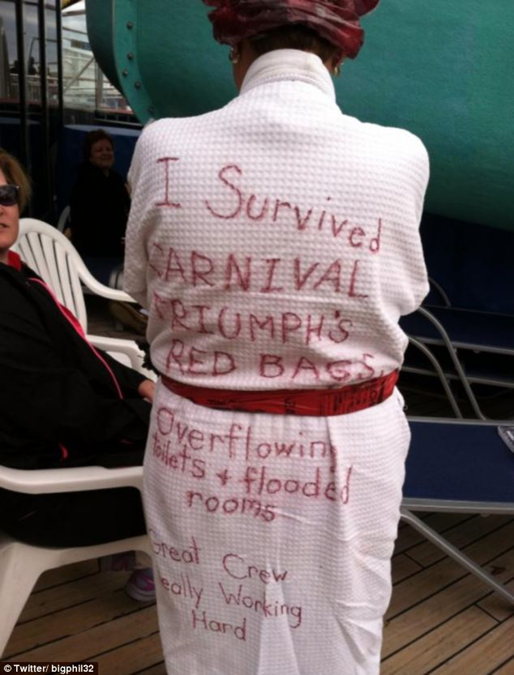
    Some companies serve as guinea pigs of how not to handle crisis brand management. Unfortunately for the 4,200 suffering passengers, Carnival Cruise Line set an example for the public relations world. The cruise line took a hit, after multiple incidents including the shipwreck of Costa Concordia off the coast of Italy, this past year. Most recently, America followed the second incident of the Carnival Triumph with horror, now commonly referred to as the “poop cruise,” after the ship lost electricity after an on-board fire. Passengers were stranded without electricity, air conditioning or working toilets for five days. As pictures of the floating cesspool emerged, the public watched carefully to observe how Carnival was handling the disaster.

    Carnival Cruise Line did irreparable damage during and immediately following the days of the rescue. Often in crisis management situations, people remember how companies handle the problem more than the actual incident itself. If Carnival had handled the incident accurately and swiftly, our memories of the event could be quite different. In retrospect of the cruise disaster, Carnival took a few costly missteps.

    1. Carnival did not communicate information clearly with passengers and press about the breakdown and rescue efforts.
    2. The CEO, Gerry Cahill, was spotted at a Miami Heat game while passengers were still on board in toxic conditions.
    3. During the press conference before passengers were able to get off the ship, not only did Cahill not properly apologize and take responsibility for the events, his comments minimalized the trauma the passengers endured. He was quoted saying, “We pride ourselves in providing our guests with a great vacation experience, and clearly we failed in this particular case.”
    4. The worst public relations move of all would be the tone-deaf tweet @CarnivalCruise sent out when 2,400 miserable passengers were disembarking from the ship. They tweeted, “Of course the bathrobes for the Carnival Triumph are complimentary.”

    Image

    http://i.dailymail.co. uk/i/pix/2013/02/14/article-2278616-1796A0C1000005DC-636_634x83

    Public relations and crisis management should understand the importance of how one incident can affect a brand. America’s limited attention span means acting strategically and promptly. Several months later, CEO Gerry Cahill resigned and Carnival Cruise Line offered their customers a “Great Vacation Guarantee” for unsatisfied customers to be able to get off the ship within 24 hours with a full refund. Brand management becomes more difficult once the damage is initially done. Will Carnival Cruise Lines campaign to regain trust be successful? Only time will tell.

    -Rachel Edwards, Ashley Creps, Dylan Fowler, and Ryan Nagy

  • America Runs on Dunkin’, but Will They Stay?

    Dunkin’ Donuts prides themselves in promoting their image as the coffee spot for the average Joe. However with Starbucks and McDonald’s as competitors, Dunkin’ Donuts has decided to revamp their stores in an effort to pull in more upscale coffee drinkers. Dunkin’ Donuts is now attempting to reach customers that are interested in the coffee-drinking experience rather than just a quick morning pit stop. Owners have the ability to choose from four different schemes that they can remodel their store as. These themes include “Original Blend,” “Cappuccino Blend,” “Dark Roast,” and “Jazz Brew.”

    Image

    -Pictured above is the “Jazz Brew” scheme.

    By redesigning their stores, Dunkin’ Donuts hopes to give their customers a better overall experience. In turn, customers will be more likely to form a strong attachment with their brand and chose them over Starbucks or McDonald’s.  Just as the CEO of Starbucks states in a quote from author Bryant Simon, “I think we have managed to, with a simple cup of coffee and a very unique experience, enhance the lives of millions of people, by recreating a sense of community, by bringing people together and recognizing the importance of place in people’s lives.” If Dunkin’ Donuts would like to be able to brand itself as what we call in IMC, a “third place,” they will have to take a page out of Starbucks’ marketing plan to create an atmosphere that draws people in to not just drink coffee, but stay.

    Image

    -Pictured above is the “Cappuccino Blend” scheme.

    So far the new change in atmosphere has led to positive results for Dunkin’ Donuts. The remodeled locations include new additions such as faux-leather chairs, digital menu boards, and relaxing music. These changes have already fostered a greater sense of community because more business professionals are stopping in around lunch time for business meetings and interviews.

    Improving the consistency in the appearance of their locations, Dunkin’ Donuts can reach a stronger brand identity. It is evident that their stores need to be redesigned after receiving the second lowest atmosphere score for beverage and snack shops in a 2012 survey done by Nation’s Restaurant News and WD Partners. As of June the company had redesigned 90 locations and hopes to have 600 finished by the end of 2013. Have you recently been to a Dunkin’ Donuts and noticed a difference in the atmosphere? Have you wanted to actually sit down and stay a while?

    -Aaron Love, Kara Zimmerman, Rachel Clay, Rebecca Hobbs