Blog

  • The Importance of Brand Elements

    By: Amanda Hoang

    (Photo by DesignMantic)

    How can a color on a logo help differentiate one brand from another? How can a single character in a brand make its entire identity so unique? Something as simple as the color or font in a brand’s logo could help a consumer associate with it in a completely different perspective. A logo can either be used to set it apart from others or cause it to be associated with another. Staying consistent with elements that have been established is key to a long lasting, famed brand identity. When building a brand, this is something important that you need to think about.

    Creating an Identity

    Creating stronger brand elements such as name, terms, signs, symbols and design will help prevent consumers from associating the identity with another brand (Ward, 2020). These elements are the basis of building a unique brand identity. You wouldn’t want someone accidentally associating you with another brand that has no credit for your work. McDonald’s has one of the most unique brand elements in color combination and symbol design. One color won’t always get a consumer to associate a brand right away with it. Unique color blocking makes it easier to distinguish one brand from another without any words. McDonald’s is easily recognizable even without the actual brand name on it (Ward 2020). The famous golden arches make the brand’s logo notable.

    (Photo from 1000 Logos)

    The combination of a brand’s element helps consumers differentiate one from another. This is why there is a strength in brand consistency. Maintaining consistency throughout brand platforms and advertisements is key to expanding a brand. The logo, colors, typeface are main elements to a brand’s identity and must not be changed. Unless a company is doing a refresh or rebranding for a specific reason, there shouldn’t be any major changes to identity elements.

    Brand Consistency

    When having a brand as huge and well known as Coca Cola, you have to stay consistent in branding. The brand has always had a very established color and typeface. In 2011, Coca Cola partnered with the World Wildlife Fund to develop an “Arctic Home” campaign for Christmas (Ward, 2020). Customers were getting confused distinguishing between regular caffeinated cokes and diets. Customers were frustrated and complaining about the change in tastes of the drink. This was a placebo effect because by removing the infamous color in their logo, their consumers could no longer associate their products with their brand. The change in color had lost consumer’s association with the brand and cut their identity cues short (Ward, 2020). It is essential for a huge brand to remain consistent in well known associations.

    (Photo from Indica Design)

                As seen from Coca Cola, not staying consistent with the brand elements that you started with could diminish the hard work you have put in. Brand identity is how a consumer associates products with a brand. Coca Cola received so much backlash and complaints from the public. It wasn’t just about not liking a new color. There were repercussions and accusations of the “changed” taste. There were also issues in inconvenience when searching for the product at the store. A brand must not divert from an iconic element that makes their brand distinctive.

    Staying Unique

                When starting a brand, one must be particular in choosing elements that have rarely or never been done before. Individual brand elements such as “logos, taglines, colours, jingles, characters, images and pack shapes,” all make-up a brand’s full identity (Ward, 2020). You wouldn’t want to copy a competitor or be associated with a brand that could potentially do your brand harm.

                Gucci and Chanel’s logos are examples of dangerously similar typefaces. These two companies are both considered top high luxury brands in the world. They are incredibly famous in the same industry. Because of the similar logos, there could be some accusations that one company is stealing product ideas from another. Having such similar logos in a sharing industry is not a great idea. It could confuse customers on what products belong to what brand. Advertising and marketing could be made harder because the brand would have to be extra careful in not copying too many ideas.

    (Photo by CreativeBloq)

                Before you start a brand, make sure to really think about what you want your brand to stand out for. Will it be a color? A symbol? Think about how every element in your brand will have to stay consistent among all the future advertising and marketing that will be done. Elements that are unparalleled to any competitors will help a brand stand out. If you want to build a successful brand, make sure to start off strong with special elements to begin building an identity.

    Resources

    Ward, E. (2020, March 2). Building a unique brand identity: measuring the relative ownership

    potential of brand identity element types. Retrieved September 12, 2021, from

  • Celebrity Endorsement: A Famous Marketing Strategy

    By: Savannah Gillie

    With the trend of influencers on the rise, it’s important that we take a look at how much they are really increasing a company’s sales. What makes this concept so interesting is that it is not only relevant in the U.S., but across the world. A study conducted in Indonesia at the University of Brawijaya titled “The influence of celebrity endorsement on purchase intention of Wardah Lipstick products through brand image and brand credibility,” aimed to determine how much influence celebrity endorsement truly has on purchase intention. For their study they used the product Wardah lipstick. Wardah is a cosmetic company founded in Indonesia. Their cosmetic brand the first in Indonesia to be halal (Rayining et al., 2019). Halal is seen as “permissible” and “lawful (Kinasih, 2017).” If you don’t understand the importance of this concept, it allows for Muslim women to be able to use their products without violating their religious practices. With around 87% of the population in Indonesia identifying as Muslim, the brand imperiality gained respect and popularity (Kinasih, 2017).

    Marketing Cosmetics

    The way companies market cosmetics is especially important. They have to be sure they are reaching a wide range of audiences. Companies have to be careful to include individuals of all skin tones, skin types, vegans, and so on. In order to create a positive impression surrounding their brand, they have to have something that makes you unique. Wardah chose to make their products halal. They catered directly to a large group’s demographic needs, therefore, establishing a form of credibility

    Celebrity Endorsement and Purchase Intention

    Let’s talk more about celebrity endorsement, how effective is it really? This study had some results you may not have expected. With so many companies using celebrity endorsement, or influencers, you would think they would have a direct effect on purchase intention, right? This study actually proved that is incorrect. Before we go into more detail, purchase intention is defined as “the tendency to buy a brand and in general based on the suitability of the buying motive with the attitudes or characteristics of the brand that can be considered (Rayining et al., 2019).” The definition alone proves that your brand has to have something more substantial than a celebrity who favors your products.

    The questions they were trying to answer were:

    -Does celebrity endorsement have a significant influence on purchase intention?

    -Does the role of brand image mediate the influence of celebrity endorsement on purchase intention?

    -Does the role of celebrity mediate the influence of celebrity endorsement on purchase intention?

    In order support these hypotheses, the researchers had to do a little digging. For this study they chose to study the population sample of buyers of Wardah lipstick products in the city of Kediri. They chose 120 individuals to answer their questionnaire. After examining the data from the survey’s, they were able to come to a conclusion about their hypotheses. As for the first hypothesis, the data proved that celebrity endorsement had no direct influence on buying interest. While celebrity endorsement can leave a positive impact, it is not strong enough to directly drive a buyer’s interest. Obviously, celebrities have the ability to create more buzz about a product, however, they are not always credible sources. Especially if a brand was solely relying on celebrity endorsement. If the product does not have a credible backbone prior to the celebrity endorsement, the strategy will be a failure.

    Results of the Study

    The study proved that celebrity endorsement is not enough to influence purchase intention on its own. However, if you pair celebrity endorsement with a positive brand image, you may be able to persuade consumers to buy your product. This study reiterated the fact that brand image can increase and influence the amount of influence celebrity endorsement has on purchase intention. The same goes for brand credibility. If a company is presenting themselves to be credible and of high-quality, celebrity endorsement has the ability to become an effective marketing strategy. Interest in a particular product is more likely to increase if the consumers are well informed.

    Celebrity Endorsement in Everyday Life

    We see celebrities constantly promoting acne products, makeup products, clothing brands, basically anything you can think of. But how much does their word really mean to us? Would you buy something solely because your favorite celebrity said to? What if it was a brand that you had never heard of? Would you trust only their judgement on the product, or would you need to look further into the product on your own? Next time you see a celebrity endorsing a brand, try to focus on what you’ve heard about the brand, rather than what you know about the celebrity. According to this study, having positive prior knowledge of the product will make the celebrity endorsement more impactful.

    References

    Hardaning, T. (2018). Hipwee. Retrieved September 9, 2021, from https://www.hipwee.com/tips/menjadi-penulis-wardah-cosmetics-bukan-lagi-mimpi-kalau-kamu-ikuti-kompetisi-ini/.

    Kinasih, R. (2017, November 21). Eiq brand series: Wardah’s fashionable strategy for halal beauty. EcommerceIQ. Retrieved September 9, 2021, from https://ecommerceiq.asia/brand-series-wardah-halal-cosmetics/

    Rayining, Yuniarinto Agung, & Surachman. (2019). THE influence of celebrity endorsement on purchase intention of Wardah lipstick products through brand image and brand credibility. Russian Journal of Agricultural and Socio-Economic Sciences, 90(6), 302–308. https://doi.org/10.18551/rjoas.2019-06.37

  • Understanding How Social Media Content Has Been Affected by the Pandemic

    By: Caitlin Freeman

    COVID-19 effects on Social Media Content

    When thinking about the COVID-19 pandemic everyone has seen the implications on our daily lives. What we may not consider is the impact COVID-19 has had on social media content. Understanding how social media content has been affected by the pandemic can help us grasp an understanding of the content we are seeing and why we are seeing it. Considering we are in a digital age, social media plays a large role in our daily lives. Whether you are checking Instagram to see what your peers are up to or if you are reading an article online, you are engaging in social media. COVID-19 has affected the way we interact with our peers not only in person but also online. Universities had to transition to online learning and people were advised to stay indoors. Elementary, middles, high schools, and many jobs also had to transition into online learning or working. Quarantine has increased social media usage and forced people to connect digitally.

    Impacts of COVID-19 on Social Media

    An article written by Charles Mountifield and Stirling Sharpe gives us some insight on the impact of COVID-19 on social medias role. “Despite the truly terrible global crisis, my thoughts on the impact of COVID-19 on social media are mostly positive” (Mountifield & Sharpe, 2020). Content creators have been forced to reinvent the content they are creating. Since more individuals are engaging in social media content, creators have to be more creative. Keeping followers engaged has become the main goal and we are seeing content that is more impactful. “It’s almost forced creators into being super creative, as well as providing an incredibly powerful platform for campaigns to gain support” (Mountifield & Sharpe, 2020). One rising trend has been keeping healthy during quarantine. Social media has become a place where people can find tips to staying healthy, while staying indoors. Cooking healthy meals, indoor exercises, and ways to stay positive during a world-wide pandemic is some of the content that has been successful. Understanding how social medias role has shifted from a place for people to stay connected to a place where people can be inspired to stay healthy helps us understand the change in social media. Social media is shifting to a more influential role by allowing its users to find ways to be healthy.

    Changes to Social Media Content because of COVID-19

    Looking at the changes made to social media output due to the current global pandemic gives us insight into the content we are seeing. Brands were forced to re-evaluate their social media content due to their business’s changing. An example of this is seen in the sports industry as sports were put on hold due to the pandemic. It was no longer safe for players to play so sports based social media had to engage in a different way. “Like many clubs, we have shifted some of our attention to relieving past glories by posting “On This Day” features. I really like what we’ve done with that, because it is not only a great way of filling the void in current sports content at the moment but it also really engages our clients and their fans by reminding of more positive times, something that I think is very important in the current climate.” (Mountifield & Sharpe, 2020). How COVID-19 has forced brands to engage with their users a different way helps us understand the content we are seeing. Sports features is a perfect example of the changes made to social media output due to COVID-19 because of how their posts were very limited. With sports being suspended sports features had to pivot their content to keep their users engaged. They were able to do this by talking about previous seasons and other topics rather than current events.

    Increase in Social Media Engagement due to COVID-19

    The pandemic has increased social media engagement because of individuals spending more time at home. People are trying to find ways to keep themselves entertained, while being stuck at home. “Unsurprisingly, people are consuming more media during the lockdown period because they are confined to their homes.” (Mountifield & Sharpe, 2020). Looking at how social media engagement has increased we can see how much COVID-19 has impacted social media. Moving forward users may look to social media for their daily interactions. The job industry for social media content creators will increase because the need for creators will rise. The spike in engagement has changed how people look at the importance of social media. Brands see the value in utilizing social media to promote their brands messaging and content. Understanding these changes will help students graduating with degrees that will allow them to work in the social media industry, successfully obtain jobs. It is important to analyze how the pandemic has increased social media usage and use that understanding to keep users engaged.

    Conclusion on How COVID-19 has affected Social Media

    Overall COVID-19 has had a large impact on social medias role, social medias output, and social media engagement. Social media content will continue to evolve due to the impact COVID-19 has had on social media. In order for brands to be successful on social media they will need to take what they have learned from the pandemic and apply it to their content moving forward.  Understanding the impact of COVID on social media will help us predict future jobs, social medias importance, and successful content. COVID-19 has impacted social media through how users interact with content as well as how content creators post. The research being done helps explain how the pandemic has impacted social media. It also allows more insight into how social media content has changed since the beginning of the pandemic. Social media content is changing due to COVID-19 and will continue to change after the pandemic.


    References

    Mountifield, C., & Sharpe, S. (2020). Managing social media content during a Global Crisis: Interview With Ben Read, social media manager at world in motion. International Journal of Sport Communication, 13(3), 300–306. https://doi.org/10.1123/ijsc.2020-0211

  • Brands Need to Stop Ghosting

    By: Alison Fore

    Photo Credit: Hindustan Times

    Ghosting is when a person reads your message and then does not respond. Ghosting can happen over email, text, direct message, and snap. When a brand ghosts an individual, they leave them feeling as though their opinions do not matter; as you can imagine, this causes decreased sales and brand loyalty.

    What Does the Research Say?

    Author Patria Lakshmana dives into the issue of a company’s engagement and how that engagement influences the customer’s loyalty and purchase intention in her article “I Will Always Follow You: Exploring the Role of Customer Relationship in Social Media Marketing.” She tested her theories in a population of people in Indonesia that represented society as a whole. She focused on 256 people in the retail banking realm in Indonesia. The author does note, “The major limitation of this study is its generalizability beyond retail banking industry” however, she explains how the audience she picked was intended to represent a broader scope of people. She chose Indonesia because they have a population of 268 million, and of that, 48% were active social media users. This group offered a good look at how the rest of the world may have interacted on social media. She had individuals fill out a questionnaire asking their thoughts and feelings about a company. She found a direct link between a brand’s engagement and the level of brand loyalty their customers had. The more a company engaged with its audience, the more brand loyalty it expressed. She also found that engagement increased the likelihood of purchasing from that company again (Lakshmana 2020).

    Why Should We Care?

    As integrated marketing communication practitioners, we need to know why engagement is essential. This article’s findings showcase that companies need someone who understands how social media works. As previously mentioned, there is a link between how much interaction a brand has with its followers and how brand loyalty increases. Thus, brands need someone to like comments, repost stories, create reels, or start an IGTV. All of these features on social media allow for increased interaction with your audience. This also means knowing when the right time is to post content on social media platforms. For example, it does not make sense to post something at 3 pm on a weekday because people are at work and unable to scroll on social media. Companies need an IMC practitioner to develop social media strategies and content calendars to ensure their post is seen. On apps like Facebook and Instagram, you need to post almost daily to see an increase in the amount of views and engagement you have on your sites. This means you need someone versed in the type of content that people want to see and in what format people want to see it. For example, a brand should not use Canva for every post as it becomes repetitive and lacks emotional appeal. Instead, a brand should mix it up with video content and candid/posed pictures. The article says it is essential to consider how and if your followers can engage with every post you make. 

    What Does Engagement Look Like?

    The type of engagement you provide may look different based on the company you are working for. Some examples include:

    • Replying to direct messages
    • Responding to emails
    • Creating interactive polls on social media 
    • Liking and replying to comments on a post 
    • Answering phone calls/calling back 
    • Responding to reviews
    Photo Credit: Jon Tyson

    All of these things are ways to engage with the public. One of the newer methods of engagement includes creating polls on a social media page. These stories should incorporate questions that you as a company have about your consumers and consider the comments and questions you have received from your audience in the past. As the article says, “the content must be entertaining, customized and yet interactive” customization is key to interaction (Lakshmana 2020).

    Let’s create an example using Gym Shark. Gym Shark is a fitness brand that has become influential in the online fitness realm. If they wanted to create a “this or that” poll to understand their consumers more, it might look like this:

    FemaleMale
    18-25 years old25-35 years old
    WeightsCardio
    At Home WorkoutsGym Workouts

    This would allow them to engage with their followers and collect essential data about who follows their social media. Gym Shark receives a lot of questions about sizing, color preference, shipping methods, and price. If they wanted to engage their followers and answer these comments on social media, they might create story telling their followers to ask them a question. Then they can filter through the questions and answer the most popular ones. Again, they get to learn valuable information about their audience. This will enhance their marketing skills in the future so they can prevent similar questions from arising later. These two examples are great ways to make your consumers feel heard. As the article says, engagement is essential because it improves loyalty and purchase intentions.

    How to Make a Social Media Plan?

    Photo Credit: Microsoft

    To ensure a high level of engagement actually happens, companies need to have a plan. This can look different for different people. Some companies might be able to pay for third-party platform like Hootsuite, which allows you to track brand engagements, schedule posts, and receive in-depth analytics. Some IMC practitioners might only be able to use Facebook Business suites which will enable you to post pictures across Facebook and Instagram. However, the analytics are not as in-depth. Finally, a practitioner might use a calendar to keep track of when to post. This would ensure that they can keep track of posts, but they will not have insight into their views/clicks, and they cannot schedule posts ahead of time. As a company grows, it might realize how influential social media is and pay for platforms like Hootsuite. Either way, no matter how you are keeping track of engagement, the most important thing is to make sure you stay engaged. 

    References:

    Laksamana, P. (2020). I Will Always Follow You: Exploring the role of customer relationship in social media marketing. International Review of Management and Marketing, 10(3), 22–28. https://doi.org/10.32479/irmm.9662

  • The Rise of Social Media Influencers

    By: Rachel Cribb

    Photo by Firmbee at Unsplash

    Social media influencers (SMIs) have increasingly become important to changing the reputation of a brand and their marketing mix. Through the use of video and pictures, SMIs have the influence to change the meaning of how a brand’s commercial is perceived by their target audience. One post on social media can spread quickly and create a positive or negative impact for a brand, which is why SMIs must be careful about which companies they collaborate with. Companies have tried multiple strategies to enhance viewer’s perception of a commercial, however, SMIs hold a power that public advertising cannot accomplish.

    Why SMI’s Are Viewed as Trustworthy

    SMIs enhance the persuasion of corporate commercials by being authentic with their targeted audience about the brand and their opinion of its message or products. The power of eWOM, electronic word of mouth, is a role SMIs play in order to share positive reviews about a brand and hope their followers spread their message. As an influencer gains more followers, their credibility and follower relationships are most likely increasing as well. According to Linqia, “In addition, 42% of marketers shifted from one-off, tactical campaign execution to an “always on” influencer strategy” (2019, p. 4). As a result, the SMIs audience is more likely to trust the influencer’s opinion on a brand or commercial.

    For example, Emma Chamberlain, a popular influencer, has gone from a regular, teenage high schooler, to an influencer attending the Met Gala in 2021. Her vulnerability and relatable experiences have resulted in her millions of followers copying her fashion styles and routinely listening to her podcasts. This proves people are more likely to be persuaded to purchase a product or follow a trend when they do not feel manipulated by a brand or the influencer promoting the brand.

    If a person feels persuaded by an advertisement, they are more likely to have negative feelings towards the advertisement and brand as a whole. This is known as persuasion knowledge (PK), which can be prevented when SMIs are responsible for sharing their opinion of a brand’s commercial (Kim et al., 2021). Followers monitor SMIs life consistently and either want to be them or be friends with them. Social media allows influencers to be perceived as someone who is always happy, organized, and educated. This may not always be the case because social media only displays moments of a person’s life through short videos or a few pictures. However, the target audience of SMIs continue to value their opinion and ask for reviews on products before they decide to purchase it for themselves. This represents how strongly followers trust SMIs and want to hear a truthful review of a brand rather than watching an advertisement that makes them feel manipulated.

    Photo by Kendall Jenner

    The Impact of Sponsorships

    Although SMIs have the power to persuade their audience to have positive feelings towards a brand, sponsorship disclosures can negatively impact their strategy. When an SMI discloses they are being paid to review a brand, the PK increases in the audiences’ minds. The audience is less likely to trust someone who is being paid to say good things about a brand. Sponsorships allow SMIs to receive free products or compensation for saying positive comments about their brand. However, the audience can recognize from a hashtag or popup on the screen if the SMI is being paid to promote a brand. Youn Kim stated, “when a sponsorship message is disclosed, social media users are likely to infer that the sponsorship’s compensation may be the reason why the influencer promotes the product” (2021, p. 407). This makes the audience more suspicious and creates negative feelings towards the brand and SMI. Skepticism grows as the audience wonders whether the SMI truly likes the brand or is more focused on being paid and gaining followers.

    When a SMI uses a narrative story to introduce a corporate commercial, they are more likely to generate positive reviews towards that brand. This occurs because a personal story is touching, believable, and can be relatable to the audience watching. For instance, if a SMI talks about how a product has helped them through the difficult time of the pandemic, it could make the audience empathize with the influencer. Narrative stories are more effective than non-narrative stories because they grab the audience’s attention and show authenticity. However, if a sponsorship disclosure is present within the narrative story, PK increases, and the audience begins to feel manipulated. The sponsorship can reduce the effect of the SMI’s words and will eventually create negative feelings towards the brand.

    SMI’s Could be the Future of Marketing

    Overall, SMIs have the followers and persuasion skills to change the meaning of a commercial and possibly benefit the reputation of a brand. The target audience is more likely to have positive feelings towards a brand when the SMI is authentic, open minded, and not participating in a sponsorship. When a sponsorship is involved, the audience feels manipulated which results in higher PK and negative feelings about the commercial. If an influencer is going to be paid to speak about a brand, they should be transparent about it rather than trying to hide it. The audience wants to have a trusting relationship with their favorite influencers which includes honest communication and authentic opinions.

    References

    Kendall Jenner [@kendalljenner]. (2021, July 27). [Photo of Kendall Jenner’s teeth whitening sponsorship] https://www.instagram.com/p/CR2XofWjQZS/

    Kim, Do Yuon (2021, June 1). “Influencer advertising on social media: The multiple inference model on influencer-product congruence and sponsorship disclosure”. Journal of business research (0148-2963), 130 , p. 405. https://doi.org/10.1016/j.jbusres.2020.02.020

    Kim, E. (Anna), Duffy, M., & Thorson, E. (2021). Under the Influence: Social Media Influencers’ Impact on Response to Corporate Reputation Advertising. Journal of Advertising, 50(2), 119–138. https://doi-org.liblink.uncw.edu/10.1080/00913367.2020.1868026

    Linqia. (2019). The state of influencer marketing 2019. Retrieved from: https://linqia. com/wp-content/uploads/2019/04/Linqia-State-of-Influencer-Marketing-2019-R eport.pdf. p. 1-13.

  • Three Points to a Successful Brand Relationship through Social Media

    By: Collin Harrington

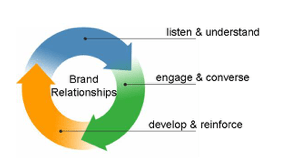
    Developing relationships is essential when promoting your brand. Relationships allow you to build connections, which can establish customers and build a community for your brand. Social media can enhance brands’ customer relationships if executed effectively. Social media marketing allows businesses to have an advantage compared to traditional marketing for a variety of different reasons such as more freedom when searching and allowing the customer to view the intention of the business. These three main points are the foundation of successful brand relationship building.

    Social Media Marketing Activity

    The first point of interest is Social Media Marketing Activity (SMMA). When building relationships, you want to connect with your customers as best as possible. Framing your message strategically on social media helps your brand pinpoint ideal clients, which will help you connect easier and create appeal. When a potential or new customer looks on your social media, they want to feel connected- how is your brand building a space they can actively be a part of? When marketing your content, a customer wants to be able to connect with the brand.

    One crucial way to do this is by interacting- being social on social media allows a brand to enforce a positive environment for its customers. Creating a brand face for your social media and being active on it creates authenticity and loyalty to your customers, creates trust, which in turn builds credibility for your brand. All of these factors can create a positive customer experience when doing social media marketing.

    Customer Experience

                Customer experience is crucial for a brand when developing potential or long-lasting relationships with a customer. Generally, when you go to an online store or a restaurant, you want to have a good customer experience; when you do not have a good experience, you often see that as a reflection of the whole business, and that business loses your service. However, if you have a good customer experience, then a customer wants to keep interacting with that business. A good customer experience over time builds a positive relationship. According to Ardy Wibowo et al. (2021), “Customers like to associate themselves with the enterprise because beneficial values of their own and those of the company overlap with each other” (p.5).

    Additionally, good customer experiences for your brand can be initiated by outdoing expectations, fast service/timely reactions (answering DM’s, calls, emails, etc..), rewarding loyalty, asking, and accepting feedback, showing appreciation for your customers, and CONNECTING!

    Intention

                Lastly, customers want to view a brand’s intention; what is the plan of this brand? What is this brand trying to convey to me? The brand intention will build customer behavioral outcomes, which in turn creates relationships. As Ardy Wibowo et al., (2021) explains, there are three types of intention when constructing brand relationships: purchase intention, loyalty intention, and participation intention. Purchase intention focuses on the intention of the customer after viewing what your brand has to offer, what activated something in a customer to make the intention to buy from your brand? Loyalty intention describes customers’ loyalty to your brand; what inspires them to keep coming back to your brand and purchase products? Lastly, participation intention describes participation in committing to social commerce activity, your socials, and your participating with your brand in general.

    These three intentions can be earned by customer experience and social media marketing activity, as these two things have a direct correlation to brand relationship building. These intentions are especially gained on social media as it is dominant in the marketing industry, gives users more freedom when researching your brand, allows easy word-of-mouth, and displays your brand’s atmosphere quickly and effectively. According to Ardy Wibowo et al., (2021)  “quality of the relationship between the user and the social networking website mediates the influence of social support and website quality toward the intention to use social commerce and continuing to use social networking sites” (p.4). This proves the statement that intention will dramatically increase the level of relationship developed, thus creating social support for your brand, and gaining customers. A key point a brand should ask themselves is the quality of the relationship, and it all depends on these factors. The best quality attracts the best customers for your brand to thrive over social media.

                Social Media Marketing Activity, Customer Experience, and intention (purchase intention, loyalty intention, and participation intention) will help build a positive atmosphere for potential, new, and long-lasting customers and establish relationships where customers can connect to the culture and community of your brand. When a brand executes Social Media Marketing Activity and Customer Experience correctly and develops intention with their customers through product or service, it allows customers to feel cared for, thus creating trust and credibility. Intention is the source of every brand’s survival.

    References

    Brand relationships. SocialSteve’s Blog. (n.d.). Retrieved September 27, 2021, from https://socialsteve.wordpress.com/tag/brand-relationships/.

    Chi, H.-kuang. (1970, January 1). [Pdf] the impact of brand awareness on consumer purchase intention : The mediating effect of perceived quality and brand loyalty: Semantic scholar. undefined. Retrieved September 27, 2021, from https://www.semanticscholar.org/paper/The-Impact-of-Brand-Awareness-on-Consumer-Purchase-Chi/5cc031eb59bd1393fd314c091b4ea6dd1a16609a.

    Customer Behavior as an Outcome of Social Media Marketing: The Role of Social Media Marketing Activity and Customer Experience. (2021). Sustainability, 13(1), 189.

    Social media marketing for your organization by Native Theory digital. Native Theory Digital. (n.d.). Retrieved September 27, 2021, from https://nativetheorydigital.com/services/social-media-marketing/.

  • How Does Social Media Marketing Aid in Fighting the Climate Crisis?

    By: Lauren Wessell

    How can IMC professionals use social media as a force for good? Sun and Wang (2019) published a research article answering this question. Throughout their research, they found that three components: product knowledge, perceived consumer effectiveness, and social media marketing all work together to positively impact a consumer’s intention to shop eco-friendly. Recent years have seen an increased interest in green living, partially due to the worsening climate crisis and how companies have started marketing green products online. When IMC professionals effectively utilize social media marketing, they help fight the climate crisis.

    Why Shopping Eco-friendly is Import

    The latest report by The Intergovernmental Panel on Climate Change, published on August 9, 2021, found that climate change is occurring at a faster pace than previously recorded over any period of time. For the first time in its report, the IPCC unequivocally attributed global warming to human action and influence. Since the industrial revolution, specifically the act of burning coal and other fossil fuels, there has been a direct correlation in the increased amount of carbon dioxide in the atmosphere. One important takeaway for coastal communities, especially Wilmington, is the increased rate of rising sea levels. Since 2006, the rate of sea-level rise has doubled (IPCC, 2021). While this development obviously has negative impacts, it has also caused a positive increased interest in living sustainably across the globe.

    So, what can IMC professionals do to aid in fighting the climate crisis? Convince consumers to purchase green, eco-friendly products. While this may seem obvious, when IMC professionals utilize social media marketing effectively it is proven that consumers are more likely to purchase green products.

    (Lim, 2019)

    Social Media Marketing Improves Consumer Knowledge and Perceived Effectiveness

    Sun and Wang (2019) found that, in general, knowledge regarding green products is fairly low. However, knowledge about a product and how effective consumers perceived those products to be were both positively impacted by the use of social media marketing. When social media marketing increases, consumers learn more about green products and in turn, view the products as more effective. There are many “green” products out there that do not live up to their name. Many companies like to slap a label with a green leaf on a new product or call their services eco-friendly to keep up with trends. This tendency does not bode well for companies who are actually producing green products, with a mission to help the environment.

    To combat this, social media content should focus on education and highlight small, every day changes the average consumer can make. Companies can increase awareness about climate change through social media marketing while selling their product. One is not likely to do extensive research and gain full trust in a new product overnight. Companies should present the key facts and convince consumers to take small steps towards becoming eco-friendly. Someone who is not a climate expert may not completely change their power source based on one Instagram post, but they could be willing to switch from single-use plastic bags and containers with effective marketing.

    (Yurasits, 2019)

    Prosocial Behavior Increases Green Buying

    Social media marketing not only increases awareness and perceived effectiveness but also encourages prosocial behavior (Sun and Wang, 2019). Prosocial behavior is defined as behavior that benefits others and society as a whole. Social media users are connected to all sorts of people online and, for better or worse, more likely to compare themselves and their lives to other users. When people communicate online, users feel pressured to change and improve their daily behaviors to match those of other influential users.

    This change in behavior will hopefully lead towards buying environmentally friendly products. For example, you may follow a blogger who recently switched to all eco-friendly cleaning products. Viewing this user’s blog posts, interacting with their Instagram stories, and viewing their Twitter content will most likely make you more inclined to buy green cleaning products. This is not a new or radical idea, but Sun and Wang were able to prove this behavior.

    Young People are More Likely to Shop Sustainably

    IMC professionals should also target younger audiences with green social media marketing. Sun and Wang (2019) concluded; younger people have a more positive attitude towards shopping sustainably than other generations. They are typically more likely to support green initiatives for several reasons. Simply put, they care more about how their present actions impact the future environment, since it is an environment they must live in. Additionally, young people are very active on social media. Marketing campaigns will have the most impact on consumers’ intention to buy green products when they are created for younger audiences.

    Social Media can Fight the Climate Crisis

    The research report by Sun and Wang proved that social media marketing increases consumers’ knowledge and perceived effectiveness of a product. When both of these things happen, consumers are more likely to purchase green products. When IMC professionals effectively use social media marketing, they increase consumers’ intention to shop sustainably. While this article focuses on buying green products, which is a growing industry, the results are indicative of the impact social media has on a variety of markets. It is essential for IMC practitioners to know how the use of social media affects consumers’ buying practices, especially when buying green can help save our planet.

    References

    Sun, Y., & Wang, S. (2019). Understanding consumers’ intentions to purchase green products in the social media marketing context. Asia Pacific Journal of Marketing and Logistics, 31(4), 860-878. doi:http://dx.doi.org.liblink.uncw.edu/10.1108/APJML-03-2019-0178

    IPCC, 2021: Climate Change 2021: The Physical Science Basis. Contribution of Working Group I to the Sixth Assessment Report of the Intergovernmental Panel on Climate Change [Masson-Delmotte, V., P. Zhai, A. Pirani, S. L. Connors, C. Péan, S. Berger, N. Caud, Y. Chen, L. Goldfarb, M. I. Gomis, M. Huang, K. Leitzell, E. Lonnoy, J. B. R. Matthews, T. K. Maycock, T. Waterfield, O. Yelekçi, R. Yu and B. Zhou (eds.)]. Cambridge University Press. In Press.

    Lim, L. (March 17, 2019). There is no planet b [photograph]. Unsplash. http://unsplash.com/photos/ycW4YxhrWHM

    Yurasits, B. (July 9, 2019). Plastic disposable cups [photograph]. Unsplash. http://unsplash.com/photos/YFiHaY2DVyE