Blog

  • Which Form of Social Media Content Works Best for Increasing Brand Attitude?

    By Shelby Watson

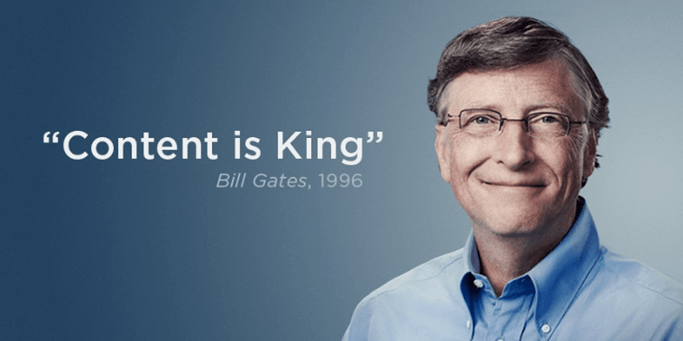
    (Photo from Dreamwealth Films, http://dreamwealthfilms.com/content-is-king-what-bill-gates-said-about-internet-in-1996/)

    Creating content-driven media to share across social channels is one of the most effective ways for a brand to reach their target audience today. However, there are so many different ways to create advertising content. How do you know which one is the most effective? Especially for brands that are looking to increase positive attitudes towards their product or service, understanding the techniques available and being able to decide which one will work the best for your purposes is incredibly important.

    What are the major techniques used by companies on social media?

    First, it will help to understand what techniques are available to you. Content marketing is a more traditional tool used by a brand, where hired social media coordinators will create original content for a brand, share that content, and try to increase brand reputation or sales. Typically, this form of content is heavily curated by the company producing it and is easy to control, which can allow a brand to create a cohesive image of itself.

    Sponsored content is content that a company pays someone to post in order to promote the brand’s image or encourage sales of its products. Often, sponsored content is posted by influencers within a certain niche market or a well-known or respected celebrity. Sponsored content is almost always disclosed as such, so an audience is aware that the content they are seeing is marketing.

    User-generated content is content that an individual posts on their own social media channels promoting a brand or product. Often, user-generated content does not disclose whether or not the poster was paid or otherwise compensated for promoting something. This kind of marketing can be riskier because a brand cannot always predict how an individual will talk about their products or services.

    Which techniques are most effective at increasing positive brand attitude?

    According to a study completed in 2019, there are significant differences in how audiences receive certain types of content. Sponsored content is generally received less favorably, likely because the disclosure that something is a paid #ad comes off as insincere to a targeted audience. For example, in November of 2021, Amazon teamed up with actor Terry Crews in hopes of improving attitudes towards the working conditions within the company’s fulfillment centers. In a TikTok posted to his channel, Crews visits an Amazon warehouse and acts like a kid in a candy store, excited about the work and employee benefits offered by Amazon (which the video says include paid college tuition and flexible working hours). The internet was quick to point out the insincerity within the video, noting that it does not accurately represent what working at a fulfillment center is like. Crews was also criticized for being willing to promote such an unrealistic video for money. In the end, Amazon’s brand attitude, as well as Crews’, took a hit because of the sponsored content.

    (Photo from Business Insider, https://www.businessinsider.com/terry-crews-amazon-ad-video-2021-11)

    On the other hand, content marketing and user-generated content are both better received by audiences because these forms of content are generally trusted more. It makes sense that user-generated content is more likely to read as sincere – if someone who doesn’t work for or with a company promotes a product or service, we are likely to believe they do actually enjoy it. For example, shopping has become a popular niche within TikTok and Instagram. #Amazonfinds on Instagram is filled with all kinds of items people are promoting from the website, and “Amazon Must Haves” videos like this one are incredibly popular across TikTok. Popular ways for brands to encourage positive user-generated content include challenges or giveaways that require users to post something in order to participate.

    It is a little more surprising, however, that content marketing and user-generated content show little difference in how they influence audience brand attitudes. Audiences likely trust content marketing more than sponsored content because the connection between author and message is clearly established. We know that a brand is going to market goods or services to us, so we expect to see ads when we follow a brand on social media. However, when we follow a celebrity or influencer, we expect to see content about them and their lives, not necessarily ads. So, this form of marketing reads as trustworthy.

    To continue with the example of Amazon, the company uses its Instagram (@amazon) as a way to reinforce its brand image and messaging. The company features humorous reviews of items from its website and uses symbols such as Amazon delivery trucks, the trademark Amazon smile, and the brand’s orange, black, and white color palette in order to support the brand image it has already built. Because we expect to see Amazon promoting itself and the items it sells on its own Instagram page, we are more likely to trust the content they are posting and in turn, may be more likely to purchase something through their platform.

    How can this help me market my own brand on social media?

    Understanding how your audience perceives different forms of content on social media can allow you to make informed decisions about how to improve brand attitudes. Depending on what your brand is looking to accomplish, you might determine that sponsored content is not the way to go or that you would prefer the control of content marketing over user-generated content. It’s always important to remember that these are general rules and that specific scenarios may call for specific kinds of content. However, using scientific research and recent case studies can help you make better decisions about your brand marketing in the future.

    Source

    Christandla, F., & Müller, J. (July 2019). Content is king – But who is the king of kings? The effect of content marketing, sponsored content & user-generated content on brand responses. Computers in Human Behavior, 96, 46-55. https://doi.org/10.1016/j.chb.2019.02.006

  • Rebranding Tourist Destinations

    By Jaci Grachen

    (Photo from Unsplash)

    In a day and age where it is possible to fly across the country or even the world, in less than a day, people have the opportunity to travel whenever and wherever they want. With social media and other digital outlets on the rise, it is common to see what we call “influencers”, and regular social media users, posting pictures and compilations of videos about their trips. This typically leads to a feeling of wanderlust when one views the idealized images and videos. The reasons for tourism range, but in recent years we have seen the destinations suffer from over-tourism. So how could branding, which is commonly associated with brands and products, help a destination handle over-tourism?

    Branding Encourages Visitation

    Destination Marketing Organizations (DMOs) play a direct role in the tourism of destinations around the world. They tend to focus all their energy on creating a logo and slogan for a destination (Séraphin, 2019). Logos can include special elements that emphasize popular spots at the destination or important historical places. This can be conveyed through colors, illustrations, or even slogans. However, how can a logo help with controlling over-tourism? The answer is that it most likely cannot. Logos are meant to be a snapshot that entices people, so DMOs should not place all their time into creating a logo with hopes of controlling over-tourism.

    What should DMOs do about over-tourism?

    ­            In order to brand a destination in a sustainable way, DMOs need to focus on beliefs related to the destination (Séraphin, 2019). With this approach, they will aim to attract mainly visitors that share those same beliefs in hopes to decrease the number of people. For example, regions in the Middle East could brand certain areas based on their connection to the Abrahamic religions. Jerusalem which is known as the Holy City in these religions could be branded as the destination where people believe Jesus’ tomb was found. Another destination in this area, the Sea of Galilee, is known to be the place where Jesus walked on water. Both are examples of tourist destinations that could be branded in a way so that only a certain type of tourist is strongly drawn to the area and visits.

                Another avenue to take is branding a destination to attract tourists that share similar values as locals. These values could be things such as environmental awareness, outdoor activities, fashion, and much more. For example, Milan is a world capital of fashion and design, so a DMO could focus on this single aspect of the city to attract mainly fashion-minded people. Although Milan has other qualities like great restaurants, if the DMO could brand Milan only for the fashion aspects then this could cut out the number of “foodies” that visit the city, and in turn, decrease tourism numbers.

    The Philosophy Behind the Branding

    With all this talk about decreasing tourism, there are many questions that could arise. Are DMOs trying to manipulate people into not experiencing the world? How will a decrease in tourism affect a destination’s economy? Can DMOs choose a certain target group of people to market to over another group? All these questions relate back to the philosophy that is behind the DMO’s actions. In order to morally brand like described above, there must be a valid “why” behind it all. Why is it that Milan is marketing to fashion lovers over food lovers? It’s because Milan is a global fashion capital, not food capital, so the DMO can be confident that there are other destinations that are a better fit for foodies.

    In addition, DMOs need to be thinking about how their branding choices could affect the locals and their livelihood (Séraphin, 2019). If a sudden change to tourism happens, then locals could suffer hugely from loss of money. However, if the new branding is implemented strategically and gradually then locals could be shielded from sudden losses with a drop in tourism. Also, the locals’ values need to be considered while planning branding. Are there values being represented accurately or are they being branded as what is most attractive? Since tourists are visitors at the end of the day, the DMOs need to respect what the locals want before planning. If the branding plan leads to an unsustainable, high or low, flow of tourists, then things need to change. Most importantly, the branding plan needs to be modeled for change. Local values can change as the world changes. Just imagine how the global pandemic of COVID-19 has shaped the value and beliefs of communities.

    Citation:

    Séraphin, H., Zaman, M., Olver, S., Bourliataux-Lajoinie, S., & Dosquet, F. (2019). Destination Branding and overtourism. Journal of Hospitality and Tourism Management, 38, 1–4. https://doi.org/10.1016/j.jhtm.2018.11.003

    Image Citation:

    Myznik, E. (2020). A stroll through the Galleria Vittorio Emanuele Ii in Milan. UnSplash. Retrieved February 6, 2022, from https://unsplash.com/photos/ZbduA_dhzpI.

  • Social Media Influencers and Their Impact on a Brand

    By Julia Dolinshek

    (Photo from Unsplash)

    What is a Social Media Influencer?

    Within the last decade, social media has become an extremely popular outlet for individuals of all kinds to interacts with family, friends, and brands that they love. The rapid growth of social media has caused brands to hire social media influencers to promote their products and spread a positive light onto their company (Singh, et al., 2020). With so many people being active users of social media, brands took advantage of the ones with a high following to not only promote their products, but also represent their brand as a whole.

    Reports indicate that over two thirds of multinational brands around the world plan to increase spending on influencer marketing within the coming years (World Federation of Advertisers, 2018). Global spending in social media marketing and communication are expected to reach $15 billion by 2022 (Schomer, 2019). Social media influencers typically consist of individuals who have a sizable audience who are willing to create content based on different products and ideas that they support.  Their followers are likely to trust any brand or product that they are endorsing, with an end goal of more people supporting the brand being promoted. With social media influencers using effective communication and marketing skills, while also being paid by the brand, everybody wins. Although the publicity is great for both parties, issues can arise when the personal lives of influencers are brought to life. This has the potential to impact a brand for the better or for the worse.

    Social Media Influencer’s Impact on a Brand – Better or Worse?

    It’s no secret that humans are all imperfect. We all try our hardest to be our best selves, both publicly and privately. It is easy for someone who is not in the public eye to make a mistake. They are able to realize a mistake, learn from it, and grow as a person because of it. There is not a large following of people to bash them and make them feel like they are unforgivable. As a social media influencer, this is not the case. Social media influencers are held to a high standard for many reasons. These individuals can be representing multiple well-known companies at a time. They are also the inspiration and role models to many of their followers. Research has shown that recommendations from social media influencers enhance consumers’ positive perceptions about a brand and consequent purchase intentions (Lu, Chang, & Chang, 2014). When a social media influencer makes a public mistake, it immediately reflects negatively on the brands that they are collaborating with. It causes the brands image to look poor, which can cause a loss of many valued customers. In today’s time, there are so many different brands to support and love. If an influencer who is promoting a particular brand is involved with a public scandal, it may cause supporters of the brand and the influencer to step back and find other competing brands to support instead.

    For Worse

    Social media influencer Olivia Jade was followed and looked up to by millions. She was a fashion, beauty, and lifestyle influencer. She had various partnerships with well-known companies such as Sephora, HP, Lulus and Amazon. In spring of 2019, it was discovered that Olivia Jade’s parents, Lori Loughlin and Mossimo Giannulli had paid $500,000 in bribes to get her admitted into the University of Southern California. Followers and supporters of Olivia were all baffled by the news, stating that she was the “poster child for white privilege” (Clark, 2020). This not only made Olivia Jade look bad, but also the companies that chose to partner with her. This scandal led to all of these companies dropping Olivia Jade as a social media influencer for their brand.

    For Better

    (Photo from Unsplash)

    Companies also sponsor individuals who will make their brand look even better than ever. Tik Tok star, Charli D’Amelio, is sponsored by popular brands such as Dunkin Donuts, Invisalign, Pura Vida Bracelets, Hollister Co., and more. Charli promotes to over 160 million followers. In 2020, Charli used her voice to speak out on topics such as Black Lives Matter, the murder of George Floyd (Charli D’Amelio: Trading card, 2021). This not only educated her large following on important events, but let others know that she is an ally and supportive of equality for all. This specific example would reflect positively on brands that she collaborates with.

    Bringing it all together

    Influencers hold great power for brands within the world of social media. Appealing to the correct target audience while effectively communicating positives about products will have great impacts on what consumers chose to purchase and support. Social media is bigger than ever before. Brands are choosing to pay social media influencers top dollar in order to shine a positive light on their company.

    Sources

    Charli D’Amelio: Trading card. SponsorUnited. (2021, November 24). Retrieved February 7, 2022, from https://sponsorunited.com/charli-damelio-trading-card/#:~:text=TikTok%20superstar%20Charli%20D’amelio,influence%20on%20social%20media.

    Clark, Chavaz. (2020, December 9). Olivia Jade Giannulli, Lori Loughlin’s daughter, breaks silence on college admissions scandal, says she was “poster child of white privilege”. CBS News. Retrieved February 7, 2022, from https://www.cbsnews.com/news/olivia-jade-giannulli-lori-loughlin-college-admission-scandal-interview/

    Lu, L. C., Chang, W. P., & Chang, H. H. (2014). Consumer attitudes toward blogger’s sponsored recommendations and purchase intention: The effect of sponsorship type, product type, and brand awareness. Computers in Human Behavior, 34, 258–266. https://doi.org/10.1016/j.chb.2014.02.007

    Schomer, A. (2019). Influencer Marketing: State of the social media influencer market in 2020

    https://www.businessinsider.com/influencer-marketing-report?r=US&IR=T Accessed

    29th Feb 2020.

    Singh, J., Crisafulli, B., Quamina, L. T., & Xue, M. T. (2020). ‘To trust or not to trust’: The

    impact of social media influencers on the reputation of corporate brands in crisis. Journal

    of Business Research, 119, 464-480. https://doi.org/10.1016/j.jbusres.2020.03.039

    World Federation of Advertisers. Brands to invest more on influencers. (2018). https://

    www.wfanet.org/news-centre/multinational-brands-focus-on-influencertransparency/

    Accessed 30 July 2018.

  • How Interactive Campaigns or “Touchpoints” Influence IMC Effectiveness

    Written by Sydney Jones

    (Photo credit: Clique Images)

    When we create a campaign, specifically in Integrated Marketing Communications, we aim for something that is going to help us connect with contacts to have some sort of the desired effect. Whether it is a greater reach, engagement, or brand loyalty, we are trying to reach some sort of goal. So, how do we achieve this goal of creating an effective campaign? The answer may be creating more interactive campaigns.

    What is IMC?           

    The American Marketing Association defines IMC as “a planning process designed to assure that all brand contacts received by a customer or prospect for a product, service, or organization are relevant to that person and consistent over time” (Davenport). Essentially, IMC enables us to not only reach our desired audience but create a connection with them. Why is this important? Consider your relationship with your boss. Having a good relationship with an employer compels us to want to stick with the job. The same could be said for brands. The more we connect with consumers and provide messages that are relevant to them, the more likely they are to remain loyal to our brand.

    Touchpoints: The Bridge Between the Brand and the Consumer

                Since IMC is so focused on connection, it is important to consider touchpoints. According to George and Michael Belch, authors of Advertising and Promotion: An Integrated Marketing Communications Perspective, “touchpoints are unique interactions that a consumer has with a brand and represent connection opportunities between the brand and the consumer” (as cited by Zwerin et al., 2019).  For example, a consumer visiting a social media site would be a touchpoint because there is an opportunity created for the consumer to create a connection to the brand. Touchpoints are essential to campaigns, as they are the catalyst for consumer-brand relationships.

    (photo credit: Toa Heftiba)

    How Do I Know My Campaign Is Effective?

    Now that we know what touchpoints are and why they are important, we need to know how they make a campaign effective. A study conducted by Amanda Zerwin, Theresa B. Clarke, and Irvine Clark III examined different techniques used in Effie’s award-winning campaigns. The Effie Awards are the only competition that currently rewards effectiveness, referred to as “results” within the judging criteria, separate from commonly measured creativity dimensions within other prominent advertising awards (Zwerin et al., 2019). The study found increasing use of digital marketing in award-winning campaigns. From the emerging categories, the ones that appeared most frequently were social networking and mobile/tablet. Search engine marketing and branded content were other emerging categories used frequently in award-winning campaigns and should be considered for future campaigns.

    There are many opportunities for interaction that come with digital marketing. Brands can use surveys, polls, or pop-ups to increase clicks and follow-through on the consumer side. Basically, the more opportunity for interaction, the more opportunity for connection. Interacting with the consumer gives brands a chance to capture information about what is relevant to them, and tailor their experience with your brand to fit that relevance. For example, if you are going to a new stylist to get your hair colored, you don’t simply sit down and let them go. You talk to them, establish what you like and what you want, and they use that information to tailor the experience to your desires. If the hair turns out the way you wanted, you continue to go back to that stylist. We are more compelled to stay loyal to things that are relevant to us, and this is important to consider when creating a campaign.

    How Many Touchpoints Should I Use?

    So, how many touchpoints make an effective campaign? You want to make sure to provide enough opportunities for the consumer to interact, without being overbearing (too many clicks to get from point to point can become annoying). According to the study by Zerwin, Clarke, and Clark, advertisers should consider using between four to nine touchpoints, as this number was shown consistently in Effie award-winning campaigns (2019). This amount allows for plenty of interaction opportunities without becoming too costly. However, their research showed that assuming an upward trend in touchpoint usage continues, advertisers may want to lean toward eight to nine touchpoints on average to remain competitive in the future (Zwerin et al., 2019).

                Overall, interaction and touchpoints are crucial to a campaign’s success. They emphasize IMC’s goal of combining marketing and communication efforts. Today, connection and emotion are much more prominent. It is important to establish communication with consumers along with marketing efforts. You don’t just want to shove your brand in their face, you want to find out why they would benefit from your brand. Establishing a connection also helps to give your brand a personality and tell its story, which are crucial points in any form of advertising or marketing. All-in-all, you want to make sure that you and your consumers have a voice.

    References

    Belch, G. E., & Belch, M. A. (2018). Advertising and promotion: An integrated marketing communications perspective (Vol. 11). New York, NY: McGraw-Hill.

    Davenport, D. (n.d.). What is Integrated Marketing Communication (IMC)? Purdue University Online. Retrieved February 4, 2022, from https://online.purdue.edu/blog/communication/what-is-integrated-marketing-communication-imc

    Zwerin, A., Clarke, T. B., & Clarke, I. (2019). Traditional and emerging integrated marketing communication touchpoints used in Effie Award-winning promotional campaigns. Journal of Promotion Management, 26(2), 163–185. https://doi.org/10.1080/10496491.2019.1699626

  • The Future of Marketing and Social Media

    By Jaime Mull

    (Photo by Austin Distel at Unsplash)

    Social media is constantly evolving, and new trends are occurring every day online. It can be difficult to keep up with the constant renewing and recycling of trends on apps like TikTok and Instagram. Companies, now more than ever, are using their various social media outlets to target consumers with current trends and memes to sell their brand or product. Well-known brands have used social media to sell their products for many years, but it hasn’t been until recently that they’ve truly engaged with consumers and actively participated in the trend cycle that is occurring. If brands are now using social media as their main selling source and are constantly posting and engaging with customers, how will their engagement evolve in the next few years? What will we see from brands on social media in the next few years that we haven’t seen yet?

    How is Social Media Used Today?

    Social media is not just a one-dimensional outlet for people to share their life and thoughts with others. Over the past few years, social media has evolved into so many different things, and has allowed people to communicate and share ideas in various ways. Specifically for marketing, social media has now become the main outlet for brands and companies to share products and communicate with their consumer-base. With apps like Instagram and Twitter, consumers can comment on a brand’s post or tweet, and the brand has the ability to respond right away. This gives brands a huge advantage and allows them to show consumers how reliable of a company they are.

    The growth of social media platforms has also created an omni-social presence, which suggests that almost every aspect of a consumer’s decision-making process is prone to social media influence (Appel et al., 2019). With the amount of different apps and websites that brand’s can post on (TikTok, Instagram, Twitter, LinkedIn, Snapchat), it is almost impossible for the consumer to avoid a product or specific brand message. If a brand wants people to see their message, they have several options for sharing and can pay to promote themselves even more.

    The use of influencers and celebrities in marketing has also increased greatly and is extremely popular today. Considering the possible reach and engagement influencers command on social media, companies have either begun embracing influencers on social media, or plan to expand their efforts in this domain even more (Appel et al., 2019). This means that influencers being used to promote a product or brand isn’t going to change in the near future, because it has shown to be effective.

    Brands will Become your Best Friend

    A safe assumption to make based on past and current trends is that brands will become even better equipped to answer consumer’s questions and meet consumer’s needs. For example, new platforms have emerged to make the connection between customer and firm effortless. Much of this is via instant messaging applications for businesses, which several leading technology companies have recently launched as business-related features in existing platforms (Appel et al., 2019). Brands are going to become even more accessible in the next few years due to platforms like this, that will allow customers to reach someone within the company in less than a few minutes. Consumers are tired of waiting for days to hear back from a brand’s customer service line, and they’re tired of hearing the same excuses for why certain products don’t work. Brands are going to become much more personable and honest with consumers, as well as make themselves available for questions and feedback at a much faster rate.

    The Future of Political Collaboration

    Something we saw in social media in the last few years that wasn’t as evident in the past was the increase in posts regarding politics, specifically from brands. Many popular brands, ranging from Ben & Jerry’s to Bumble, spoke up during the 2020 Presidential election and were very clear about which side they were taking in the race. It is becoming a growing trend for brands to show their support for political figures, which is interesting because there’s always the chance that they lose customers who don’t agree with their stance.

    There is also the case of politicians themselves utilizing social media more in the future, essentially to market themselves. A relevant example of this is with Donald Trump and his run for office in 2016, and 2020. Research has shown that with simple interventions, social media platforms can increase targeted audiences’ likelihood of voting (Appel et al., 2019). We will definitely see more social media use from politicians, as well as brands in support of politicians, in future campaigns and election years.

    Social Media is Always Evolving

    While it is always interesting to analyze social media and predict what trends and themes will happen in the next few years, no one really knows for sure what will happen online. Social media is constantly shifting and changing shapes, and new trends are always being created. It will be interesting to see how social media unfolds in the future.

    Sources

    Appel, G., Grewal, L., Hadi, R., & Stephen, A. T. (2019, October 12). The future of social media in Marketing – Journal of the Academy of Marketing Science. SpringerLink. Retrieved February 24, 2022, from https://link.springer.com/article/10.1007/s11747-019-00695-1

    Distel, A. (2019, July 24). Photo by Austin Distel on unsplash. Beautiful Free Images & Pictures. Retrieved February 24, 2022, from https://unsplash.com/photos/tLZhFRLj6nY

  • How Using Social Media to Manage Crisis Will Make or Break Your Brand

    By Jacob Guiler

    (Photo by Point Park University)

    Managing Crisis Communication Via Social Media

    “Every organization will at one time or another face a crisis or transformation, and therefore needs to be prepared to communicate… (Špoljarić, 2021).” How you communicate during a crisis could make or break your brand’s image. The communication between a brand and its public(s) during and after a negative occurrence is known as crisis communication. Social media is the perfect tool for a brand to communicate during and after a crisis.

    Social media creates a direct channel for the brand to consumer

    It also creates a channel for consumer-to-consumer communication about the brand. As IMC students, it is important to be aware of how connected an organization is to its consumers. This will allow us to supply a consistent brand image for our organization across all platforms and social media channels. It also supplies the means to address a crisis quickly and reach a vast number of consumers.

    Taking advantage of this one-way and two-way communication between the brand and customer is crucial to reduce the damage prior, during, and after a crisis. After any negative occurrence, you can check social media to see what people are saying about your brand in response to the crisis. You can use social media to quickly address any discrepancies or false rumors that may have surfaced because of the negative occurrence. This is an excellent way to engage with your brand’s audience while supporting your brand’s image.

    Crisis offers an opportunity to develop and improve

    This is true for the organizations we will join in the future and for life as a student. Unforeseen events will creep up that make life as a student hard such as financial problems, employment issues, or the pandemic. We must not let crisis break us but, instead use it to make us.

    Brands can use a crisis to position themselves to be valued and distinct in their audiences’ minds. If you respond to a crisis with prompt and honest communication the public will remember your brand as one that is not fazed by hardships and as a brand that will be around for a while. If you respond to a crisis incorrectly it could mean the end of your brand. An incorrect response would be waiting too long to address the crisis, using the wrong social media, or saying the wrong things.

    Prompt and honest communication increases customer’s trust in an organization and its actions

    (Photo from Matthew’s intelligent identification)

    Getting ahead of a crisis and addressing quickly can save a brand’s reputation. You want to be the first to address the crisis, as waiting too long could result in the creation of another narrative that doesn’t support your brand’s image. Letting someone who doesn’t know the brand’s image, position, or other knowledge of the brand will likely harm your brand’s reputation. You want to build trust in your brand through constant communication. If your audience is used to quick responses, they will expect you to communicate as soon as a crisis occurs.

    Addressing an issue quickly and honestly will allow your audience to get a better understanding of what the brand is going through and react accordingly. If you wait until after you have already performed poorly, you are leaving it up to your audience’s speculation and eliminating the chance to tell your side of the story. As IMC students this is true for any crisis we may face as well. If something happens in your life that will affect your performance, let your instructor know.  If not, your professor may assume that you’re lazy, uninterested, or that you don’t care about the class. If you are struggling in a class, in your personal life, or even at work it is best to let your teacher know at once.

    What does this mean for the practice of IMC?

    Crisis communication is a great resource for any IMC practitioner and the practice of IMC itself. It answers questions such as: What kind of communication is expected during a crisis? What’s the best form of communication during a crisis?

     Maintaining constant communication is a great way to get an audience to trust your brand. You must continue this communication in the time of a crisis to keep that trust. This means that you must take crisis communication seriously to support your brand’s image. Respond quickly and honestly so your audience understands the crisis and stands by you. This will gain more trust in the brand as your audience knows you will maintain your brand’s values even when faced with adversity. Don’t let a crisis break your brand, use it to make your brand.

    References

    Špoljarić, A. (2021). Managing crisis communication via Social Media. Naše Gospodarstvo/Our Economy, 67(1), 23–32. https://doi.org/10.2478/ngoe-2021-0003

  • Controversial Advertising Strategies: Understanding How They May Help or Hurt Your Brand

    By Emma Hudson

    (Photo from Unsplash)

    Have you ever heard the phrase “there’s no such thing as bad press?” On the surface, this statement may seem logical. Controversial advertising is known for making brands more relevant by grabbing attention and garnering conversation. But just how valid is the “bad press” argument?

    According to an article released by MDPI , controversial advertising operates by deliberately inducing feelings of surprise by “violating social norms or personal ideals, to draw attention.” Controversy must be used with extreme caution, as it may generate both positive and negative effects in the reception of an advertised brand.

    Here’s a closer look into the successes and failures of controversial advertising and questions that should be examined when considering a controversial campaign for your brand.

    What does effective controversial advertising look like?

    A common misconception about controversial advertising is that its primary goal is to offend its viewers. In reality, controversial advertising doesn’t aim to polarize an audience. When done correctly, it’s an attention-grabbing technique for stating an opinion, and brands use it to stir the conversation about a contentious topic.

    An example of effective controversial advertising is found in the 2017 Budweiser advertisement, “Born The Hard Way.”

    (Photo from Budweiser: Born The Hard Way)

    This commercial tells the story of Budweiser founder Adolphus Busch and his journey to America from Germany with a dream of building his own beer company. The ad artfully portrays the trials a young Busch may have overcome, from fiery ships to unwelcoming American citizens, and eventually meeting with future business partner Eberhard Anheuser.

    The advertisement was released during Trump’s executive order banning immigrants from Muslim countries and makes a subtle statement on the topic. The story makes people realize that something so fundamentally American, like Budweiser beer, can have immigrant roots.
    It reminds viewers that the United States is founded on immigrants, a message that starts a conversation without condemning pro-travel ban or anti-immigration individuals. The strategic use of controversy helped the commercial reach 21.7 million views within the first 72 hours, with a predominantly positive audience reaction (Atkinson, 2017).

    What does ineffective controversial advertising look like?

    When approached ineffectively, controversial advertising undermines customer trust in brand values and creates confusion that may lead to brand abandonment (Buchnik and Nowacki, 2018). A prime example of this is Hyundai’s commercial, “Pipe Job,” meant to promote the Hyundai ix35, an eco-friendly fuel cell car with “100% water emissions.”

    (Photo from Hyundai: Pipe Job)

    This advertisement shows a man running a hose from his car’s tailpipe to its passenger compartment in his closed garage. Taking a few deep breaths and closing his eyes, the man waits to be killed by carbon monoxide poisoning. A few hours later, the garage light comes on, and the man leaves in defeat. “The new 1×35 with 100% water emissions” appears on the screen, which makes it impossible for the man to take his own life. Unsurprisingly, the commercial was pulled after airing for only 24 hours, receiving backlash for mocking suicide attempt survivors (Herper, 2013).

    Questions to ask before using controversial advertising

    1. What are your goals?

    The first question you want to ask before pursuing a controversial topic through advertising is, “what are your goals?” If the reason that your marketing team wants to execute a controversy is to go viral, you need to think again. Controversial advertisements should have logical reasoning and meaning behind them to achieve their desired effect.

    This question reigns relevant to the “Pipe Job” commercial, as the motives of the advertisement were unclear. Sure, the company wanted to promote that their new car has 100% water emissions, but couldn’t they accomplish this through a less triggering method? More likely than not, the brand used the controversial advertising strategy merely to go viral, which ended in outright disaster.

    2. Are the goals relevant to your brand values?

    To elicit a positive response, you must consider if your goals align with your brand values. If the messages perceived do not reflect your brand’s values, it may come off as disingenuous, which will damage consumer trust. Additionally, if the values presented through the advertisement are misaligned, your audience will likely not align with those principles either. The disconnect between audience values and campaign messaging can lead to brand abandonment.

    The Budweiser commercial does a great job relating its brand values to the commercial at hand. Budweiser claims the title of “America’s beer,” so the idea of immigrants achieving the “American dream” aligns directly with the brand’s image.

    3. What are the potential consequences or misconceptions?

    A great way to determine the reception of your advertisement is to conduct focus groups. This will allow you to receive insight into how audiences may react to your commercial before it is published and cannot be changed. Once your commercial is live, there’s no turning back.

    It may also be beneficial to consider some of the common causes of negative reception in controversial advertising. Such controversies can be triggered by:

    • Human figures presented in a way that implies or maintains negative stereotyping of specific social groups (women, men, children, or elderly people)
    • Information whose accuracy is clearly doubtful (misleading advertising).
    • Negative associations of a religious, racial, or ethnic nature.
    • Content that insensitively utilizes trauma or violence (drastic scenes, violence, cruelty, death, rape, etc.)

    (Buchnik and Nowacki, 2018)

    Key Takeaways

    In a current culture obsessed with controversy, it’s easy to create a campaign that draws attention from the masses. While the saying goes, “there’s no such thing as bad press,” it is vital that your team thoroughly strategizes for positive public perception. With the right goals, consideration of brand values, and proper reflection on potential consequences or misconceptions, you’re more likely to receive the desired response from your audience.

    Sources

    Atkinson, Claire. (2018). “Budweiser’s Super Bowl Ad Was the Most-Watched Online.” New York Post, https://nypost.com/2017/02/07/budweisers-super-bowl-ad-was-the-most-watched-online/. 

    Herper, Matthew. (2013). “Hyundai Apologizes for Car Ad Depicting Attempted Suicide.” Forbes, https://www.forbes.com/sites/matthewherper/2013/04/25/a-hyundai-car-ad-depicts-suicide-it-is-so-wrong-i-cant-embed-it-in-this-post/?sh=2691cee6554d. 

    Bachnik, K., & Nowacki, R. (2018). How to build consumer trust: Socially responsible or controversial advertising. Sustainability, 10(7), 2173. doi:http://dx.doi.org/10.3390/su10072173