Blog

  • Has Kanye West’s Lack of Sensitivity Permanently Hurt His Image?

    Kanye West has continually proved to be one of the most controversial artists in today’s music business. West constantly finds himself under scrutiny by the public for shocking things he has said or done. Since his behavior is reoccurring, it came as no surprise when he made an offensive exclamation at his concert on Friday in Sydney, Australia. Every time West does something to shock his fans, he continues to build on his negative image. After enough negative press, this image could easily become the only way people see Kanye West.

    At his concert in Sydney, Australia on Friday, September 12th, Kanye West reportedly refused to play a song until the entire audience was standing. According to the Daily Mail Australia, West said, “I can’t do this song until everybody stand up. Unless you got a handicap pass and you get special parking and s—t.” After that exclamation most people in the audience stood up, but once West noticed two people remained seated, he called them out. He refused to continue on with the show until he realized that one man had a prosthetic limb and the other was in a wheelchair.

    Targeting these fans was highly inappropriate and disrespectful. They were not physically able to stand up, but regardless no artist should require that his fans get on their feet during a concert. Being a paying customer gives all concertgoers the right to stand or sit as they please. West defied norms that he should have been more mindful of in this situation. By defying these social norms, West made himself look bad, which in turn reflects poorly on his image.

    Kanye West made similar comments just a few days earlier at his concert in Melbourne, Australia. During that show he said, “stand up unless y’all sitting down because y’all handicapped.” He received some negative feedback from this comment, but his fans did not really take notice until the incident in Sydney. In the past, West received criticism when he interrupted Taylor Swift during her speech at the MTV Video Music Awards in 2009. West said that Beyoncé deserved to win the award for best female video instead of Swift. In a later interview, West tarnished his image even further by saying he had no regrets about dissing Taylor Swift during the MTV VMA’s.

    A person’s image evolves through both direct and indirect experiences, in this case, a direct one with his audience. West appears to be more focused on his identity, who he wants to be, rather than addressing his image, who the public perceives him to be. Through social media reactions, West’s metaimage seems to result in the public not favoring him as an artist due to his behavior.

    Through the Attribution Theory, West’s fans analyze his behavior in an attempt for them to better understand his intentions. West’s fans want to better understand why he said what he did so they can predict what he might say in the future. By using a combination of the behavior they have witnessed and the motive behind West’s words, his fans will try to decode West’s current and future rhetoric.

    This is not the first time Kanye West has done something outrageous, and it certainly will not be the last. When artists and other people in the spotlight continually practice certain behavior, can we as viewers begin to predict their next move? Can we attribute their behaviors to an underlying motive?

    – Hannah Rodgers, Kaitlyn Russell, Anna Joy Zima, Malia Swift, and Spencer Brenes
  • NFL Image Takes a Tackle

    NFL Image Takes a Tackle

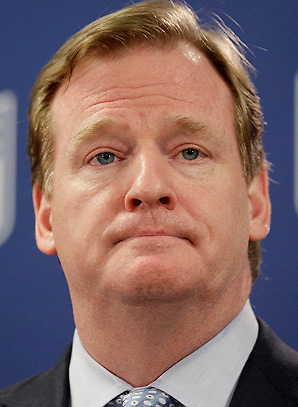
    One of the hot topics recently hitting the media today has been the news surrounding Ray Rice and the Baltimore Ravens. This story has created turmoil and conflict when regarding the NFL’s image but more specifically Roger Goodell’s image. Back when the news first broke about Rice supposedly hitting his now wife, the NFL responded with little punishment due to the fact that there was no proof.

    Recently, TMZ has released video footage of the incident, which resulted in Rice’s suspension. The biggest question that has came to surface was whether or not the NFL knew about the video before it was released to the public. Goodell and Baltimore Ravens coach, John Harbaugh, responded saying that they had no prior knowledge of this video.

    Video contains violence, discretion advised (http://www.tmz.com/2014/09/08/ray-rice-elevator-knockout-fiancee-takes-crushing-punch-video/)

    Now the Associated Press has released a statement and a voicemail that proves the video was sent to the NFL back in April. So what does this mean for the NFL and the NFL commissioner? The image of Roger Goodell is quickly declining, due to his unresponsiveness to the issue.

    In an organization as large as the NFL, the commissioner works as a sort of mouthpiece for the entire entity. He doesn’t just speak for himself; he also speaks as the NFL. This personification of the entire organization makes the choices of one man represent the image at large. This is why Goodell’s actions are so detrimental to the NFL’s entire brand image.

    This topic perfectly blends together with Marshall McLuhan’s theory of Media Ecology. According to Griffin (2011) this surrounds the idea that technology not only influences our society as a whole, but that also how media and communication practices shape and affect human perceptions and understanding of human affairs. The video of Ray Rice that went viral into our social media world, shaped our insight and intuition of how the NFL and Roger Goodell handle its organization, and certainly affects out external interpretation of the NFL’s image.

    -Hannah Zeskind, Connor Gold, Margaret Cafasso, Kierstin Geary, and Olivia Sadler

  • Mobile Savings Apps: How Back-to-School Shopping is Changing

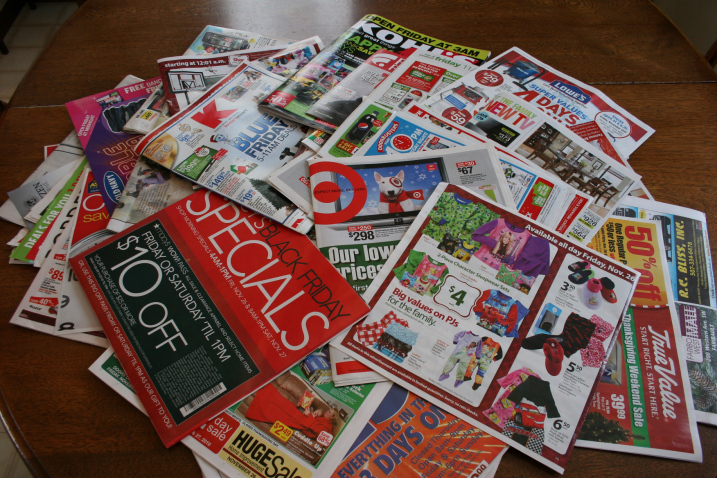
    Ten years ago, we sat next to our parents while they flipped through the Sunday newspaper looking for back to school deals, picking out the newest school supplies and must have backpacks to check off our supply lists. As technology became more of a centerpiece for mass advertising, television commercials and billboards were the next big thing. Today, smart phone apps are beginning to change the way we tackle back to school shopping lists, making the once tedious process more accessible and fun for the entire family.

    ads

    Major corporations like Target and Wal-Mart are appealing to digital natives and the “tech savvy” with their apps, Cartwheel and Savings Catcher. These companies, already well known for their low prices, have branded their apps to make it easier for their customers to get the deal. According to Target, Cartwheel users have already saved $107,297,608- and counting! Not only do these apps help you save on everyday items, the more you access the app the more savings opportunities you’ll receive. Cartwheel invites users to “play more save more” to unlock “offer spots” that were otherwise not available. The Wal-Mart Savings Catcher allows you to compare their deals to other stores and guarantee to match any lower price you find. Not only will using these apps save you money, they’ll save you time and make back-to-school shopping more interactive.

    While it’s easy to recognize apps created by these major corporations, apps like Key Ring are making a name for themselves in the mobile savings world. Although not tied to any major brand, the Key Ring app has become popular as one of the most helpful when it comes to savings. Creator, Chris Fagan, released on the apps website that in its first year on the market Key Ring had 400,000 installs. That number quickly grew to 1,000,000, and now stands at more than 10,000,000 four years later. Unlike Cartwheel and the Savings Catcher, Key Ring’s interactive experience goes one step further. By allowing you to make and share shopping lists, view deals from multiple retailers, store your existing loyalty rewards cards, and scan barcodes on the spot users can organize and complete their back-to-school shopping with ease.

    keyring-app

    As the motive for discount shopping opportunities increases, easier access through mobile apps gratifies the modern shopper’s needs. The Uses and Gratifications Approach explains how individuals actively seek out media to satisfy their individual needs. Like with back-to-school shopping, mobile apps allow you to search and apply discounts directly to the items you need faster than the hours spent cutting coupons in the past. As digital natives we ask ourselves: Why would we spend hours scouring newspaper clippings when we can access thousands of discounts with the touch of a finger anywhere we are?

    Angelica DiPaolo, Morganne McIntyre, Anderson McNaull, Madeline O’Connor, Rachel White

  • More Book for Your Buck

    The process of ordering books is an inevitable part of higher education yet, each semester I cringe at the amount of money spent on textbooks. As we progress through college, our textbook prices seem to rise with us. While many of us blame our professors for requiring certain books, the flaw is in the publishing industry. Knowing that students are forced to pay the price, publishers drive up prices without fear of repercussion.

    The College Board recently stated that the average college student spends $1,200 per year on textbooks and supplies. This equals out to about 14% of tuition and plays a significant role in the debt burden of students. This chart from College Insurrection gives you an idea of how inflated the cost of textbooks has become since 1978 and the rapid rate at which these prices are increasing.

    textbooks

    While buying our books in stores or on campus has become almost impossible with the prices we would need to be willing to pay, the Internet has answered our cry for an affordable option. With websites like Chegg, we have the ability to buy and even rent both used and new textbooks. By shopping online, it eliminates the role of wholesalers, retailers and distributors. As a result, students save money.

    Websites such as Chegg are targeting college students who want to save big bucks on textbooks but now, Chegg is finding ways to keep customer retention by branching out and becoming more than just an online book shop. The website has successfully implemented Customer Relationship Management, or CRM, into their interactions with customers. New Directions for Institutional Research explains how CRM works when an organization or company can find new avenues to pursue, in addition to, ways to interact and better serve the customer.

    Chegg has anticipated the needs of their customers well and this is apparent right on their front page. The website offers help with homework at the same place the students buy their textbooks, as well as, step-by-step solutions for your courses, scholarship connections and course scheduling and reviews. All of these benefits keep their current customers engaged and coming back for multiple reasons. By attempting to be more than just an online bookstore they strengthen brand loyalty and ensure a lasting relationship with students.

    If all of this textbook talk is stressing you out… Rest easy knowing that there are companies like Chegg out there trying to correct this problem.  Congress is even getting involved with the Affordable College Textbook Act, which alleviates some of the financial burden.  Though textbook prices will remain an issue for students in the foreseeable future, there is help on the way.  What would you like to see done to put a little more money back in your pocket?

  • East Hills Mall’s “Cheesy” Back-To-School Commercial and Brand Impact

    We have all seen those commercials that are so bad that you cannot help but laugh. You pass them along on social media to everyone you know and soon, even the local news and radio stations are reporting on them as well.  

    Last month, the East Hills Mall in St. Joseph, Missouri released a commercial that has now gone viral for being “cheesy” and  “terrible” according to comments on YouTube. The commercial features various stores in the mall singing a “back-to-school” themed song. It mentions some items that may be on your shopping list in the hopes that you will purchase them from the East Hills Mall. Lines from the commercial have also gone viral and people can’t stop singing along with “Boots and pants! Boots and pants!”

    Producer, director, and editor of the commercial, Chris Fleck, is not upset about the attention his commercial has gained but instead says that he accomplished his goal. He told FOX 26 KNPN that when the idea was pitched they hoped it would go viral. He stated, “If you can entertain and get your message in, you’ve accomplished your goal. I just love that it’s getting this much response. That’s what commercials do, they get response.” Fleck and the East Hills Mall definitely got the attention they wanted and their commercial was even featured on CBS and The Soup. The YouTube video, “Terrible Mall Commercial“, shown above now has over two million views. 

    
In the media today you always hear everyone say that there is no such thing as bad press and that as long as you are being talked about it is to your benefit. But is this type of communication doing anything to build or perpetuate relationships with consumers? Since a goal of IMC is to cultivate a relationship with the consumer, the prior question is one that should be asked. It seems that making a commercial for the sole purpose of getting attention could be detrimental to the brand since it does not aim to build brand loyalty. Although Fleck, the director/producer/editor, is happy with the attention the video has received, what does it say about the East Hills Mall’s brand?

    -Danielle Walters, Morgan McCleaf, Kelli Hall, Stephanie Jordan, and Shawn Rause

  • Target’s Back-To-School Commercials Set High Standard For Competitors

    Target and Walmart are arguably the two most popular shopping venues for back-to-school shopping across many grade levels. Studies have been conducted to see how each company’s’ marketing tactics reflect in their prices. In 2012, Time reported that overall, Target saved customers only 46 cents for every 100 dollars spent, however, “what appears to have put Target ahead, at least for the time being, is a blitz of seasonal and back-to-school discounts and promotions.”

    Target has done it again this year with its back-to-school themed television commercials that are directed towards students and parents alike. The majority of Target’s commercials seek to reach elementary and middle school aged kids, depicting real-life scenarios of heading back-to-school.

    Through epideictic rhetoric, Target’s back-to-school advertisements illustrate a world that children want to live in now, whether it’s going back to school with the perfect supplies or by conquering his or her fears. Many children experience a sense of ‘back-to-school fever’ and Target hones on that.

    Although, the company has gone further this year, enlisting songs circa 1981 to serve as the background music of the commercials. The parental demographic likely went to school themselves during this time and can easily recognize the songs “I just Can’t Get Enough” by Depeche Mode and “Kids in America” by Kim Wilde. Target has personalized this media to parents, who will be making the purchases, by playing the songs to a more child-friendly tune. The advertisements create a sense of nostalgia for parents, encouraging them to reminisce on his or her own school days.

    Song: Depeche Mode-I just can’t get enough (1981)

    This connection created through the media from seller to consumer could potentially make this brand stand out from others and illustrates Wilbur Schramm’s Source-Message-Channel-Receiver Communication Model. Target serves as the source by sending out the message, which is that they offer school supplies at a low cost. These advertisements and commercials illustrate the channel and, in this particular case, the receiver is the parents.

    Song: Kim Wilde-Kids in America (1981)

    In the “Kids in America” themed commercial, Target also highlights a philanthropic motive through a giving campaign entitled, “Buy One, Give One.” This effort attempts to persuade consumers to buy the Target brand supplies because for each supply purchased, another will be donated to a child in need. Utilitarianism describes an effort that produces the greatest good for the greatest number of people. By deciding to shop at Target, as opposed to other stores, consumers are doing more good for a greater amount of children depending on how many items he or she purchases.

    Target has made a great effort this back-to-school season to compete with other stores that have similar supplies at low costs. Do you think their tactics are effective in reaching out to publics?


    -Kaitlyn Russell, Anna Joy Zima, Malia Swift

  • Back to School: Branding Yourself

     Welcome back readers! It’s that time of year again for back to school shopping. There has been a plethora of back to school clothing sales from various companies trying their best to stand out. American Apparel’s recent ad has made quite an impression this season, but not necessarily in a good way. For their fall campaign, the company chose a risqué shot of one of their young models in a mini skirt from an angle that was revealing. Although American Apparel has never been known as a conservative brand and this isn’t their first scandalous ad, this raised much controversy and The Advertising Standards Authority (ASA) demanded them to take it down for “sexualizing schoolgirls”.  

    Screen Shot 2014-09-04 at 4.57.50 PM

    According to Griffin (2011), Muted Group Theory is the idea that women or other minorities are being silenced in their opinions and the way that they are being represented. The theory speaks of how women in the mass media are used as sex symbols, even in ads marketed to their own gender. This ad shows young women in a suggestive position and at an angle that can be interpreted as voyeuristic. Although the ad is marketed to young girls, the company is run by an older white male named Allen Myer.

    We all know that going back to school is an important time of year where you want to look your best and impress fellow students and friends. However, just like corporations, you have to create a brand for yourself that will reflect a positive image amongst your peers that acts in your own best self interest. Do you think that American Apparel’s choice of subjecting women in their ads in order to cultivate a scandalous brand image is worth the negative attention?

    -Hannah Zeskind, Connor Gold, Kierstin Geary, Margaret Cafasso, and Olivia Sadler