Blog

  • Brand Gender and Its Influence on Loyalty

    By Emily Klein

    When you think of a brand, does it have a certain personality? How about a certain gender? The answer to this is almost certainly yes.

    (Photo from Unsplash – Pawel Czerwinski)

    Customers make perceptions based on a brand’s attributes, history, and values. All these qualities can add up to represent the brand in a certain manner, whether masculine or feminine. Brand gender is the masculine and feminine personality traits that are both appropriate and applicable to brands.  Most brands are interpreted as either masculine or feminine by their consumers. Research studies have revealed that brand gender, a key aspect of brand personality, might influence customer responses to brands. Mixed-target brands with strong gender identities, whether feminine or masculine, struggle to reach both men and women, especially in symbolic product categories (Azar, Aimé, & Ulrich, 2018).

    Brand Gender v.s Brand Sex

    Brands are divided into two distinct and universal dimensions, masculine brand personality traits and feminine brand personality traits. Brand gender must be separated from brand sex. Brand sex is a demographic attribute that refers to the human sex-linked to a brand, seeing a brand as a man or a woman. Brand gender is a collection of behavioral qualities that can be described as a collection of human personality attributes associated with masculinity and femininity that are applicable and relevant to brands. For example, Dr. Squatch is a hygiene brand that is seen as a mal when referring to brand gender. They market mainly towards men and use advertisements that are adventurous, aggressive, brave, daring, dominant, and sturdy. However, Dove is seen as a feminine brand even though they sell products for both men and women. Dove uses advertisements that are fragile, graceful, sensitive, sweet, and tender.

    (Photo from Unsplash – Tim Mossholder)

    Gender and Brand Loyalty

    Customers’ gender identities are often created, enhanced, or realized through the brands they select, according to research, and brand gender has a positive impact on consumers’ affective, cognitive, and behavioral responses to brands. According to a previous study, brand personality has a substantial impact on affective responses to brands and encourages emotional commitment to them (Vacas de Carvalho, Azar, & Machado, 2020). There is proof that a clear gender positioning of a brand has a direct effect on brand love and explains the brand effect, preference, and loyalty. A recent study from Science Direct showed that women are more likely to buy from an unknown brand than men.  

    Gender and Loyalty on Social Media

    Both a more favorable view about a brand and recurring patronage are examples of loyalty. Consumers’ feelings, preferences, and dedication to a brand are referred to as attitudinal loyalty. Customer loyalty on social media is very important as it is a huge marketing factor for businesses. Potential customers are more likely to trust other customers’ testimonials rather than a paid advertisement by the brand. The previous study has demonstrated that brand gender, a key aspect of brand personality, might influence consumer–brand responses, regarding social media. Companies have been pouring more time and money into social media, particularly Facebook, in recent years in order to build stronger relationships with customers and influence relevant behavioral outcomes (Vacas de Carvalho, Azar, & Machado, 2020). However, the topic of how social media brand strategies might help consumers create and strengthen crucial responses, including brand loyalty, is continuously being explored. This study was meant to explore this further and see if brand gender had an impact on loyalty in general and on social media.

    The Study

    Following the research, it was discovered that feminine brand personality qualities had no significant impact on social media contribution. Consumer contributions to brand-related content on social media were significantly influenced by just male brand personality attributes (Vacas de Carvalho, Azar, & Machado, 2020). As a result, just one dimension of brand gender, namely masculine brand personality qualities, was found to have an impact on consumers’ contributions to brand-related material. This method has a detrimental influence on customer perceptions of master brands, with a greater negative impact on feminine master brands than masculine master brands (Azar, Aimé, & Ulrich, 2018). This is important to know because it can help brands to portray themselves as masculine in order to increase brand loyalty.

    Why it Matters

    Before you start a brand, you may want to consider a few things. What will be your colors? Do you have a symbol? How will you market yourself? These elements may seem simple but all of them will associate your brand with a certain gender. All these points can be wrapped into the idea that consumers often perceive brands as a certain gender. This can be important to remember as you enter the professional world, particularly in regard to advertising decisions. This study can help you know how to appeal to their target market and what gender characteristics their consumers would like to see.

    Resources

    Azar, S., Aimé, I., & Ulrich, I. (2018, May 30). Brand gender-bending: The impact of an endorsed

    brand strategy on consumers’ evaluation of gendered mixed-target brands. Retrieved February 07, 2022, from https://www.emerald.com/insight/content/doi/10.1108/EJM-04-2017-0278/full/html

    Vacas de Carvalho, L., Azar, S. L., & Machado, J. C. (2020). Bridging the gap between brand

    gender and brand loyalty on social media: Exploring the mediating effects. Journal of Marketing Management, 36(11-12), 1125-1152. doi:10.1080/0267257x.2020.1740293


  • It’s not you, it’s the process: What to actually expect when creating content

    By Abigail Morris

    (Photo from Adobe Stock user Kittiphan)

    As I sit here writing this post, I find myself “stuck” on how to introduce this topic. I’ve spent hours on collecting, organizing, and summarizing data to include into this article. Yet, I’m sitting here clueless and hesitant. I’ve spent years of my academic career honing my skills to create content such as this and still I find myself constantly in this headspace. And because I aspire to do this as a career, the pressure of continually creating post and visuals that are interesting an engaging can become extremely discouraging – especially when I’ve dedicated so much time to the practice. But when I take a moment to step back and analyze where this disconnect is coming from, I begin to understand that this stagnant headspace is part of the process. 

    With every creative industry (especially in areas of art and literature), there is a tedious and straining side of content creation that hardly ever is mentioned or noticed. And when you’re creating relatable/interesting text and visuals – one might find themselves more inclined to interject personal elements into their work (that are deemed professional and relatable to the topic).  Diana Bossio in the article, Burning Out and Turning Off: Journalists’ Disconnection Strategies on Social Media, she states that “These exchanges [emotive intrapersonal communication within a professional context] are a kind of labor, and they can also be seen in the context of building and engaging with community, being ‘creative’, expanding personal and professional networks, and engaging in a pleasurable activity. Baym (2018) characterizes this as relational labor, or practices and strategies that creative professionals have adopted to create stronger emotional and thus commercial relations with audiences.”

    So, whenever a post receives positive feedback and attention, the creator of that content will feel a sense of accomplishment that validates their passion to keep creating. In the same sense, this kind of personal connection with content creation can cause emotional fatigue and burnout whenever they feel that they aren’t “hitting the mark” with their work. And with the added pressure of one needed to meet their quota, this can further discourage an individual within this field.

    Like how writers and artist cope with creative blocks, understanding social media burnout can help content creators to identify aspect of their work that are causing stress or lack of fulfillment, so that one may be able to find ways to fix this disconnection.

    This kind of persuasive and engaging rhetoric is heavily used within social media marketing, especially when one uses this to convey their brand identity as relatable. According to Demand Metric, 82% of consumer’s have a more positive perception of an organization after reading custom content. Because of this, 90% of organizations use content as a method for marketing. This desire for a brand to articulate an active, positive and informative image to their audience has become a necessity when creating brand trust and loyalty. With this push to create a positive and engaging public narrative for an organization, those assigned to accomplish such task many find themselves mentally and emotionally drained in order to provide their clients with quality work.

    (Photo from Adobe Stock user Drobot Dean)

    So, what should someone do then they are creatively “stuck”?

    Disconnect by creating a professional persona.

    The journalist interviewed for this study recommended that content created for work should not be used or posted on personal accounts. This ability to divide your personal and professional life is a way that any content creator can ease the stress of work so that they have the mental capacity to think outside of the box and create. In the article, Bossio states that “For journalists using social media as a professional communication tool, disconnection strategies actually work in tandem with the different ways they connect online, positioning those connections more strategically as professional labor and thus inscribing particular meanings and uses for social media interactions.”

    Now, this ability to disconnect doesn’t mean that you’re sacrificing effective “personal” quantities of the brand identity that draw the attention of your target demographic. This just means that your personal and professional social media post shouldn’t be intertwined. Similar to the concept of dividing your physical workspace from your bedroom – the same concept should be used within your creative process. Although these personas differ, they’re still a part of who you are.

    Just like how your able to decorate your desk at work with personal little nick-nack and trinkets – you can bring elements of yourself into the work you create. At the same time, you’re not going to put your queen-sized mattress in your office cubical. The professional persona that you create for work can embody a similar presence of your personal self. But when you start to associate the stresses of work into areas of your life in which you mentally and emotionally escape (in this case, social media), you begin to lose that sense of security that once was there (which is the number 1 way for any level-headed individual to lose their sanity).

    As easy as I make this advice sound, one’s ability to successfully disconnect and create a professional persona is not something that can accomplished overnight. This kind of self-discovery takes time to properly analyze and evaluate.

    (Photo by Adobe Stock user WavebreakmediaMicro)

    In the meantime, if you find yourself in a creative limbo, remember that:

    1. This is absolutely normal
    2. Many people who work within the creative field experience this at some point within their career.
    3. Even though you feel creatively stagnant, YOU ARE DOING SOMETHING.
    4. It just takes time to see those results.
    5. If you’re aware of what you’re experiencing, IT WILL PASS.
    6. Understanding the source of stress and creative fatigue is vital when creating your “plan-of-action” to overcome the creative block.

    Applying these steps into your workflow can tremendously help the stress created that can manifest itself into creative blocks. Also, acknowledging this aspect can lift the internal frustration that comes with constantly creating and posting content.

    Allowing yourself the time to self-reflect and implement what you’ve discovered into your workflow not only lifts the pressure of expectations that you and those around you create, but it also allows you to focus on creating work that efficiently conveys the intended message.

  • How the Rampant Rumor Mill on Social Media has Impacted the Health Care Community

    By Eva Walton

    Going through a global pandemic has been life-changing for every person in the world. It has become so prevalent in our day-to-day lives that it is now the new “normal”; no matter how much we want to escape it. How often nowadays do you go to the store with mask-required signs on the door? How many emails do you receive a day detailing the rising number of cases or the need to get vaccinated? The information regarding the pandemic is surrounding us, but it is especially apparent on all forms of social media.

    Social Media VS Corona Virus

    An infodemic, which is defined as “an overabundance of information- some accurate and some not- that makes it hard for people to find trustworthy sources and reliable guidance when they need it,” has been being tracked on social media to dispel rumors and other misleading information pertaining to COVID-19 (Islam, 2020). Consider all the times you have been on Twitter, Instagram, or Facebook in the past two years and have seen crazy rumors such as “drinking bleach may kill the virus” or that “COVID was a biological weapon manufactured by the CIA” (Islam, 2020). These rumors, stigmas, and conspiracy theories may seem outlandish to most people, have created a multitude of real challenges for the public health field.

    (Photo from @schluditsch)

    What Does This Mean for the Public Health Community?

    Health care workers around the world have been deemed as unsung heroes. However, since the beginning of the pandemic, these heroes have been on the receiving end of physical assault, bullying, and discrimination from their neighbors and landlords (Islam, 2020). The people who are responsible for providing care and aid in dangerous situations or when one is sick are the same people who are receiving mistreatment for simply doing their job. This backlash has gone deeper than hatred for healthcare workers and has stemmed into severe stigmatization and blame on specific races and nationalities. In many high-profile social media posts, the Corona Virus was being referred to as the “Chinese Virus”, leading to reports of physical and violent attacks towards healthcare workers of Asian origin. Apart from the mistreatment of healthcare workers, misinformation has also led to organizations practicing false treatments. One of the popular myths that were brought to reality was that the consumption of highly concentrated alcohol could kill the virus. This led to approximately 800 people dying, 5,876 hospitalized, and 60 developed complete blindness (Islam, 2020). This is just one of many examples of how stigmas and rumors among social media have become extremely harmful to the health care industry.

    Panic in a Pandemic

    It is no secret that public panic and misinformation can lead to catastrophe. If it is rumored that a huge snowstorm or hurricane is coming, ill-prepared people will rush to the stores to stockpile canned goods, water bottles, batteries, and many other necessities. This has also rung true amidst the pandemic. No one was fully aware of what to expect regarding COVID-19 and the quarantines, leading to panic buying of essential healthcare products such as face masks, hand sanitizer, and toilet paper (Islam, 2020). Videos began emerging online via TikTok, Facebook, and Twitter that showed stores completely wiped out of products and prices of hand sanitizers and face masks being jacked up to astronomical prices. The shortages of essential goods contributed to hospital and home transmission of COVID-19 in several countries around the world (Islam, 2020). If you find yourself coming across information regarding the pandemic, make sure you are fact-checking and doing proper research, to ensure the information is factual and safe.

    (Photo from https://www.bbc.com/news/technology-54440662)

    What Can We Trust Anymore?

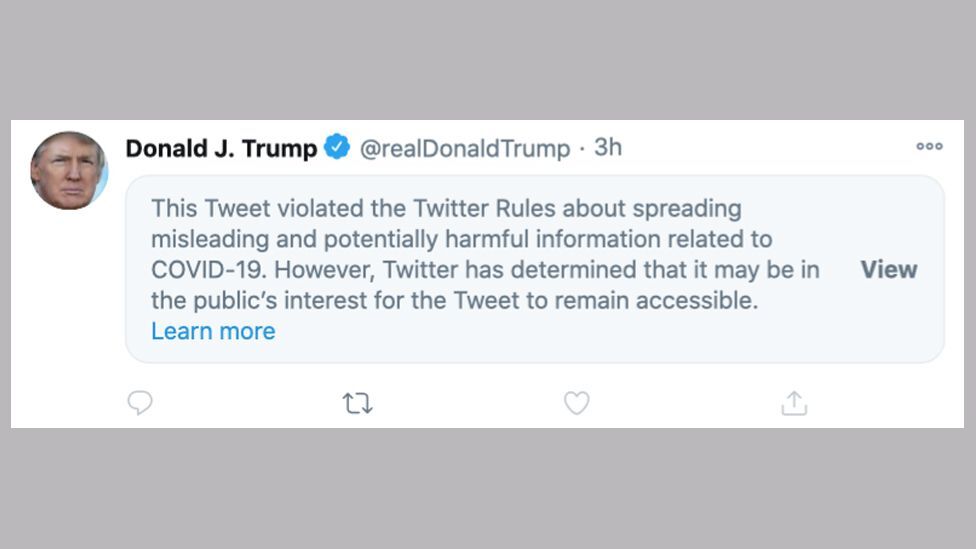
    Amid the pandemic, social media became a war zone of “fake news” and a breeding ground for hatred, misinformation, lies, and rumors. It became intoxicating for many users and made many struggles with their ability to trust the medical community, health professionals, and the government. With high-profile officials, such as former President Donald Trump, causing an uproar with their social media habits, it turned a global health crisis into a political battle, with friends turning against friends and family turning against family. The mistrust with these communities of leaders impacted healthcare-seeking behaviors such as seeking COVID-19 testing and motivated people not to get vaccinated or receive antibiotics (Islam, 2020).

    Where Do We Go from Here?

    It is important to keep in mind that while social media can lay the groundwork for lies and deception, it has also created a community of real-time information and solutions to help cope with the pandemic as well. Considering the pandemic, we now have access to virtual doctors’ appointments, reliable information from all over the globe, and a live discussion about symptoms and reactions to ongoing diagnoses. Overall, coming across information on the internet can be proven threatening in some ways however, here are resources to fact check and cancel out the “fake news”:

    https://www.cdc.gov/coronavirus/2019-ncov/prevent-getting-sick/how-covid-spreads.html?CDC_AA_refVal=https%3A%2F%2Fwww.cdc.gov%2Fcoronavirus%2F2019-ncov%2Fabout%2Findex.html

    https://coronavirus.jhu.edu/map.html

    https://www.who.int/

    https://coronavirus.jhu.edu/map.html

  • Establish your brand identity and you will guarantee success

    By Kelly Geiger

    Imagine you are walking through the mall and every store looks the same. Décor, logos, colors… everything is exactly the same. How could you possibly find the store you are looking for? This is where brand identity shows its importance. When you walk through the mall and see the check mark of a Nike store, the cursive sign reading Free People, or the navy-blue color surrounding the Gap, there is no question as to what brand you are looking at. Establishing a brand identity through colors, logos, fonts and more will not only set you apart from other brands, but also improve recognition and memorability for customers.

    This article will do two things. It will help you understand what a strong brand identity is and show you the importance of visually building a brand that sets themselves apart from their competitors.

    What is brand identity?

    “Brand identity is a combination of the name, terms, signs, symbols, and design used to identify a brand’s goods or services and distinguish them from competitors (Aaker 1991; Kotler 1991; Zaichkowsky 2010)” (Ward and Yang and Romaniuk and Beal, 2020). This is the part of the brand that people associate with visually. When you see Coca-Cola, what color do you think of? Red. When you see the words ‘Just o It’ what brand do you think of? Nike. When you see the golden arches what brand do you think of? McDonalds. “Brand identity elements are the building blocks that contribute, creatively, to enhancing brand presence in advertising content and purchase environments. For example, many McDonald’s advertisements contain no direct brand name, but instead favor brand identity elements such as the “Golden Arches” and “I’m lovin’ it” jingle” (Ward and Yang and Romaniuk and Beal, 2020). These are all examples of how successful these companies were in creating a strong brand identity. 

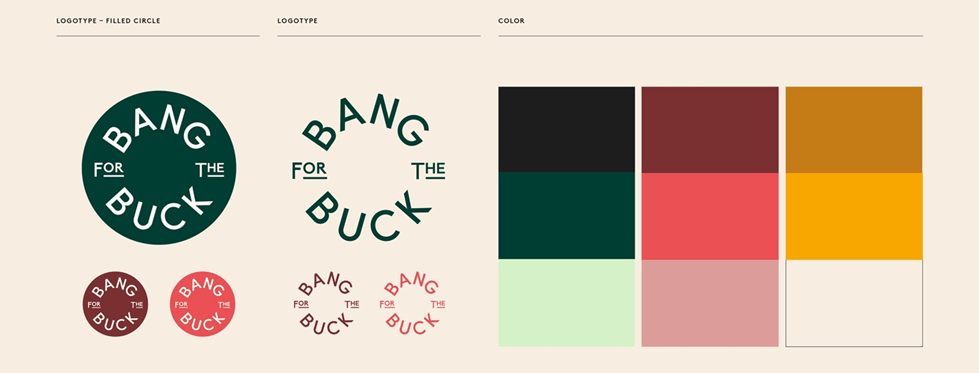
    Brand identity is not about selling the company’s product, it is about selling the company itself. They want to set themselves apart from their competitors, and using these visual elements is how they do it. This idea of ‘selling themselves rather than their products’ is further explained in the scholarly article Building a unique brand identity: measuring the relative ownership potential of brand identity element types by Ella Ward, Song Yang, Jenni Romaniuk, and Virginia Beal. “Described as an integrated system of cues, the purpose of brand identity is to provide a physical, proprietary representation of the brand (Perry and Wisnom 2003). In this sense, rather than providing a reason to buy the brand, the primary function of brand identity is to create a synergy amongst disparate brand elements and establish a unique brand look and feel for relatively homogenous goods (Perry and Wisnom 2003; Underwood 2003; Romaniuk and Nenycz-Thiel 2014).” In the image below you can see what an established brand identity might look like.  This mock example is a great representation on how a company creates a color scheme, font, and logo variations that are specific to their company.

    (Photo from BeHance, https://www.behance.net/gallery/57691987/Bang-for-the-buck/modules/375634675)

    While some might not value the artistic side of branding such as choosing colors, logos, fonts, etc., this isn’t just so your brand looks ‘pretty’ or ‘trendy’, it is truly a science to set yourself apart from your competitors.  Brand identity is important because it relates to the psychological ways consumers connect their memory with your brand.  “Brand identity elements can help explain the brand (Kohli et al. 2013), add meaning (Dahlén and Rosengren 2005) and contain imagery such as colours and shapes that expand the way the brand is encoded and stored in memory (Keller et al. 2008; Hartnett et al. 2016). As a result, the brand becomes more readily accessible to the consumer via creating a unique brand identity and artistic presence. (Ward and Yang and Romaniuk and Beal, 2020) Again, when it relates to identity elements, the goal is not to sell the product but the brand itself. Another way to explain this is “Identity elements are the cornerstone to brand identity that helps consumers to recognize brands and distinguish them from competitors (Hoek and Gendall 2010). These elements evoke the brand in the mind of consumers and create a unique look and/or feel that makes it easy to identify the brand (Perry and Wisnom 2003; Romaniuk and NenyczThiel 2014).” (Ward and Yang and Romaniuk and Beal, 2020).

    The biggest takeaways from this article are the importance of brand identity and its key position in successful companies.  It relates to integrated marketing communication in many ways but most of all brand identity can be practiced through campaign and message design.  The corresponding brand identity features are mostly used in the forms of advertising, packaging, and other forms of design.  Integrated Marketing Communication deals with these features of how and why it is necessary to create a brand identity as well as how this will eventually help your company succeed within its marketing and advertising techniques.  

    Source

    Ward, E., Yang, S., Romaniuk, J., & Beal, V. (2020). Building a unique brand identity: Measuring the relative ownership potential of brand identity element types. Journal of Brand Management, 27(4), 393–407. https://doi.org/10.1057/s41262-020-00187-6

  • How Wendy’s Does Social Media Deliciously Different

    By Davis Upton

    In today’s highly connected network environment, the common use of social media is changing the environment for branding. The interactive, participatory, and open natures of social media offer brands the opportunity to connect online content to consumers. This allows brands to catch the consumer’s attention through multiple brand social media strategies in digital.

    Some common brand social media response strategies to increase digital customer engagement involve non-verbal and verbal cues generated or created by enterprises on social media. Response strategies consist of three categories:

    (1) Affective response identified with emojis, humor, and self-expression as key features that facilitate social interactions.

    (2) Interactive response involving asking questions, agreeing, showing appreciation, or supporting others in ways that help form a personalized impression of the interlocutor.

    (3) Cohesive response, which serves to maintain or build a sense of community or group commitment, reduce social distance, and enhance brand consensus.

    These brand social media strategies in digital help increase the effectiveness of the brand’s digital customer engagement on social media. Consumer social media practices such as browsing, liking, sharing, commenting can be conceptualized as behavioral manifestations of digital customer brand engagement. Digital customer engagement is growing in importance as a source of brand value since it increases consumer loyalty and affects brand performance. 

    The effective use of brand social media strategies to improve digital customer engagement remains an ongoing challenge for enterprises. However, with strong brand strategy selection, design, and management based on social media. Great success can occur like in the case of Wendy’s.

    (Photo from Nimble)

    Distinctive Brand Personality, Authenticity, and Long-Term Consistency

    Wendy’s is a brand that is engaging digital customers successfully. The reason being is because of their approach to engagement with digital customers and their distinct brand voice. Wendy’s voice and brand are unique to them, but even IMC students can learn from their overall strategy and apply those lessons to their own social media accounts.

    This article will explore the impact of brand social media strategies on digital customer engagement. This is extremely relevant to the practice of Integrated Marketing Communications and the incorporating practices of advertising, marketing, and public relations into an integrated plan. This article will also help provide a reference for the industry practitioner in his brand social media strategy selection, design, and management.

    Here are four big things we can take away from Wendy’s social media accounts.

    (1) They have a distinctive brand personality that includes constant zingers to users and competitors alike.

    (2) They are extremely authentic. People can tell that their posts are written by an actual person and not some sort of automated curation tool. No computer could come up with the clever, highly entertaining posts that they share.

    (3) They are consistent in the long term in their efforts to post often.

    (4) Thanks to the immediacy and constant accessibility of the internet. Wendy’s social media team is extremely responsive to consumers interacting with their social media channels.

    Nowadays the brand is the message the company wants to communicate to its consumers. So, the response strategies that Wendy’s is utilizing can be defined as “the communication process by which brands generate non-verbal and verbal cues in order to enhance intimacy with (potential) consumers.” People want responses to all their social media interactions with a particular brand, and they want them now. Wendy’s is ready!

    Final Thoughts

    When brands like Wendy’s reflect their interpersonal or social relationships and actively construct consumer brand relationships through social media. They can gain a competitive advantage against other similar brands. Also, companies with engaging social media branded content, an adoptive responsive approach to consumers, and research on digital customer engagement can do the same. Furthermore, these brands are noticing that creating content and building an online reputation with a particular target audience community is essential. Not only for the company but the brand image as well.

    Wendy’s has a professional witty team supporting the brand, that we can mimic, and all adapt to the strategies they use. They’ve created and maintained a distinct voice that relies heavily on authenticity, and are now known for their exceptional responses, both customer service and otherwise. While most brands desire exchanges that lead the consumer to the purchase or consumption of their products or services. Wendy’s attempts to go beyond that and consistently show their customers that they care about what they want. So that an active relationship with the brand can develop into something that goes beyond the core transaction and turns into a longtime customer with a stable brand relationship to Wendy’s.

    References

    Anon, (2022). Nimble.com. https://www.nimble.com/blog/wp-content/uploads/2018/11/1_g-cLxDjYRVjVjaWM54holA.jpeg

    Gotter, A. (2017, April 11). What Wendy’s Twitter Account Can Teach Us about “Doing Social.” Agorapulse. https://www.agorapulse.com/blog/wendys-twitter-account/

    Liu, Y., Liu, X., Wang, M., & Wen, D. (2021). How to Catch Customers’ Attention? A Study on the Effectiveness of Brand Social Media Strategies in Digital Customer Engagement. Frontiers in Psychology, 12. https://doi.org/10.3389/fpsyg.2021.800766

  • How can brands stay up to date with user generated content?

    By Courtney Busick

    Brands are constantly changing. They need to stay up to date on how an audience interacts with them on social media. Many companies are finding users who share their content through stories or posts shows more engagement and interaction than counting likes and comments. How can brands engage their audience? By understanding their human values and what makes them want to share user-generated content with others.

    What is user generated content? User-generated content (UGC) is completely created by the user. Many brands are using this by asking users on social media questions about their products. More and more brands are finding that they can get free marketing from social media users with UGC’s. Whether it’s Lays asking for new chip flavors or Coke sharing the hashtag #shareacoke, brands can get reviews from user who share their content on platforms.

    Sometimes it can be hard for a brand to navigate UGC’s so here are some tips I love from other marketers that can help you engage with user-generated content.

    (Photo Pi Datametrics, https://www.pi-datametrics.com/blog/name-game-coca-colas-shareacoke-summer-ad-campaign/)

    Connect Human values to your Products

    Understanding a user is understanding what they value. Brands must look at human values and use those to generate content that users enjoy. “Human values are guiding principles reflecting style goals in life that may impact how individuals judge situations and events” (Nikolinakou 14). Meaning that human values are what drives our decisions. It affects consumer behavior towards certain products. It can also affect what we purchase. There are four levels of human values described by the article a brand should understand. Self- Transcendence (audiences’ stances on political or social issues), Conservation (audience’s desire to maintain security and stability), openness to change (what motivates users to change their opinions about products/services), and Self enhancement (user’s need to achieve success, wealth or influence) (Nikolinakou 14).

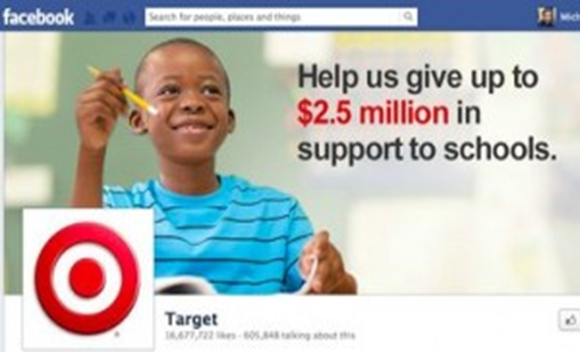
    Target actually used this in their “Acceptance” campaign. In 2010, Target pledged to donate $500 million to student’s education and they would double that for the best college acceptance video form their audience. So people sent in videos of them opening their college letters (Siu 2015). This allowed for the brand to connect with the brand personally and have fun showing of their authentic emotions. They touched on self-transcendence and conservation of their audience by showing what they value and how they are going to engage their loyal customers.

    (Photo from Contently, https://contently.com/2012/08/03/target-video-captures-real-college-acceptance-reactions-video/)

    In IMC, we should always be focused on the values of the consumer. This can also be seen through looking at a specific target audience. This is from their demographic to their psychographics and behaviors. What are the values and behaviors of my audience and how can I engage them in user content? For user generated content, you not only want to look at your brand target audience, but the population that is most likely to share you content through reviews or promotions.

    Reach out to audiences with specific human values to share content or promote a brand

    Human values drive consumer decisions. The primary and most popular values is conservation values. Consumers are constantly looking for trust and safety from their brand (Nikolinakou 15). By brands reaching out to the customers for promotions it makes them feel in charge and in control of the brands they love and their purposes.

    An example of this is social media management company Buffer. Instead of creating captions and content on their own, they encouraged their users to engage in their blog and submit their own content. They get the chance to be featured on their account. They post their own content to make you feel a part of their content process. Buffer also makes sure to be quick in responding to comments and dm’s on their pages. It allows for them to be authentic and true to their followers.

    In IMC, brand loyalty is so important. If a consumer picks our brand, we know we have to think of how we can meet their needs and that they want to stay with us. You cannot have customers without brand loyalty. As a customer to certain brand, I want to feel like the brand cares about me and what I value. I like to find brands that are consistent and authentic with what they do. People are influenced by others around them, so it creates a strong community of people who love and will continue to purchase from your brand.

    So what makes it easy for brands to use user generated content? Connection and understanding. In order for brands to immerse themselves into user generated content they must understand their clientele and who is loyal to their brand. They must observe human values and understand what human values they should reach in order to find quality brand users.

    Sources

    Nikolinakou, A. (2019) “Do human values matter for promoting brands on social media? How social media users’ values influence valuable brand‐related activities such as sharing, content creation, and reviews” Journal of Consumer Behavior. 14-22

    Siu, E. (2021, April 15). 10 user generated content campaigns that actually worked. HubSpot Blog. Retrieved February 25, 2022, from https://blog.hubspot.com/marketing/examples-of-user-generated-content 

  • Social Media Influencers: The Face of Marketing

    By: Seth Hunter

    (Photo by Kim Kardashian)

    How many of your favorite celebrities promote a new product daily on their social media accounts? Social media influencers (SMIs) are becoming more prevalent in marketing practices and are changing marketing in all areas. The digital age has introduced a new career field for social media whether it’s being an influencer with millions of followers or a small business using these platforms to promote their brand. Companies that partner with SMIs have to understand the risks of it, how to disclose their sponsorship, and also reflect their brand’s image in the advertisement.

    Risks of Influencer Marketing

                Partnering with SMIs is an effective strategy that many brands have started to use over the past few years. These sponsorships can be seen on every social media platform, but they first gained popularity with celebrities like the Kardashians posting SugarBearHair vitamins on their Instagram accounts. Now anyone with a social following can be sponsored by brands whether it’s in exchange for free products or being paid for their exposure.

    (Photo by Audrey Champelli)

    Having SMIs sponsor a brand comes with risks because if they do not have a good relationship with the public it can lead to the downfall of brands. “Cancel culture” has caused many social media influencers to leave the internet and lose any profit they previously received from social media. Cancel culture is when a person on the internet is exposed for things from their past and in turn receives hate from people on the internet, ultimately ending their social media careers. If a brand sponsors an influencer who becomes involved in a scandal leading to them being “canceled” has the risk of leaving a negative view on the brands that sponsored them. This can be seen with beauty guru James Charles who was dropped from brand sponsors after being “exposed” on social media.

    Sponsorship Disclosure

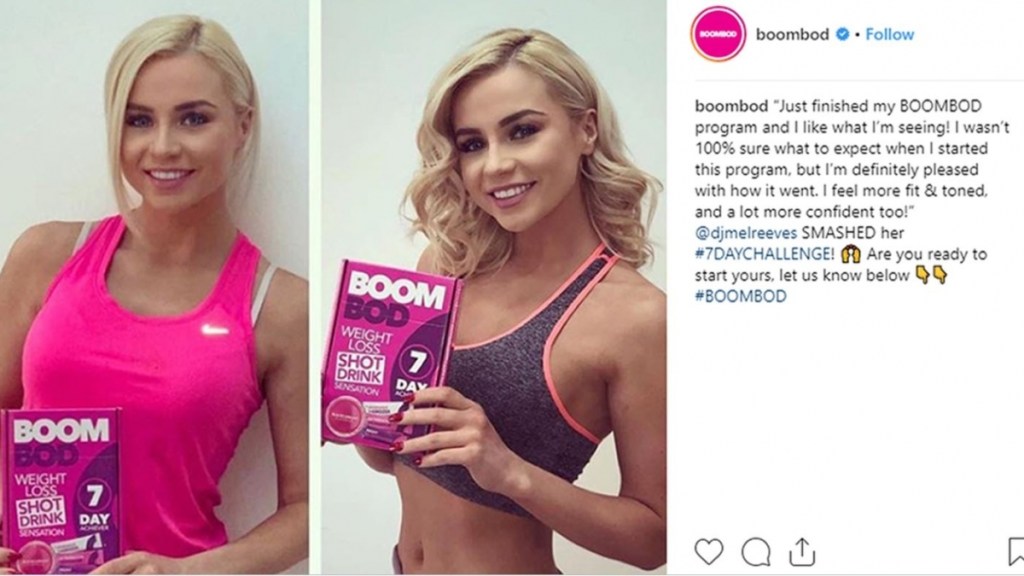
                When a SMI is sponsored by a brand they must disclose that they are being sponsored by the brand they are promoting. Disclosing a sponsor is an easy way to tell their followers that anything they say is being paid for and to take this opinion with a grain of salt. These disclosures protect the influencers from lawsuits if a consumer sues a brand for selling products that don’t do what is promised.

    The reason influencer marketing is so popular is because they are real people speaking positively about a product or a brand and their followers have a high level of trust in them. When this new marketing strategy began to rise on social media it was mainly celebrities advertising products and their followers had issues trusting whether they enjoyed the product or not. It was revealed that many of these celebrities didn’t use the products they advertised. Since then, some people refuse to trust influencers and the products they support. This is only a small percentage though because you can see hundreds of sponsorships daily even from small influencers who only reach a few thousand compared to millions.

    Brand Image

                Many brands have realized the effectiveness of using influencers to promote their products hence why small influencers are now seen doing sponsorships without having millions of followers. Brands want to choose people that reflect the image they have created for their brand. Every brand has values that are important to them, and they would never purposely choose to do something that will diminish these values or their image. As indicated by the risks above, brands must be careful to avoid being caught in controversy when reaching out to SMIs. Hence the increase in brands partnering with small influencers who tend to have no controversies surrounding them and their followers support them fully. This is unlike large creators who have a large follower base but a lot of them are bot accounts or “haters.”

    Smaller influencers tend to have a closer relationship with their followers, and this is a prime marketing opportunity for smaller companies. By paying for sponsorships with small influencers, which are more affordable compared to trying to get a television commercial or asking a popular influencer to sponsor their product, they can grow exponentially. This can be seen on the social media app TikTok which has launched many brands from small startups to multi-million-dollar companies.

    (Photo by Boombod)

    Social media influencers are not going away anytime soon, and they have become a popular marketing option for companies to use. Nearly every company has its own social media accounts and many of them will use SMIs. It is an easy and effective marketing strategy for companies to use and get the exposure they desire. As the marketing industry starts to move away from traditional strategies and platforms the world will continue to see the rise of influencer marketing.
     
     
    References

    Zhou, S., Blazquez, M., McCormick, H., & Barnes, L. (2021). How social media influencers’ narrative strategies benefit cultivating influencer marketing: Tackling issues of cultural barriers, commercialized content, and sponsorship disclosure. Journal of Business Research134, 122–142. https://doi.org/10.1016/j.jbusres.2021.05.011