Category: Social Media

  • “Checking In” to Spring Break

    Happy Spring Break! Many students have spent the last couple months (or longer) trying to figure out where their Spring Break time is best spent. If you’re like me, this preparation may have involved a thorough internet search to find the perfect hotel for your week off. An increasing number of hotel chains have discovered the perks of social media use and are developing ways to satisfy the needs and wants of their customers on an increasingly personal level.

    Social media sites such as Foursquare, Twitter and Facebook Places, allow a user to “check in” or log their current location. While some companies may be skeptical about the relevance of such tools to the business that they do, the hotel industry has discovered that these services create a greater feeling of inclusion and personalization to their guests. Now hotels can invite guests to “check in” both literally and virtually, completely committing to their stay. Another added benefit of location-based check-in tools is the ability to track and incentivize a guest’s stay. Hotels participating in incentive programs for social media have been known to use a variety of rewards to reach out to their social media circle; examples include anything from a discounted meal in the hotel restaurant to late checkout times for the final night of your stay. Some hotels have gone so far as to collaborate with airlines or credit card companies to create an unofficial “rewards program”; offering discounts and frequent flier miles for using your American Express card or staying at the Hilton.

    Of course with programs such as these, there can (and will) arise questions of security and privacy. Many savvy social media users are hesitant to place their exact location online. The flip side of this is that many users don’t want the world to know where they are NOT (for instance at home…protecting their belongings). While safety and security concerns are understandable, potential thieves and “bad guys” are not the only party with a vested interest in your location and personal information. Some of the aforementioned hotels have begun tracking mentions of their brand to create a more customized experience. For instance, say you book a night at a Marriott and tweet about how excited you are to stay there for your anniversary. With the use of these tools it’s not unlikely that you will open the door to find a chilled bottle of Champagne with a note from the staff wishing you a “Happy Anniversary”. Or, on a creepier note, a woman on the local radio the other day described checking into a hotel to find a wrapped dog bone and a note saying “Snickers misses you”, a response to her Facebook status the day before where she stated that she “ hate(s) to leave Snickers (her dog) at home when she goes on vacation”… To me, this was a little bit too personalized.

    As is typical with this type of marketing, it is necessary to find a happy medium between discovering a guest’s needs and invading their privacy. How far is too far and is there such thing as too personal? While this may not be a topic that concerns you too much while lounging on the beach in Florida or soaking up the culture in a foreign country, it’s important to keep in mind that while logging your location, you may be signing up for more than you recognize. So what do you think? Will you be
    “checking in” before you checkout this Spring Break?

    Lauren Habig

  • Slimful or Sinful?

    It is no secret that women in America are under extreme pressure to be slim. Products like Slim-Fast, QuickTrim, and Hydroxycut are just a few examples of what women are buying to live up to this cultural expectation. I’ve seen these items and have simply written them off as another weight loss scheme. Nothing about them really struck me as odd, or even unhealthy. However, the other day I heard a commercial that made my jaw hit the floor. That commercial was for Slimful. Take a look for yourself.

    I honestly thought it was a parody commercial that was making fun of how idiotic some products are, but, oh, how wrong I was! I immediately began researching this product to see if it was really as ridiculous as it sounded. The commercial ends with the statement “eating less is a beautiful thing,” and this is exactly what the product promises and promotes. The idea is simple: eat a Slimful chew, drink a glass of water, and you won’t be hungry for hours.

    skinnyThere is no mention of combining the product with an exercise program or a healthy diet. The website does say that the idea is to eat less, not to stop eating at all. However, it is no secret that many girls and women struggle daily with eating disorders. What message is a commercial like this sending to those struggling with anorexia or bulimia? It sounds an awful lot like encouragement to me. The commercial blatantly says it is not only okay to eat less but that actually it is a beautiful thing to eat less.  Looking at this advertising campaign from a health communication perspective, it becomes increasingly hard to ignore how dangerous a commercial and product like this could be. In advertising, the meaning of the message is often defined by the audience receiving it. Ignoring the impression this commercial could make on someone struggling with an eating disorder is heinous. The campaign helps to perpetuate the idea that thinness, and therefore frailty is beautiful in women, not strength. The commercial also further extends the idea that eating less, rather than doing more is the way to achieve a desired weight or look.

    Advertisements like this are just one of the many factors that play a large role in the creation of the cultural expectations women are held to. The rise of social media sites such as Twitter, Pinterest, and Tumblr, have accelerated the spread of these unrealistic expectations to a new level. Media still sets the tone for cultural stereotypes, but social networking sites have the power to expand and develop them unlike any tool in the past. Individuals are able to chime in with their opinions and like-minded groups begin to form.

    What troubles me the most about this advertising campaign is the life it could potentially take on in the Pro-Anorexia (Pro-Ana), and Pro-Bulimia (Pro-Mia) social media communities. This article from the Huffington Post begins to explain the debate currently happening on Twitter and in these online communities. The hashtags “#proana” and “#promia” are used on Twitter to indicate support and encouragement for those with eating disorders. These hashtags raise concerns because often the users are not trying to help each other beat the disease but rather they exchange advice on how to become a more “successful” anorexic or bulimic. As the article explains, this is truly a complicated issue. Some people are callingpinterest warning for a ban on this type of communication and support. Tumblr and Pinterest, which are largely centered around visual content, have already begun to take steps to slow down the spread of Pro-Ana and Pro-Mia content. However, censoring Twitter content quickly brings up arguments over the first amendment which will slow down any ban decisions in progress.

    Additionally, as this article from the New York Daily News discusses, some people argue that these communities can actually provide support for girls trying to recover. This argument grew out of a study published in Health Communication. The study interviewed bloggers that write for Pro-Ana websites. The bloggers explained that the online communities provide a place where they can be understood. Eating disorders are a stigmatized illness that can often lead to feelings of isolation. If these online communities can provide emotional support for those suffering from an eating disorder that is unavailable elsewhere, how can destroying them be justified?

    The Slimful commercial was released only a month ago and hasn’t received much attention yet. Only time will tell if the results will be as detrimental as one may imagine. There is no simple answer to the questions I’ve raised in this post. I’ve only touched the tip of the iceberg. It seems that more vicious circles are being created as social media continues to evolve, and this could be just the beginning.

    Alexandra Huss

  • S.O.S.

    The night has progressed and you are about to make your move when the inevitable question arises, “do you have a condom?” This is the premise that Durex has based their new campaign on. The S.O.S. campaign is an “app powered” one-hour condom delivery service discreetly operating between 4pm and 4am. When one first runs across this ad they may think it is a parody, but this is a service that already exists in certain cities, such as Dubai. The company plans to further expand the campaign to more cities. In today’s busy world, everyone loves a delivery service. How else would we get our last-minute pizzas, packages, flowers…condoms? The new Durex campaign, launched by the Buzzman firm, is ingenious and definitely outside the realm of normal advertising. The unique aspects of this campaign clearly exemplify why this firm has been credited with the development of captivating campaigns in the past. Future endeavors should not be far behind when examining their exciting new usages of message, labels, and systems.

    S.O.S. (short for “Save Our Souls”) is globally recognized as a distress signal. Viewing the YouTube commercial on Durex condoms it is evident that the sense of urgency, emergency, distress (if you will) associated with an S.O.S can easily be transferred to something less immediately life-threatening.  It was genius to associate their entire campaign on the premise that this product and service is not only a service people may want, but a good they most definitely NEED!  The name itself alerts potential consumers of this product to the fact that it could be important for their lives.  Buzzman of Paris is the firm credited for the original development of this campaign, which may explain why Paris is the leading city in votes for implementation of delivery service (or is it because Paris is truly the city of love)?  Either way there is definitely potential for geographic growth.

    sos_condoms

    http://www.sos-condoms.com/

    Not surprisingly, YouTube is a vehicle for advertising both the product and service.  Social media is being adopted by most modern businesses as a way to connect with audiences on a personal level which allows them to identify and solve the needs and wants of their target audience. The sensual and provocative usage of filming in the commercial fits perfectly the “edginess” that the campaign strives for, while remaining appropriate to the standards of social media. Not only does this medium provide unlimited amounts of information, it builds brand image and is yet another way to gain valuable information about its consumer.  A win-win for Buzzman,Durex and the customer!

    Retailing is the sales of goods and services from businesses to the end users. Durex, in this retail plan, concentrates on its brand image and loyal consumers for selling the product itself (the condom) but this plan furthers the retailing process by integration of a new supply chain of their product.  Rather than purchasing their products by the counter at a pharmacy, or even online, the timeliness and personal service is considered.  Why should pizzas be the only show in town?  Condoms have hit the big time in this retail venture.  It should be interesting to see how this takes off.  The worst-case scenario is that Durex gets people talking, and their condoms “protect” Buzzman’s reputation for fresh ideas.

    – Zach AbramoCallie FenlonLauren Habig,  Alexandra HussMichael Nunes,Daniel Schaefer

  • Get Your Vote On!

    From commercials to infomercials, advertising and marketing in this day and age has become a completely different game than in the past. Lately, between the Super Bowl and Valentine’s Day, many Americans have been overwhelmed with advertisements and promotions that are attempting to make their company stand out from the competition. Whether it was simply trying to convince you to buy their soft drink or attempting to convince you to buy your girlfriend’s engagement ring from their jewelry store, sometimes it seems a little too forced.

    http://www.stikkymedia.com/blog/pepsis-20-million-dollar-social-media-campaign

    In response to this tension,  marketers are always looking for innovative new ways to involve consumers in the production, promotion and selection of the product itself. This method has been used effectively before and proved quite fruitful for certain companies. In 2007, Mountain Dew began their “DewMocracy” promotion where customers get the chance to vote on new flavors, graphics, colors and names. To this day, Mountain Dew continues to create opportunity for customer interaction in their promotions and advertisements.

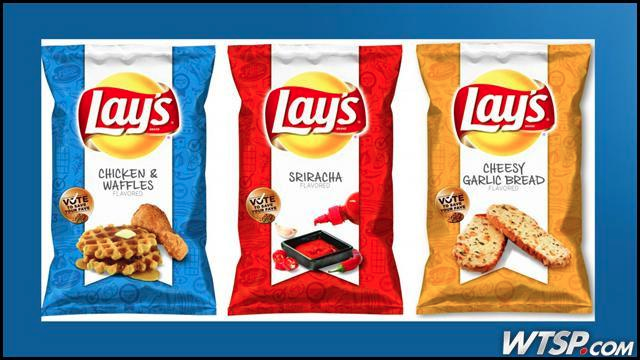
    Interactive promotional campaigns are ideally designed to benefit both the customer and the company. Lays potato chips are the most recent corporation to take this creative strategy and run with it. Lays has put together a multi-step process for establishing their newest flavor of chip. Originally, Lays invited consumers to submit their flavor ideas and let the public vote on these flavors on Facebook. At this point, the public has voted and Lays has narrowed the competition down to the top 3 public favorites. These flavors have actually been produced and are available for purchase for a limited time. While these flavors are available the voting will continue on Facebook and eventually one will be voted in and named the newest member of the Lays family.

    http://www.wtsp.com/news/article/297982/81/You-get-to-pick-the-new-Lays-potato-chip-flavor

    Taking a step back and evaluating this marketing strategy utilized by Lays, Mountain Dew and many other large corporations, it is clear that it is effective not only as a result of the customer interaction, but in a handful of other ways. Obviously if voting and discussion is taking place on social media, this is driving a ton of Internet traffic to each of the respective websites. Also, the customer involvement builds a relationship with the consumers and gives them the feeling that they are a part of the company and making important decisions. Finally, specifically for Lays and other promotions that offer the product for a limited time, this strategy causes a boom in sales with everyone trying the new product.

    Now that this promotion idea of customer involvement has been tried and proven many large companies are adopting these campaigns. Doritos, along with a few other companies, ran campaigns before the Super Bowl to have the consumers make and vote for which commercial would be shown during the big game. So despite the fact that we are still being consistently and constantly advertised to (and that’s not likely to change any time soon!) the benefits of running these promotions are clearly beyond the obvious boost in sales, this is relationship building at its finest!

    Zach Abramo, Callie Fenlon, Lauren HabigAlexandra Huss, Michael Nunes, Daniel Schaefer, Dann Williams

  • Not to Burst Your Bubble….

    Take a minute and check your Facebook. It’s okay.. we can wait!

    Okay, now take a look at the ads on your news feed. Does anything look familiar? Maybe you were on a website earlier this week and now the brand is popping up everywhere? Or perhaps you recently bought tickets to a concert and now you are being bombarded with “Music You Might Like”… weird, right?

    This type of personalized advertising is being used to zero in on potential customers. It isn’t just on Facebook either. Facebook, YouTube, Amazon, the list continues! With the advancement of technology and the increased popularity of social media sites, your purchase history on Amazon can be lined up with your recent Google search inquires. This personalized advertising helps filter down the type of ads shown to you. The advertisements you are most likely to respond to are splashed across your regular web browsing, increasing the advertisers chance in persuading you on your next purchase.thefilterbubble

    However as Eli Pasiser points out in The Filter Bubble, this doesn’t just stop with advertising. It’s no secret that Facebook started filtering news feeds a while ago, but did you know Google filters results directly to you as well? Three people could search the same exact phrase and return different results. Pasiser argues that these personalized news feeds and search results limit the power of the internet. The filter bubble makes it harder for internet content to go viral, which limits the unity the internet can create behind a movement. It can also limit the information readily available at our fingertips because we are only seeing things our history indicates we would like to see, rather than something outside of our bubble.

    The flip side is: we live in a generation of information overload. Is limiting our search results, customizing our advertising, and funneling down our news feeds that terrible? People used to have to do crazy things like go to the library and look information up in books and magazines… what?! Should we count our technological blessings or demand our free browsing back?

    Michael Nunes, Daniel Schaefer, Alexandra Huss, Zach Abramo, Callie FenlonDann Williams, Lauren Habig

  • Freakers the New Coozie?

    Established in 2011 and proudly located in Wilmington, NC we introduce to you….the Freaker! It’s the new cool coozie that is the ultimate one size fits all. Starting in Wilmington, NC this company started from a local start-up business with a vision to command and conquer and now has become a global product that is creating a high demand. In just one year it has grown exponentially into a money-making machine. How did they do it? Well first and foremost it is a very handy product that is way more interesting than any coozie we’ve ever had and can fit on any drink possible keeping it insulated and your hand protected. Secondly they have a clear-cut brand personality that is all about being unique to yourself and having as much fun as possible and they love to show it. They also have a unique way of marketing the Freaker from a truck that they turned into a home and drove around the country having grilled cheese parties at various trade shows coupled with various marketing videos on their website that show off their brand. They have approximately 200 stores across the nation with global distributors in Canada and Japan. It also helps that all Freakers are made in the USA helping local businesses and having a monopoly on it doesn’t hurt either because they have a patent on the product as well.

    If you watched the video the guy is Zach Crain the founder of Freakers, and as you can see he is a highly eccentric individual with a weird sense of humor. He is obviously very confident about his personality and has branded his product with it. The show “Shark Tank” allows business owners to pitch their ideas to billionaire entrepreneurs and get a large investment in return for a percentage of the business. Zach fails to grab any of the investors because they aren’t sure that he will be able to return on their investment. However, he was able to impress the potential investors with his impressive sales record of over 300,000 dollars in 13 months. So, one thing is clear: Zach Crain and Freaker USA have no where to go but up!

    Lauren HabigAlly WaltonHannah EureGene LeeErin Kiffmeyer

  • Becoming the Beast of Hollywood East

    In the spirit of the holiday season, we decided this was the perfect opportunity to talk about one of Wilmington’s greatest treasures: EUE/Screen Gems Studios and Wilmington Regional Film Commission, Inc (WRFC). These businesses not only help improve the Wilmington economy but they also are huge supporters of the local community. Through various strategic tactics as well as some unintentional local promotion, the film industry is a driving force behind many of the local businesses in Wilmington.

    It should also be mentioned how many jobs EUE/Screen Gems Studio has helped create in our area. From cast, crew, and extras to the creation of new organizations, such as the WRFC, Wilmington’s job market expanded immensely when the EUE/Screen Gems Studio set up shop in 1996. EUE/Screen Gems Studios still create job opportunities for the Wilmington community today, and even offer UNCW film students the opportunity to improve their resume by guiding tour groups through the studio lot.

    To gain more insight into what community outreach WRFC is involved we spoke with one of their employees, Caleb Ward. He provided us with a quick explanation of how the WRFC works with local businesses. When movies or television shows begin their production in Wilmington, the WRFC provides them with a directory of local businesses. Local businesses do have to apply and pay for their appearance in the directory. However, for many local small businesses the benefits of being included in the publication immensely outweigh the monetary commitment. Local businesses such as Strickland’s Window Coverings have become a go-to for many productions because of their ability to keep up with the fast pace of the film industry’s demands. We aren’t talking months or even weeks, we are talking about days. Ward explained that it was Strickland’s production of a unique set of blinds that that paved the way for a promising business relationship with the film industry. The blinds ordered were to resemble those used in the White House during President Abraham Lincoln’s term. Strickland’s provided these blinds to the production company within two days of the order being placed. Strickland’s is not the only local business with a story like this. Julia’s Florist has seen a jump in business since tapping into the film industry for sales. Owner, Dana Cook, told Star News that she has begun receiving one to two film-related orders a day. To a small business this small increase in daily orders can have a large impact on their yearly sales. The WRFC recently hosted a brunch for local businesses not yet included in the directory. At the brunch, small business owners heard testimony from their fellow community members about what being involved with the film industry has done for them. This experiential marketing technique boosted the WRFC’s brand credibility with the local business owners who were potentially hearing from them for the first time. As a result, over half of the businesses in attendance were persuaded to join the directory.In addition to the opportunities created by the WRFC, the film industry brings about another kind of attention to the Wilmington area. With more major movies and television shows coming to the area, A-list celebrities are appearing more frequently. In the last year Wilmington has hosted: Jennifer Aniston, Robert Downey Jr., Gwyneth Paltrow, Josh Duhamel, Colbie Smulders, Emma Roberts, Channing Tatum, Julianne Hough, Ryan Seacrest, and Fergie. Just to name a few! Celebrities, now more than ever, have platforms that allow them to share their lives with fans. This platform is largely created by social media. Celebrities use their accounts for a variety of purposes including further extending their brand, raising awareness about different issues, and engaging with their fan base.

    Recently, the local business community in Wilmington has been able to benefit from these extensive platforms because celebrities have been sharing their local experiences via their various platforms. Celebrities, like Emma Roberts and Colbie Smulders, tweeted about North Carolina coffee joints that impressed them. This kind of publicity is remarkable because the celebrities are sharing their own unfiltered opinions and there is no telling how many people it could reach. Local businesses that impress the celebrities are often additionally covered by various news sources, such as Star News and The Examiner. This is added news coverage that wouldn’t be possible without EUE/Screen Gems Studios.

    There is one last tidbit that we simply cannot leave out. By bringing the film industry to Wilmington, EUE/Screen Gems Studios has facilitated the opportunity for the community to benefit from multiple philanthropic ventures. For example, when the filming of Iron Man 3 took over New Hanover County Medical Center the “producers reimbursed the hospital for staffing cost and made a donation to the center’s foundation, which supports various hospital programs.” Many other productions and actors have taken part in charity events that support local causes, such as One Tree Hill and Safe Haven.
    There are so many wonderful benefits of having EUE/Screen Gems Studios a part of our local community. Not only does is bring in an A-list crowd but it will continue to help boost the local economy and benefit local businesses. With the growing popularity of EUE/Screen Gems Studio, we are hopeful that the continuous influx of celebs and big movie/tv productions will help keep Wilmington, NC on the map of places to visit!

    – Alexandra HussCaroline MerrillAlyssa MorrelloLauren Van TrigtDann Williams