Now that Valentine’s Day is over, we can get down to the real celebration of the season: Single Awareness Day, or SAD. A dedication to all the single people out there, sick of the holidays and searching for a break from the commercialism that is Valentine’s Day.
With no evident background explaining why Valentine’s Day is the cheesy, romantic holiday we all know and endure, the media has flourished coming up with its own meaning and traditions. The day itself cannot be pinned down to a single event, all we know for sure is that it is a mix of Roman and Christian traditions. The Catholic Church recognizes three different St. Valentines, each carrying their own legend. It is a holiday with a mysterious history, yet it is deemed the day of love.
Single Awareness Day has its own history, believed to be started by a college student at Mississippi State University. It became prominent on social media year after year on Valentine’s Day, but was recently changed to February 15th in order to give it its own celebration. Single Awareness Day is now officially a national holiday!
According to the website, singleawareness.com, suggested activities for this celebratory day include sending yourself flowers, partying with other singles, and exchanging gifts with single friends. And don’t forget to wear green, the complementary opposite of red, or black if you want to symbolize your absence of celebration.
For all the single people out there, you made it through another over-sentimental Valentine’s Day. Now is the time to assemble with your single friends, and buy the discounted chocolate. Being single is not a curse, but a celebration of independence and empowerment. That is what Single Awareness Day represents.
Donald Trump as a citizen and as a presidential candidate was known to get himself into sticky situations on social media, more specifically Twitter.
@realDonaldTrump engaged heavily in Twitter communication during the course of the election cycle. His ‘twitter-happy’ personality often came across aggressive and disrespectful. However, this was the brand that Donald Trump created for himself, as he knew what I was getting himself into.
Donald Trump, just minutes before the inaugural ceremony, took the time to tweet for the first time with his newly adopted Twitter handle @POTUS.
A little less than a month ago, on January 20th, Donald J. Trump was sworn into the Office. Also on that day, the now 45th President adopted the Twitter handle @POTUS. With this transition comes a bigger responsibility of how the President chooses to communicate using social media. President Trump must now reinvent his social media communication strategy, and re-brand himself as the President of the United States.
Former President Barack Obama was the first president to utilize Twitter to communicate with the nation; However, the 44th President was not nearly as dependent on this form of communication as is President Trump.
Ever since President Trump entered office, he has been utilizing Twitter and Facebook heavily. I have personally seen several events streaming live via Facebook. As many of us know, it can take up valuable time to generate a powerful message with only 140 characters. As students who are studying communication, we understand that a key skill to have in the process of “managing mutual responding” is to be able to generate effective and efficient messages to convey understanding to listening parties. It is not easy, especially with a limit of 140 characters. President Trump, however, seems to have no problems generating messages throughout the day among his Presidential duties. I can almost see the book on the shelf now…The Art of the Tweet by Donald Trump.
Regardless of anyone’s opinions of President Trump’s policies, decisions, and beliefs, he is still breaking through barriers by trying to cut out the middleman in bringing you important information. If he is able to maintain ‘presidential etiquette’, do you think it is appropriate for President Trump to continue his frequent tweeting? Can this help prevent news sources from misinterpreting his attitude towards something, or an event that occurred? Just a couple points to think about.
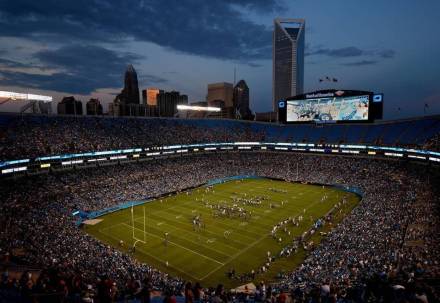
Living in the US, the NFL is easily one of the most recognizable brands we come into contact with on a daily basis. More specifically, living in North Carolina, we are fully immersed in the mania and hype of “Panther Nation.”
(Courtesy of @IGpanthernation via Twitter)
The Carolina Panthers, like other franchises, maintain a prominent and consistent brand image among their target demographics. There are numerous ways that an organization of this magnitude must communicate with its audience in order to stand out among the many notable NFL “power franchises.” The typology, or types of messages that an organization delivers, must be tailored to the situation, the environment, and the audience that they are trying to reach.
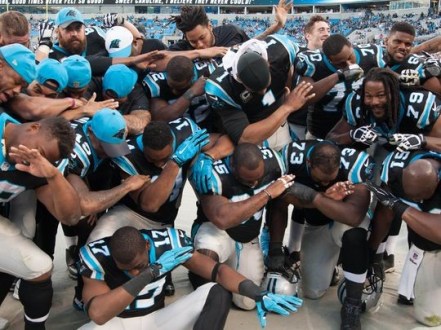
The 2015 NFL season is one that Panthers fans will not soon forget. The team’s star quarterback, Cam Newton, and his fellow teammates rose in popularity as they went on a 15 game winning streak. The team was frequently seen unapologetically posing for mid-game photo-ops, while “dabbing” on their competition.
(Photo: Jeremy Brevard, USA TODAY Sports)
Cam Newton was awarded the coveted title of league MVP and the team even made an appearance in the Super Bowl. I think it’s safe to say that a season like that makes the marketing team’s job quite easy. First of all, the media delivers a great deal of positive, unplanned press for a consistently victorious team. There was even hype created about “the perfect season” before it even happened!
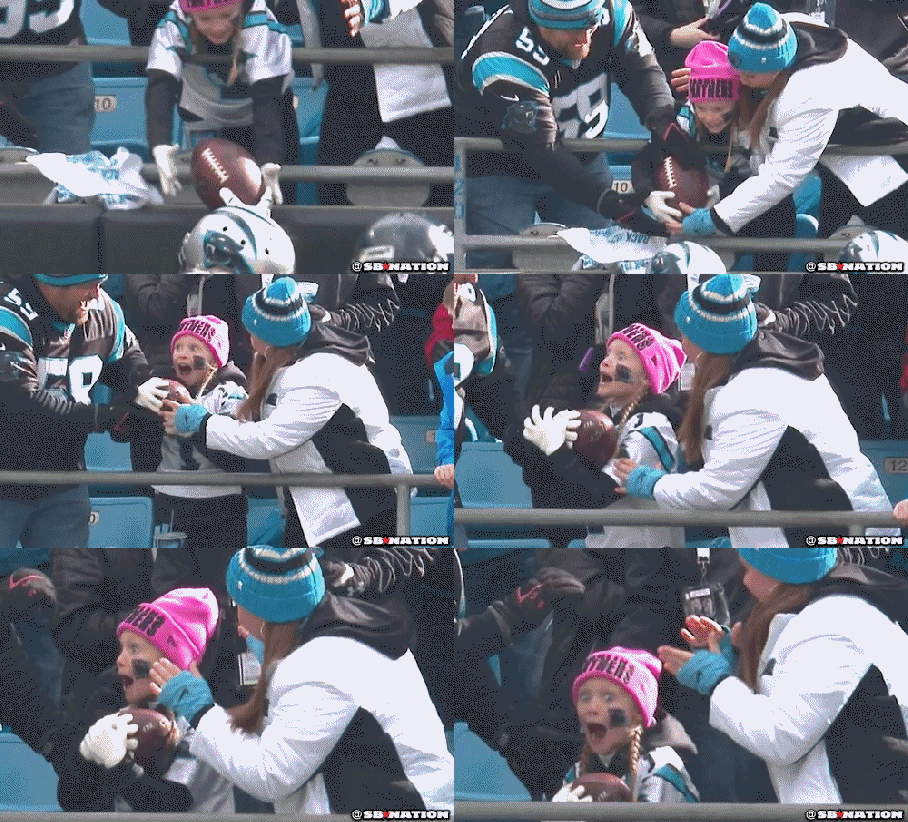
(Joseph Person, The Charlotte Observer)
They were heavily represented by the media in a positive manner. The message was either about another Panthers victory, or something equally as amazing like Cam throwing his insane number of touchdown balls to kids in the stands.
Secondly, football fans are obviously more likely to root for a team that delivers wins. Panthers fans began to come out of the woodwork to see what “Super Cam” or “Luuuuuke” would do at each game. Advertising and social media material was at no shortage due to their strongly positive image in the media, as well as their ever growing, ever enthusiastic fan base.
The marketing and branding techniques of the organization seemed to shift in a new direction after the crushing Super Bowl loss to the Denver Broncos. The social media updates, advertising, and media coverage transitioned to a much more humble, appreciative tone. The constant stream of “Keep Pounding” updates quickly transformed into a message of “We will work harder” and “next year is our year.”
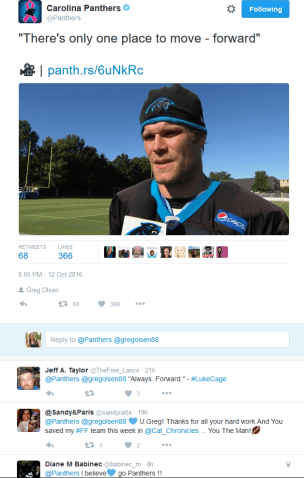
Unfortunately for the Panthers, the 2016 season has certainly not been their year. So far the team’s record is 1 win and 5 losses. Even worse, their MVP sustained a concussion along with several other key players being placed on injured reserve. This has placed the organization at the bottom of the NFC South Conference. Their current struggle has caused a shift in the typology of the organization’s communication methods. Instead of relying on positive media attention and bandwagon fans, the focus has been more on philanthropy, hard work, and the “ride or die” fan base. Without the epic victories and record breaking plays to broadcast, the Panthers are forced to look for content that comes from within its organizational culture and soul. Recent communication from the Panthers places a larger impact on team motivation and hope for the future:
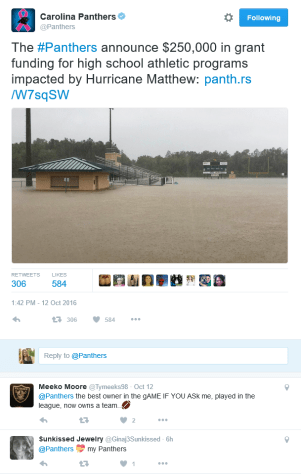
While other messages highlight the organization’s charitable efforts and donations.
A small sigh of temporary relief likely comes from the generally supportive response the Panthers have received from their true fans:
Although the NFL audience may be harsh and unforgiving at times most fans stay loyal to their favorite team, no matter how stormy the weather. The determination and optimism found within the typology of the Panther’s messages will likely resonate with true fans and keep them coming back for more!
(Jeff Siner, The Charlotte Observer)
Are you a Panthers fan? If so, are these communication strategies keeping you hopeful for your team, or are you fed up and just ready to see some wins? Let us know what you think!
-“PR and IMC: The Benefits of Integration” Public Relations Quarterly, Fall, 1994, 38-44
Applying for jobs has many young adults worried. There are ways, however, to boost your chances of landing that job. Creating a Linkedin Profile is one way to show your professionalism and is a good way to network with countless other people, but you are probably thinking that many people have these profiles. How can you make yours stand out? We have some tips that you can use when crafting your profile.
Join as Many Groups as You Can
Linkedin allows it users to connect with others and start groups. It is important to be in groups because the more groups you are in the more likely you will be found when searched by an employer. Be sure to only join groups that are relevant to the jobs you want to get. The more groups you are a part of the more times your name your will appear in front of someone looking to hire. You can really make yourself standout by leading a group too.
Be Very Descriptive in Your Summary
The more descriptive you are in your summary the better your chances will be in attracting attention to your profile. This space allows you to tell what separates you from your peers. It is a good resource to share your story. Also, be sure to include many keywords in the “speciality” section so that when searched, your profile will show up sooner.
3. Keep it Professional
Your Linkedin profile should be completely different than your Facebook profile. Linkedin is not a place to chat with your friends or create a profile to see how many shares or likes it can get. It is about networking and giving companies an online representation of who you are. Your profile needs to be organized. If your profile is a mess then whoever is looking at your page will assume that you are a mess too.
Show off Your Work
Linkedin gives its users the opportunity to attach files or link websites in the profile. It is important to utilize this so that employers have a direct link to see the work you have done. Do not be afraid to show off your work and be proud of what you have done. Remember confidence is key. Make your profile a confident one.
Keep it as Updated as Possible
Your Linkedin profile should not be outdated. A profile is not created and then left to be alone. It should be in motion and kept up to date. Your profile needs to constantly be updated so that employers see all your experience. If you leave important information out then they will have no way of knowing of it. They can only see what you put out there. Adding that extra information could mean the difference between getting hired or getting overlooked. If you have experience then be sure to let them know. Do not limit yourself.
Let us know what you think of our tips and be sure to comment below if you have any of your own that you would like to share!
If you attend UNCW then there are many traditions that you are probably aware of. Wagsgiving, Ooze Ball, and maybe even Hawk it Out. There is one that you might not be aware of, and that would be Homecoming. Wait, what? Shouldn’t Homecoming be one of the biggest events of the year? Well you would be right if it were any other school. For various reasons our Homecoming is not as big as other universities. Some blame the lack of a football team, others say it is our overall school attitude, while others claim there is a gap between awareness and motivation to attend.
For UNCW, Homecoming can be an opportunity to strengthen the sense of community among current students, alumni, and the surrounding populace. Uniting for the same purpose, to support the same school and cheer for the same team, instills a firm sense of pride. Pride can be a powerful tool. Think of UNC Chapel Hill. UNC students, alumni, and even fans have a strong sense of pride in their school and in their team. Most everybody knows who the Tar Heels are and a large number of people want to be part of their team in one way or another. Through this, the students, alumni, and fans are creating awareness. This is called Word of Mouth Marketing and allows for the marketing campaign to basically run itself. It is a necessary tool in creating a lasting tradition and instilling a strong sense of pride. So what pride essentially does, is ensure that no matter what, the school will always have a market for new students and an ever-lasting fan base.
The question is, how can Homecoming become a successful tradition? It is a common assumption that our Homecoming participation is low because we do not have a football team, which is also why our Homecoming is in the spring. However, if we stay with the example of UNC Chapel Hill, we see that a football team is not what makes the Homecoming event successful. Their fan base lies largely in their basketball team just like UNCW’s. The issue comes in the form of getting people motivated. Motivation begins with awareness and bridging the gap between the two starts with promoting involvement opportunities. People care more about events if they have a hand in creating them.
There are ways for students and student organizations to be involved in Homecoming. Some include participating in the annual banner contest, the Intercultural Fest (iFest), and by competing for Homecoming King and Queen. One of the most successfully advertised Homecoming event is Dub Idol. This is one of the first traditions that many freshmen hear about even before they arrive. If every event were advertised and instilled into the students as much as Dub Idol then the level of involvement could potentially increase. Implementing some new advertising techniques could be a start so the lesser known events become a staple. There is already an emphasis on reaching alumni, but in order to target the students, utilizing Social Media is one of the best options.
Overall, Homecoming is a tradition that every UNCW affiliate could participate in and has the potential to create an environment that allows students, past and present, to market their spirit and their pride. It is difficult to change a mindset, but Homecoming is moving in the right direction and with a little help from students it can become one of the most anticipated events of the year. One thing is for sure, we will be out this weekend participating in any events we can in order to increase student involvement and show our support for UNCW’s Homecoming.
Please nod your head if you have ever taken another route to class pretending to be on your cell phone or completely ignoring someone who was trying to give you an event flyer. If you give your computer screen a nod, we applaud you. However, if you are like 99% of the student population at UNCW and nodded your head–we understand.
There are over 250 student organizations vying for our attention, membership and time so how do we pick what to attend? Our choices depend on how, or if, we hear about the event and how creative the marketing is. The Association for Campus Entertainment is the university’s student programming board Did you enjoy Hoddie Allen last year? That was ACE. What about when Maci Bookout from Teen Mom was here in the spring? That was ACE too.
In the midst of everything college kids have going on, ACE provides an outlet for free entrainment. But just like every other student organization, they have to compete for your time as well. Integrated Marketing Communication, IMC, allows us to diversify the means by which we achieve our marketing goals. A public relations campaign? Check. Social media presence? Also check. Cool and engaging advertising? Also IMC.
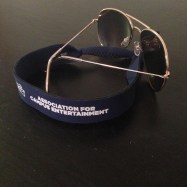
ACE does this through an array of promotional tools each year, the first being through giveaways what college student doesn’t like free things? This year ACE gave phone wallets, Croakies, car USB adapters and staplers. This may seem like a mishmash of items but each one served a purpose: to be seen and get the ACE name known. Whether it is letting a classmate use the ACE braded stapler, or paying for food in Wag as you pull your OneCard out of your ACE branded phone wallet, ACE is marketing their brand. The goal is to increase the number of times a student sees a brand and how they associate it—hopefully in a positive light.
There is more to promotions than simply getting a name out; ACE must also promote their events. There are the standard campus marketing methods such as banner, chalking and flyers, but in order to infiltrate the calendars of college students, you must take efforts farther. ACE is a brand that thrives on creative promotions, whether this be acting out a scene from an upcoming movie in the campus theatre or handing out paint brushes across campus for a Cheerwine and Design event. There is always something being passed out.
A successful marketing campaign goes beyond creating and implementing the campaign. The ultimate goal of IMC, is to not only change one’s beliefs, but to change his or her actions. Whether this be successfully convincing students to change their plans and attend an event or sign up for ACE, we want them to act on our suggestions. So how do you think ACE stacks up, do you hear about their events through traditional means of advertising or through creative promotions across campus? Furthermore – how do you prefer to be wooed into coming to an organization’s event or do you organically decide to attend? Let us hear your thoughts and comments blow!
With the rapid growth of new products, brand extensions and the blurring of traditional and new age advertising, marketing and advertising to target audiences has reached a new level of competitiveness. Brands now must adapt to this changing environment and contest with competitors to stay at the top of their market and target to audiences in creative, attention-grabbing tactics.
The most iconic brand in the soda market, and throughout the world, is undoubtedly that of Coca-Cola. In the summer of 2011, Coke created an original marketing strategy to run a campaign that would inspire people to connect with the brand both online and offline in order to acclimate to the changing marketing environment. The campaign’s prime objective was to increase consumption of Coke over the summer season and to get people to fall in love with the iconic brand again. Particularly, in Australia, at the time nearly 50% of teens and young adults had never tasted a Coke and this drove the brand to reconnect with the country.
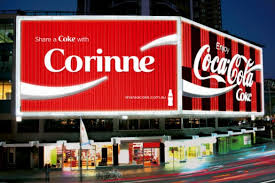
Established in Australia, the ‘Share a Coke’ campaign immediately received positive media attention and consumer responsiveness. The idea of the ‘Share a Coke’ campaign was to place Australia’s 150 most popular names on the front of millions of Coca-Cola bottles, simple right? This was the first time in 125 years that Coke had made such a paramount transformation to it packaging, and it was revolutionary.
“We used publicly available data to review the most popular names in Australia and ethnic representation in Australia to ensure the diversity of our multi-cultural nation was represented appropriately.”
– Coca-Cola Spokesperson.
The Coca-Cola brand wanted to initiate conversations by putting Australians front and center and inspire them to connect with people and ‘Share a Coke’. The central theme that gave ‘Share a Coke’ its power was the way a brand so universal could replace its logo with individual names by reaching out to consumers and personalizing its brand to individuals.
“We are using the power of the first name in a playful and social way to remind people of those in their lives they may have lost touch with, or have yet to connect with”
-Lucie Austin, Marketing Director for Coca-Cola South Pacific.
The ‘Share a Coke’ campaign strategically exhibited that when personalization in advertising is done the right way, it can be highly appealing and extremely effective. While Coke got personal, media was buzzing with talk over what the brand was implementing behind the personalization. Coke remained silent until Australia’s highest rated media weekend. The campaign was revealed to the public and aired across the biggest weekend in Australian sport, during the AFL (Australian Football League) and NRL (National Rugby League) grand finals which reached over 30% of the population.
Succeeding the campaign launch, requests for more names were coming in the thousands. Coke was prepared for this boom of requests by setting up kiosks that toured 18 Westfield shopping centers attracting consumers to personalize any name on a Coca-Cola bottle.
Coke wanted to especially reach out to the 50% of young adults that had never tasted a Coke in Australia, and there was no better way to reach this target market than online. Participation and mass allocation was achieved through Facebook by providing consumers with the resources to connect and ‘Share a Coke’ by creating a personalized virtual Coke bottle to share with a Facebook friend. Consumers were tagging friends in pictures with personalized Coke bottles and sharing stories on social media platforms like Twitter, Facebook and YouTube. Coke consumers also could create their own commercials! With the abundance of requests still pouring in, Coke told consumers to put in a vote of “who do you want to share a Coke with the most?” via Facebook. After 65,000 people voted, Coke bottles with 50 new names were released. “Consumers were invited to SMS a friend’s name, which was projected live onto the iconic ‘Coca-Cola’ sign at Sydney’s King’s Cross. They then received an MMS enabling them to share their friend’s name up in lights, via Facebook and email.”
The multi-platform communications strategy was implemented to ‘Share a Coke’ with someone you know, or want to know and ultimately gave people the resources to find, connect and share. After 3 short months of running the campaign, young adult Coca-Cola consumption increased significantly in Australia by up to 7%, making 2011 Coke’s most fruitful summer season in history. The ‘Share a Coke’ campaign resulted in 76,000 virtual coke cans shared, 378,000 extra coke cans printed at kiosks, and 5% more people were drinking coke. Coca-Cola had successfully won over Australia and became a part of popular culture again.
 Now that Valentine’s Day is over, we can get down to the real celebration of the season: Single Awareness Day, or SAD. A dedication to all the single people out there, sick of the holidays and searching for a break from the commercialism that is Valentine’s Day.











 IMC Hawks Blog