Category: Social Media

  • How Do Brands Evaluate and Choose Social Media Influencers?

    In the short amount of time someone spends on YouTube, Instagram, or Facebook, there is a high chance that they have encountered a social media influencer promoting a product. How many times have you scrolled through your Instagram feed and seen someone promoting Care/Of Vitamins? Probably a lot. So, what really is a social media influencer? What qualifies a person to become a social media influencer? How do brands come into contact with the influencer? In Jan-Frederik Grave’s 2019 research article titled, “What KPIs Are Key? Evaluating Performance Metrics for Social Media Influencers” all of these questions are answered.


    According to Grave, there are two challenges that companies face when selecting a social media influencer: finding which social media influencer to work with and measuring the outcomes of the campaign. Fashion, health, beauty, entertainment and more are just a few of the various topics that social media influencers cover. Since there is a wide range of influencers for a company to choose from, they must rely on social media metrics to determine which influencer they would like to collaborate with.


    Key performance indicators (KPIs) are various metrics used by brand marketers and agencies when selecting a social media influencer for their brand, according to Grave. One KPI that might be used is the amount of interactions an influencer recieves on a post (comments, “likes”, “shares”, etc). Another KPI could be the amount of followers, subscribers, friends, etc. the influencer has on their social media channels.


    Grave explains that typical paid content on social media is created by the brand marketers themselves, which gives them more control of the overall message. However, social media influencers are given most of the control when it comes to creating the content for the brand. Although brand marketers provide the social media influencer with some tips to follow for the content, it is up to the influencer to create the content. Grave says this is why it is important for companies to choose an influencer whom they believe will create quality content with non-conflicting posts on their channels.

    Kate Scott is an undergraduate student at the University of North Carolina at Wilmington. She will be graduating in May 2020 with a B.A. in Communication Studies with a focus in Integrated Marketing Communication.


    References

    Gräve, J.-F. (2019). What KPIs Are Key? Evaluating Performance Metrics for Social Media Influencers. Social Media Society, 5(3), 205630511986547. doi: 10.1177/2056305119865475


  • How Social Media Benefits Brand Attitude and Awareness Online

    Based on a research study by Daniela Langaro, Paulo Rita, and Maria de Fa ́tima Salgueiro

    It’s no secret that social media has moved mountains, and has created a plethora of new ideas in the world of branding. The correlation between using social media sites and branding has always been an integral factor in utilizing the different communication and marketing skills this generation has to offer. Something so normal and monotonous like scrolling through social media feeds now has more power and value than we as a society of communicators could ever imagine. Branding nowadays cannot be fostered within a company without some sort of media and online presence, and social media happens to be a somewhat “free” platform for building a brand. The article “Do social networking sites contribute for building brands?” clarified a lot of my assumptions as a Communication Studies student on how different areas of social media serve different organizations. While a lot of my discoveries and observations were not new, they have expanded the way I think about social media and branding as a whole, and as two equal parts that help one another in the world of communication.

    Before considering the advantages of social media, let’s discuss branding. Branding, by definition, is “the promotion of a particular product or company by means of advertising and distinctive design”, and a brand alone is defined as “a type of product manufactured by a particular company under a particular name”. So, we can conclude that while a brand is the product or idea being promoted, if the act of branding isn’t successful, the actual brand may not be of as much value as it could be. These two individual elements of branding and an actual brand depend on each other for quite a lot.

    From these ideas, companies build the image and vision of their “brand” and formulate ways to continue the branding process in different, creative ways. For example, almost anyone can identify the “target” emblem included in the retail store Target’s logo. People identify with the logo, and immediately think about what the logo means to them by associating it with a time or place they engaged with the Target brand, and then decide if they like it or not. From here, all of these interactions with branding can be broken down into subcategories including brand awareness and brand attitude.

    Brand awareness, as defined in the article “Do social networking sites contribute for building brands?” captures the potential availability of a brand in the mind of the consumer (Langaro, Rita, and Salgueiro, 2018). In the same article, brand attitude is defined as the evaluative dimension of brand image. Customers, potential or current, develop their own evaluation and judgements towards a brand by what they see and interact with. Having a presence on social media heavily affects this interaction and can provide a leg up for companies looking to engage more with different audiences. This can make a company or organization more competitive as well. The more a brand image or brand in general is shown in an appropriate way, the more association, knowledge, and popularity the brand will attract. This is why an online or social media presence is so vital today. Because social media is so relevant, why not utilize free promotion and improve the image of a company by establishing an online presence on a social media website?

    When it comes to branding, organizations want their personal image to be immediately identified and simple enough for people to remember. This is most often achieved by visuals and resonating cognitively with the organization’s potential or desired audiences. Brand association, brand quality, and brand knowledge are all benefits of using social media to boost any image or brand online (Langaro, Rita, and Salgueiro, 2018). When a company posts regularly on popular social media platforms, it now has individuals associated with and educated in it’s brand based off of the brand’s online presence, which is an essentially free outlet to promote or improve branding. Organizations now see the value and necessity in posting daily on social media sites and looking into analytics because it can show an organization exactly how people are interacting with their brand.

    One can realize quickly that branding is a very broad element in the promotion of a company, business, or organization. Branding is not just simply “branding”. Branding is developing a certain image within a brand, connecting other people and things to the brand, showcasing the brand in a way that will connect with others and display the right idea to customers, and the list goes on. When one analyzes the purpose of branding, so many layers can be found within it and its purpose is ever-changing. One thing that isn’t going anywhere, though, is the constant yet rapid growth of the internet and social media. Companies should continue to use social media outlets for brand communication. They should stay current on evolving social media trends, and how the company can adjust and grow with a technologically-charged society. Taking advantage of the online community can work wonders in the world of branding.

    Written by Natalie Oldani

  • Social Media: How Relevant are You?

    Crafting an idea, building a brand, launching it and growing a following all take time and the key factor in making a brand successful is building relationships on social media. Social media has shifted the focus of strategic marketing from informational ads to creating content and having conversations within social groups. According to the 2018 article in The Journal of Media Research Online Brand Awareness. A Case-Study on Creating Associations and Attachment by Alina Nechita “the symbolic dimension built by communicative means ensures the consistency and value of a brand.”

    Nechita discusses figuring out how your audience is using social media, she mentions the reach of Facebook, Instagram, Youtube, Pinterest, and niche blogs for reaching your audiences. You should be figuring out what platforms your audiences are using, Facebook and Pinterest report the most active users, Instagram is popular with teenagers and young millennials, what are your consumers using?

    Once you know where the people are, where do you start? Nechita’s research recommends piggy-backing on influencers; she specifically mentions using influencers who test products, applies personal experience, and share a final verdict. Nechita acknowledges the potential for bias but mentions that these tend to be very successful and apply similarly to general brand awareness. She states that “in the absence of a well-known brand to associate it with, the impact of its message will soon become null.” 

    Though Nechita recommends building brand awareness through more established brands and influencers, it can be done over time through consistent engagement with social groups online. The process requires analysis of not only sales, but of likes, shares, and comments at six-month intervals. 

    You should be establishing consistent positive interactions with your consumers online. Nechita mentions looking into all mentions of your brand and having them removed. The text mentions how detrimental to a new brand a negative comment could be and recommends going as far as to look the person up and contact them to discuss having the comment removed as well as frequently removing those who engage negatively online. While a negative comment may be detrimental, I think to contact someone with the goal to remove it seems risky, I would think responding directly would be a better solution. Public criticism deserves a public response.

    She goes on to mention that creating a tone or mood to the conversations on social media is also important, she mentions humor working particularly well here in America like Wendy’s use of Twitter. It is essential to create a conversation that your audience wants to be a part of and is relevant.

    Another key point that she makes is that the worst possible thing a brand can do is to ignore the customers. Nechita iterates that with well-known brands, our consumption shows who we are, it’s a representation of us so the brand’s personality needs to match up with our own. These brands have to continue to stay relatable to the consumer and she elaborates on this by going over measuring customer satisfaction and that being shared among social communities: if you like it, you tell your friends about it, right? She states that the most successful brands are the ones that “fulfill the needs of community members.” 

    This doesn’t just mean physical needs but emotional ones as well, she offers the example of Samsungs’ commercial in India in 2018, where they mention a refrigerator taking care of you like your mother does, driving on strong emotions like a mothers’ love, maybe sadness from missing that mother, and so on. Nechita makes the point that “the brand sales goal is no longer obviously profit-oriented, but apparently targets its alignment to certain emotional needs, to bring joy to customers.”

    The article goes on to warn of trying to engage online by launching too many social media accounts at once that you cannot create individual content consistently for each or not having a specific communication strategy which creates inconsistency in messaging. It says that “humanizing a brand will ensure the public’s involvement for a longer period of time” and unattended social media profiles that have old posts at the top of the page create the feeling that the brand is doesn’t care about interacting with their consumers.

    So what this research boils down to is finding your target audiences and immersing your brand into the conversation in the various social groups in your audience and then having an honest, organic conversation with your consumers and figuring out their needs and trying to fulfill them. Through this process, you create a lasting impression on your audience and an authentic value to your brand that consumers want to take part in and share with others. 

    NECHITA, V. A. (2018). Online Brand Awareness. A Case-Study on Creating Associations and Attachment. Journal of Media Research, 11(2), 91–111. https://doi-org.liblink.uncw.edu/10.24193/jmr.31.7

    Carol Friday 


    Carol Friday is a Communication Studies senior at the University of North Carolina Wilmington and is the creative director for the community group managing the Communication department’s Twitter page, the IMC Hawks blog, and its respective Twitter and Facebook page. 


  • Spring Cleaning, Kondo Style

    After Wilmington suffered a rainy fall and a chilly winter, we have finally reached spring. The first official day of spring was March 20th, 2019 and we “sprung forward” on March 10th, which means more daytime! Even though we technically lost an hour of sleep, we have more daylight to do much more than we could during the end of Daylight Savings Time. Since we have more opportunities to tackle responsibilities during the daytime, one chore that may seem daunting to some, but rewarding to others is spring cleaning.

    blog4

    Spring cleaning is the act of decluttering places that you use the most often; whether it be your house, car, office, or any other areas that need some tidying up. Tidying up doesn’t mean just cleaning your dirty bathroom or your smelly car. It could also be the act of putting away those heavy coats and other winter clothes and replacing those clothes with your spring wear! People who usually start spring cleaning, give up because there are too many areas to tackle or realize that there is always next year. However, one woman has made an impact on several lives that not only have organizational issues but can share with the world that tidying up may not be so daunting after all, Marie Kondo.

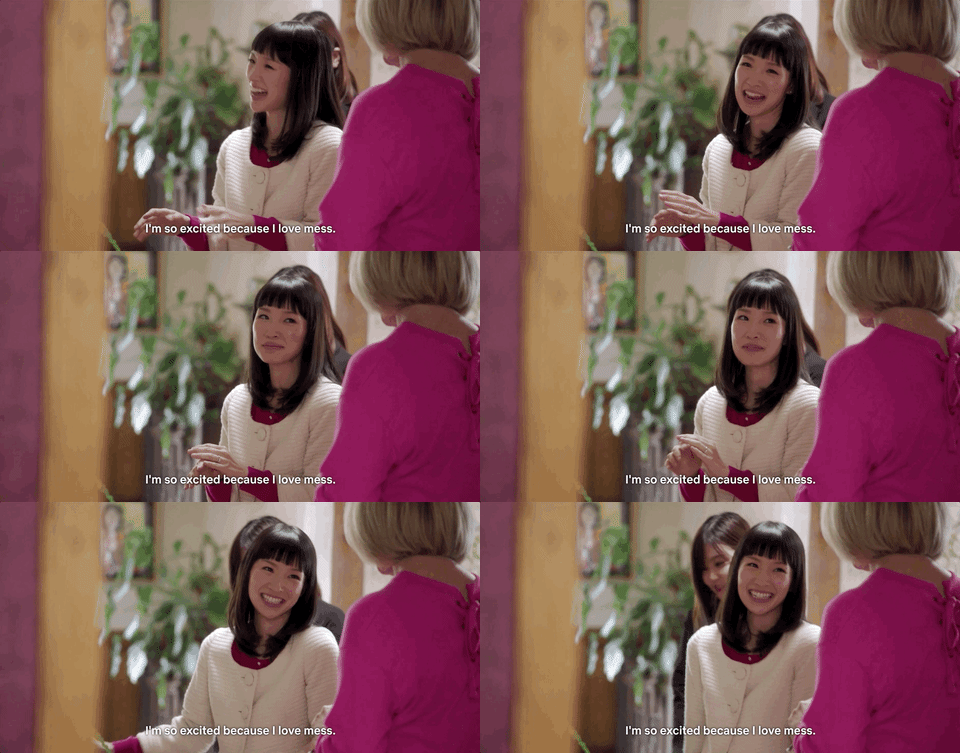
    If you binged watch any Netflix series, then you’ve possibly come across the popular Netflix series, “Tidying Up with Marie Kondo.” In the hit series, Kondo is invited to step into the lives of people who suffer from organizational issues or have a difficult letting items go that give them “joy” even though the items may be a doorstop. Kondo explains her method to her clients and reassures to them that it’s more than just throwing out the things you no longer need; it’s about choosing joy.

    blog1.gif

    So how exactly is the method broken down? The KonMari Method™ encourages that people should tidy by category, not location. Starting with clothes, then moving to books, papers, komono (known as miscellaneous items), and, lastly, sentimental items. To complete the KonMari Method™, Kondo explains her six basic rules of tidying:

    Rule #1: Commit yourself to tidying up.

    Rule #2: Image your ideal lifestyle.

    Rule #3: Finish discarding first.

    Rule #4: Tidy by category, not by location.

    Rule #5: Follow the right order.

    Rule #6: Ask yourself if it sparks joy.

    If the item doesn’t “spark joy,” to the client, Kondo asks them to thank them for the joy that they did give them, and then let it go the item that they wish to discard.

    Although the KonMari Method can’t organize certain aspects of your life, it can undoubtedly tackle those areas of your home that you’ve been procrastinating for the past year or so. Get started on your spring cleaning, Kondo style.

    -Kristian Worthy

  • Sneaky Little Sponsored Posts

    Sneaky Little Sponsored Posts

    Product placement is nothing new, in fact, it’s a tale as old as time. Whether it be Wilson the volleyball or the countless music video stars and their Beats, we are bombarded with these gentle (or not so gentle) reminders that celebrities are just like us. Here are the products they use, and you should use them too.

    It’s pretty easy to spot overt product placement, but what happens when you’re scrolling your Instagram a feed and come across your favorite Bachelor contestant showing off a new pair of “sunnies” or your fitspo follow sharing her favorite smoothie recipe that includes a specific brand of protein powder. In recent years, it has become harder to spot when products are being intentionally marketed towards us. Even with the addition of the trusty sponsored post, there is something about Instagram ads that seems a little sneakier than good old-fashioned product placement.

    When a brand pays to be referenced in a film or TV show there is a level of responsibility the platform has to ensure the brand is trustworthy. If a film comes out supporting a faulty product the whole movie is tainted. Yet, when an influencer creates a post supporting a weight loss tea that is said to have very negative side effects, no one bats an eye. Sure, they might get called out here or there but for the most part, they get off scot-free and continue to post disingenuous ads.

    Speaking of Scott, celebrity influencer and member of the Kardashian empire Scott Disick, was the first person to (inadvertently) unveil the insincerity of these sponsored posts. In an ad for Bootea, he appeared to have accidentally copy and pasted the intended caption along with the instructions for posting. The caption read “Here you go, at 4pm est, write below. Caption: Keeping up with the summer workout routine with my morning @booteauk protein shake!” That’s a pretty big mistake to make. Of course, we would have known it was a sponsored post regardless of the blunder, however, there is something so underhanded about knowing brands are telling people what and when to post on their personal accounts.

    (Read the full article here)

    As someone studying IMC, this sort of marketing behavior really becomes a Sophie’s choice. There is no denying the power Instagram ads have in terms of creating brand awareness. We follow people on Instagram because we want to see their lives, the products they’re using, and in turn what products we should be using. But how do we make the informed choice when we don’t truly know it is a product they actually use or just a payout. When Serena Williams signs a contract with Nike we know that without a doubt she will be playing in Nike equipment, there is a level of accountability there. But when Scott Disick posts about protein powder we have no idea if that product ever even got opened.

    There isn’t really a clear fix to ensure that brands and influencers are held accountable for the content they post and promote but, as IMC students I urge to be diligent and aware of those sneaky little sponsored posts and as IMC practitioners I urge you to learn from Scott’s mistake.

    -Tori Lyman


  • My RA Doesn’t Know What the BAFTAs Are… Do You?

    A couple nights ago, my RA was doing her door-to-door checkups when she came across my roommate and I discussing the BAFTAs (aka the British Academy of Film and Television Awards). We were talking about the typical stuff such as who was there and who we think had won when my RA interrupted and asked puzzledly, “The BA-who?”

    IMC Blog

    For her, she hadn’t heard of the BAFTAs and didn’t know what they were. Even when I explained what the acronym stood for, she still didn’t understand. Eventually, I referred to them as the ‘British’ Oscars.

    Although this explanation gave my RA a better grasp on what the ceremony was, it led me to wonder just how popular the BAFTAs were in the U.S. To be honest, the only reason why I knew about the ceremony was because some of my favorite celebrities, Prince William and Kate Middleton, advertised it on Twitter. Does social media always attract the BAFTAs’ viewers?

    To find my answer, I first had to watch their most recent show which were the British Academy Film Awards.

    The British Academy Film Awards were held on February 10, 2019 at the Royal Albert Hall, London, UK. The show featured notable (and nominated) actors like A Star Is Born’s Bradley Cooper, Black Panther’s Letitia Wright, The Queen of Scots and Suicide Squad’s Margot Robbie, and many more. Some of the film industry’s biggest winners were movies such as The Favourite and Roma which together won 10 BAFTAs.

    The awards were televised on the British network BBC One, but for North Americans, it was on the American network, BBC America. Although having them broadcasted on BBC America was a great tactic to bring in an American audience, not that many people have access to that channel. This led the BAFTAs in recent years to heavily rely on social media platforms to advertise their show.

    According to BAFTAs’ 2017 annual report, they create awareness by paying and partnering with Snapchat, Facebook, and Twitter to increase social engagement. This includes streaming live footage from the event along with hashtagging #BAFTAs or #EEBAFTAs. I have to say this strategy is smart since according to Edison Research, about 80 percent of North Americans had an online presence by 2017.

    Thanks to BAFTAs’ tactics and others, their 2017 online engagement totaled in 104,509,190 people. These engagements also include visits to BAFTAs’ website, organic visits on Facebook, and organic impressions on Twitter. This was an increase of 96 million from 2016.

    Another strategy the BAFTAs use is posting videos from their shows on to YouTube. Currently, their most popular video from the British Academy Film Awards is Dev Patel’s Supporting Actor acceptance speech for 2016’s Lion. It has about 820,000 views.

    The BAFTAs are killing their social media marketing and I hope by then end of 2019, they gain an even a bigger audience.

    Have you watched the BAFTAs this year? What do you think of their marketing strategies?

    Let me know in the comments!

    ⎼ Aliyah Harris

    Sources: Bafta.org

  • Do Celebrity Endorsements Change the Way People Vote?

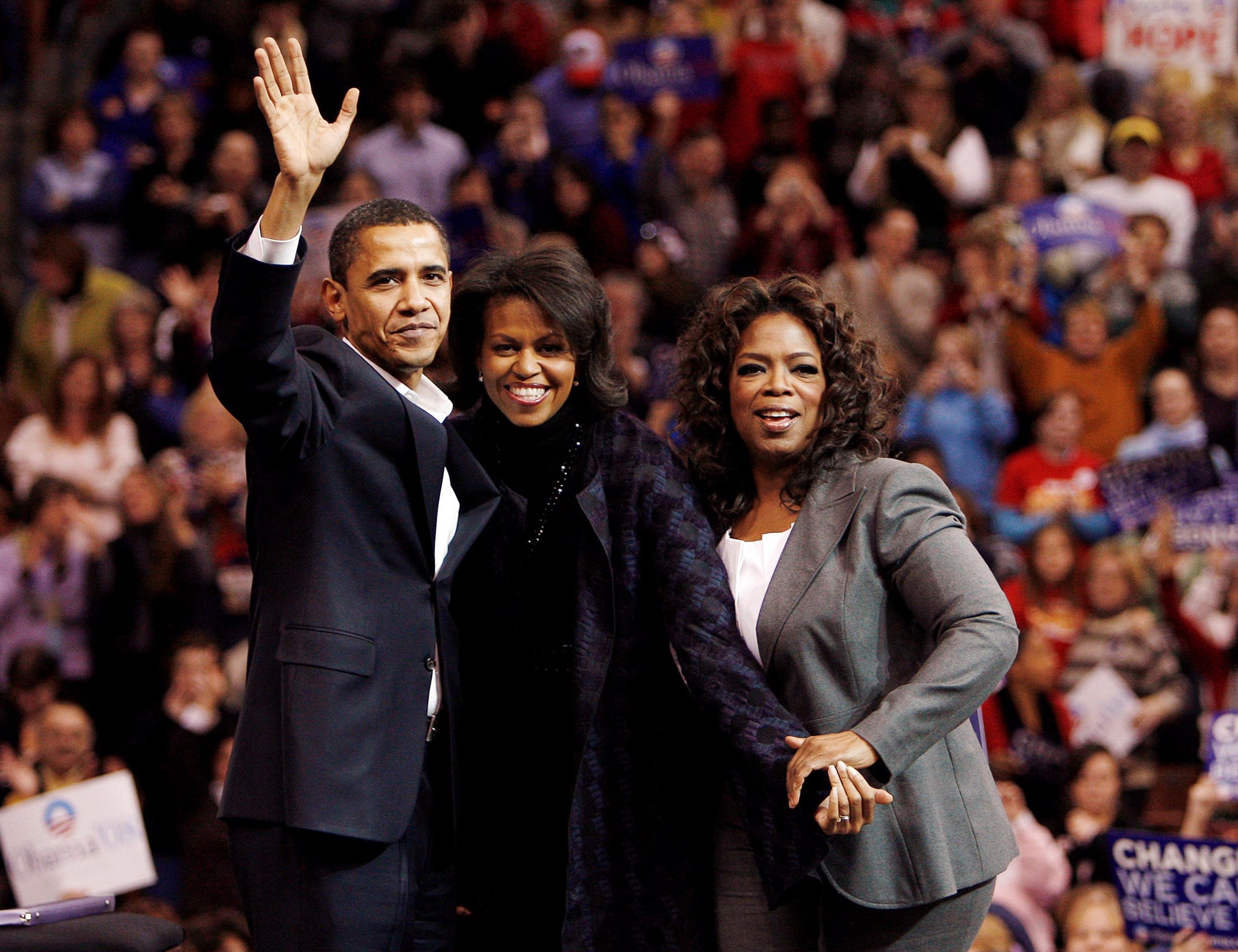
    180108-oprah-winfrey-michelle-obama-ac-532p_0fbd7ab0e3ab6c8a230fb18bc50e8ab0.fit-2000wThere is no denying how impactful celebrity endorsements can be on the public, especially in today’s political landscape. As the 2018 midterm election approaches, more and more celebrities are attempting to mobilize people to get to the polls and vote! But are these endorsements actually affecting candidates’ numbers?

    Many celebrities have been seen personally endorsing candidates from their home states. Recently, Taylor Swift posted on Instagram that she will be voting for Tennessee candidates Jim Cooper and Phil Bredesen. Will Ferrell was spotted knocking on doors in Georgia endorsing Stacey Abrams for governor. Jack Black and Meryl Streep made large donations to Senator Claire McCaskill’s reelection fund. Even the Houston native, Travis Scott, voiced his support for Beto O’Rourke.

    ifxeonmt9clbgaoywl0b.png

    It is obvious celebrities have an effect on the way people think. People are more likely to use a product if they see a celebrity using that product or endorsing it.  Also, the more credible celebrities have a much higher impact on people’s opinions and decisions.  However, this does not seem to apply to the political scene.

    According to Gallup, Pew, and CBS News, celebrity-endorsed campaigns do not matter to the overwhelming majority of voters. CBS News polls revealed that 78% of people expected celebrity endorsements to have little to no effect on the election. Some experts say poll numbers may not accurately reflect the true impact that big-name celebrities have on campaigns.

    dt1.jpg

    So maybe, celebrities that endorse politicians aren’t doing the trick. One study found that an increase in young voter participation could be attributed to celebs that influence fans to “get out and vote”. Many celebrities are posting pictures of their “I Voted” stickers and tweeting to their fans the importance of having your voice heard by voting.

    1108-rocking-the-vote-primary-3-1200x630

    Overall, a voter who typically votes for one party is not going to turn around and become a supporter of another party because a celebrity told them to. But people who were undecided or weren’t planning on voting in the first place could be persuaded to get out to the polls. The link between celebrity power and politics has a long history and most studies claim it does not affect the way people vote. Perhaps the question we should ask is, “Do celebrity endorsements make you pay more attention?”

    – Lizzy Regnery


    References:

    http://theconversation.com/us-election-what-impact-do-celebrity-endorsements-really-have-66204

    https://www.marieclaire.com/politics/g24442884/celebrity-endorsements-politics-2018/

    http://www.electionanalysis2016.us/us-election-analysis-2016/section-2-campaign/us-election-what-impact-do-celebrity-endorsements-really-have/

    https://www.today.com/news/oprah-effect-can-celebs-sway-voters-wbna27227264