Category: Media Ethics/Censorship

  • “Checking In” to Spring Break

    Happy Spring Break! Many students have spent the last couple months (or longer) trying to figure out where their Spring Break time is best spent. If you’re like me, this preparation may have involved a thorough internet search to find the perfect hotel for your week off. An increasing number of hotel chains have discovered the perks of social media use and are developing ways to satisfy the needs and wants of their customers on an increasingly personal level.

    Social media sites such as Foursquare, Twitter and Facebook Places, allow a user to “check in” or log their current location. While some companies may be skeptical about the relevance of such tools to the business that they do, the hotel industry has discovered that these services create a greater feeling of inclusion and personalization to their guests. Now hotels can invite guests to “check in” both literally and virtually, completely committing to their stay. Another added benefit of location-based check-in tools is the ability to track and incentivize a guest’s stay. Hotels participating in incentive programs for social media have been known to use a variety of rewards to reach out to their social media circle; examples include anything from a discounted meal in the hotel restaurant to late checkout times for the final night of your stay. Some hotels have gone so far as to collaborate with airlines or credit card companies to create an unofficial “rewards program”; offering discounts and frequent flier miles for using your American Express card or staying at the Hilton.

    Of course with programs such as these, there can (and will) arise questions of security and privacy. Many savvy social media users are hesitant to place their exact location online. The flip side of this is that many users don’t want the world to know where they are NOT (for instance at home…protecting their belongings). While safety and security concerns are understandable, potential thieves and “bad guys” are not the only party with a vested interest in your location and personal information. Some of the aforementioned hotels have begun tracking mentions of their brand to create a more customized experience. For instance, say you book a night at a Marriott and tweet about how excited you are to stay there for your anniversary. With the use of these tools it’s not unlikely that you will open the door to find a chilled bottle of Champagne with a note from the staff wishing you a “Happy Anniversary”. Or, on a creepier note, a woman on the local radio the other day described checking into a hotel to find a wrapped dog bone and a note saying “Snickers misses you”, a response to her Facebook status the day before where she stated that she “ hate(s) to leave Snickers (her dog) at home when she goes on vacation”… To me, this was a little bit too personalized.

    As is typical with this type of marketing, it is necessary to find a happy medium between discovering a guest’s needs and invading their privacy. How far is too far and is there such thing as too personal? While this may not be a topic that concerns you too much while lounging on the beach in Florida or soaking up the culture in a foreign country, it’s important to keep in mind that while logging your location, you may be signing up for more than you recognize. So what do you think? Will you be
    “checking in” before you checkout this Spring Break?

    Lauren Habig

  • Slimful or Sinful?

    It is no secret that women in America are under extreme pressure to be slim. Products like Slim-Fast, QuickTrim, and Hydroxycut are just a few examples of what women are buying to live up to this cultural expectation. I’ve seen these items and have simply written them off as another weight loss scheme. Nothing about them really struck me as odd, or even unhealthy. However, the other day I heard a commercial that made my jaw hit the floor. That commercial was for Slimful. Take a look for yourself.

    I honestly thought it was a parody commercial that was making fun of how idiotic some products are, but, oh, how wrong I was! I immediately began researching this product to see if it was really as ridiculous as it sounded. The commercial ends with the statement “eating less is a beautiful thing,” and this is exactly what the product promises and promotes. The idea is simple: eat a Slimful chew, drink a glass of water, and you won’t be hungry for hours.

    skinnyThere is no mention of combining the product with an exercise program or a healthy diet. The website does say that the idea is to eat less, not to stop eating at all. However, it is no secret that many girls and women struggle daily with eating disorders. What message is a commercial like this sending to those struggling with anorexia or bulimia? It sounds an awful lot like encouragement to me. The commercial blatantly says it is not only okay to eat less but that actually it is a beautiful thing to eat less.  Looking at this advertising campaign from a health communication perspective, it becomes increasingly hard to ignore how dangerous a commercial and product like this could be. In advertising, the meaning of the message is often defined by the audience receiving it. Ignoring the impression this commercial could make on someone struggling with an eating disorder is heinous. The campaign helps to perpetuate the idea that thinness, and therefore frailty is beautiful in women, not strength. The commercial also further extends the idea that eating less, rather than doing more is the way to achieve a desired weight or look.

    Advertisements like this are just one of the many factors that play a large role in the creation of the cultural expectations women are held to. The rise of social media sites such as Twitter, Pinterest, and Tumblr, have accelerated the spread of these unrealistic expectations to a new level. Media still sets the tone for cultural stereotypes, but social networking sites have the power to expand and develop them unlike any tool in the past. Individuals are able to chime in with their opinions and like-minded groups begin to form.

    What troubles me the most about this advertising campaign is the life it could potentially take on in the Pro-Anorexia (Pro-Ana), and Pro-Bulimia (Pro-Mia) social media communities. This article from the Huffington Post begins to explain the debate currently happening on Twitter and in these online communities. The hashtags “#proana” and “#promia” are used on Twitter to indicate support and encouragement for those with eating disorders. These hashtags raise concerns because often the users are not trying to help each other beat the disease but rather they exchange advice on how to become a more “successful” anorexic or bulimic. As the article explains, this is truly a complicated issue. Some people are callingpinterest warning for a ban on this type of communication and support. Tumblr and Pinterest, which are largely centered around visual content, have already begun to take steps to slow down the spread of Pro-Ana and Pro-Mia content. However, censoring Twitter content quickly brings up arguments over the first amendment which will slow down any ban decisions in progress.

    Additionally, as this article from the New York Daily News discusses, some people argue that these communities can actually provide support for girls trying to recover. This argument grew out of a study published in Health Communication. The study interviewed bloggers that write for Pro-Ana websites. The bloggers explained that the online communities provide a place where they can be understood. Eating disorders are a stigmatized illness that can often lead to feelings of isolation. If these online communities can provide emotional support for those suffering from an eating disorder that is unavailable elsewhere, how can destroying them be justified?

    The Slimful commercial was released only a month ago and hasn’t received much attention yet. Only time will tell if the results will be as detrimental as one may imagine. There is no simple answer to the questions I’ve raised in this post. I’ve only touched the tip of the iceberg. It seems that more vicious circles are being created as social media continues to evolve, and this could be just the beginning.

    Alexandra Huss

  • Are You Getting Scroogled?

    Beginning March 1st, Google will be implementing a new privacy policy which will affect all of its products/services offered in order to gain a better perspective of their consumers and give them a more personalized experience. With the new privacy policy, Google will be able to gain more access to personal information by pulling material from all Google-operated services/products, such as E-mail, and using that information to create personalized advertisements to the user. This idea is similar to the one discussed in our earlier blog post titled “Not to Burst Your Bubble….”. With a better understanding of their users, Google will better be able to sell advertising, which in fact, is a main source of revenue for the company. Also, advertisers will be willing to spend more money with Google, if Google is bringing them more customers.

    This privacy policy change has certainly upset a number of people, but it might be safe to say none like Microsoft, a competitor of Google’s. Within recent weeks, Microsoft has released a number of advertisements via print and YouTube blatantly attacking Google and its new privacy policy. With the headline, “Have you Been Scroogled?”, and the advertisements tearing the privacy policy to shreds, it’s hard for one to not compare these advertising campaigns to those of the presidential elections.  It is unclear what the purpose of the advertisement is until the very last couple of seconds in which the Microsoft Outlook logo is revealed. There is even a website dedicated to the campaign. Upon visiting, the user is given the option to sign a petition against Google and the option to try Microsoft Outlook. The irony behind this whole situation is prevalent in several ways. First, Microsoft is placing these anti-Google advertisements on YouTube. Second, when searching for “Microsoft anti-Google ads” through the Google search engine, the websites provided where splattered with banner/marginal ads for Microsoft. When performing this same search through Bing (a search engine owned by Microsoft), the websites provided had shown ads sponsored by Google. This pattern resembles the concept of a “strange loop” within the Coordinated Management of Meaning theory. According to Littlejohn (1999, in Theories of Human Communication), these occur when “the rules of interpretation change from one point in the loop to another, causing a paradox, or strange loop, in which each contexts disconfirms the other”.

    http://www.scroogled.com/

    As of now, a little less than 10,000 people have signed the petition, which is only a small fraction of the G-mail users, and the YouTube advertisement have received far more “dislikes” than “likes”. Maybe this strategy isn’t as successful as Microsoft had hoped it would be. With Google being the most popular search engine, it is going to take more than that to persuade its users to up and switch to Microsoft. What does this say about Microsoft as a company? Will this be the new advertising technique of the future? Will we no longer see companies like Coke and Pepsi beating around the bush but rather taking deliberate stabs at one another? Only time will tell, but it will be interesting to see where the rest of Microsoft’s campaigning takes us.

    Callie Fenlon

  • Four More Years… of Media Frenzy?

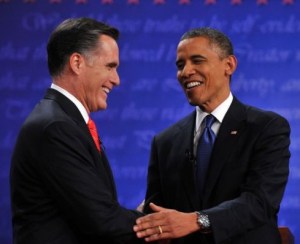
    All night long Americans were glued to their televisions or their computers anticipating the results of the 2012 Presidential Election. Around 11:20PM on Tuesday, November 6th America got their answer: four more years for President Barack Obama. Some celebrated and some cried. This election deepened the political divide between Americans unlike any other election. What made this election different from any other? The answer is the mainstream media bias.

    Even though Obama’s campaign team stood their ground in the battleground states, the real winner should be media outlets. Whether it was the presidential debates or the campaign trail, media coverage was everywhere. Does this increased access to information via the media mean we are better informed than we used to be? The mainstream media is our main source of information; we rely on them to know what is going on outside of our bubble.

    The question is… what happens when the media takes on a biased role? A major criticism of the media is that it isn’t just giving us information but also conditioning us about how to think about the issues. CNN and Fox News are criticized as two of the most biased sources in the market, and they are also two of the largest. This means the same story can be presented on both outlets but the facts included can persuade the reader to feel a certain way about the issue. This article from CNN states that Romney supporters were asking for Fox News instead of CNN when it became clear that Obama was taking the lead. This is good news in that it means people are aware of the biased, however, turning to a known biased source to get the story you want compromises the credibility of the information you receive.

    Media bias is everywhere. It is nearly impossible to get just the facts on the current issues. As informed consumers, this leads us to question how the bias impacts the general public. What happens when the public accepts the bias opinion as factual information? For one thing, the party divide deepens. A conservative tuning into Fox News sees his/her beliefs reaffirmed day after day, and the same happens when a liberal tunes into CNN. After a while, this can create a red and blue polarization. In some cases the divide has increased so much so that the two parties cannot begin to reason with the opposite side. Does this mean it is the media’s fault we have become so divided in our political views?

    Now that the election is over, it is time that we refocus our attention on the issues at hand in our country and work together for the greater good of America despite personal political affiliation. Is this still possible with such biased media? Regardless of who won, how do we now come together to do what is best for America? President Obama: the media will either provide a platform to cultivate support for your ideas, or tear every move you make to shreds. As citizens of this great nation, we are all rooting for you… the President of the United States of America.

    – Alexandra HussCaroline MerrillAlyssa MorrelloLauren Van TrigtDann Williams

  • Just say anything to win.

    With the 2012 presidential election day right around the corner, the candidates have found themselves in a television battlefield. Each candidate hopes to take his opposition down by firing loaded words weekly. It seems that advertisements to vote for a candidate have instead evolved into advertisements to not vote for their competitor. Both the Obama and Romney campaigns have spent millions on these largely negative commercials that appear to be overflowing our televisions, especially in battleground states. As viewers being constantly bombarded by accusatory messages, are these presidential candidate advertisements doing more harm than good?

    Romney has recently received immense criticism for a misleading television advertisement that aired primarily in Ohio about Obama and the auto industry. The commercial states that Chrysler is moving Jeep production to China because of Obama’s failed policies, a claim that aimed to hit home with the thousands of Ohioans employed in the industry. Although Chrysler does intend on building Jeeps in China, it can be interpreted from the advertisement that Chrysler will stop making Jeeps in the United States and move all production to China. The Democrats’ response to Romney’s claim used blunt terms attacking Romney’s character. The claims were deemed as “outrageous assertions” and Biden even asked of their competitors at a rally in Youngstown, Ohio, “Have they no shame?”

    These responses may have successfully portrayed Romney as a “liar,” but Obama’s auto advertisement used some of the most biting rhetoric yet, according to The Detroit News. It emphasizes Romney’s “wrong-headedness on the auto bailout” (as cited from The Detroit News’ editorial page) but never mentioned the paper’s overall endorsement for Romney in the election.

    Every word in a speech by a presidential candidate is deliberately chosen. Each phrase in a campaign advertisement is carefully crafted. Nothing presidential candidates deliver is accidental, innocent, or meaningless. Politicians are most successful when their campaigning efforts communicate the precise message their audience wants to hear. But what happens when they will say just about anything to win?

    Erin Kiffmeyer, Hannah Eure, Eugene Lee, Ally Walton, Lauren Habig

  • Has the Branding of Humans by Companies Gone Too Far?

    Marketers and advertisers have been getting more and more creative with how they choose to promote their brand and products. A recent trend has been the one of the “walking billboard.” Many people have been willing to brand almost any part of their body for the right price.


    In more recent years, tattoos have been seen as both as cultural icons as well as innovative methods to deliver a specific message. Web sites such as LeaseYourBody.com, TatAD.com, BodyBillboardz.com, HumanBanner.com, and LivingAdSpace.com connect brands and potential advertisers with individuals who are willing get “branded” for money.

    Many popular brands such as Volvo have used these creative tattoo advertisements to further promote their cars. Linda Gangeri, national advertising manager of Volvo Cars of North America, said their tattoo man was a way to get people to think differently about the Volvo brand.  Being a “walking billboard” is an extreme example of how people are being used to creatively advertise for brands in today’s society.

    There are less permanent and drastic ways in which someone can brand themselves for a company. Clothing is a great example. Clothing will always be a great tool for human branding because it is one of the first things we notice about the appearance of others.  In recent years, there have been rumors circulating that Abercrombie and Fitch pays individuals to come into their store and shop whilst wearing their clothes.  Even more recent are the allegations that the company has done the exact opposite as well. In 2011, the company reportedly offered the cast members of MTV’s “Jersey Shore”, specifically Mike “The Situation”, to not wear their clothes while filming the popular TV series. They felt that the cast members wearing their clothes affected their brand negatively rather than positively and did not want to be affiliated with the show. Clothing is also largely used by brands that are not restricted to apparel to benefit both the clothing store, and their own brand. For instance, the clothing store “Hot Topic” sells a variety of different t-shirts from many different companies. One of the big examples is the “Twilight” series. By selling shirts that relate to the book or movies, the people who buy these shirts then become walking billboards for both “Twilight” as well as “Hot Topic”. Clothing has been and remains to be a great tool for human branding for the simple fact that in society, appearance really does seem to be everything. If someone is attractive and is wearing a t-shirt that promotes something, most people that see this person are likely to be influenced by what is being advertised on the shirt.  The “Legalize Gay” shirts from “American Apparel” are a great example. Not only does the shirt promote a cause, but some people even think it’s trendy. This caused the design to become a quick success for “American Apparel”.

    Along with self-branding through choice of apparel, companies use celebrities to promote their brand by paying them a great deal of money to wear their clothes, jewelry, hats, sunglasses, etc. In 2003, famous tennis player Serena Williams signed a sponsorship contract with Nike which agreed to pay her over 8 million dollars a year just to wear Nike’s logo on her uniforms and visors while playing. Not only is Serene getting paid; she does not even have to buy her clothes from Nike because they are given to her. The better and more popular the athlete, the more money companies choose to invest into that particular person or team. Tiger Woods is another athlete that has been ridiculous sums of money just to wear and boost certain brands. Before his sex scandal, Tiger allegedly made between 55-60 million dollars from endorsements.  After, the controversy, he makes about 20 million less, but still an incredible amount of money just to wear Nike apparel.  This marketing strategy applies to fashion and luxury brands as well. On the “red carpet”, interviewers are constantly asking who designed celebrities’ dresses or what brand of jewelry are they wearing. Throughout the past couple of years, the number of film stars that accept fees for wearing a brand’s designs or jewels at the Academy Awards and other red-carpet events has significantly increased. Lucie Greene, the author of many articles located in FT Magazine, stated that “last year US Weekly reported that Oscar host Anne Hathaway was paid $750,000 by Tiffany & Co to wear its jewels throughout the ceremony. The same story said that Gwyneth Paltrow was paid $500,000 to wear Louis Vuitton baubles during her live performance” that same night of the Oscars. Businesses are looking for every possible way they can find to market their brand and increase sales and participation. Phillip Bloch, a professional stylist who works with the popular celebrity Sandra Bullock, along with many other famous clients, views this pay-to-wear trend a smart branding strategy. “It’s a business more than ever now”, Bloch says.

    Over time, the ways in which people are used to promote and essentially brand a company have evolved.  While clothing has been around for quite some time, the creative ways in which it is used has been changing in recent years.  Celebrities have been used to wear a brand and increase revenue.  As notes, extremes such as being a “walking billboard” have become more and more prominent.  As is natural in a social setting, people are extremely influential upon one another.  Thus starts the argument that as technology develops over time, the ways in which humans are used to advertise will as well.

    Sasha De Vecchi, Lindsay Gallagher, Jay Reilly, Cary Welborn

  • Remember When…We Didn’t Live in a Web 2.0 World?

    What do you think of when someone asks you “Remember When?” Among the historical disasters that have plagued our world, the media has always played a prominent role in the information that is released to the rest of the world. For example, in 1986 a huge explosion occurred at a nuclear power plant in Chernobyl, Ukraine. Even though nuclear power represented a large technological step forward for mankind, our technology in regard to media was still lacking. In fact, the Soviet Union tried its hardest to keep any information regarding the disaster out of media coverage. Not only did it take a long time for the rest of the world to find out about the disaster, but when they did, many of the facts were inaccurate and misleading. This is only one of the many examples in which getting authentic news coverage was halted by the government. Also, the mediums in which the information was made public were very minimal.  There are many other events that occurred during World War I, World War II, The Cold War, Vietnam, etc. that were not made public as well due to the lack of technology in that era.

    In more recent years, a new dawn of technology has signed the beginning of the Tech Age as well as the information Era. These new technological discoveries have further allowed us to transfer information liberally and have also given us the privilege of instant access to information that would otherwise have been difficult or tedious to find in the past. With improvements in technological development, such as the internet, we now have new global platforms that further enable and enhance the flow of information.

    We saw the amazing impact of the Web 2.0 technological age on the fateful day of September 11, 2001.  The new millennium called for the drastic cell phone advancement from bulky older versions to a new PDA form.  The advantages of this transformation really came to light when doomed passengers were able to make one more phone call home on their descent.  Also, real-time coverage about the day’s events was available instantaneously for the world to follow.  Unlike the decades prior, we did not have to wait for the evening news or rely on word of mouth information about the attack.  Americans could simply turn their television on, tune into their radio, call someone on their cell phone or access the internet from their PC or smart phone to keep up with ongoing news that day.  While this was beneficial to the average American that wanted to be informed, it proved especially pivotal for family members that had loved ones working in the buildings that were attacked.

    Every major advancement in society comes with its consequences.  While the technology era has birthed an easier way of living and communicating, the new wave of innovations came with a downside characterized by the improper usage of this knowledge via the media. Nowadays the media is manipulated all the time; these negative effects often come from lobbies that push political agendas or use inaccurate sources.  It is hard to determine what is credible on the web today due to the fact that almost anyone can access it.  Even with the disadvantages that come along with the new technology enhanced media, events such as September 11th prove the importance of getting accurate information in a timely manner.

    Sasha De Vecchi, Lindsay Gallagher, Jay Reilly, Cary Welborn