Category: Marketing

  • The Future of Marketing and Social Media

    By Jaime Mull

    (Photo by Austin Distel at Unsplash)

    Social media is constantly evolving, and new trends are occurring every day online. It can be difficult to keep up with the constant renewing and recycling of trends on apps like TikTok and Instagram. Companies, now more than ever, are using their various social media outlets to target consumers with current trends and memes to sell their brand or product. Well-known brands have used social media to sell their products for many years, but it hasn’t been until recently that they’ve truly engaged with consumers and actively participated in the trend cycle that is occurring. If brands are now using social media as their main selling source and are constantly posting and engaging with customers, how will their engagement evolve in the next few years? What will we see from brands on social media in the next few years that we haven’t seen yet?

    How is Social Media Used Today?

    Social media is not just a one-dimensional outlet for people to share their life and thoughts with others. Over the past few years, social media has evolved into so many different things, and has allowed people to communicate and share ideas in various ways. Specifically for marketing, social media has now become the main outlet for brands and companies to share products and communicate with their consumer-base. With apps like Instagram and Twitter, consumers can comment on a brand’s post or tweet, and the brand has the ability to respond right away. This gives brands a huge advantage and allows them to show consumers how reliable of a company they are.

    The growth of social media platforms has also created an omni-social presence, which suggests that almost every aspect of a consumer’s decision-making process is prone to social media influence (Appel et al., 2019). With the amount of different apps and websites that brand’s can post on (TikTok, Instagram, Twitter, LinkedIn, Snapchat), it is almost impossible for the consumer to avoid a product or specific brand message. If a brand wants people to see their message, they have several options for sharing and can pay to promote themselves even more.

    The use of influencers and celebrities in marketing has also increased greatly and is extremely popular today. Considering the possible reach and engagement influencers command on social media, companies have either begun embracing influencers on social media, or plan to expand their efforts in this domain even more (Appel et al., 2019). This means that influencers being used to promote a product or brand isn’t going to change in the near future, because it has shown to be effective.

    Brands will Become your Best Friend

    A safe assumption to make based on past and current trends is that brands will become even better equipped to answer consumer’s questions and meet consumer’s needs. For example, new platforms have emerged to make the connection between customer and firm effortless. Much of this is via instant messaging applications for businesses, which several leading technology companies have recently launched as business-related features in existing platforms (Appel et al., 2019). Brands are going to become even more accessible in the next few years due to platforms like this, that will allow customers to reach someone within the company in less than a few minutes. Consumers are tired of waiting for days to hear back from a brand’s customer service line, and they’re tired of hearing the same excuses for why certain products don’t work. Brands are going to become much more personable and honest with consumers, as well as make themselves available for questions and feedback at a much faster rate.

    The Future of Political Collaboration

    Something we saw in social media in the last few years that wasn’t as evident in the past was the increase in posts regarding politics, specifically from brands. Many popular brands, ranging from Ben & Jerry’s to Bumble, spoke up during the 2020 Presidential election and were very clear about which side they were taking in the race. It is becoming a growing trend for brands to show their support for political figures, which is interesting because there’s always the chance that they lose customers who don’t agree with their stance.

    There is also the case of politicians themselves utilizing social media more in the future, essentially to market themselves. A relevant example of this is with Donald Trump and his run for office in 2016, and 2020. Research has shown that with simple interventions, social media platforms can increase targeted audiences’ likelihood of voting (Appel et al., 2019). We will definitely see more social media use from politicians, as well as brands in support of politicians, in future campaigns and election years.

    Social Media is Always Evolving

    While it is always interesting to analyze social media and predict what trends and themes will happen in the next few years, no one really knows for sure what will happen online. Social media is constantly shifting and changing shapes, and new trends are always being created. It will be interesting to see how social media unfolds in the future.

    Sources

    Appel, G., Grewal, L., Hadi, R., & Stephen, A. T. (2019, October 12). The future of social media in Marketing – Journal of the Academy of Marketing Science. SpringerLink. Retrieved February 24, 2022, from https://link.springer.com/article/10.1007/s11747-019-00695-1

    Distel, A. (2019, July 24). Photo by Austin Distel on unsplash. Beautiful Free Images & Pictures. Retrieved February 24, 2022, from https://unsplash.com/photos/tLZhFRLj6nY

  • Controversial Advertising Strategies: Understanding How They May Help or Hurt Your Brand

    By Emma Hudson

    (Photo from Unsplash)

    Have you ever heard the phrase “there’s no such thing as bad press?” On the surface, this statement may seem logical. Controversial advertising is known for making brands more relevant by grabbing attention and garnering conversation. But just how valid is the “bad press” argument?

    According to an article released by MDPI , controversial advertising operates by deliberately inducing feelings of surprise by “violating social norms or personal ideals, to draw attention.” Controversy must be used with extreme caution, as it may generate both positive and negative effects in the reception of an advertised brand.

    Here’s a closer look into the successes and failures of controversial advertising and questions that should be examined when considering a controversial campaign for your brand.

    What does effective controversial advertising look like?

    A common misconception about controversial advertising is that its primary goal is to offend its viewers. In reality, controversial advertising doesn’t aim to polarize an audience. When done correctly, it’s an attention-grabbing technique for stating an opinion, and brands use it to stir the conversation about a contentious topic.

    An example of effective controversial advertising is found in the 2017 Budweiser advertisement, “Born The Hard Way.”

    (Photo from Budweiser: Born The Hard Way)

    This commercial tells the story of Budweiser founder Adolphus Busch and his journey to America from Germany with a dream of building his own beer company. The ad artfully portrays the trials a young Busch may have overcome, from fiery ships to unwelcoming American citizens, and eventually meeting with future business partner Eberhard Anheuser.

    The advertisement was released during Trump’s executive order banning immigrants from Muslim countries and makes a subtle statement on the topic. The story makes people realize that something so fundamentally American, like Budweiser beer, can have immigrant roots.
    It reminds viewers that the United States is founded on immigrants, a message that starts a conversation without condemning pro-travel ban or anti-immigration individuals. The strategic use of controversy helped the commercial reach 21.7 million views within the first 72 hours, with a predominantly positive audience reaction (Atkinson, 2017).

    What does ineffective controversial advertising look like?

    When approached ineffectively, controversial advertising undermines customer trust in brand values and creates confusion that may lead to brand abandonment (Buchnik and Nowacki, 2018). A prime example of this is Hyundai’s commercial, “Pipe Job,” meant to promote the Hyundai ix35, an eco-friendly fuel cell car with “100% water emissions.”

    (Photo from Hyundai: Pipe Job)

    This advertisement shows a man running a hose from his car’s tailpipe to its passenger compartment in his closed garage. Taking a few deep breaths and closing his eyes, the man waits to be killed by carbon monoxide poisoning. A few hours later, the garage light comes on, and the man leaves in defeat. “The new 1×35 with 100% water emissions” appears on the screen, which makes it impossible for the man to take his own life. Unsurprisingly, the commercial was pulled after airing for only 24 hours, receiving backlash for mocking suicide attempt survivors (Herper, 2013).

    Questions to ask before using controversial advertising

    1. What are your goals?

    The first question you want to ask before pursuing a controversial topic through advertising is, “what are your goals?” If the reason that your marketing team wants to execute a controversy is to go viral, you need to think again. Controversial advertisements should have logical reasoning and meaning behind them to achieve their desired effect.

    This question reigns relevant to the “Pipe Job” commercial, as the motives of the advertisement were unclear. Sure, the company wanted to promote that their new car has 100% water emissions, but couldn’t they accomplish this through a less triggering method? More likely than not, the brand used the controversial advertising strategy merely to go viral, which ended in outright disaster.

    2. Are the goals relevant to your brand values?

    To elicit a positive response, you must consider if your goals align with your brand values. If the messages perceived do not reflect your brand’s values, it may come off as disingenuous, which will damage consumer trust. Additionally, if the values presented through the advertisement are misaligned, your audience will likely not align with those principles either. The disconnect between audience values and campaign messaging can lead to brand abandonment.

    The Budweiser commercial does a great job relating its brand values to the commercial at hand. Budweiser claims the title of “America’s beer,” so the idea of immigrants achieving the “American dream” aligns directly with the brand’s image.

    3. What are the potential consequences or misconceptions?

    A great way to determine the reception of your advertisement is to conduct focus groups. This will allow you to receive insight into how audiences may react to your commercial before it is published and cannot be changed. Once your commercial is live, there’s no turning back.

    It may also be beneficial to consider some of the common causes of negative reception in controversial advertising. Such controversies can be triggered by:

    • Human figures presented in a way that implies or maintains negative stereotyping of specific social groups (women, men, children, or elderly people)
    • Information whose accuracy is clearly doubtful (misleading advertising).
    • Negative associations of a religious, racial, or ethnic nature.
    • Content that insensitively utilizes trauma or violence (drastic scenes, violence, cruelty, death, rape, etc.)

    (Buchnik and Nowacki, 2018)

    Key Takeaways

    In a current culture obsessed with controversy, it’s easy to create a campaign that draws attention from the masses. While the saying goes, “there’s no such thing as bad press,” it is vital that your team thoroughly strategizes for positive public perception. With the right goals, consideration of brand values, and proper reflection on potential consequences or misconceptions, you’re more likely to receive the desired response from your audience.

    Sources

    Atkinson, Claire. (2018). “Budweiser’s Super Bowl Ad Was the Most-Watched Online.” New York Post, https://nypost.com/2017/02/07/budweisers-super-bowl-ad-was-the-most-watched-online/. 

    Herper, Matthew. (2013). “Hyundai Apologizes for Car Ad Depicting Attempted Suicide.” Forbes, https://www.forbes.com/sites/matthewherper/2013/04/25/a-hyundai-car-ad-depicts-suicide-it-is-so-wrong-i-cant-embed-it-in-this-post/?sh=2691cee6554d. 

    Bachnik, K., & Nowacki, R. (2018). How to build consumer trust: Socially responsible or controversial advertising. Sustainability, 10(7), 2173. doi:http://dx.doi.org/10.3390/su10072173

  • How Do Brands Evaluate and Choose Social Media Influencers?

    In the short amount of time someone spends on YouTube, Instagram, or Facebook, there is a high chance that they have encountered a social media influencer promoting a product. How many times have you scrolled through your Instagram feed and seen someone promoting Care/Of Vitamins? Probably a lot. So, what really is a social media influencer? What qualifies a person to become a social media influencer? How do brands come into contact with the influencer? In Jan-Frederik Grave’s 2019 research article titled, “What KPIs Are Key? Evaluating Performance Metrics for Social Media Influencers” all of these questions are answered.


    According to Grave, there are two challenges that companies face when selecting a social media influencer: finding which social media influencer to work with and measuring the outcomes of the campaign. Fashion, health, beauty, entertainment and more are just a few of the various topics that social media influencers cover. Since there is a wide range of influencers for a company to choose from, they must rely on social media metrics to determine which influencer they would like to collaborate with.


    Key performance indicators (KPIs) are various metrics used by brand marketers and agencies when selecting a social media influencer for their brand, according to Grave. One KPI that might be used is the amount of interactions an influencer recieves on a post (comments, “likes”, “shares”, etc). Another KPI could be the amount of followers, subscribers, friends, etc. the influencer has on their social media channels.


    Grave explains that typical paid content on social media is created by the brand marketers themselves, which gives them more control of the overall message. However, social media influencers are given most of the control when it comes to creating the content for the brand. Although brand marketers provide the social media influencer with some tips to follow for the content, it is up to the influencer to create the content. Grave says this is why it is important for companies to choose an influencer whom they believe will create quality content with non-conflicting posts on their channels.

    Kate Scott is an undergraduate student at the University of North Carolina at Wilmington. She will be graduating in May 2020 with a B.A. in Communication Studies with a focus in Integrated Marketing Communication.


    References

    Gräve, J.-F. (2019). What KPIs Are Key? Evaluating Performance Metrics for Social Media Influencers. Social Media Society, 5(3), 205630511986547. doi: 10.1177/2056305119865475


  • Why Your Business Should Adapt a Green Thumb

    We’ve all heard the saying “Going Green”. Almost everyone nowadays is changing their daily habits to be more environmentally friendly. But what does this mean for businesses? Eco Brands are gaining popularity, which means adding some green to your business could be your next marketing move.

    With the rising concern about climate change, it’s no wonder people are beginning to be more cautious when shopping. Whether you believe in the crisis or not, there is some sort of draw to making an environmentally friendly decision. Consumers are becoming more and more likely to spend extra on a product if it is considered “green”.

    In a 2017 joint study done by, The Hong Kong Polytechnic University and Rajamangala University of Technology Phra Nakhon, researchers found that there is a strong relationship between brand green image and eco branding; specifically, within textile brands. A majority of the people surveyed agreed that eco-branding helps a brand’s reputation and credibility, and that it increases their likelihood of purchasing from a business.

    Eco-Branding is the emphasis on environmentally friendly practices within a company. This could mean that products are made with recycled materials, the production leaves a smaller carbon footprint, or that the company uses revenue to invest in protecting the environment. Some major corporations will highlight specific “green” projects they do while some companies are built upon the principle of being eco-friendly. Regardless, this is a rising trend for businesses as the world becomes increasingly worried about the state of the environment.

    Brand Green Image is described in the study as the consumer’s value in the eco-friendliness of a brand. Target consumers are predicted to be more willing to pay more for eco-friendly goods and services. Not all consumers hold environmentally cautious production as a high factor in decision making, but some however do. It is important to reflect the green image to that target market. The goal is to tap into the target’s values and create a more personal connection between the brand and consumer.

    Credibility is a huge factor in brand loyalty. Consumers favor brands that are consistent and reliable. Data shows a positive relationship between eco-brand and credibility. Eco-Branding shows that the brand is concerned in preserving the environment, a value in which some consumers hold highly. However, it is important when implementing eco-branding to be transparent with the audience. Claiming to be “green” when sustainable practices are not being made can cause major damage to a brand’s credibility.

    The study also showed that consumers are more likely to prefer a brand with an established green image. If eco-friendly tactics are integrated into the company’s brand image, participants of the survey stated that they were more likely to do business with them. This means that sustainability within a company is a key factor to market to the public.

    If you are considering enhancing your company’s brand image in the future, perhaps implement an eco-branding strategy.

    1. Introduce green products or services into your company. An example of a green product would be something that was made from recycled materials or was made in a process that used low energy. These types of products are becoming increasingly popular, especially within the fashion industry. Textiles require a lot of energy and water to create, so many brands are looking for alternate production methods for their products. Retail franchise H&M has a service that promotes recycling used clothes in exchange for a discount- which promotes an eco-friendly brand image.

    2. In addition to adding green products or services, promote green behavior in branding materials. Include reasons why it is important to shop sustainably or use green products. Being transparent on why the brand is eco-friendly helps to build credibility and trust amongst consumers.

    3. Highlight the effect on the environment your company has made by switching to be greener and articulate that data to shareholders. This creates more value in the company and can attract potential investors. Being transparent with shareholders is another way to strengthen relations and brand reputation.

    Not only does eco-branding have the potential to attract more customers, it can boost your company’s reputation. As the results of the study show, there is a positive relationship between eco-brand and green brand image. There is potential for increased value, profit, and brand loyalty. So perhaps going green might be your next business move?

    Post written by Lyndsey Newton

    Kan, Chi Wai, Ting Chow Cheby Yuen, Chamlong Sarikanon, and Rattanaphol Mongkholrattanasit. 2017. “A Study of Brand Green Image in Relation to Eco-Branding of Fashion Products.” Applied Mechanics and Materials 866: 448-451. doi:http://dx.doi.org.liblink.uncw.edu/10.4028/www.scientific.net/AMM.866.448. https://search-proquest-com.liblink.uncw.edu/docview/1910408508?accountid=14606.

  • Spring Break Travel, Iceland, and Authentic Advertising

    Spring Break Travel, Iceland, and Authentic Advertising

    March begins the season of spring break for college students and faculty. It’s a necessary period to disconnect, reflect, and have some fun in the midst of midterms and difficult coursework, jobs, or internships.

    But just because we might be escaping our day-to-day lives for a week doesn’t mean we escape the myriad ways that advertising and integrated marketing communication impacts us and our decisions. One huge way IMC impacts us: how do we decide where to go?

    Travel agents, tourism bureaus, hotels, airlines, and other stakeholders create vibrant campaigns. Few have had to deal with a crisis as large as a volcanic eruption.

    Inspired by Iceland

    Eyjafjallajokull-fimmvorduhals-eruption-iceland11
    Eyjafjallajökull erupting. Via adventures.is

    In 2010, Eyjafjallajökull (an Icelandic volcano) erupted and caused historic disruptions, including ash fall that shut down flights across Europe for almost a week.

    Tourism to Iceland fell by 30%. Inspired by Iceland was a campaign that involved the whole country. The president of the country at the time, Ólafur Ragnar Grímsson, stopped the entire country in its tracks (schools, workplaces and more) to ask for citizens to submit positive stories–which they did.

    The campaign chronicled its success in this video:

    The huge catalogue of positive Iceland experiences included celebrity testimonials. Webcams provided live footage of some of the most tourist-attracting natural wonders. The results of the campaign included more than £137 million in extra tourism revenue and more than 22 million stories shared.

    That last part is pretty amazing, because Iceland’s population is fewer than 350,000 people.

    The Brooklyn Brothers, the campaign’s creators, shared a case study on their website with more details.

    What Other Travel Experiences Can Take from Inspired By Iceland

    The award-winning campaign was effective because the agency running it knew its target audience: socially conscious millennials wary of traditional advertising ploys. The Brooklyn Brothers successfully gathered authenticity and storytelling.

    What would be more likely to get you to travel to a destination: a generic, high-production-value slideshow of landscapes with a peppy but robotic disembodied narrator telling you to Visit XYZ? Or a series of pictures of black sand beaches and a story from Olaf, a real Icelander, telling you about his afternoon on Iceland’s south coast? What is more authentic–a curated video or a live webcam broadcast?

    If you picked the second answer for any of those, you’re part of the target audience for Inspired by Iceland.

    Authenticity in marketing is now more important than ever, Business.com writes. That’s counterintuitive for some brands, which strive to carefully curate a perfect facade. Consumers’ desire for authenticity also makes it difficult for brands that lack a clear contribution to “the greater good”–without that corporate social responsibility, authenticity just means admitting that a brand wants a profit.

    The travel and tourism industry has always been about selling experiences, not goods. The next time you start googling destinations, consider what experiences you’re being sold–and whether they’re true-to-life or inauthentic ones.

    –Nikki Kroushl

  • And the Oscar Goes To…Advertising!

    And the Oscar Goes To…Advertising!

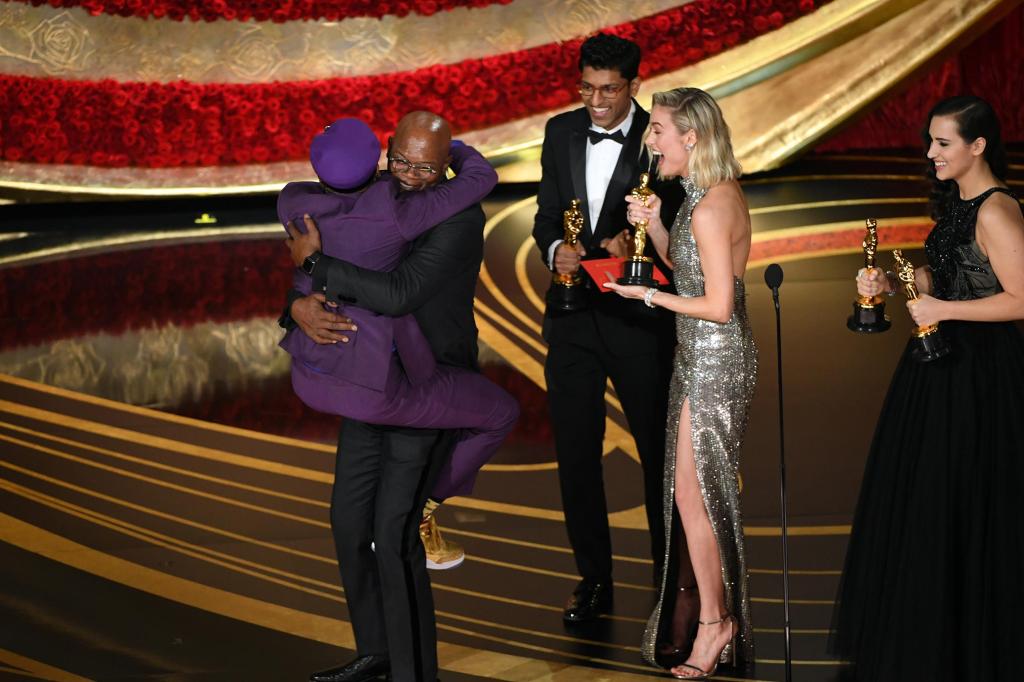
    The Academy Awards were last Sunday, and I think it’s safe to say there were plenty of surprises throughout the night. From the program having no host, to Green Book unexpectedly winning Best Picture, there was plenty to talk over the course of the next few days. Although director Spike Lee supposedly storming out after the Best Picture reveal, and Lady Gaga and Bradley Cooper’s steamy duet made headlines, things that didn’t get as much recognition were the various advertisement campaigns geared specifically towards the Academy Awards audience.

    It’s no secret that we are living in an age of recorded television and streaming services, and people have become impatient in general when it comes to sitting through commercials. Much like the Super Bowl, an awards show such as the Oscars are another example of a live televised event people tune in to in real time, and thus present the perfect opportunity to capitalize on viewers’ attention. While the adverts for the program didn’t cost nearly as much as those for the Super Bowl (according to Variety, 30 second advertisement spots for the Oscars cost between $2-3 million), it was very clear through the commercials’ content that they were advertising directly to the Academy Award audience, especially females.

    One example of this was with Walmart’s ad campaign. It’s known that fashion and style contribute to some of the Oscar’s biggest moments—both on the red carpet and in the award categories. Walmart, one of the night’s sponsors, seized this night of culture and fashion as an opportunity to advertise their clothing lines, while simultaneously highlighting film crew members and stylists who work endlessly behind the camera to make “movie magic” happen. The various commercials reinforced the idea that if ordinary people such as Julia Roberts’, Rami Malek’s, and Chadwick Boseman’s stylists can be glamorous and creative while wearing Walmart, then you can too!

    Another advertisement specifically aimed at women between the awards was a Budweiser commercial featuring Charlize Theron. In the commercial, Theron challenges female stereotypes while drinking her beer in a bar by challenging men to various games (billiards, darts, arm wrestling, etc.). An A-List celebrity, and a beautiful woman at that, was sure to capture and keep the attention of a time-shift-conditioned audience.

    Another Academy-specific ad campaign came from Google. The company utilized clips from various iconic movies, such as 2001: A Space Odyssey, Lady Bird, The Hangover Scream, Jerry Maguire, Deadpool etc., and depicted how the scenarios could have played out differently had Google been present in each scene. The commercials assume that viewers of the Oscars are movie buffs, and know enough about the films to understand the references within the commercials.


    What do you think? Do you believe the advertising efforts between the awards successfully kept audiences engaged? Did celebrities or those closely associated with celebrities influence your opinion about a product or brand featured? Comment below with your thoughts!

    -Audra Bullard

  • Nobody Puts OBJ in the Corner

    The NFL may already be the center of focus during the Super Bowl, but that doesn’t stop them from joining the competition for the most memorable advertisement of the night.

    If don’t watch the Giants play, you may be unaware that Odell Beckham Jr. has become fairly well-known for his touchdown celebrations. See the below highlight reel for reference:

    In a commercial with the slogan “To All the Touchdown Celebrations to Come,”  Eli and Odell take on the epic 80’s classic Dirty Dancing. The two tackled the iconic choreography with near perfect accuracy. Although, admittedly, Odell’s moves are a little more polished than Eli’s, but that just adds to the charm of the ad.

    The goal of the advertisement is to market for the upcoming season by highlighting the fact that, for most teams, the Super Bowl marks the beginning of a fresh start. For Eli and Odell, that means nailing the perfect touchdown celebration.

    The ad is a mix of surprise, nostalgia, and humor, working in unison to secure its spot at the top of the numerous “Best Super Bowl Commercial” lists for weeks to come after the game–that’s free advertising. The cost to run an advertisement during the Super Bowl is worth it if the ad is successful. Not to mention the fact that several of the ads, including this one, go viral online before the game even airs.

    How do you think they did?

    -Katie Solinski