Category: Marketing

  • Anything you can do, I can do better… and cheaper!

    In the world of sports, it is never a surprise to see Gatorade as a major sponsor. Their product has been placed into events including NHL games, the MLB home run derby, and the Super Bowl. With that being said, not seeing Gatorade as one of the official sponsors of the 2012 Olympic games in London was a surprise. The reason for Gatorade’s absence in the 2012 London Games is because Powerade, a product of Coca-Cola, bought the sponsorship for over 100 million dollars and blocked Gatorade out. Gatorade did not fret when they were faced with this challenge. Instead of accepting defeat and letting Powerade run all of the sponsorships and advertising, Gatorade decided to respond with a commercial of their own.

    In this commercial, Gatorade not only openly states that they did not sponsor the 2012 Olympics, but also to spin it into an extremely effective advertising technique. They portrayed the overall message stating that they were not there on the billboards and buses, but instead they were there “for real” inside the best athletes in the world. Gatorade did an excellent job in embracing the fact that they could not officially sponsor the event, but still being present in the advertising and overall experience of the event

    In accordance, Powerade also plays an interesting role in their advertising by pointing out the fact that you may not know the athletes that they sponsor. This brings another aspect to the table that can be compared directly to Gatorade. Everyone knows the big time athletes like Derek Jeter, Tiger Woods, and Usain Bolt who are sponsored by Gatorade; but there are few people who are familiar with the athletes that Powerade sponsors. Powerade decided to base their commercial on the athletes that are not as famous, but the underdogs of the world.

    Coca-cola spent over 100 million dollars to sponsor the Olympics and Gatorade attempted to catch their audience’s attention with one commercial. The bigger the risk, the bigger the pay off, right? So what do you think… did Powerade come out ahead?

    – Alexandra Huss, Caroline Merrill, Alyssa Morrello, Lauren Van Trigt, Dann Williams

  • HubSpot: The Transformation From Outbound Marketing to Inbound Marketing

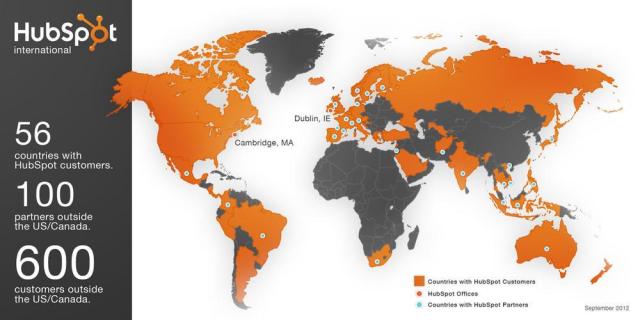
    Among the large variety of social media in today’s society, HubSpot, although not very well-known, has been a major pioneer within its field and has generated great success. HubSpot was created by Brian Halligan and Dharmesh Shah at the Massachusetts Institute of Technology (MIT) in June of 2006 and has been rapidly growing ever since. It is new strategic marketing software that is actively helping over 7,500 companies within 46 countries by generating personal research including blogging, social media, email marketing, etc. Hubspot’s marketing techniques have been used for online companies such as Twitter, LinkdIn, among many others.

    Brian Halligan, one of the co-founders of HubSpot, stated the following in one of his blog posts on the site: “Rather than doing outbound marketing to the masses of people who are trying to block you out, I advocate doing “inbound marketing” where you help yourself “get found” by people already learning about and shopping in your industry. In order to do this, you need to set your website up like a “hub” for your industry that attracts visitors naturally through search engines, the blogosphere, and social media. I believe most marketers today spend 90% of their efforts on outbound marketing and 10% on inbound marketing, and I advocate that those ratios flip.” This is the driving force behind the company today.

    With the competition that is present in today’s business world, it is crucial to have a tactical plan to further market one’s brand. HubSpot achieves this by taking the best inbound marketing techniques and combining them into one spot, which is exactly what HubSpot accomplishes. This innovative tool is not free, but there is a free trial run that one can sign up for prior to buying a full subscription. In a country where the use of social media has increased a whopping 356% in six years, it is no secret that social media is now a competitive market. A company generally needs to be utilizing social media better than their competitors to be successful. HubSpot helps with this because it compares a company to their competitors on a social level and teaches a company how to develop and grow faster than its competitors. It also educates companies on how to create exciting, new content for the public and how to use cross-channel campaigns. These services that HubSpot offers allow businesses to stand out in today’s very crowded business market.

    The proof that HubSpot is effective is in the statistics. Studies show that on average, after three months of use, HubSpot users experience 32% more leads per month and 24.6 times more leads after twelve months of use. In 2011, HubSpot grossed over thirty million dollars in revenue. Internationally, HubSpot is growing at a rate of 200% a year and even has scheduled to open a new headquarters in Dublin in 2013. The opening of this new headquarters is expected to provide 150 jobs for the citizens of Ireland and already employs 300 people in the United States.

    Since the creation of HubSpot in 2006, the company has been quickly evolving. Not only are more companies using it, but the company has provided many jobs in a time where new jobs are a worldwide necessity. With the increase of social media influence in society today, companies such as HubSpot are essential in aiding a company convey its message to a large pool of consumers.

    Sasha De Vecchi, Lindsay Gallagher, Jay Reilly, Cary Welborn

  • I Am.. Authentic?

    What makes an advertisement authentic?  Is it the product, or the ways in which marketers try to make the product seem appealing to you, the consumer?  In today’s society, companies are constantly trying to discover the next great idea that can sell a product.  Whether it is a new logo on the product or a new commercial you see on TV, they are all aiming towards the trend of being considered “authentic.”


    Let’s take this Dr. Pepper commercial for example.  An uplifting ad telling you to embrace your “inner you” by breaking out of your everyday routine and go with the crowd of people that are all doing the same.  What is this commercial really trying to say, that the product is authentic, or the consumer is authentic?  Do people who want to express themselves drink Dr. Pepper?  This is authentic right?  You are going against the norm by showing off your “inner you” and storming the streets in joy.  But in actuality this ad is the furthest thing from authentic.  The entire commercial is just a clever new way that a corporation spent millions of dollars on to get you to buy their product.  They want to appear authentic to consumers because that notion of scarcity and realism is what is driving the consumer market today.

    This is a common misconception among today’s society; the secure feeling of knowing the product you are buying is authentic.  Companies are trying to persuade you into buying their product because of how exclusive and different it is from all the rest; when in actuality, most of them are comparable to one another and the methods they take to explain that to you are exactly the same.

    Dr. Pepper is not the only product employing this notion of authenticity.  It seems that this effort must be working because these products are still thriving.  Are the products you buy and consume daily producing authentic advertisements?  Are these advertisements the reason you choose their brand, their product?  And are these products authentic or are you, the consumer authentic?

    Jessie Butner, Meaghan Beam, Zach Abramo, Jack Lane

  • Does Humor Sell?

    During the 2010 NFL Super Bowl, Old Spice started a new marketing campaign, releasing the above commercial online and on television. It quickly became the “number one all-time most viewed” branded channel on Youtube. How did they achieve that success? By targeting women, who dominate the body wash market, and men with humor, it created for the first time a topic of conversation for couples around the nation. The marketing team also showed the commercials in certain movies where there was a “high amount of couples” were projected to go. So because of the topic of conversation that was generating millions of hits on YouTube, women began to buy Old Spice for their husbands and boyfriends so that they could “smell like the man your man can smell like.”

    But how did this campaign have continued success? Old Spice continued to use the “man your man can smell like” guy and let him interact with fans all over the internet who would ask him random questions that he would answer in his fashion. In one day alone Old Spice generated more hits on Youtube than Obama’s presidential victory speech, on day two he had 8 of 11 top videos on Youtube, and by the end had over 40 million people view his videos.

    The success of this campaign is astounding considering that ; the brands twitter following increased 2700%, Facebook fan interaction went up 800%, and traffic to the Old Spice website increased 300%. This made the bottom line of the company increased 107% 10 months after the release of the first Old Spice commercial.

    Shortly afterwards many companies have tried to have the same success, copying the Old Spice guy commercials to a certain degree but still enjoying some success. By making some of the funniest and memorable commercials of all-time Old Spice increased their brand awareness while making people laugh and had one of the most amazing marketing campaigns for a business ever. So does humor sell? This guy thinks so.

    – Ally WaltonLauren HabigErin KiffmeyerHannah EureGene Lee

  • “Google Chrom-otional”

    The number one purpose of television commercials is to make the consumers believe they need a product. Many companies rely on humor or a catchy jingle to gain interest in their product. Another tactic that can be a tad more difficult to accomplish involves making that emotional connection with the viewers. Evoking an emotional response through the use of commercials has proven especially hard to do these days. It is difficult for companies to make an emotional impact on their viewers with such little air time. Additionally, companies face the difficulty of connecting the commercial’s story-line to the lives of a diverse group of viewers. Despite these challenges, Google Chrome has released a series of commercials that have actually been able to tug at the heartstrings of many viewers.

    These new advertisements not only display all the features that Google Chrome has to offer, but they are also able to leave a lasting impression on those who watch them. This emotional connection Google is able to make with the audience sets their advertising apart from competitors. They do this by using the short time of the commercial slot wisely. Instead of trying to get a jingle stuck in your head, they create what could be described as incredibly short films. By telling the audience a story, Google does more than show the audience a product. The audience feels a connection with the characters in the commercial. This type of connection is what Google is counting on. Their slogan “the web is what you make of it” gives the consumer the creative freedom to express themselves in any way, shape, or form. It challenges us to showcase our thoughts and to put ourselves out there in a way that has not been possible before. This is Google’s way of saying, “look what has been done, what will you do?”

    Google has also conquered an even harder challenge with this advertising campaign. Making superstars relatable is a challenge many people face working in the entertainment industry. Google managed it in just around one minute. One might think using Lady Gaga as a spokesperson would make a product seem out of touch with this world. However, Google focused in on how she draws support from her fans and showers them with love. All the while she is encouraging them to be who they are. It is hard not to be a Lady Gaga fan after watching the video. This is what makes Google Chrome’s campaign so successful. Not only does their product look good and have celebrity endorsement, the celebrity also looks good and the fans feel included in the production of the commercial as well. Everyone wins.

    Google Chrome has also recently made a commercial depicting the interaction between a father and daughter. The daughter, Jess, is struggling to find her place away at college and her father is her main support system as her mother has passed away. The commercial demonstrates the benefits of using Google Chrome to communicate and presents the ability to support loved ones even though they may be miles away. This commercial touches not only the hearts of homesick college students but also the parents suffering from empty nest syndrome. Suddenly, Google Chrome is a light in the confusing darkness and it can satisfy all of a family’s communication needs. Again, everyone wins.

    Google Chrome has taken a risk by using an emotional appeal in their recent commercials, straying away from the many humorous or just downright strange commercials aired today. The integration of Google Chrome as an instrument to change human behavior is a major move on Google’s part. The notion that we can use Google Chrome to improve the way we live our lives is bold, but after all… the web is what you make of it.

    Alexandra Huss, Caroline Merrill, Alyssa Morrello, Lauren Van Trigt, Dann Williams

  • Walmart: A Rebranding Genius.

    Consumers all over the world are becoming more savvy and sophisticated with each passing year. In order to survive in today’s marketplace, companies have to update and revitalize their identity while retaining brand equity. This is the unavoidable challenge that companies must face. Brands are struggling to maintain relevance in the eyes of evolving consumers and even the most established companies have to undergo brand re-inventions. Losing loyal customers in an effort to attract new ones is always a pitfall of making a possible change for the worse… but that’s just a risk many brands are willing to take.

    Walmart had one of the most successful rebranding campaigns ever. It is the world’s largest retailer and one of the most distinguishable brands in history. Since its first store opening in 1962, Walmart has evolved from a rural American company to a globally recognized corporation. Historically criticized for having hostile corporate practices, mistreating employers, and being a target for environmentalists, Walmart reconsidered their brand identity and took action in creating a fresh image for their company.

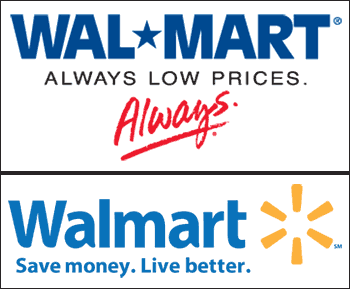
    In 2008, Lippincott brand designers developed a strategy to shift the focus of Walmart from just low prices to an overall positive shopping experience. They unveiled the new tag line “Save money. Live Better.” to highlight the emotional benefits of shopping at Walmart. They hoped to get the message across to consumers that spending less allows people to live better lives, not only save money.

    Image

    A new logo and innovative store design was also implemented. The logo no longer showed a choppy, antiquated Wal-Mart; it now showed a fluid, refreshing Walmart. The star in between all caps was replaced by a bright orange starburst for a finishing touch. The new store design included higher ceiling, lower shelves, wider aisles, and a color palette of vibrant orange, yellow, and green. The signaling of Walmart’s appetizing products in the grocery department and the creation of a more enjoyable and friendly shopping environment was the goal of the new design.

    Image

    This rebranding campaign proved to be a tremendous success for Walmart. The customer ratings for how “clean,” “fast,” and “friendly” Walmart is increased radically between 2008 and 2010. Not even the Walmart haters can deny that in the world of branding, Walmart takes the crown.

    Erin Kiffmeyer, Hannah Eure, Ally Walton, Lauren Habig, Eugene Lee

  • Remember When… Cupcakes Were Just for Kids?

    Think back to your elementary school days.  Were you one of the “lucky ones” whose birthday happened to fall on a school day?  If your parents were anything like mine, this probably meant having the honor of bringing your class a huge batch of store-bought (or on the rare occasion, homemade) cupcakes.  Right now you’re probably picturing them, covered in sprinkles and icing that turned your mouth bright colors, maybe decorated with plastic Barbie or Spider-Man rings that everyone would wear for the rest of the day.  Back then cupcakes could make you king or queen for a day, at least in the eyes of your classmates.

    Image

    Nowadays cupcakes have a different reputation.  An exceptional batch could win you $10,000 and instant fame.  Thanks to television programs that highlight the new art of cupcake baking, these mini treats are taking the country by storm, and it’s not just the kids that are buying in.

    In 2010, the show “Cupcake Wars” began airing on the Food Network.  Each episode brings together 4 top-rated cupcake bakers from across the country to compete for $10,000 and the chance to debut their cupcakes to crowds of America’s elite at events such as awards shows and charity parties.  The list of ingredients these bakers are given ranges from fruits and nuts to chili peppers and vodka and the finished products are a far cry from the yellow cake and chocolate icing of our childhood.

    The popularity of cupcakes is rapidly spreading and the evidence is popping up in cities nationwide.  Cupcake bakeries that specialize in traditional, exotic, and chic flavors are now conveniently located next to your favorite coffee shops and boutiques.  These bakeries are rebranding the phenomenon of the cupcake with unique flavors and styling that aim to please a more adult crowd.  Not only are they a pleasure for the palate, but cupcakes these days are like a new accessory.  They can be as high-end as the bakeries that produce them and the clientele that consume them.   A cupcake bakery called Georgetown Cupcakes, also famous for a television show that airs on TLC called “DC Cupcakes,” has catered to clients such as Kim Kardashian.

    ImageHowever, it’s not just the ingredients or the celebrity that make cupcakes more appealing to adults.  Now, anyone over the legal drinking age can partake in fine cupcake-inspired wine and vodka produced by Cupcake Vineyards.  Why not pair your cupcake with a glass of wine?  Bakeries and other specialty shops now host cupcake and wine tasting events where adults can mingle and the two indulgences can be enjoyed side by side.

    So is this new trend something to expect from all of our childhood favorites? Will popsicles be the next big thing?  Leave it to the media to help us decide.  Until then we might as well have our cake, and eat it too. Bon appétit!

    Ally Walton, Lauren HabigErin Kiffmeyer, Hannah EureGene Lee