Category: Marketing

  • The Old and The Reckless

    The commercials from last Sunday’s Super Bowl have been flooding social media sites as they get passed around by friends. The Taco Bell “Viva Young” commercial has been  particularly popular with over two million views on YouTube. The commercial starts with a nurse at a retirement home putting an older man to bed. Then the old man sneaks off with friends to acquire the life of the young and, of course, “Fourth Meal” at Taco Bell.  This unusual group of pranksters are seen pool hopping, lighting firecrackers and even getting down in the clubs. The group building up a hunger ends their night at the Taco Bell Parking lot, and walking back to the retirement home as the sun rises. The song “We Are Young” by Fun, is played in Spanish (of course)to maintain brand continuity. Interestingly, that particular song became popular during last year’s Super Bowl; when it appeared in a Chevy commercial.

    While watching the game, a friend said “talking babies and crazy old people always make the best commercials”. It is interesting to me that the most entertaining commercials are based on events that do not happen often (or at all!) The concept of “old folks” having partying hard and reliving their youth is entertaining and hilarious. This idea has been used before; the artist Modestep released a music video for their song “Sunlight”. This video was posted on YouTube on July 3, 2011 and has over twenty-two million views. The Modestep video has the same idea as the commercial but is not censored by the FCC. The Taco Bell commercial is a “clean” version of this music video as much of the material is not suitable for U.S. television. It Is remarkable to see music culture influencing the types of commercials we see.

    The stylistic features of the commercial and music video are similar. Certain aspects, such as the shot angle and exposures, are close to the same. The idea of the older people going crazy and partying hard that Taco Bell portrays take you by surprise, particularly while considering that most of the commercials promoting their unique concept of “Fourth Meal” have been targeted to their younger consumers (who are more likely to be up late). This commercial appears to actively debunk the stereotype that elderly people are typically in bed by nine. It is interesting to see the commercial feature a group of people who may or may not consume Taco Bell given the primary target audience of most Super Bowl ads. Is this an opportunity for Taco Bell to expand to more mature (or not-so-mature) markets or just another opportunity to entertain the younger population at the expense of the older one? Regardless it is a reminder to “Live Mas” and while doing so, fill your hunger with Taco Bell.

    – Zach Abramo, Callie Fenlon, Lauren Habig,  Alexandra Huss, Michael NunesDaniel Schaefer, Dann Williams

  • The Super Bowl of Advertising

    You know what they say – “the best part about the Super Bowl is the commercials”. From the Budweiser frogs, to the GEICO Gecko and even Maxwell (the little piggy who cried “whee whee whee” all the way home) we are constantly receiving messages through creative entertainment. Whether or not you tune in for the game or the ads on Super Bowl Sunday  it’s inarguable that there are only a handful of other events that have the capacity to attract this much attention from such a large audience. Football fan or not, Super Bowl Sunday is all about packing into a room full of friends and family and eating Doritos, Dominos or wings from Buffalo Wild Wings while drinking a nice cold Budweiser. The circumstances surrounding this iconic American tradition combine to create an ideal environment for marketers trying to sell their products. Millions of diverse viewers will tune in and inevitably be bombarded with advertisements targeted to all ages and demographics; an opportunity that advertisers eagerly await all year.

    That being said, it is pretty obvious that many big-name brands would benefit by planning huge advertising campaigns strictly designed to run during the Super Bowl. In the past it was imperative that these commercials were kept a secret until their grand unveiling during the big game. However, with the recent explosion in popularity of social media and internet video viewing platforms, things have taken a slight shift. Many of the advertisers supporting this year’s Super Bowl are now releasing “teasers” designed to increase anticipation of the full ad, as if these commercials were full-length feature films… and it doesn’t stop there. Some of the companies released the full edition of their Super Bowl commercial as early as three days before The Big Game. Well… that doesn’t make it much of a Super Bowl commercial, does it?

    So now that these companies are releasing their special campaigns pre-Super Bowl, viewers will have the pleasure of seeing ‘Super Bowl’ advertisements running up to a week early. Some of the main sponsors created interactive campaigns in order to pre-determine which of their advertisements would resonate best with viewers. Doritos ran a “Crash the Super Bowl” contest where viewers voted for their favorite fan-submitted video to “win” and be played during the game. Similarly, Coca Cola varied from this strategy by releasing a teaser but letting the fans vote on the ending.

    Doritos-goat

    At the end of the day, there are successes and failures in the Super Bowl advertising process. From a marketing standpoint these ideas are pure genius. Directly involving the audience, either through voting or asking for audience submissions, builds the brand’s relationship with its consumers and brings more attention to their product. So for those of you with a pre-game tradition, you might want to begin by preparing yourselves for the commercial invasion that America likes to call the Super Bowl.

    – Michael NunesAlexandra Huss, Zach AbramoCallie FenlonDann Williams, Daniel Schaefer Lauren Habig

  • What’s That Doing There?

    After a long day of work or school most of us like to sit down and shut off the batteries. Some people (including myself) do this by
    enjoying a nice beverage and turning on the Netflix. The appeal of a service like
    Netflix is, of course, the elimination of the commercials that disrupt our viewing
    pleasure on live T.V. One night, I sat down and turned on The Office, I was
    instantly bombarded with company logos and products. As the actors go about
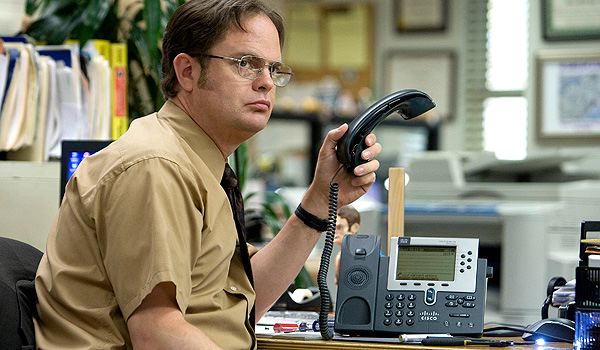
    their typical work day, the camera conveniently focuses on the Cisco Systems
    Telephone on Dwight’s desk and the HP logo on the computer that Pam uses as she
    hides behind her desk. These logos are not in the frame by coincidence, but
    rather they have been carefully positioned by the show’s producers. This discreet
    advertising strategy is known as product placement.

    Business dictionary defines product placement as “an advertising technique used by companies to subtly promote their products through a non-traditional advertising technique, usually through appearances in film, television, or other media.” This form of advertising is initiated through an agreement between a product manufacturer and whichever media company owns the program featuring the product. In the vast majority of product placement agreements the media company receives economic benefit as the manufacturers often pay a fee to have their product (or brand name) used, mentioned, or significantly featured in a program.

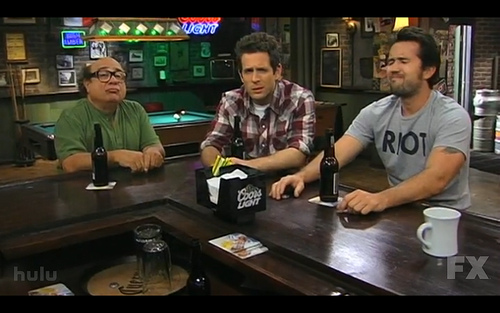
    Product placement is everywhere. A few notable shows that are known proponents of this technique are American Idol (Coca-Cola cups for all judges), It’s Always Sunny in Philadelphia (Coors Light consumption and signs prominently placed in the bar), and 30 Rock (which features multiple Apple products.) This form of advertising has been around for years and will continue to thrive as long as people keep consuming media. In this way, companies continue to ensure that viewers have plenty of exposure to their product, even if certain audience members have learned to maneuver around those pesky commercials.


    Michael Nunes, Daniel Schaefer, Lexie Huss, Zach Abramo, Callie FenlonDann Williams, Lauren Habig

  • Thankful for Thanksgiving Brands

    Thanksgiving means lots of different things to different people.  For some, it is a chance to celebrate all that we are thankful for, for others it is an opportunity to reflect upon our nation’s beginning. Most people use the occasion to reconnect with family and friends but there is one unifying factor that drives the anticipation for all: the food.

    From the first Thanksgiving in 1612, dinner has been the highlight of the event.  While it’s not likely that our founders dined on what is now considered to be the “traditional” Thanksgiving feast, they were no doubt thankful for the bounty. Today, it is not only the food that drives the holiday, but the brands that continue to supply our Thanksgiving favorites through the years. Thanksgiving staples include: stuffing, green bean casserole, mashed potatoes, cranberry sauce, rolls and, of course, Turkey! And don’t forget to leave room for the Pumpkin pie.

    (picture credit to UVA.edu)

    Most would agree that it’s just not Thanksgiving without a turkey, and Butterball has been providing the Thanksgiving bird since it was founded in 1940. Today, Butterball is the largest turkey producer in the U.S, providing 20 percent of the total turkey production in the country. Another brand essential to Thanksgiving dinner is Kraft. Kraft, which was founded in 1903, not only provides the Stove Top brand stuffing that complements the turkey so well, but Kraft also makes the French-fried onions that no green bean casserole would be complete without. Ocean Spray serves as the go-to brand for anything cranberry, including the cranberry sauce on your Thanksgiving table, and when you need something to soak up the extra gravy on the plate, chances are you’re reaching for a Crescent Roll – courtesy of Pillsbury. Finally, the Libby’s canned food brand has been around since 1869, and Thanksgiving chefs all over the country swear by their canned pumpkin in the perfect Pumpkin Pie recipe.

    Just thinking about this tried and true combination of Thanksgiving brands is enough to make most people’s mouths water! So abandon your diets, put on your elastic-waisted pants and cut another slice of Turkey, Thanksgiving only comes once a year!

    Happy Thanksgiving and Bon Appetite!

    Lauren Habig, Ally Walton, Hannah Eure, Gene Lee, Erin Kiffmeyer

  • “Dare to Soar”

    Colleges and universities are places that can unify people from all over the world.  They have sports, clubs, fraternities and sororities, honor societies and many other groups and opportunities to unify the student body.  Another way schools have started to unify people is with words.

    This year will be the first year with Gary Miller as the chancellor of UNCW.  When he was inaugurated in early May 2011, Miller brought with him a new way of thinking and a new school slogan: “Dare to Soar.”  With this new slogan, Miller wanted to try to echo the school motto, which is “dare to learn,” and bring students together in hopes of achieving higher goals than were previously set.

    Image

    Miller hopes that this new slogan will help build the UNCW brand.  The school already has a very solid brand because of its academic values and Miller hopes this new slogan will further better the brand name.  He hopes that this new slogan will show an aspiration to reach higher goals in the future and reflect the soaring growth of our school.

    As UNC Wilmington students, we noticed the attempt to unite the school and motivate the student body with words. There are many other schools which have created slogans that have utilized powerful words that were intended to convey specific messages to students, faculty, and the community surrounding these colleges. After the shootings at Virginia Tech, the school used the words “Together We Stand” to make sure that the students who had survived the horrific events could all unite to get through the tragedy.

    Some words have been associated with certain campuses for decades. Harvard University, for instance, has the word “veritas” written across the university arms. Originally, the phrase was long and dealt with the truth of Christ and the church. However, today the campus has changed the motto to simply mean “truth” and is a reminder of the morals and standards at Harvard.

    Image

    Many campuses attempt to bring these powerful phrases onto their campus to motivate and unite their students. The question is, do these words always create the campus environment that they are trying to create? Are these words really powerful, or are they just trying to be powerful? How long will the students remember these slogans and mottos?

    Zachary Abramo, Meaghan Beam, Jessica Butner, Jackson Lane

  • Less Cancer, More Birthdays

    “Imagine a world with more birthdays.” Everyone loves a birthday. Birthdays mean parties, presents, cake, maybe a few libations followed by the possible dancing, and just overall merriment. Birthdays celebrate life and represent another year in the world. It is pretty agreeable that birthdays insinuate a good thing and have an overall positive connotation. The American Cancer Society, which hosts Relay for Life-a walking event that is held across the nation and raises millions a year for cancer research and resources, has taken this phrase and integrated it into their marketing campaign to make people rally behind their cause. Now the phrase, “Imagine a world with more birthdays” has an even greater, even tear-jerking message. Imagine a world with less loved ones passing away from cancer and more people being able to be merry and on earth for another year.

    As the designated “Official Sponsor of Birthdays” the American Cancer Society takes hold of the emotional appeal of connecting their cause to everyday life.  The American Cancer Society uses slogans such as “Happy Birthday is a victory song,”  “A world with less cancer is a world with more birthdays” and many others to very effectively draw people into raising funds for the events.  Connecting something scary, like the often terminal illness of cancer, to the happy annual event of celebrating a birthday, something that everyone has, is a very innovative way to put the American Cancer Society’s cause at a relatable level for all.  Everyone may not have cancer, but everyone has a birthday.

    The fact that the American Cancer Society markets their events as a general celebration of life in general makes it appealing to those with cancer or those who have survived cancer because they are fighting and have fought to live and have more birthdays.  It also makes it appealing to those who haven’t had cancer because they get a chance to really celebrate, be grateful for their health, and the fact that they have been able to celebrate their birthdays without fear of them being shorthanded by cancer.  Finally, the message really digs emotionally when it comes to a person who has had a loved one pass away from cancer.  How amazing would it be to be able to celebrate one more birthday with that special person?


    As a society, we understand that messages are being thrown every which way to try to get us to do something.  While the American Cancer Society could use a percentage or amount of money to help get people to support the cause of cancer prevention and awareness, instead they opt to display their organization as one that can bring an immense amount of hope to all audiences.  It’s safe to say the proof is in the pudding.  The American Cancer Society’s Relay for Life had an astonishing 4 million participants and raises about 400 million dollars a year.  With a marketed identity of one that sponsors overall joy, the American Cancer Society has struck a chord causing a strong continued success that many charitable organizations long for.  Happy Birthday must be victory song after all.

    – Alexandra HussCaroline MerrillAlyssa MorrelloLauren Van TrigtDann Williams

  • To Sponsor or Not to Sponsor: That is the Question.

    Currently, one of the biggest trends in music is the presence of music festivals. These festivals host a number of bands from all different genres, pulling large audiences of varied consumers in to enjoy the shows. Festivals are generally a couple of days long and promote a laid-back lifestyle complete with camping tents and hammocks. We can thank Woodstock for this specified musical platform. However, is it also a platform for something else? In recent years, music festivals have also hosted a number of sponsors, who market their brands by simply surrounding festival goers with advertisements and products.

    But what is the benefit for companies that sponsor these events? Since companies spend time and money to become an integral part of the festival atmosphere there must be some sort of profitable gain. The major draw for companies is the audience. Generally speaking, attendees are in their late teens to late 20’s. This generational demographic, once targeted, are often very loyal consumers to their favorite brands. Companies hope to capitalize on this while festival-goers are having a good time, enjoying the music, and are open-minded. This audience is also very important because they have a larger disposable income than most. The ability to spend upwards of $400 for a two day music festival, says to companies that this demographic is, for the most part, either affluent or avid consumers.

    However, there is also a downside to being a sponsor at one of these events. Companies have to be very aware that if the audience does not perceive their product as one that coincides with the overall experience and atmosphere of the festival then they will either be completely ignored or considered an annoyance. For instance, a brewing company will do a lot better and be viewed much more positively than a law firm or insurance agency. In order to be successful as a sponsor you have to ensure that your product will enhance the mood, environment and fit the audience profile.

    One of the best examples of sponsorships working harmoniously with the specific nature of music festivals is Firefly, which was held for the first time this summer in Delaware.  Firefly made all of their vendors and sponsors local companies who brought a higher class of food and drink to the campsites. Instead of bombarding attendees with big named company sponsors Firefly chose to keep the music festival experience more authentic. Dogfish Head, their beer sponsor, even unveiled a new brew named the “Firefly Brew.” The event also had a TOMS Shoes tent, where you could purchase a pair of canvas slip-ons to be painted on-site by a local artist.

    Firefly was successful because they accompanied their musical line-ups with relevant sponsors, which in the end created a newer, more evolved and authentic version of a music festival experience.

    Lauren HabigHannah EureErin KiffmeyerAlly WaltonGene Lee