Category: IMC

  • Out With The Old, In With The New: Technology Decides It All

    Everyday you as a consumer are exposed to hundreds of thousands of brands. Over the decades the shopping industry has exploded with most brands disappearing at the same rate new ones appear, yet some brands have stood the cluttered test of time – one of those is Macy’s.

    Created in 1858 by Rowland Hussy Macy the Macy’s store was originally a dry goods store. Macy’s started to gain notable recognition in the 1900s with its holiday window displays and the hiring of Santa Claus for the stores. In 1924 the store moved to its current NYC location, on the corner of Broadway and 34th Street. This year was also the first Macy’s Day Parade, which was organized to celebrate immigrant employees new American Heritage.

    macys6n-2-web

    In 1944, Macy’s became apart of the Federated Department Stores, Inc., renamed Macy’s Inc. creating the world’s largest department store. Today, Macy’s has 800 stores in the United States and sells merchandise online.

    Macy’s isn’t the only iconic retailer – Sears Roebuck ring a bell? Starting in 1886, the mail order company prospered as it was able to provide low cost alternative to farmers. As mail order plants transitioned into stores, Sears found their place in city life and the retailer soon became a retailer giant. Today the store owns 863 mall-based operations and 1200 other locations including hardware, outlet, tire, and battery stores.

    sears catalogue

    Nowadays Macy’s and Sears are direct competitors, but it seems Sears, the company who invented mail order, can’t quite figure out online order.

    Holiday sales account for a large indicator of profit margins and often depict the health of a company. Sears seems to be in critical condition – US stores suffered a 9.2 percent drop. In decline for some time now, and with little to no improvement, some speculate the store could be gone by 2017.

    The history of an iconic brand is something that should be cultivated in your identity – it induces credibility, shows longevity, and prompts nostalgia. Yet being historic isn’t merely enough to remain vibrant. Iconic companies remain iconic because they are able to cultivate lasting relationships with consumers – at all time periods – and that means evolving.

    Looking at each retailers attempt to reach customers during the holiday seasons could explain Sears 9.2 percent drop in sales. Both have social media accounts, yet social media presence is widely disproportionate. Macy’s Instagram account has 150,00 followers while Sears has two Instagram accounts – “Sears” and “Sears Style” – yet both of the followers combined don’t even reach 8,000. A huge missed opportunity for Sears – Instagram is leading the way in social media, growing faster than Facebook, Twitter, and Pinterest combined.

    According to Gary Vaynerchuk’s article “The Road to Black Friday: Macy’s vs. Sears”, the use of social media by Sears is lazy. Choosing to ignore the social media culture they have posted irrelevant and uninteresting content such as a link to one of their commercials and an original YouTube video. While Macy’s post content that is culturally relevant, trendy, and formed around pop culture.

    Our culture today has switched, as James Twitchell describes it, “In the last generation we have almost completely reversed the poles of shame so that where we were once ashamed of consuming too much (religious shame), we are now often ashamed of consuming the wrong brands (shoppers’ shame)”. In this day in age a brand establishes and remains relevance by relationship cultivation, reinforcement, and engagement forged through technology – the Internet and social media. It seems Sear’s inability to adapt to technology has prevented them being able to participate in the younger crowds culture leading in profit and brand influence. As an American brand we hope Sears can get back into the groove but as they stand now they are the weakest link.

    In what other ways do old brands stay new? Can you think of any others that have had a hard time capturing new generations of shoppers? Or others that have done well?

    Caroline Robinson, Savannah Valade, Elizabeth Harrington

  • “Dumb Ways to Die” Campaign—Dumb Enough to Work?

    What do you think of when you hear “Australia”? Accents? Kangaroos? The Great Barrier Reef? Wouldn’t it be nice to be there in lieu of the recent frigid weather? I bet two things no one would ever put together is Australia and train safety, but you probably will after seeing the two awareness commercials Australia has recently released for the Melbourne Metro.

    In 2012 “Dumb Ways to Die” was launched as a train safety PSA. The three-minute animated spot features personified blobs making outrageously stupid decisions –  setting your hair on fire, eating out of date medicine, using the clothes dryer as a hiding place, selling both kidneys on the Internet. With these demonstrations, comes a catchy song that illustrates each scene as it unfolds. At the 2:24 mark, the audience is introduced to train safety in which the dumbest ways to die are: standing on the edge of a train station platform, driving around the barrier at a railroad crossing, and running across the tracks.

    This year, another PSA spot appeared just in time for Valentine’s Day. Titled “Dumb Ways”, the second video – this only ones 30 seconds – features the blob from the original spot who died from selling both his kidneys on the Internet and replicates the format of the first spot with the simplistic design elements, characters, and tune. Even though the new spot has absolutely no correlation with train safety, the advertisement’s copy reads “Be safe around Valentine’s Day*” and in smaller font, “*and trains”.

    With the release of the newest Valentine spot, it is obvious that McCann Melbourne realized the success first 3 minute spot reached with over 71 million YouTube views. However, the Valentine Day advertisement is relying on the presumption that the viewer has already seen previous campaign efforts, which include radio, print and outdoor advertising. The campaign even has some interactive media such as a fully functioning website and a mobile phone game app that offers short mini games where you can save the characters from their “dumb” deaths.

    There is no denying that the whole campaign is undeniably cute and captures attention, but the question is, is this direction effective?

    When asked about the creation and initial vision of the campaign, John Mescall, McCann’s executive director, said this, “The idea for a song started from a very simple premise: What if we disguised a worthy safety message inside something that didn’t feel at all like a safety message? So we thought about what the complete opposite of a serious safety message would be and came to the conclusion it was an insanely happy and cute song.”

    metrotrain_2

    What Mescall is describing is the use of logical fallacy or in our case irrelevant points. Usually the use of fallacies in an argument or message weakens it, but Mescall used it to his advantage, strengthening the impact.

    One logical fallacy, argumentum ad baculum, is an argument that uses threats or forces to cause the acceptance of the conclusion. Example: “Do this! Or ____ will happen!” “If you don’t this, ____ will happen!” The Dumb Ways campaign uses this fallacy’s appeal to fear in the explicit form of death – if you do these activities in the ad you will die – to remind people of the need for train safety.

    In addition, another logical fallacy is also used – red herring. In this type, a fallacy of diversion is created where irrelevant arguments or information is introduced into a discussion in order to divert people’s attention away from the issue under discussion and towards a different conclusion. No one needs to know all the dumb ways to die; almost all of the scenarios are things that are common sense. Except for the last 30 seconds, none of the scenarios are relevant to educating people on train safety.

    Over a year after the original launch of the “Dumb Ways to Die” commercial, the campaign has grabbed the attention of the world, educating all of us on train safety. What do you think of this PSA? Do you think the campaign could have been stronger if the agency had gone in a different direction?

    Savannah Valade, Elizabeth Harrington, Caroline Robinson

  • Marc’s Makeover: Marc Jacobs’ decision to rebrand… is it the right one?

    Deciding whether or not to rebrand your company is an immense decision. Your brand is the face and personality of your company. It is what viewers connect with. Changing this identity will greatly affect your company, but if done right the market can soar.

    Fashion designer Marc Jacobs has decided it is time for his company, Marc Jacobs International to rebrand. In an interview with David Amsden from W Magazine Jacobs explains the troubles the Marc Jacobs brand had encountered. Describing the brand as having been “diluted” from his lack of creative supervision and merchandisers pushing his design team.

    In order to fix this Jacobs decided to leave his position at Louis Vuitton to grow his company, which includes boutiques, clothing lines such as Marc by Marc Jacobs and Little Marc Jacobs (a children’s clothing line), Bookmarc (a bookstore), and more.

    Some changes have already taken place such as his decision to move his offices from Manhattan to London and his decision to part with longtime campaign photographer Juergen Teller after he creatively disagreed on the Spring 2014 ad campaign which features Miley Cyrus. 

    marcmiley

    So what is Jacobs looking to do? He’s looking to redesign the logo and packaging, to build his shoe and handbag lines, and maybe even change the name, which he told W Magazine that he had always hated.

    Rebranding can be daunting between redefining research, audiences, creative campaigns, and even products, but for those experiencing continuous losses, it is often the best way to launch back into the market.

    In recent years, another clothing line, Burberry, underwent a widely recognized successful rebranding campaign. Over the years, the British line went from being known for its historically iconic outwear, to being associated with cheapest form of high fashion, and even gang wear.

    In 2006, the company hired Angela Ahrendts and in the next six years, she turned the ubiquitous brand back to luxurious. First, Ahrendts did what she called “buying back the company.” Reigning in the 23 licenses Burberry had around the world, control was brought back to the company with centralized executive and creative offices that could maintain product authenticity and exclusivity.

    Secondly, Ahrendts recognized we are in the age of digital consumption and a digital generation – tapping into the resources social media and technology offers. In stores, sale assistants are equipped with iPads, and mirrors transform into screens displaying catwalk images. Online, the company continues to grow its presence, attracting over 16 million fans on Facebook, and over 2 million followers on Twitter. Burberry also uses YouTube to broadcast campaigns, events, music, and even corporate news. 

    However, rebranding is not exclusive to high profile companies, the challenges above are things that can be experienced in all types of companies: personal, mid, or large. So how do you know if you should rebrand your own company? From Katie Morrell’s article “10 Signs You Should/Should not Rebrand” here are some warming signs that your company should rebrand.

    Macro problems

    Maria Ross, author of Branding Basics for Small Business: How to Create an Irresistible Brand on Any Budget (2010, Norlights Press) suggests that if a company notices that their target customers are choosing the competition over their own company and if a decrease in sales is also trending, rebranding should be considered.

    Look and function don’t match

    Another element that should be considered when having a decrease in customers is “From a cosmetic point of view, when you look old and your looks don’t reflect what you are or what you deliver, it may be time to rebrand,” said Susan Betts, senior strategy director for New York-based FutureBrand North America.

    Attracting the wrong customers

    Rebranding is beneficial when a company wants to change their target customers. It gives a company an opportunity to create a new brand identity that the new target audience has the chance to connect too.

    Management change

    When a company changes management, it is normal that policies and values change as well. When a companies values change, rebranding is a good idea.

    Philosophy/function change

    When a company changes it’s direction, rebranding can showcase to customers what they may or may not be aware of concerning this change. Betts also mentions rebranding should be considered when a company has a “New philosophy or a changed philosophy”.

    These signs are great examples to take heed from, but it is important to note rebranding should not be done unless it has been proven your brand identity is the root of your problems. Branding is the largest initial investment for a company, it sets the spring board for your identity, association, and customers. Rebranding is an even bigger investment – an attempt to reintroduce ideas to already established and preconceived perceptions is no easy task, it is one that must be thoroughly strategized. For Burberry, reigning in and refining their identity proved to be the best decision the company has made. For Jacobs, we will see what his creative vision produces.

    What companies do you think have faltered recently or over the years? Who needs to rebrand?

    Caroline Robinson, Savannah Valade, Elizabeth Harrington

  • P&G Sochi Countdown Ends Today!

    Grab your patriotic gear and set your TV recordings—the 2014 Winter Olympics begin today! While the official opening ceremony will not be held until tomorrow, the first five events of the Olympics are being held today. As the world has anxiously been awaiting the kickoff to the winter games, official sponsors have been preparing promotional material for months in order to promote their brand in conjunction with the Olympics.

    One of the Olympics’ worldwide partners, Procter & Gamble, created an entire “Thank You Mom” advertising campaign for the 2012 London Olympics, thanking moms for their hard work and dedication in assisting their children to become Olympic athletes. Whether it was waking their children up for early practices, or simply driving them to training sessions, the campaign highlighted the mother’s supportive role of the athlete’s journey to worldwide success.

    This year, P&G won over the hearts of many with an emotional second chapter to the campaign, titled “Pick Them Back Up”, specially crafted to promote this years Winter Olympics. Check out the video below.

    Tear-jerking, right? Since its premiere during the Golden Globes, the video has gone viral and has been viewed over 13 million times on YouTube. With the slogan, “For teaching us that falling only makes us stronger,” the commercial effectively hits America’s soft spot by thanking mothers for encouraging their children to pick themselves up after they fall and keep working towards their dreams.

    In addition to the heart-warming tribute to moms, P&G also created feature videos on specific 2014 Winter Olympic athletes and their mothers. Each video gives the world insight on the athlete’s unique journey to the Olympics, and the backbone behind their success—their mom.

    P&G strategically incorporated pathos into their campaign in order to entice and persuade viewers using an emotional appeal. By inviting the world into the Olympian’s lives and sharing their stories, P&G gives viewers the chance to connect and relate to the athletes on an emotional level before the games begin. We watch as the future Olympians stumble, fall, get back up and push forward on their journey to become professional athletes.

    untitled

     The commercial gives the audience an opportunity to join and follow this year’s Olympians on their path to success by utilizing elements of pathos. The story has all of the warm and fuzzy emotions people typically like to see: smiling babies, determined children, great triumphs and most importantly, supportive mothers. After viewing the video and witnessing the athlete’s triumph over hardships, we feel the emotional obligation to follow the stories of the current Olympic athletes.

    “A mom’s love of a young child who is an athlete is a universal emotion,” Vice President of P&G said about the advertisement, “These commercials create positive feelings. When consumers think about the brand, the feelings will transfer over.”

    With the special “thank you” being directed at moms everywhere, the idea is that parents and children will want to immediately run to one another and share a misty-eyed hug. P&G  wants to associate themselves with the inspiration that accompanies the supportive relationship between a mother and child, as well as provide an opportunity for the viewer to join in on this feeling.

    P&G has done an incredible job  branding themselves as a family-valuing company. Through the newly released commercial for the “Thank you, Mom” campaign, that began back in October 2013, P&G has reinforced consumers that they believe in family and are devoted to all of the hard working mothers in the world. In the first video in the campaign P&G stated, “The hardest job in the world, is the best job in the world. Thank you, Mom.” This campaign has become one of the largest multi-brand activations in the company’s history. P&G is delivering their brand message for the Sochi Olympics through a variety of media channels globally.

    Marc Pritchard,P&G CMO, states that the focus of their marketing tactics have shifted predominantly to the internet. “I really think about it as digital first. We think of search and social and video and display as the first focus. That’s where our consumers are spending their time” stated Pritchard. The campaign has already been a huge success through its emotional components accompanying the Olympics to market its products’ relationships with consumers, especially to the mothers of the world.

    By incorporating pathos and reinforcing their family brand image using mothers as a focal point, P&G aims to increase brand propensity within their target audience. They hope that connecting to the audience on an emotional level, and in conjunction with the Olympics, will persuade consumers to chose their brand over their competitors. Do you think this ad worked? Does this campaign make you want to watch the Olympics?

    -Briana McWhirter, Emily Foulke, Hannah Turner

  • You can’t have your Coke and drink it too

    It’s one of the pillars of successful marketing, target your audience. Individualizing ads to particulars groups or regions of consumers ensure that messages have the most impact. But what happens when a company features a controversial scene in a spot, then removes it for some audiences and not others? Good marketing move or failure to take a stance?

    In its newest global campaign, “Reasons to Believe” Coca-Cola set out to inspire consumers that no matter what happens in life, it’s those small happy moments that make life worth living.

    Check out the commercial below.

    In most European countries the ad contains a scene of two gay men holding hands in front of their wedding party. However, in the Irish version (the video below) the scene has been replaced to feature a bride and groom.

    The Irish LGBT publication, EILE Magazine, brought attention to the issue, calling the removal an “inexplicable move”. In response to the criticism, Coca-Cola said that the advertisement had been tailored to individual markets so that the ad resonates with the people in each country where it is shown. The company defends the decisions saying that grooms were excluded from the Irish version because gay marriage is not legal in the country. EILE Magazine claims the Coca-Cola reasoning moot. The footage of the two grooms is known to be a video clip from a same-sex union ceremony in Australia – equivalent to a civil partnership in Ireland. Yet gay marriage is also illegal in Australia, but shown there. EILE claims the spot should have been suitable for Ireland as well.

    Coca-Cola has unequivocally made public their supporting stance on same sex marriage. Since 2006, the Human Rights Campaign continues to award Coca-Cola with a 100 percent ranking of their company polices and practices regarding LGBT. The Coca-Cola Company notes on their website, “To achieve a perfect score, companies must have fully inclusive equal employment opportunity policies, provide equal employment benefits, demonstrate their commitment to equality publicly and exercise responsible citizenship”

    Many are saying that Coca-Cola’s recent actions were hypocritical. Coca-Cola claims to support gay marriage, but their choice to remove a gay marriage scene from a commercial in Ireland, in which law does not prohibit such imagery, is misleading of the company’s values. Similarly, another beverage icon, Starbucks, has also gained attention for their hypocritical actions.

    Bryant Simon discusses the company Starbucks in his book Everything But the Coffee. Through his research he comes to discover that Starbucks isn’t delivering what they are promising in their brand – good coffee with little environmental impact. Claiming to buy fair-trade coffee from Rwanda and Nicaragua farmers, Starbucks was actually buying from bigger farmers and only buying 5-6 percent of fair-trade out of all the total coffee purchases.

    Much like Starbucks claiming to be environmentally friendly yet not taking the necessary steps in order to be green, Coca-Cola’s actions were just as misleading; claiming to support gay marriage yet removing a scene from one version of a commercial for the sole purpose of trying to please everyone.

    As future and current brand ambassadors we have to remember that every decision we make, including company policy decisions, become an integral part of brand, and when decisions are made that contradicts that it hurts the brand.

    On the other side of things, as consumers (and as Simon states in his book) we have to remember pursuing “solutions to highly complex social problems through buying and buying alone” doesn’t fix the problem or change the ideology. We have to stop relying and believing that buying certain brands is going to change a social issue.

    So, does Coke’s decision to take out the gay marriage scene hurt its brand identity? Should companies take stances on social issues? What practices do you follow to make sure this brand conflict doesn’t occur in your company or with your clients?

    Savannah Valade, Caroline Robinson, Elizabeth Harrington

  • I Believe I Can Fly

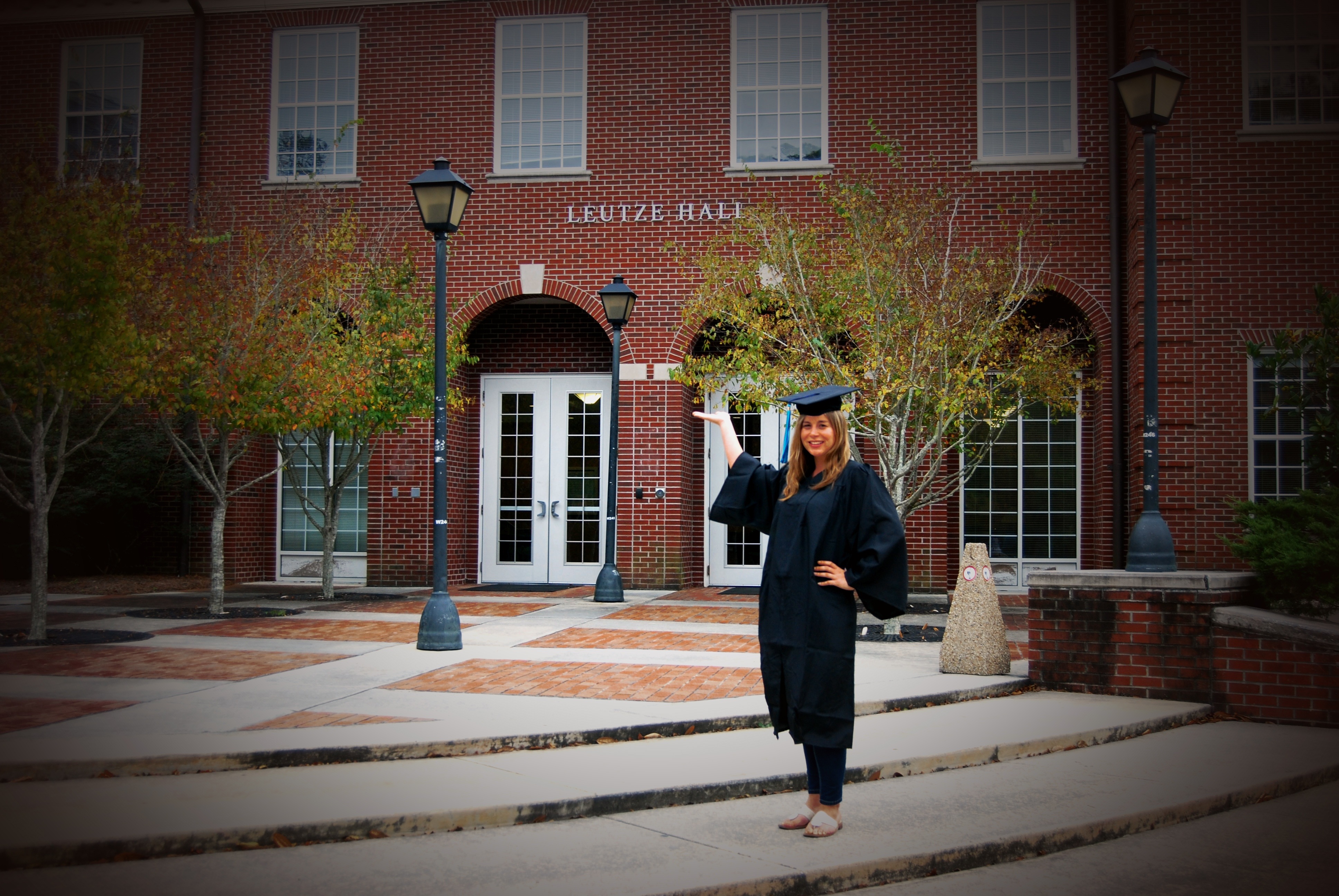
    It’s hard to believe that a week and a half from today, I will be in my cap and gown, and the life I know as a student will be over. I will be graduating from the University of North Carolina Wilmington as a Communication Major, focusing in Advertising and Public Relations! It has taken me 5 ½ years, 4 schools, and 3 different majors to get to where I am now (let’s just say I like to experience new things…often). Wilmington, UNCW, and the Communication Studies department specifically has been the perfect fit for me and I finally feel at home, a place to stay. Although I no longer feel that I have the mental or financial capacity to stay a student, UNCW will always feel like home to me and Wilmington is where I hope to start my career!

    20131204-162923.jpg

    So at the moment, in between juggling my final projects for the six courses I am taking, I am also applying to jobs in Wilmington within the marketing field. I have always said that I would move away from Wilmington for the perfect job, but they would have to pay me enough so that I could travel back whenever I want! I hope to work for a marketing agency or firm, but an in-house position at a company is something I will consider as well. Unlike many other Seahawk peers I do feel ready to enter the “real world” and soar!

    20131204-163542.jpg

    Being a student in the Department of Communication Studies of UNCW is where I have grown and continue to grow into the young professional that I aspire to become. When I transferred to UNCW, I had most of my general courses out of the way so I jumped right into the steps to become a COM major! This included taking Introduction to Communication (COM 150) with Dr. Weber and Research Methods (COM 200) with Dr. Olsen at the same time, which didn’t intimidate me at all. It only confirmed I was in the right department with the right professors. What makes the Communication Department at UNCW so successful is the professors. Through my Public Relation courses with Professor Chin, I have learned how to keep pushing harder to get the results I want under strict deadlines. Through my Capstone course with Professor Trimble, I can professionally present myself to (and impress) employers with an outstanding resume, cover letter, portfolio and interview skills.

    The most influential professor that has made a huge impact on my life here is Dr. Persuit. From the moment I stepped in my transfer orientation, she caught my interest with this concept called IMC (Integrated Marketing Communication… duh), I took her class and I am hooked! Through the multiple courses I have taken with her she has not only taught me great insights on the many aspects of marketing but also on life in general. Ultimately she has inspired my creative passion for marketing! One quote from Dr. Persuit that I will never forget is “IMC’s goal isn’t to change attitude, it is to change behavior”; I have not only incorporated this within my marketing classes but throughout my life.

    20131204-151550.jpg

    So my experience at UNCW has been a little bit different than most. I didn’t enter as a freshman so I don’t have crazy dorm memories nor did I make my best friends here at UNCW. The experience UNCW did give me was a chance to expand my knowledge and practice what I would like to do with my life; and that is something that no one can ever take away from me! So thank you to everyone who helped me along the way here at UNCW, whether you are have been my professor, classmate, or just the barista at Port City Java in Randall, I appreciate it. I will always be a Seahawk at heart, I’m just spreading my wings and ready to fly!

    -Kelsey Raskob

  • Paul McCartney’s NEW Publicity Stunt

    The digital world of iTunes and social media has given the music industry both high and low notes. While the Internet offers accessibility, it also caters to specificity. Most predominantly, the Internet offers an array of platforms for artists to upload, share, and send their music.  However, while music junkies may be constantly searching for new digs, most people eventually acquire a particular taste for what they choose to send through their ear buds.  Internet music services such as Pandora, Spotify, and iHeartRadio allow users to handpick and listen to an endless variety of artists and genres. This narrowcasting of music leaves artists waging campaigns to try to reach listeners. As a result, clutter prevails.

    Like in advertising, clutter has become a big problem in music promotion. As Douglas Rushkoff pointed out in The Persuaders, “The more messages they create, the more they have to create to reach us.”

    The more opportunity social media platforms – YouTube, MySpace Music, and most recently Vine – offer artist to share their music, the more competitive and important promotion of music and musician become.

    So how does a music artist break through all the online music clutter without breaking budget? The answer is: great music, a little luck, and a publicity stunt.

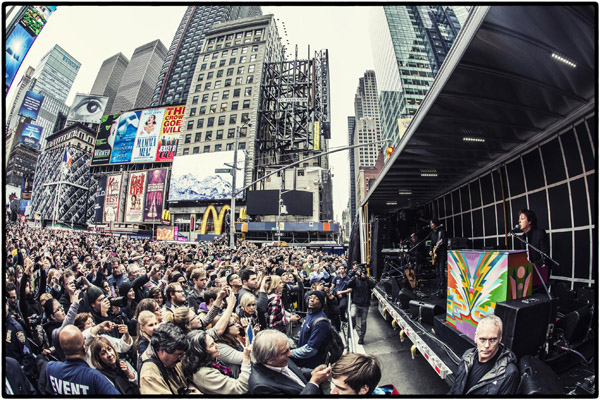
    Not new to the music arena are surprise gigs on rooftops or buses in the middle of big cities, events known in the public relations world as a publicity stunts. This past October, music legend Sir Paul McCartney promoted his recently released album, NEW, by doing just such a thing – performing a surprise concert in the middle of Times Square.

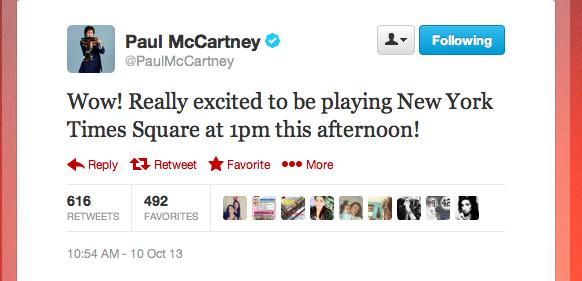
    Paul McCartney at performs at the Times SquareTelling fans only hours before – via Twitter – he played a 15-minute long show featuring the single “New”, as well as music from the (not at the time released) album. McCartney was not only able to give NYC fans a concert, but fans from around the world could tune in through Times Square live webcast and watch the performance.

    pm tweet nyThe surprise gig resulted in social media buzz and major news coverage, all promoting the NEW album for free. The stunt was so successful; exactly a week later he performed another surprise concert in London.

    pm tweet loSir Paul McCartney proved how to conquer the masses. Not only did he succeed in making his fans happy, but also he succeeded in executing a publicity stunt that generated both word of mouth and media coverage that ended up promoting his music at no cost to him.

    Caroline Robinson, Savannah Valade