Campaigning for the 2012 presidential election has begun. Republican hopefuls are working to convince voters that they are the right choice to defeat President Obama, while the president is trying to convince everyone that he should remain in office. 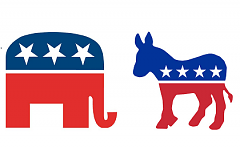 In 2008, the Democratic and Republican parties shared some of the same beliefs on certain issues, but had opposing viewpoint on others. Democrats were in favor of requirements to hire more women and minorities, repealing tax breaks for the wealthiest Americans, and removing troops from Iraq. Republicans were in favor of three strikes sentencing laws, taking steps to strengthen the economy and more anti-drug initiatives. Both parties were in favor of limits on political campaign funds, and a path to citizenship for illegal immigrants. The sentences above about the different parties were straightforward and un-biased, but it is difficult to find such information from one source. You must be very careful in 2012 while selecting the information you are going to consider, regarding the candidates. Beware of the agenda setters!
Certain types of media will tell you that the Republicans are money hungry classists who are only in favor of appeasing the rich, with the intent to modify tax laws in order to behoove large corporations. Then, that same media outlet will likely show a documentary on the sub-prime mortgage crisis, featuring interviews with families in middle America who lost everything. There will be a lot of content promoting public programs for the under-served, and illustrating the Democrats as the humanitarian party.  That media outlet selectively left out good points about the Republican party on purpose. It is called agenda setting, and it is when the media controls the amount of exposure certain news gets. The more exposure people get to certain types of news, the more important it becomes. If messages about middle Americans losing everything reach you every day, it will become important to you because it will inadvertently be on your mind. There could be a more pressing issue out there, but if it is not prominent in the media, how will you know?
You may be fooled into thinking that all Republicans are overly conservative and old-fashioned, and that Democrats are big spending and incautious if you don’t investigate for yourself. With regards to IMC, each party tends to portray the opposing side negatively. This poor image can potentially end a candidate’s campaign. With this in mind, it is up to the people to figure out which issues are important and research them from both angles. Ultimately, politics can be quite biased, filled with false information and one-sided opinions. When you vote in this upcoming election remember: you cannot believe everything you hear or see.
-Stephanie Bakolia, Claire Outlaw, David Glaubach


 What is the most important thing about Halloween? Your costume! When we were younger, we thought running around the neighborhood for a few hours trick or treating was the essence of Halloween. But as college students, we start pondering our costumes weeks or even months in advance, while candy and parties are afterthoughts. A Halloween costume allows you to express yourself more freely than you can in everyday clothes, and for many college students it is the most important outfit of the year. Some people spend hundreds of dollars putting together the perfect costume, complete with make-up, wigs and props.
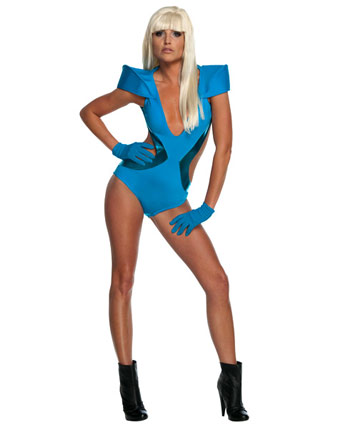 Last year, the costume most searched on Google was Lady Gaga. This year, the two top searches appear to be Nicki Minaj and Charlie Sheen. Among other popular searches are Pan Am, Amy Winehouse, Rihanna and Katy Perry.
 They believed that on this day the spirits would come back to earth and roam free; causing mischief and looking for living souls to possess. The people would dress up in frightening costumes, make blood sacrifices and leave food outside of their front doors in an attempt to ward off the evil spirits and appease their appetites. Halloween only fundamentally changed when the Romans took the Celtic lands and forced Christianity among its people. The Romans adopted the Celtic celebrations, infusing their religious beliefs into the concepts, and named it “All Saints Day” in order to honor the saints that did not have a day of their own. By the 1500s, “All Saint’s Day” had become “All Hallows’ Day”, and the Celtic festival had begun to be known as All Hallows’ Evening, Hallow Evening, and eventually… Halloween.
 Since everyone is now participating in the tradition, the role of marketers is to offer these costumes and candies to every main audience of Halloween: children, parents, teenagers, and young adults, in hope that their variety will be selected as the “hot item” this year.


 IMC Hawks Blog