Category: IMC

  • “Dare to Soar”

    Colleges and universities are places that can unify people from all over the world.  They have sports, clubs, fraternities and sororities, honor societies and many other groups and opportunities to unify the student body.  Another way schools have started to unify people is with words.

    This year will be the first year with Gary Miller as the chancellor of UNCW.  When he was inaugurated in early May 2011, Miller brought with him a new way of thinking and a new school slogan: “Dare to Soar.”  With this new slogan, Miller wanted to try to echo the school motto, which is “dare to learn,” and bring students together in hopes of achieving higher goals than were previously set.

    Image

    Miller hopes that this new slogan will help build the UNCW brand.  The school already has a very solid brand because of its academic values and Miller hopes this new slogan will further better the brand name.  He hopes that this new slogan will show an aspiration to reach higher goals in the future and reflect the soaring growth of our school.

    As UNC Wilmington students, we noticed the attempt to unite the school and motivate the student body with words. There are many other schools which have created slogans that have utilized powerful words that were intended to convey specific messages to students, faculty, and the community surrounding these colleges. After the shootings at Virginia Tech, the school used the words “Together We Stand” to make sure that the students who had survived the horrific events could all unite to get through the tragedy.

    Some words have been associated with certain campuses for decades. Harvard University, for instance, has the word “veritas” written across the university arms. Originally, the phrase was long and dealt with the truth of Christ and the church. However, today the campus has changed the motto to simply mean “truth” and is a reminder of the morals and standards at Harvard.

    Image

    Many campuses attempt to bring these powerful phrases onto their campus to motivate and unite their students. The question is, do these words always create the campus environment that they are trying to create? Are these words really powerful, or are they just trying to be powerful? How long will the students remember these slogans and mottos?

    Zachary Abramo, Meaghan Beam, Jessica Butner, Jackson Lane

  • Less Cancer, More Birthdays

    “Imagine a world with more birthdays.” Everyone loves a birthday. Birthdays mean parties, presents, cake, maybe a few libations followed by the possible dancing, and just overall merriment. Birthdays celebrate life and represent another year in the world. It is pretty agreeable that birthdays insinuate a good thing and have an overall positive connotation. The American Cancer Society, which hosts Relay for Life-a walking event that is held across the nation and raises millions a year for cancer research and resources, has taken this phrase and integrated it into their marketing campaign to make people rally behind their cause. Now the phrase, “Imagine a world with more birthdays” has an even greater, even tear-jerking message. Imagine a world with less loved ones passing away from cancer and more people being able to be merry and on earth for another year.

    As the designated “Official Sponsor of Birthdays” the American Cancer Society takes hold of the emotional appeal of connecting their cause to everyday life.  The American Cancer Society uses slogans such as “Happy Birthday is a victory song,”  “A world with less cancer is a world with more birthdays” and many others to very effectively draw people into raising funds for the events.  Connecting something scary, like the often terminal illness of cancer, to the happy annual event of celebrating a birthday, something that everyone has, is a very innovative way to put the American Cancer Society’s cause at a relatable level for all.  Everyone may not have cancer, but everyone has a birthday.

    The fact that the American Cancer Society markets their events as a general celebration of life in general makes it appealing to those with cancer or those who have survived cancer because they are fighting and have fought to live and have more birthdays.  It also makes it appealing to those who haven’t had cancer because they get a chance to really celebrate, be grateful for their health, and the fact that they have been able to celebrate their birthdays without fear of them being shorthanded by cancer.  Finally, the message really digs emotionally when it comes to a person who has had a loved one pass away from cancer.  How amazing would it be to be able to celebrate one more birthday with that special person?


    As a society, we understand that messages are being thrown every which way to try to get us to do something.  While the American Cancer Society could use a percentage or amount of money to help get people to support the cause of cancer prevention and awareness, instead they opt to display their organization as one that can bring an immense amount of hope to all audiences.  It’s safe to say the proof is in the pudding.  The American Cancer Society’s Relay for Life had an astonishing 4 million participants and raises about 400 million dollars a year.  With a marketed identity of one that sponsors overall joy, the American Cancer Society has struck a chord causing a strong continued success that many charitable organizations long for.  Happy Birthday must be victory song after all.

    – Alexandra HussCaroline MerrillAlyssa MorrelloLauren Van TrigtDann Williams

  • To Sponsor or Not to Sponsor: That is the Question.

    Currently, one of the biggest trends in music is the presence of music festivals. These festivals host a number of bands from all different genres, pulling large audiences of varied consumers in to enjoy the shows. Festivals are generally a couple of days long and promote a laid-back lifestyle complete with camping tents and hammocks. We can thank Woodstock for this specified musical platform. However, is it also a platform for something else? In recent years, music festivals have also hosted a number of sponsors, who market their brands by simply surrounding festival goers with advertisements and products.

    But what is the benefit for companies that sponsor these events? Since companies spend time and money to become an integral part of the festival atmosphere there must be some sort of profitable gain. The major draw for companies is the audience. Generally speaking, attendees are in their late teens to late 20’s. This generational demographic, once targeted, are often very loyal consumers to their favorite brands. Companies hope to capitalize on this while festival-goers are having a good time, enjoying the music, and are open-minded. This audience is also very important because they have a larger disposable income than most. The ability to spend upwards of $400 for a two day music festival, says to companies that this demographic is, for the most part, either affluent or avid consumers.

    However, there is also a downside to being a sponsor at one of these events. Companies have to be very aware that if the audience does not perceive their product as one that coincides with the overall experience and atmosphere of the festival then they will either be completely ignored or considered an annoyance. For instance, a brewing company will do a lot better and be viewed much more positively than a law firm or insurance agency. In order to be successful as a sponsor you have to ensure that your product will enhance the mood, environment and fit the audience profile.

    One of the best examples of sponsorships working harmoniously with the specific nature of music festivals is Firefly, which was held for the first time this summer in Delaware.  Firefly made all of their vendors and sponsors local companies who brought a higher class of food and drink to the campsites. Instead of bombarding attendees with big named company sponsors Firefly chose to keep the music festival experience more authentic. Dogfish Head, their beer sponsor, even unveiled a new brew named the “Firefly Brew.” The event also had a TOMS Shoes tent, where you could purchase a pair of canvas slip-ons to be painted on-site by a local artist.

    Firefly was successful because they accompanied their musical line-ups with relevant sponsors, which in the end created a newer, more evolved and authentic version of a music festival experience.

    Lauren HabigHannah EureErin KiffmeyerAlly WaltonGene Lee

  • Has the Branding of Humans by Companies Gone Too Far?

    Marketers and advertisers have been getting more and more creative with how they choose to promote their brand and products. A recent trend has been the one of the “walking billboard.” Many people have been willing to brand almost any part of their body for the right price.


    In more recent years, tattoos have been seen as both as cultural icons as well as innovative methods to deliver a specific message. Web sites such as LeaseYourBody.com, TatAD.com, BodyBillboardz.com, HumanBanner.com, and LivingAdSpace.com connect brands and potential advertisers with individuals who are willing get “branded” for money.

    Many popular brands such as Volvo have used these creative tattoo advertisements to further promote their cars. Linda Gangeri, national advertising manager of Volvo Cars of North America, said their tattoo man was a way to get people to think differently about the Volvo brand.  Being a “walking billboard” is an extreme example of how people are being used to creatively advertise for brands in today’s society.

    There are less permanent and drastic ways in which someone can brand themselves for a company. Clothing is a great example. Clothing will always be a great tool for human branding because it is one of the first things we notice about the appearance of others.  In recent years, there have been rumors circulating that Abercrombie and Fitch pays individuals to come into their store and shop whilst wearing their clothes.  Even more recent are the allegations that the company has done the exact opposite as well. In 2011, the company reportedly offered the cast members of MTV’s “Jersey Shore”, specifically Mike “The Situation”, to not wear their clothes while filming the popular TV series. They felt that the cast members wearing their clothes affected their brand negatively rather than positively and did not want to be affiliated with the show. Clothing is also largely used by brands that are not restricted to apparel to benefit both the clothing store, and their own brand. For instance, the clothing store “Hot Topic” sells a variety of different t-shirts from many different companies. One of the big examples is the “Twilight” series. By selling shirts that relate to the book or movies, the people who buy these shirts then become walking billboards for both “Twilight” as well as “Hot Topic”. Clothing has been and remains to be a great tool for human branding for the simple fact that in society, appearance really does seem to be everything. If someone is attractive and is wearing a t-shirt that promotes something, most people that see this person are likely to be influenced by what is being advertised on the shirt.  The “Legalize Gay” shirts from “American Apparel” are a great example. Not only does the shirt promote a cause, but some people even think it’s trendy. This caused the design to become a quick success for “American Apparel”.

    Along with self-branding through choice of apparel, companies use celebrities to promote their brand by paying them a great deal of money to wear their clothes, jewelry, hats, sunglasses, etc. In 2003, famous tennis player Serena Williams signed a sponsorship contract with Nike which agreed to pay her over 8 million dollars a year just to wear Nike’s logo on her uniforms and visors while playing. Not only is Serene getting paid; she does not even have to buy her clothes from Nike because they are given to her. The better and more popular the athlete, the more money companies choose to invest into that particular person or team. Tiger Woods is another athlete that has been ridiculous sums of money just to wear and boost certain brands. Before his sex scandal, Tiger allegedly made between 55-60 million dollars from endorsements.  After, the controversy, he makes about 20 million less, but still an incredible amount of money just to wear Nike apparel.  This marketing strategy applies to fashion and luxury brands as well. On the “red carpet”, interviewers are constantly asking who designed celebrities’ dresses or what brand of jewelry are they wearing. Throughout the past couple of years, the number of film stars that accept fees for wearing a brand’s designs or jewels at the Academy Awards and other red-carpet events has significantly increased. Lucie Greene, the author of many articles located in FT Magazine, stated that “last year US Weekly reported that Oscar host Anne Hathaway was paid $750,000 by Tiffany & Co to wear its jewels throughout the ceremony. The same story said that Gwyneth Paltrow was paid $500,000 to wear Louis Vuitton baubles during her live performance” that same night of the Oscars. Businesses are looking for every possible way they can find to market their brand and increase sales and participation. Phillip Bloch, a professional stylist who works with the popular celebrity Sandra Bullock, along with many other famous clients, views this pay-to-wear trend a smart branding strategy. “It’s a business more than ever now”, Bloch says.

    Over time, the ways in which people are used to promote and essentially brand a company have evolved.  While clothing has been around for quite some time, the creative ways in which it is used has been changing in recent years.  Celebrities have been used to wear a brand and increase revenue.  As notes, extremes such as being a “walking billboard” have become more and more prominent.  As is natural in a social setting, people are extremely influential upon one another.  Thus starts the argument that as technology develops over time, the ways in which humans are used to advertise will as well.

    Sasha De Vecchi, Lindsay Gallagher, Jay Reilly, Cary Welborn
  • HubSpot: The Transformation From Outbound Marketing to Inbound Marketing

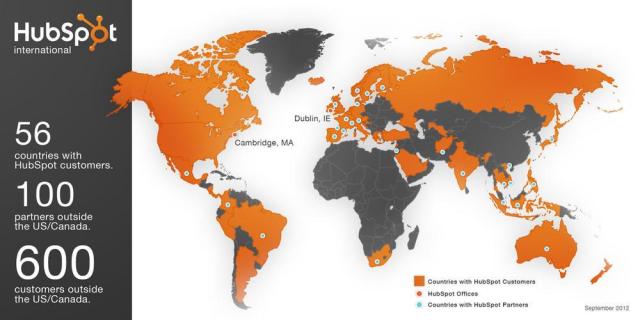
    Among the large variety of social media in today’s society, HubSpot, although not very well-known, has been a major pioneer within its field and has generated great success. HubSpot was created by Brian Halligan and Dharmesh Shah at the Massachusetts Institute of Technology (MIT) in June of 2006 and has been rapidly growing ever since. It is new strategic marketing software that is actively helping over 7,500 companies within 46 countries by generating personal research including blogging, social media, email marketing, etc. Hubspot’s marketing techniques have been used for online companies such as Twitter, LinkdIn, among many others.

    Brian Halligan, one of the co-founders of HubSpot, stated the following in one of his blog posts on the site: “Rather than doing outbound marketing to the masses of people who are trying to block you out, I advocate doing “inbound marketing” where you help yourself “get found” by people already learning about and shopping in your industry. In order to do this, you need to set your website up like a “hub” for your industry that attracts visitors naturally through search engines, the blogosphere, and social media. I believe most marketers today spend 90% of their efforts on outbound marketing and 10% on inbound marketing, and I advocate that those ratios flip.” This is the driving force behind the company today.

    With the competition that is present in today’s business world, it is crucial to have a tactical plan to further market one’s brand. HubSpot achieves this by taking the best inbound marketing techniques and combining them into one spot, which is exactly what HubSpot accomplishes. This innovative tool is not free, but there is a free trial run that one can sign up for prior to buying a full subscription. In a country where the use of social media has increased a whopping 356% in six years, it is no secret that social media is now a competitive market. A company generally needs to be utilizing social media better than their competitors to be successful. HubSpot helps with this because it compares a company to their competitors on a social level and teaches a company how to develop and grow faster than its competitors. It also educates companies on how to create exciting, new content for the public and how to use cross-channel campaigns. These services that HubSpot offers allow businesses to stand out in today’s very crowded business market.

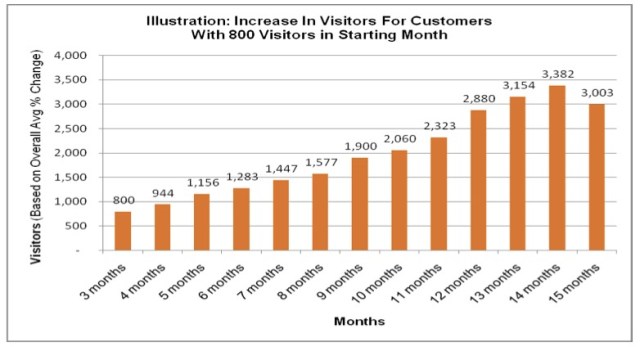
    The proof that HubSpot is effective is in the statistics. Studies show that on average, after three months of use, HubSpot users experience 32% more leads per month and 24.6 times more leads after twelve months of use. In 2011, HubSpot grossed over thirty million dollars in revenue. Internationally, HubSpot is growing at a rate of 200% a year and even has scheduled to open a new headquarters in Dublin in 2013. The opening of this new headquarters is expected to provide 150 jobs for the citizens of Ireland and already employs 300 people in the United States.

    Since the creation of HubSpot in 2006, the company has been quickly evolving. Not only are more companies using it, but the company has provided many jobs in a time where new jobs are a worldwide necessity. With the increase of social media influence in society today, companies such as HubSpot are essential in aiding a company convey its message to a large pool of consumers.

    Sasha De Vecchi, Lindsay Gallagher, Jay Reilly, Cary Welborn

  • I Am.. Authentic?

    What makes an advertisement authentic?  Is it the product, or the ways in which marketers try to make the product seem appealing to you, the consumer?  In today’s society, companies are constantly trying to discover the next great idea that can sell a product.  Whether it is a new logo on the product or a new commercial you see on TV, they are all aiming towards the trend of being considered “authentic.”


    Let’s take this Dr. Pepper commercial for example.  An uplifting ad telling you to embrace your “inner you” by breaking out of your everyday routine and go with the crowd of people that are all doing the same.  What is this commercial really trying to say, that the product is authentic, or the consumer is authentic?  Do people who want to express themselves drink Dr. Pepper?  This is authentic right?  You are going against the norm by showing off your “inner you” and storming the streets in joy.  But in actuality this ad is the furthest thing from authentic.  The entire commercial is just a clever new way that a corporation spent millions of dollars on to get you to buy their product.  They want to appear authentic to consumers because that notion of scarcity and realism is what is driving the consumer market today.

    This is a common misconception among today’s society; the secure feeling of knowing the product you are buying is authentic.  Companies are trying to persuade you into buying their product because of how exclusive and different it is from all the rest; when in actuality, most of them are comparable to one another and the methods they take to explain that to you are exactly the same.

    Dr. Pepper is not the only product employing this notion of authenticity.  It seems that this effort must be working because these products are still thriving.  Are the products you buy and consume daily producing authentic advertisements?  Are these advertisements the reason you choose their brand, their product?  And are these products authentic or are you, the consumer authentic?

    Jessie Butner, Meaghan Beam, Zach Abramo, Jack Lane

  • “Google Chrom-otional”

    The number one purpose of television commercials is to make the consumers believe they need a product. Many companies rely on humor or a catchy jingle to gain interest in their product. Another tactic that can be a tad more difficult to accomplish involves making that emotional connection with the viewers. Evoking an emotional response through the use of commercials has proven especially hard to do these days. It is difficult for companies to make an emotional impact on their viewers with such little air time. Additionally, companies face the difficulty of connecting the commercial’s story-line to the lives of a diverse group of viewers. Despite these challenges, Google Chrome has released a series of commercials that have actually been able to tug at the heartstrings of many viewers.

    These new advertisements not only display all the features that Google Chrome has to offer, but they are also able to leave a lasting impression on those who watch them. This emotional connection Google is able to make with the audience sets their advertising apart from competitors. They do this by using the short time of the commercial slot wisely. Instead of trying to get a jingle stuck in your head, they create what could be described as incredibly short films. By telling the audience a story, Google does more than show the audience a product. The audience feels a connection with the characters in the commercial. This type of connection is what Google is counting on. Their slogan “the web is what you make of it” gives the consumer the creative freedom to express themselves in any way, shape, or form. It challenges us to showcase our thoughts and to put ourselves out there in a way that has not been possible before. This is Google’s way of saying, “look what has been done, what will you do?”

    Google has also conquered an even harder challenge with this advertising campaign. Making superstars relatable is a challenge many people face working in the entertainment industry. Google managed it in just around one minute. One might think using Lady Gaga as a spokesperson would make a product seem out of touch with this world. However, Google focused in on how she draws support from her fans and showers them with love. All the while she is encouraging them to be who they are. It is hard not to be a Lady Gaga fan after watching the video. This is what makes Google Chrome’s campaign so successful. Not only does their product look good and have celebrity endorsement, the celebrity also looks good and the fans feel included in the production of the commercial as well. Everyone wins.

    Google Chrome has also recently made a commercial depicting the interaction between a father and daughter. The daughter, Jess, is struggling to find her place away at college and her father is her main support system as her mother has passed away. The commercial demonstrates the benefits of using Google Chrome to communicate and presents the ability to support loved ones even though they may be miles away. This commercial touches not only the hearts of homesick college students but also the parents suffering from empty nest syndrome. Suddenly, Google Chrome is a light in the confusing darkness and it can satisfy all of a family’s communication needs. Again, everyone wins.

    Google Chrome has taken a risk by using an emotional appeal in their recent commercials, straying away from the many humorous or just downright strange commercials aired today. The integration of Google Chrome as an instrument to change human behavior is a major move on Google’s part. The notion that we can use Google Chrome to improve the way we live our lives is bold, but after all… the web is what you make of it.

    Alexandra Huss, Caroline Merrill, Alyssa Morrello, Lauren Van Trigt, Dann Williams