Category: IMC

  • How Influencer Marketing has Changed our Society

    By Kylee Clifton

    It’s 2023. You spend most of your free time scrolling through TikTok watching your favorite influencers “Get ready with me” videos. They show you their most recent favorite products, linking them in their profile for you to view. You automatically put these new products into your cart and buy them, not realizing you are a part of their strategic marketing strategy. According to Jones (2021), “Influencer Marketing” uses trusted figures within a niche community that possess knowledge or experience about what they are advertising. The term “Influencer celebrification” is defined as “The process by which influencers acquire celebrity capital within an interconnected advertising ecosystem.” This celebrity capital is usually achieved through sports, music, television and movies (Jones 2021). In this blog my intent is to share this new idea of influencers, and how they have changed the marketing strategy for our society.

    You might be familiar with the concept of celebrity endorsements, which have been a popular method to promote products in our society. The idea of connecting a celebrity figure to a brand allows the audience to feel emotionally connected to the products displayed by that brand. Although this strategy is still efficient, there has been a rise in social media platforms, creating prominent influencer figures who have a large following. The Influencer Marketing Hub Explains that brands love influencers because they are able to create trends and encourage their followers to buy the products they use. There are 4.89 billion people social media users globally, which makes this marketing strategy important. (Geyser 2023)

    @ForbesLife on X

    I want to talk a little bit about Alix Earle. For those who do not know her, she is one of the biggest and newest influencers of this generation. She is referred to as the “It girl” who shares TikTok videos of her day-to-day life. She is 22 years old and has an impressive 6.1 million followers on the TikTok app. She is now rising to celebrity status due to her new connections with many famous people, attending big events and being on many news outlets and magazines. Alix conducted an interview with Forbes talking about what led to her success. She states that her videos are authentic and in real time, which leads her fans to have an emotional connection to her. They feel as if they can relate to her on a personal level because of the openness and trust Alix creates.

    For an influencer to be successful, the article “Influencer Celebrification: How Social Media Influencers Acquire Celebrity Capital” describes two celebrification processes:

    1. “Audience Portability: Influencers have the power to create content that is consistently engaging to their audience. The value of an influencer is in the influencers committed audience and the willingness to be transported across platforms and opportunities.
    2. Creative Ideation: Influencer has already created a niche which is evident in the followers. This idea touches upon the responsive and reciprocal content development between influencers and audiences.” (Jones 2021).

    Alix Earle has nailed both of these processes above. She is now guiding her way to acquire celebrity capital because of her influential content and her niche community that worships her, “The smartest influencers out there and the ones who really will have longevity are the ones who understand the relationship that they have with their audience.” (Jones 2021). With social media still on the rise, evolving to influencer marketing strategies are beneficial for many companies and brands to stay successful in our society today.

    Works Cited

    Bretoni, S. (2023). How Influencer Alix Earle cornered a social media market and made $5 million in one year. Forbes. https://www.forbes.com/video/6337810992112/how-influencer-alix-earle-cornered-a-social-media-market-and-made-5-million-in-one-year/?sh=15da54ba6dac 

    Brooks, G., Drenten, J., & Piskorski, M. J. (2021). Influencer Celebrification: How social media influencers acquire Celebrity Capital. Journal of Advertising50(5), 528–547. https://doi.org/10.1080/00913367.2021.1977737 

    ForbesLife. (2023, October 3). Video: How Alix Earle earned $5 million in a year while balancing college and career demands https://t.co/d2ktw9zdcx pic.twitter.com/aeb0aer6up. Twitter. https://twitter.com/ForbesLife/status/1709252057356435476 

    Geyser, W. (2023, November 15). What is an influencer? – social media influencers defined [updated 2024]. Influencer Marketing Hub. https://influencermarketinghub.com/what-is-an-influencer/ 

    Photos licensed from Adobe Stock 
  • Social Media Influencers and Their Impact on a Brand

    By Julia Dolinshek

    (Photo from Unsplash)

    What is a Social Media Influencer?

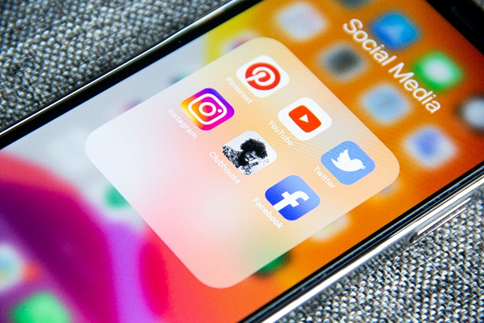
    Within the last decade, social media has become an extremely popular outlet for individuals of all kinds to interacts with family, friends, and brands that they love. The rapid growth of social media has caused brands to hire social media influencers to promote their products and spread a positive light onto their company (Singh, et al., 2020). With so many people being active users of social media, brands took advantage of the ones with a high following to not only promote their products, but also represent their brand as a whole.

    Reports indicate that over two thirds of multinational brands around the world plan to increase spending on influencer marketing within the coming years (World Federation of Advertisers, 2018). Global spending in social media marketing and communication are expected to reach $15 billion by 2022 (Schomer, 2019). Social media influencers typically consist of individuals who have a sizable audience who are willing to create content based on different products and ideas that they support.  Their followers are likely to trust any brand or product that they are endorsing, with an end goal of more people supporting the brand being promoted. With social media influencers using effective communication and marketing skills, while also being paid by the brand, everybody wins. Although the publicity is great for both parties, issues can arise when the personal lives of influencers are brought to life. This has the potential to impact a brand for the better or for the worse.

    Social Media Influencer’s Impact on a Brand – Better or Worse?

    It’s no secret that humans are all imperfect. We all try our hardest to be our best selves, both publicly and privately. It is easy for someone who is not in the public eye to make a mistake. They are able to realize a mistake, learn from it, and grow as a person because of it. There is not a large following of people to bash them and make them feel like they are unforgivable. As a social media influencer, this is not the case. Social media influencers are held to a high standard for many reasons. These individuals can be representing multiple well-known companies at a time. They are also the inspiration and role models to many of their followers. Research has shown that recommendations from social media influencers enhance consumers’ positive perceptions about a brand and consequent purchase intentions (Lu, Chang, & Chang, 2014). When a social media influencer makes a public mistake, it immediately reflects negatively on the brands that they are collaborating with. It causes the brands image to look poor, which can cause a loss of many valued customers. In today’s time, there are so many different brands to support and love. If an influencer who is promoting a particular brand is involved with a public scandal, it may cause supporters of the brand and the influencer to step back and find other competing brands to support instead.

    For Worse

    Social media influencer Olivia Jade was followed and looked up to by millions. She was a fashion, beauty, and lifestyle influencer. She had various partnerships with well-known companies such as Sephora, HP, Lulus and Amazon. In spring of 2019, it was discovered that Olivia Jade’s parents, Lori Loughlin and Mossimo Giannulli had paid $500,000 in bribes to get her admitted into the University of Southern California. Followers and supporters of Olivia were all baffled by the news, stating that she was the “poster child for white privilege” (Clark, 2020). This not only made Olivia Jade look bad, but also the companies that chose to partner with her. This scandal led to all of these companies dropping Olivia Jade as a social media influencer for their brand.

    For Better

    (Photo from Unsplash)

    Companies also sponsor individuals who will make their brand look even better than ever. Tik Tok star, Charli D’Amelio, is sponsored by popular brands such as Dunkin Donuts, Invisalign, Pura Vida Bracelets, Hollister Co., and more. Charli promotes to over 160 million followers. In 2020, Charli used her voice to speak out on topics such as Black Lives Matter, the murder of George Floyd (Charli D’Amelio: Trading card, 2021). This not only educated her large following on important events, but let others know that she is an ally and supportive of equality for all. This specific example would reflect positively on brands that she collaborates with.

    Bringing it all together

    Influencers hold great power for brands within the world of social media. Appealing to the correct target audience while effectively communicating positives about products will have great impacts on what consumers chose to purchase and support. Social media is bigger than ever before. Brands are choosing to pay social media influencers top dollar in order to shine a positive light on their company.

    Sources

    Charli D’Amelio: Trading card. SponsorUnited. (2021, November 24). Retrieved February 7, 2022, from https://sponsorunited.com/charli-damelio-trading-card/#:~:text=TikTok%20superstar%20Charli%20D’amelio,influence%20on%20social%20media.

    Clark, Chavaz. (2020, December 9). Olivia Jade Giannulli, Lori Loughlin’s daughter, breaks silence on college admissions scandal, says she was “poster child of white privilege”. CBS News. Retrieved February 7, 2022, from https://www.cbsnews.com/news/olivia-jade-giannulli-lori-loughlin-college-admission-scandal-interview/

    Lu, L. C., Chang, W. P., & Chang, H. H. (2014). Consumer attitudes toward blogger’s sponsored recommendations and purchase intention: The effect of sponsorship type, product type, and brand awareness. Computers in Human Behavior, 34, 258–266. https://doi.org/10.1016/j.chb.2014.02.007

    Schomer, A. (2019). Influencer Marketing: State of the social media influencer market in 2020

    https://www.businessinsider.com/influencer-marketing-report?r=US&IR=T Accessed

    29th Feb 2020.

    Singh, J., Crisafulli, B., Quamina, L. T., & Xue, M. T. (2020). ‘To trust or not to trust’: The

    impact of social media influencers on the reputation of corporate brands in crisis. Journal

    of Business Research, 119, 464-480. https://doi.org/10.1016/j.jbusres.2020.03.039

    World Federation of Advertisers. Brands to invest more on influencers. (2018). https://

    www.wfanet.org/news-centre/multinational-brands-focus-on-influencertransparency/

    Accessed 30 July 2018.

  • The Future of Marketing and Social Media

    By Jaime Mull

    (Photo by Austin Distel at Unsplash)

    Social media is constantly evolving, and new trends are occurring every day online. It can be difficult to keep up with the constant renewing and recycling of trends on apps like TikTok and Instagram. Companies, now more than ever, are using their various social media outlets to target consumers with current trends and memes to sell their brand or product. Well-known brands have used social media to sell their products for many years, but it hasn’t been until recently that they’ve truly engaged with consumers and actively participated in the trend cycle that is occurring. If brands are now using social media as their main selling source and are constantly posting and engaging with customers, how will their engagement evolve in the next few years? What will we see from brands on social media in the next few years that we haven’t seen yet?

    How is Social Media Used Today?

    Social media is not just a one-dimensional outlet for people to share their life and thoughts with others. Over the past few years, social media has evolved into so many different things, and has allowed people to communicate and share ideas in various ways. Specifically for marketing, social media has now become the main outlet for brands and companies to share products and communicate with their consumer-base. With apps like Instagram and Twitter, consumers can comment on a brand’s post or tweet, and the brand has the ability to respond right away. This gives brands a huge advantage and allows them to show consumers how reliable of a company they are.

    The growth of social media platforms has also created an omni-social presence, which suggests that almost every aspect of a consumer’s decision-making process is prone to social media influence (Appel et al., 2019). With the amount of different apps and websites that brand’s can post on (TikTok, Instagram, Twitter, LinkedIn, Snapchat), it is almost impossible for the consumer to avoid a product or specific brand message. If a brand wants people to see their message, they have several options for sharing and can pay to promote themselves even more.

    The use of influencers and celebrities in marketing has also increased greatly and is extremely popular today. Considering the possible reach and engagement influencers command on social media, companies have either begun embracing influencers on social media, or plan to expand their efforts in this domain even more (Appel et al., 2019). This means that influencers being used to promote a product or brand isn’t going to change in the near future, because it has shown to be effective.

    Brands will Become your Best Friend

    A safe assumption to make based on past and current trends is that brands will become even better equipped to answer consumer’s questions and meet consumer’s needs. For example, new platforms have emerged to make the connection between customer and firm effortless. Much of this is via instant messaging applications for businesses, which several leading technology companies have recently launched as business-related features in existing platforms (Appel et al., 2019). Brands are going to become even more accessible in the next few years due to platforms like this, that will allow customers to reach someone within the company in less than a few minutes. Consumers are tired of waiting for days to hear back from a brand’s customer service line, and they’re tired of hearing the same excuses for why certain products don’t work. Brands are going to become much more personable and honest with consumers, as well as make themselves available for questions and feedback at a much faster rate.

    The Future of Political Collaboration

    Something we saw in social media in the last few years that wasn’t as evident in the past was the increase in posts regarding politics, specifically from brands. Many popular brands, ranging from Ben & Jerry’s to Bumble, spoke up during the 2020 Presidential election and were very clear about which side they were taking in the race. It is becoming a growing trend for brands to show their support for political figures, which is interesting because there’s always the chance that they lose customers who don’t agree with their stance.

    There is also the case of politicians themselves utilizing social media more in the future, essentially to market themselves. A relevant example of this is with Donald Trump and his run for office in 2016, and 2020. Research has shown that with simple interventions, social media platforms can increase targeted audiences’ likelihood of voting (Appel et al., 2019). We will definitely see more social media use from politicians, as well as brands in support of politicians, in future campaigns and election years.

    Social Media is Always Evolving

    While it is always interesting to analyze social media and predict what trends and themes will happen in the next few years, no one really knows for sure what will happen online. Social media is constantly shifting and changing shapes, and new trends are always being created. It will be interesting to see how social media unfolds in the future.

    Sources

    Appel, G., Grewal, L., Hadi, R., & Stephen, A. T. (2019, October 12). The future of social media in Marketing – Journal of the Academy of Marketing Science. SpringerLink. Retrieved February 24, 2022, from https://link.springer.com/article/10.1007/s11747-019-00695-1

    Distel, A. (2019, July 24). Photo by Austin Distel on unsplash. Beautiful Free Images & Pictures. Retrieved February 24, 2022, from https://unsplash.com/photos/tLZhFRLj6nY

  • Controversial Advertising Strategies: Understanding How They May Help or Hurt Your Brand

    By Emma Hudson

    (Photo from Unsplash)

    Have you ever heard the phrase “there’s no such thing as bad press?” On the surface, this statement may seem logical. Controversial advertising is known for making brands more relevant by grabbing attention and garnering conversation. But just how valid is the “bad press” argument?

    According to an article released by MDPI , controversial advertising operates by deliberately inducing feelings of surprise by “violating social norms or personal ideals, to draw attention.” Controversy must be used with extreme caution, as it may generate both positive and negative effects in the reception of an advertised brand.

    Here’s a closer look into the successes and failures of controversial advertising and questions that should be examined when considering a controversial campaign for your brand.

    What does effective controversial advertising look like?

    A common misconception about controversial advertising is that its primary goal is to offend its viewers. In reality, controversial advertising doesn’t aim to polarize an audience. When done correctly, it’s an attention-grabbing technique for stating an opinion, and brands use it to stir the conversation about a contentious topic.

    An example of effective controversial advertising is found in the 2017 Budweiser advertisement, “Born The Hard Way.”

    (Photo from Budweiser: Born The Hard Way)

    This commercial tells the story of Budweiser founder Adolphus Busch and his journey to America from Germany with a dream of building his own beer company. The ad artfully portrays the trials a young Busch may have overcome, from fiery ships to unwelcoming American citizens, and eventually meeting with future business partner Eberhard Anheuser.

    The advertisement was released during Trump’s executive order banning immigrants from Muslim countries and makes a subtle statement on the topic. The story makes people realize that something so fundamentally American, like Budweiser beer, can have immigrant roots.
    It reminds viewers that the United States is founded on immigrants, a message that starts a conversation without condemning pro-travel ban or anti-immigration individuals. The strategic use of controversy helped the commercial reach 21.7 million views within the first 72 hours, with a predominantly positive audience reaction (Atkinson, 2017).

    What does ineffective controversial advertising look like?

    When approached ineffectively, controversial advertising undermines customer trust in brand values and creates confusion that may lead to brand abandonment (Buchnik and Nowacki, 2018). A prime example of this is Hyundai’s commercial, “Pipe Job,” meant to promote the Hyundai ix35, an eco-friendly fuel cell car with “100% water emissions.”

    (Photo from Hyundai: Pipe Job)

    This advertisement shows a man running a hose from his car’s tailpipe to its passenger compartment in his closed garage. Taking a few deep breaths and closing his eyes, the man waits to be killed by carbon monoxide poisoning. A few hours later, the garage light comes on, and the man leaves in defeat. “The new 1×35 with 100% water emissions” appears on the screen, which makes it impossible for the man to take his own life. Unsurprisingly, the commercial was pulled after airing for only 24 hours, receiving backlash for mocking suicide attempt survivors (Herper, 2013).

    Questions to ask before using controversial advertising

    1. What are your goals?

    The first question you want to ask before pursuing a controversial topic through advertising is, “what are your goals?” If the reason that your marketing team wants to execute a controversy is to go viral, you need to think again. Controversial advertisements should have logical reasoning and meaning behind them to achieve their desired effect.

    This question reigns relevant to the “Pipe Job” commercial, as the motives of the advertisement were unclear. Sure, the company wanted to promote that their new car has 100% water emissions, but couldn’t they accomplish this through a less triggering method? More likely than not, the brand used the controversial advertising strategy merely to go viral, which ended in outright disaster.

    2. Are the goals relevant to your brand values?

    To elicit a positive response, you must consider if your goals align with your brand values. If the messages perceived do not reflect your brand’s values, it may come off as disingenuous, which will damage consumer trust. Additionally, if the values presented through the advertisement are misaligned, your audience will likely not align with those principles either. The disconnect between audience values and campaign messaging can lead to brand abandonment.

    The Budweiser commercial does a great job relating its brand values to the commercial at hand. Budweiser claims the title of “America’s beer,” so the idea of immigrants achieving the “American dream” aligns directly with the brand’s image.

    3. What are the potential consequences or misconceptions?

    A great way to determine the reception of your advertisement is to conduct focus groups. This will allow you to receive insight into how audiences may react to your commercial before it is published and cannot be changed. Once your commercial is live, there’s no turning back.

    It may also be beneficial to consider some of the common causes of negative reception in controversial advertising. Such controversies can be triggered by:

    • Human figures presented in a way that implies or maintains negative stereotyping of specific social groups (women, men, children, or elderly people)
    • Information whose accuracy is clearly doubtful (misleading advertising).
    • Negative associations of a religious, racial, or ethnic nature.
    • Content that insensitively utilizes trauma or violence (drastic scenes, violence, cruelty, death, rape, etc.)

    (Buchnik and Nowacki, 2018)

    Key Takeaways

    In a current culture obsessed with controversy, it’s easy to create a campaign that draws attention from the masses. While the saying goes, “there’s no such thing as bad press,” it is vital that your team thoroughly strategizes for positive public perception. With the right goals, consideration of brand values, and proper reflection on potential consequences or misconceptions, you’re more likely to receive the desired response from your audience.

    Sources

    Atkinson, Claire. (2018). “Budweiser’s Super Bowl Ad Was the Most-Watched Online.” New York Post, https://nypost.com/2017/02/07/budweisers-super-bowl-ad-was-the-most-watched-online/. 

    Herper, Matthew. (2013). “Hyundai Apologizes for Car Ad Depicting Attempted Suicide.” Forbes, https://www.forbes.com/sites/matthewherper/2013/04/25/a-hyundai-car-ad-depicts-suicide-it-is-so-wrong-i-cant-embed-it-in-this-post/?sh=2691cee6554d. 

    Bachnik, K., & Nowacki, R. (2018). How to build consumer trust: Socially responsible or controversial advertising. Sustainability, 10(7), 2173. doi:http://dx.doi.org/10.3390/su10072173

  • Find Your People

    Find Your People

    The road to graduation has been a rollercoaster. When I began the ride, I thought I would be graduating four years later in Spring 2020. Little did I know that my path through college would not be the straight line I imagined. That has been my biggest lesson in college; life is not going to go exactly the way you want it to. If all our desires were granted, we would have quite a few more billionaires walking around.

    I had to learn how to change my outlook on being successful and motivated, by failing. But now, as I sit here writing this post and reflecting on my past 5 years of school, I can share my lessons learned before I leave UNCW.

    Get Organized

    First and foremost, learn how to get yourself organized. I used to never plan out anything in regard to my classes but, I learned the hard way, personal organization is a key to success. Buy yourself a planner or a big desk calendar. Sit down for 5 minutes on Sunday night, before the week starts, and plan out the assignment due dates for your classes. I promise you, it will make a world of difference! Having a planner means you won’t be stressed about remembering due dates. You have a source you can refer to anytime you’re wondering when an assignment is due. Simple, effective, and CHEAP!

    Roll with the Punches

    I made some early mistakes and was academically dismissed from UNCW. I’m sure you’ve heard it before, but college is going to throw a lot at you. Now this doesn’t mean you will instantly be forced into crazy life changes and decisions, but 4 years is a long time and those moments do come and come at you fast – trust me. In my first year in Wilmington, I did not have a solid direction to follow. I put more attention toward my social life than my course and those choices resulted in my dismissal from UNCW. I spent the following year attending Cape Fear Community College and was forced to take a long look at myself and the choices I had made. Assigning blame to outside influences is easy but being introspective and realizing that YOU are the root of the problem is extremely hard. I had to figure out what I needed to cut from my life and what I needed to work on to return to UNCW. That year at Cape Fear CC taught me more than my combined four years at UNCW. I started managing my time effectively and focusing all my attention on my grades. The hardest part of that process was holding on to my motivation to return to UNCW. I was still having hard moments and dealing with feelings of failure that made me want to just give up. Learning to push past those moments and reassure myself that I was doing the right thing made me a stronger person. Learn to not let the low moments get the better of you.

    Find Your People (Major)

    As cliche as this sounds, find the major you enjoy. In my first year at UNCW, I was initially a finance major but quickly realized it was not the path I wanted to take. After being readmitted, I considered going back to Cameron and majoring in marketing, but my advisor suggested an alternate path. Instead, I could major in communication studies and take courses in integrated marketing communication. I wasn’t sure at first because I didn’t know much about COM Studies. I took COM 301 with Dr. Weber and that was the catalyst that sparked my love for communication studies. The sense of community that was cultivated in his class, and each of my classes afterward, was a breath of fresh air. The faculty in the COM department have been incredibly supportive of me and I never felt as if they did not want me to succeed. Being a member of the COM Studies department allowed me to finish my education surrounded by brilliant professors who all work to prepare their students for success after college. So my advice, go out and experiment with your classes. Your first choice may not be your final choice. The college experience is 10x better when you find a major that interests you.

    Liam Abourezk is a May 2021 graduate and believes “failure is the stepping stone for success.”

  • How Do Brands Evaluate and Choose Social Media Influencers?

    In the short amount of time someone spends on YouTube, Instagram, or Facebook, there is a high chance that they have encountered a social media influencer promoting a product. How many times have you scrolled through your Instagram feed and seen someone promoting Care/Of Vitamins? Probably a lot. So, what really is a social media influencer? What qualifies a person to become a social media influencer? How do brands come into contact with the influencer? In Jan-Frederik Grave’s 2019 research article titled, “What KPIs Are Key? Evaluating Performance Metrics for Social Media Influencers” all of these questions are answered.


    According to Grave, there are two challenges that companies face when selecting a social media influencer: finding which social media influencer to work with and measuring the outcomes of the campaign. Fashion, health, beauty, entertainment and more are just a few of the various topics that social media influencers cover. Since there is a wide range of influencers for a company to choose from, they must rely on social media metrics to determine which influencer they would like to collaborate with.


    Key performance indicators (KPIs) are various metrics used by brand marketers and agencies when selecting a social media influencer for their brand, according to Grave. One KPI that might be used is the amount of interactions an influencer recieves on a post (comments, “likes”, “shares”, etc). Another KPI could be the amount of followers, subscribers, friends, etc. the influencer has on their social media channels.


    Grave explains that typical paid content on social media is created by the brand marketers themselves, which gives them more control of the overall message. However, social media influencers are given most of the control when it comes to creating the content for the brand. Although brand marketers provide the social media influencer with some tips to follow for the content, it is up to the influencer to create the content. Grave says this is why it is important for companies to choose an influencer whom they believe will create quality content with non-conflicting posts on their channels.

    Kate Scott is an undergraduate student at the University of North Carolina at Wilmington. She will be graduating in May 2020 with a B.A. in Communication Studies with a focus in Integrated Marketing Communication.


    References

    Gräve, J.-F. (2019). What KPIs Are Key? Evaluating Performance Metrics for Social Media Influencers. Social Media Society, 5(3), 205630511986547. doi: 10.1177/2056305119865475


  • What is wrong with IMC?

    IMC seems to be everywhere and nowhere at the same time. Schools are teaching it and marketers are using it, but some experts are still reluctant to write about it in new media. I was curious as to why, so I chose to reference an article titled “Integrated Marketing Communication- from an instrumental to a customer-centric perspective” by Manfred Bruhn and Stefanie Schnebelen. The purpose is to inform readers about the role of Integrated Marketing Communication in new media. Brunn and Schnebelen attempted to do this through discussion of the changed conditions of the media markets since the development of Integrated Marketing Communication.

    This article is based on research done via a literature-based approach. The authors conducted this with consideration of the modern media market and customer behavior. The first step in researching was analyzing the challenges of Integrated Marketing Communication, followed by the principles of customer-centric Integrated Marketing Communication, and lastly the implementation issues in Integrated Marketing Communication. By analyzing these three steps, Brunn and Schnebelen were able to point out the gaps of Integrated Marketing Communication in new media and establish a media-based umbrella framework that searched for common gaps in new media and Integrated Marketing Communication. The authors analyzed various forms of literature that discussed Integrated Marketing Communication in efforts to see the prevalence of Integrated Marketing Communication on new media.

    Brunn and Schnebelen didn’t really END the conversation on why IMC isn’t being considered a part of new media yet, but the authors definitely opened the door for it and provided

    good insight into the issues of experts in marketing and new media not considering IMC a part of the currently used approach to media and marketing.

    As someone who is an avid consumer of things such as Nike shoes and also an IMC student, the marketing campaign they use to get me interested in purchasing their products practically revolves around IMC. First, they promote and share user-generated content all the time for their advertisements. Secondly, they integrate all kinds of different marketing and promotional tactics in order to reach the correct audience effectively. Personally, I do not know researchers and scholars can ignore IMC’s place in new media given the fact that it is in almost every advertisement and marketing campaign that we see in today’s world. The method of encompassing things such as influencer marketing, commercials, and targeted advertisements into one campaign is practically standard in marketing now, and it is time that literature catches up with the times.

    The results of the study by Brunn and Schnebelen were that the artifacts about Integrated Marketing Communication that the authors analyzed did not discuss social media as a part of Integrated Marketing Communication in new media to any great extent. The articles that were analyzed were vague and only regarded Integrated Marketing Communication as a new form of media, but did not get into specifics and more information. The literature that the authors analyzed fails to address the foundational change of social media and the impact it has on Integrated Marketing Communication as a whole. The article also discusses the loss of control over advertising content that corporations are currently experiencing. Today, someone can post a viral tweet about your brand and that becomes a part of your brand identity. The corporation has no control over that happening and as a result of the rise in user-generated content, corporations are now more interactive with users on social media and promote UGC, as opposed to strictly

    pushing their own content. The authors suggest changing the mindset of the corporate IMC world, rather than changing the process in which communication is done. The results of this study encourage corporations and IMC practitioners, in general, to remember that IMC is an adaptive concept and as new forms of media and communication emerge, IMC must be adapted, rather than made into a black and white, never-changing subject.

    One example of this that I see regularly is when Instagram users “tag” the brands they were wearing or using in their posts. Today, more marketing on social media is done by consumers to other potential consumers than ever before, and major corporations are putting more resources consumers to spread the word about their products in hopes that consumers create marketable content for them.

    This study has made a great impact on IMC. Firstly, this article forces those in the Integrated Marketing Communication research community to seek a deeper understanding of social media and its impacts on social media. As social media continues to become a mainstream of marketing, the literature not analyzing this information shows that the Integrated Marketing Communication industry is behind where it should be in terms of analyzation and application of Integrated Marketing Communication in new media, specifically the analysis of Integrated Marketing Communication in the customer-centric landscape.

    Bio:

    Adam Guttadauro is a student at UNCW, majoring in Communication Studies. He is originally from Boston, Massachusetts. While not in a class, he is working on his various business ventures

    or at home watching football. Adam is interested in IMC due to its prevalence in his ventures and hopes to bring an IMC-centered approach to all of those ventures