Category: Global Warming

  • Why Your Business Should Adapt a Green Thumb

    We’ve all heard the saying “Going Green”. Almost everyone nowadays is changing their daily habits to be more environmentally friendly. But what does this mean for businesses? Eco Brands are gaining popularity, which means adding some green to your business could be your next marketing move.

    With the rising concern about climate change, it’s no wonder people are beginning to be more cautious when shopping. Whether you believe in the crisis or not, there is some sort of draw to making an environmentally friendly decision. Consumers are becoming more and more likely to spend extra on a product if it is considered “green”.

    In a 2017 joint study done by, The Hong Kong Polytechnic University and Rajamangala University of Technology Phra Nakhon, researchers found that there is a strong relationship between brand green image and eco branding; specifically, within textile brands. A majority of the people surveyed agreed that eco-branding helps a brand’s reputation and credibility, and that it increases their likelihood of purchasing from a business.

    Eco-Branding is the emphasis on environmentally friendly practices within a company. This could mean that products are made with recycled materials, the production leaves a smaller carbon footprint, or that the company uses revenue to invest in protecting the environment. Some major corporations will highlight specific “green” projects they do while some companies are built upon the principle of being eco-friendly. Regardless, this is a rising trend for businesses as the world becomes increasingly worried about the state of the environment.

    Brand Green Image is described in the study as the consumer’s value in the eco-friendliness of a brand. Target consumers are predicted to be more willing to pay more for eco-friendly goods and services. Not all consumers hold environmentally cautious production as a high factor in decision making, but some however do. It is important to reflect the green image to that target market. The goal is to tap into the target’s values and create a more personal connection between the brand and consumer.

    Credibility is a huge factor in brand loyalty. Consumers favor brands that are consistent and reliable. Data shows a positive relationship between eco-brand and credibility. Eco-Branding shows that the brand is concerned in preserving the environment, a value in which some consumers hold highly. However, it is important when implementing eco-branding to be transparent with the audience. Claiming to be “green” when sustainable practices are not being made can cause major damage to a brand’s credibility.

    The study also showed that consumers are more likely to prefer a brand with an established green image. If eco-friendly tactics are integrated into the company’s brand image, participants of the survey stated that they were more likely to do business with them. This means that sustainability within a company is a key factor to market to the public.

    If you are considering enhancing your company’s brand image in the future, perhaps implement an eco-branding strategy.

    1. Introduce green products or services into your company. An example of a green product would be something that was made from recycled materials or was made in a process that used low energy. These types of products are becoming increasingly popular, especially within the fashion industry. Textiles require a lot of energy and water to create, so many brands are looking for alternate production methods for their products. Retail franchise H&M has a service that promotes recycling used clothes in exchange for a discount- which promotes an eco-friendly brand image.

    2. In addition to adding green products or services, promote green behavior in branding materials. Include reasons why it is important to shop sustainably or use green products. Being transparent on why the brand is eco-friendly helps to build credibility and trust amongst consumers.

    3. Highlight the effect on the environment your company has made by switching to be greener and articulate that data to shareholders. This creates more value in the company and can attract potential investors. Being transparent with shareholders is another way to strengthen relations and brand reputation.

    Not only does eco-branding have the potential to attract more customers, it can boost your company’s reputation. As the results of the study show, there is a positive relationship between eco-brand and green brand image. There is potential for increased value, profit, and brand loyalty. So perhaps going green might be your next business move?

    Post written by Lyndsey Newton

    Kan, Chi Wai, Ting Chow Cheby Yuen, Chamlong Sarikanon, and Rattanaphol Mongkholrattanasit. 2017. “A Study of Brand Green Image in Relation to Eco-Branding of Fashion Products.” Applied Mechanics and Materials 866: 448-451. doi:http://dx.doi.org.liblink.uncw.edu/10.4028/www.scientific.net/AMM.866.448. https://search-proquest-com.liblink.uncw.edu/docview/1910408508?accountid=14606.

  • Filter Your Way To A Greener Earth


    “What do you want for dinner honey, how about plastic?” This may seem like a ridiculous statement, but it’s one that needs to be taken seriously. The Great Pacific Garbage Patch is a large island in the Pacific Ocean that is full of tires, plastic, nets, and lots and lots of trash. To be clear, the largest landfill isn’t on land, it’s in the ocean. An estimated 80% of the garbage in the ocean comes from land sources and plastic composes 90% of the trash floating in the oceans around the world. The size of the Great Pacific Garbage Patch is not verified, but some say that it is twice the size of the state of Texas while others say the garbage island is 3.8 million square miles. The trash leaves human hands, goes into the ocean, and kills sea animals. Sea turtles become entangled by fishing nets, eating plastic bags mistaking them as jelly fish, and dying because of it. Birds are also scooping up the trash and feeding it to their young mistaking it for food and dying from starvation or ruptured organs. How does this process come to a full circle? The trash leaves humans hands, goes into the ocean, animals then eat the trash, bigger animals eat the smaller animals that have ingested the trash, the animals are then caught by fisherman, and then the fish, which have ingested trash and plastic, ends up on your dinner plate. Sounds delicious right? No, I didn’t think so.

    Mostly everyone can agree with the statement that we live in the “Age of Plastic”. However, it has been a growing issue within the world that plastic is harmful to the environment. But has anyone stopped to think of what it is doing to the human body? Werner Boote has and that is why he created the documentary called Plastic Planet. Boote traveled all over the world to understand how plastic is made and used throughout the countries. During the video he speaks to the world’s foremost experts in biology, pharmacology, and genetics to receive some answers about the effects of plastics. A shocking revolution of this video is that plastic is actually in our blood. He created this video to educate those about the risks of plastic and how long the material really lasts on earth. This video is encouraging those to limit the use of plastic and to educate the next generations of children so that they understand what kind of a plant they are being introduced to. Last year, the Green Team on UNCW’s campus collaborated with another sustainability group to play this movie for the students to see. People should be educated on the effects of plastic and understand how harmful it really is.http://firstrunfeatures.com/plasticplanetdvd.html

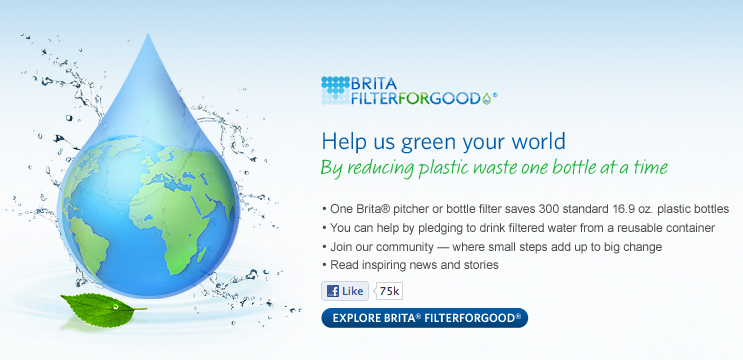
    Many companies are now producing products to help save the environment and cut down on the amount of plastic bottles the world uses every year. Brita water filters has made technology so that customers can make tap water from their home safe from harmful bacteria and pure while using their own glasses. Brita has a new campaign, Brita For Good, which asks customers to use their bottle and pitcher filters to save about 300 plastic bottles from being used and thrown away. The average filter needs to be thrown away every two months, so you don’t have to constantly be worrying about changing the filter. Camelbak is another company striving to save the environment from being consumed by waste. They have recently designed a product to solve water purification problems with a system that uses UV light. The bottle takes 60 seconds to purify the water inside, which is not too long to wait for pure and fresh water.

    -Kelsey Bendig, Brooke Keller, Andrea Blanton, Brian Burch

  • The trend of helping others

    With everything that is happening in the world today, it is nice to see that others are using their products to direct consumers’ attention to things other than America’s economy. Some companies have created a brand based on helping those in need. This trend has been one that can actually make a difference in the world we live in. These companies are using their consumers’ ethos to make them feel as though they are doing the right thing by buying certain products. This marketing tactic has proven to be a successful one because two brands especially have become increasingly popular throughout their mission to help those who truly need it.  

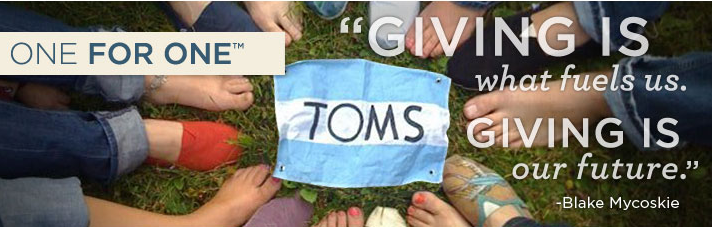
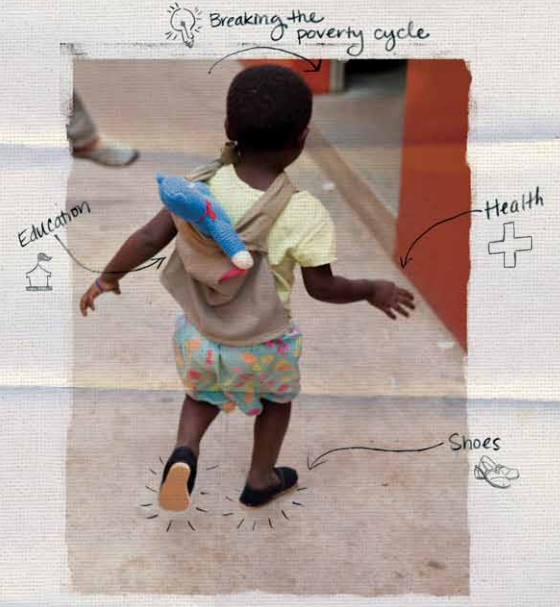
    If you haven’t heard of TOMS, you aren’t in with the latest trends.  Here on the campus of UNCW especially, TOMS are almost as big of a hit as Rainbows.  Not only do they look amazing and feel great, the TOMS brand is all about giving back.  For every pair of TOMS sold, the company donates a pair of their shoes to people in need.  The TOMS brand started back in 2006 with the creator’s trip to Argentina, where he saw first hand how many children had no shoes to protect their feet.  This is not only true in Argentina, but in many other developing countries where children grow up barefoot.  The TOMS brand slogan is ONE FOR ONE and is making a major impact on the trend of helping those in need.

    Chegg is a resource that hundreds of thousands of students utilize around the world to rent or buy textbooks to save money. One of Chegg’s incentives for students to rent or buy textbooks from their company is their philanthropic marketing strategy.  Chegg markets to their consumers that with their support, Chegg can plant trees around the world. Today, Chegg has planted over five million trees with their partnership with American Forest Global ReLeaf Foundation.  As stated on Chegg’s website these trees are planted worldwide to, “help regenerate areas damaged by wildfire, strengthen River Bounds, and restore wildlife habitats.”  In 2011, 175,000 trees were planted in Pondicherry, India, 40,500 trees were planted in Colorado and 700,000 trees were planted in Florida, just to name a few.  Chegg inspires students to be a catalyst for change around the world.  When their consumers purchase their textbooks through Chegg they can make a difference in the world by improving the environment.

    -Kelsey Bendig, Andrea Blanton, Brooke Keller, Brian Burch

  • Orange You Glad We’re Green?

    Although most would not argue with the fact that the push for “going green” is a necessary and important step for companies, as consumers and the target audience of the companies we must consider the reality. In an ideal world, companies are going green because it is the right thing to do and they are concerned about our environment. However, the skeptical student in me makes me take a step back before buying into their “concern” and think about their true intentions. Take a look at this commercial for Xango and their new “Green” initiative.

    Catchy jingle but is Xango really concerned about doing their part to help reduce their carbon footprint? Or in a world where going green is the latest fad, can companies simply not afford to stay in their old ways? Organic and “green” is what consumers want whether companies like it or not.  Although it is not completely a bad thing since it does force companies to make the change, it also may lead to consumers giving companies more praise than they deserve. So before you tweet about how XYZ company is “going green” think about the possible reasons behind their move before you press enter.

    -Alaethea Hensley, Jessica Kingman, and Lauren Phelps

  • Global Warming: A Global Concern

    Most of us are familiar with the term “going green,” and we all agree that it is a good thing.  Reusing, recycling and emitting less greenhouse gasses are awesome. 

    Greenhouse gasses have been a hot topic for many years, particularly when it comes to global warming.  Some scientists and Al Gore are looking into the effects that humans are having on the earth and saying we are the cause of global warming.  Many people are saying that high levels of carbon dioxide in the atmosphere are trapping heat and causing temperatures to raise, glaciers to melt and sea levels to change.  All those things are detrimental to many wildlife habitats and could ultimately lead to the extinction of human kind.  Some scientists are saying that we need to take The Polar Bear Pledge, find cleaner sources of energy and stop eating so much beef.

    Some scientists are saying that the sun simply goes through hot and cool spells, and right now it happens to be hot.

    Global warming due to human activity has been marketed to us very successfully, and most people think it is true because its prominence in the media has allowed for many repeated messages (agenda setting).  We are not trying to reject any of the scientific research that has been done to support global warming theories, but from an IMC standpoint we should know better than to blindly accept something as true without questioning it and researching both sides.  There are many theories about global warming that have nothing to do with humans. Some researchers say that global warming and cooling is a natural phenomenon that has been occurring since the beginning of time due to the amount of water vapor in the atmosphere.  Political analysts say that many people stand to benefit financially from global warming with the trading of carbon credits, and that certain politicians have dual roles in the matter, as advocates and investors.  Either way, it is wise to take a stance on the issue; the wellbeing of our world is at stake and it is up to us to protect it.

    -Stephanie Bakolia, Claire Outlaw, David Glaubach