Category: Endorsements

  • Worlds To Be Explored

    Video games…the staple of my childhood. From Banjo-Kazooie to Apex Legends; video games have been a part of my life since I can remember. The stories told, visuals seen, and music heard has all accumulated into the so-called adult writing this.

    If you have played video games most of your life you may have heard either a family, friend, or peer say, “Why are you wasting your time playing that game?” Hopefully, this did not result in you quitting spending time exploring the vast worlds video game developers have created. Instead, I hope this made you question why you truly enjoy spending your time racking up gold coins and virtual armor.

    For me, it was the sense of accomplishment and escape it offered. During middle school and early into high school I often found myself spending hours playing World of Warcraft. The expansive world and stories that Blizzard created drew me in and I spent six years playing every single day after school and on the weekends. I made a lot of life long friends through the game and created amazing memories. Of course, there are other games worth noting and that is exactly what the DICE awards were made for.

    wow-baf-fanart-contest

    Hosted by the Academy of Interactive Arts and Sciences, a non-profit organization recognizing interactive arts, the DICE awards allow for amazing video games to be noticed. This awards show recognizes not only the game itself, but the people who made it and the development teams who have led advancements in the massive interactive entertainment industry.

    It distinguishes the people who have spent years creating this one experience to be enjoyed by people around the world. The artists who pour every resource into this one entertainment piece that allows people to escape and experience accomplishments for a couple hours every day. The DICE awards are important because they recognize the people who take their time to make someone else’s life enjoyable. This year, God of War was awarded game of the year.

    ps4-june-refresh-god-of-war-three-step-banner-01-us-17nov16

    They also recognized Bonnie Ross, head of 343 Industries and a strong promoter of STEM and diversity efforts across the video game industry among women and other minorities. You might recognize the name if you are a massive HALO fan.

    So, next time someone asks you why you are “wasting your time” playing games, tell them you are experiencing interactive art. Explain to them the work that goes on behind the scenes and about the stories you have experienced and achievements you have made. At the end of the day if you enjoy playing video games as much as I do it will not really matter what others think. If you have made friends online you are surrounded by like minded and passionate individuals, who recognize the enjoyment video games can bring. So, keep on playing and enjoy your time exploring.


    – Christian Lombardi
  • Do Celebrity Endorsements Change the Way People Vote?

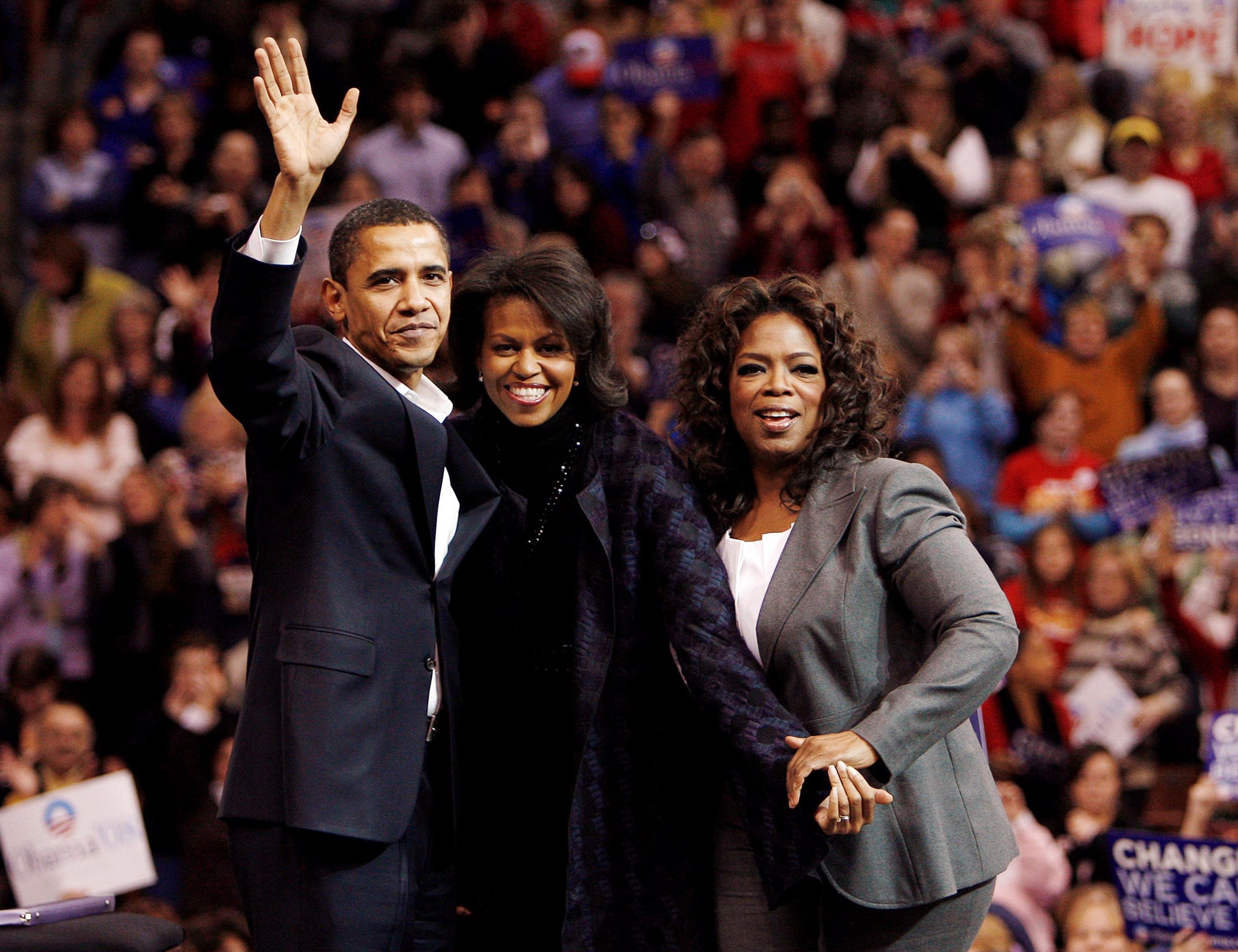
    180108-oprah-winfrey-michelle-obama-ac-532p_0fbd7ab0e3ab6c8a230fb18bc50e8ab0.fit-2000wThere is no denying how impactful celebrity endorsements can be on the public, especially in today’s political landscape. As the 2018 midterm election approaches, more and more celebrities are attempting to mobilize people to get to the polls and vote! But are these endorsements actually affecting candidates’ numbers?
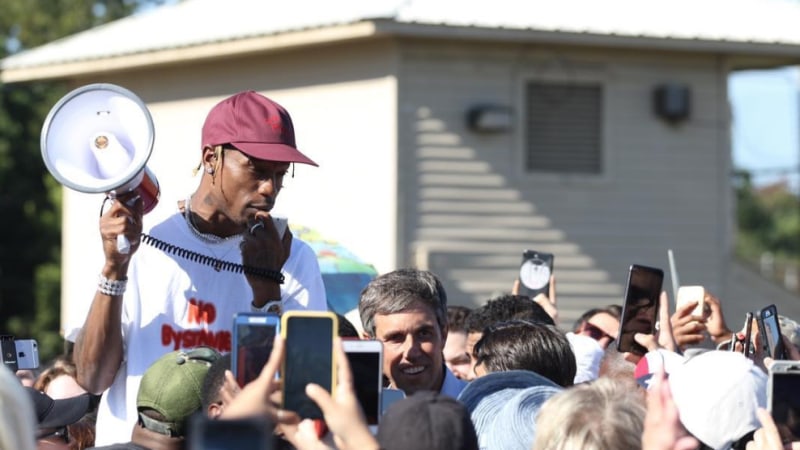
    Many celebrities have been seen personally endorsing candidates from their home states. Recently, Taylor Swift posted on Instagram that she will be voting for Tennessee candidates Jim Cooper and Phil Bredesen. Will Ferrell was spotted knocking on doors in Georgia endorsing Stacey Abrams for governor. Jack Black and Meryl Streep made large donations to Senator Claire McCaskill’s reelection fund. Even the Houston native, Travis Scott, voiced his support for Beto O’Rourke.

    ifxeonmt9clbgaoywl0b.png

    It is obvious celebrities have an effect on the way people think. People are more likely to use a product if they see a celebrity using that product or endorsing it.  Also, the more credible celebrities have a much higher impact on people’s opinions and decisions.  However, this does not seem to apply to the political scene.

    According to Gallup, Pew, and CBS News, celebrity-endorsed campaigns do not matter to the overwhelming majority of voters. CBS News polls revealed that 78% of people expected celebrity endorsements to have little to no effect on the election. Some experts say poll numbers may not accurately reflect the true impact that big-name celebrities have on campaigns.

    dt1.jpg

    So maybe, celebrities that endorse politicians aren’t doing the trick. One study found that an increase in young voter participation could be attributed to celebs that influence fans to “get out and vote”. Many celebrities are posting pictures of their “I Voted” stickers and tweeting to their fans the importance of having your voice heard by voting.

    1108-rocking-the-vote-primary-3-1200x630

    Overall, a voter who typically votes for one party is not going to turn around and become a supporter of another party because a celebrity told them to. But people who were undecided or weren’t planning on voting in the first place could be persuaded to get out to the polls. The link between celebrity power and politics has a long history and most studies claim it does not affect the way people vote. Perhaps the question we should ask is, “Do celebrity endorsements make you pay more attention?”

    – Lizzy Regnery


    References:

    http://theconversation.com/us-election-what-impact-do-celebrity-endorsements-really-have-66204

    https://www.marieclaire.com/politics/g24442884/celebrity-endorsements-politics-2018/

    http://www.electionanalysis2016.us/us-election-analysis-2016/section-2-campaign/us-election-what-impact-do-celebrity-endorsements-really-have/

    https://www.today.com/news/oprah-effect-can-celebs-sway-voters-wbna27227264

  • Tips for Your Linkedin Profile

    Applying for jobs has many young adults worried. There are ways, however, to boost your chances of landing that job. Creating a Linkedin Profile is one way to show your professionalism and is a good way to network with countless other people, but you are probably thinking that many people have these profiles. How can you make yours stand out? We have some tips that you can use when crafting your profile.1217linkedin

    1. Join as Many Groups as You Can

    Linkedin allows it users to connect with others and start groups. It is important to be in groups because the more groups you are in the more likely you will be found when searched by an employer. Be sure to only join groups that are relevant to the jobs you want to get. The more groups you are a part of the more times your name your will appear in front of someone looking to hire. You can really make yourself standout by leading a group too.

    1. Be Very Descriptive in Your Summary

    The more descriptive you are in your summary the better your chances will be in attracting attention to your profile. This space allows you to tell what separates you from your peers. It is a good resource to share your story. Also, be sure to include many keywords in the “speciality” section so that when searched, your profile will show up sooner.  blog-cover-1024x587

    3. Keep it Professional

    Your Linkedin profile should be completely different than your Facebook profile. Linkedin is not a place to chat with your friends or create a profile to see how many shares or likes it can get. It is about networking and giving companies an online representation of who you are. Your profile needs to be organized. If your profile is a mess then whoever is looking at your page will assume that you are a mess too.

    1. Show off Your Worklinkedin2

    Linkedin gives its users the opportunity to attach files or link websites in the profile. It is important to utilize this so that employers have a direct link to see the work you have done. Do not be afraid to show off your work and be proud of what you have done. Remember confidence is key. Make your profile a confident one.  

    1. Keep it as Updated as Possible

    Your Linkedin profile should not be outdated. A profile is not created and then left to be alone. It should be in motion and kept up to date. Your profile needs to constantly be updated so that employers see all your experience. If you leave important information out then they will have no way of knowing of it. They can only see what you put out there. Adding that extra information could mean the difference between getting hired or getting overlooked. If you have experience then be sure to let them know. Do not limit yourself.

    Let us know what you think of our tips and be sure to comment below if you have any of your own that you would like to share!

    -Austin, Jonathan, & Kaela

    Photo Sources

     http://exclusive.multibriefs.com/images/exclusive/1217linkedin.jpg

  • #VersaceLovesGaga

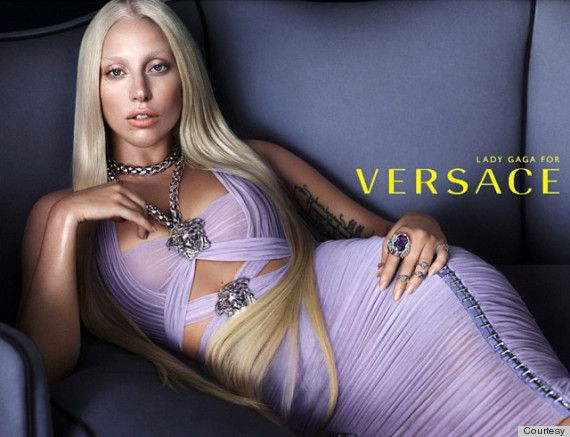
    Ever wonder what could happen if two fashion superstars like Donatella Versace and Lady Gaga got together?  They would open up a whole new world of consumers to both of their brands.  Versace is a well-known luxury clothing brand that been around since 1978.  The head lady in charge now is none other than Donatella Versace herself.  Although Donatella is distinguished as a talented designer, it’s her vibrant persona that makes her even more famous.  In recent years Versace usually went with non-famous models in their ad to focus more on the clothing instead of a celebrity name on it.  This spring fashion season Versace is trying a new campaign with Lady Gaga as the focus.

    This change up in the ad routine of Versace is very positive considering the social power these women have.   In leading up to this announcement, the two have been seen together everywhere.  This new well established friendship is great for the Versace brand.  Lady Gaga is a very influential woman not only in music, but in fashion.  When someone thinks of Gaga, their first thought is “I wonder what she’s wearing this time?”  She has a major advantage because of her power to expose this brand as much as possible.   Versace is thought of more as a mature brand, but with Lady G’s influence over a younger generation this can reel in a completely different group of purchasers then before.

    Lady Gaga is quite possibly a twenty-four hour ad campaign for the Versace clothing brand.  She is constantly being photographed in this brand that is then exposed all over the internet and in magazines.  She truly has embraced the product, she is being paid to promote to exact detail including her new Donatella look.

    Not only do these ladies have reach on tabloids, but their social media sites are a huge way to endorse the company as well.  The combined followers on twitter for Versace and Gaga is over forty-two million people.  The two are always promoting one another on various media sites, creating this whole new revolution for Versace. Including a personalized hash-tag for the Versace endorser herself, #VersaceLovesGaga.  This has been trending all over twitter, just proving how much influence she has also in the cyber world. This seems to be an extremely beneficial partnership for both brands and we’ll continue to see growth in Versace and Lady Gaga this fashion season.

    Melissa Shampoe

  • Ambush Marketing, Rule 40, and the Sochi Controversy You Aren’t Hearing About

    Have Olympic advertising partnerships gotten too big? Have rules and restrictions protecting these “official sponsors” gone too far?

    Dawn Harper Tweets her Opinion of Olympic Rule 40
    Dawn Harper Tweets her Opinion of Olympic Rule 40

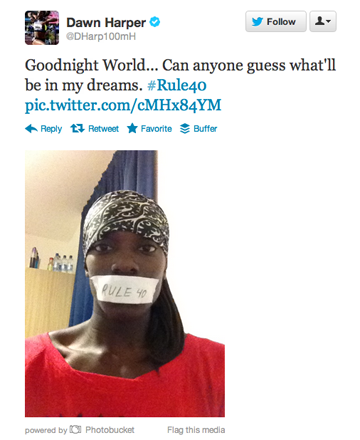
    Two-time track and field medalist Dawn Harper thinks so.  That’s why she posted this tweet with #Rule40 in protest of the IOC’s infamous Rule 40 during the 2012 Olympics in London.

    If you aren’t yet familiar with Rule40, it is a total ban on an athlete’s promotion of personal sponsors and their ability to acknowledge those who helped them get where they are today. It is especially focused on social media, where it has become a commonplace for athletes to thank sponsors with pictures and personal statements.

    Harper isn’t the only athlete to voice her displeasure with the effective “gag order” on competitors, but with companies spending upwards of $100,000,000.00 to associate their brands with the Olympics Games, is it really that hard to see why #Rule40 is in effect?

    Some have even gone as far to refer to the situation as a “battle”. Yet, despite the activism surrounding #rule40, without a doubt the biggest threat to the official Olympic sponsors is the ever-pervasive ambush marketers, silently stalking and waiting for their chance to steal some the Olympic brand name.

    These controversial ambush marketing campaigns attempt to capitalize on high-visibility events and locations through brand association without having to pay for the high-cost of officially sponsoring an event. My favorite example of ambush marketing involved the Minnesota Timberwolves selling this advertisement on the side of their stadium, where it happens to only be viewable from inside the nearby Minnesota Twins baseball stadium (where the official sponsor is Target).

    View of Timberwolves basketball stadium from inside the Twins baseball stadium
    View of Timberwolves basketball stadium from inside the Twins baseball stadium

    Ambush marketing may have been around in the advertising world for years, but the Olympics are seen as “the flagship event for ambush marketing”. Creative campaigns by infamous ambush advertisers like Nike often times attract more online buzz and conversation than the actual official sponsors.

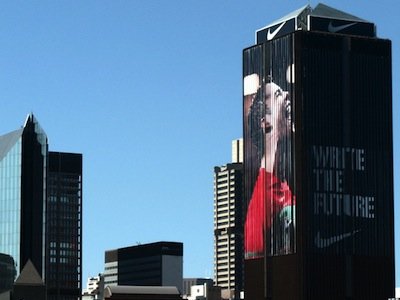
    During the 2010 World Cup in South Africa officially sponsored by Reebok, advertising juggernaut and infamous ambush marketer Nike, placed an eye-catching ad on the fourth tallest building in the entire city of Johannesburg. When paired with a lengthy viral video, many agreed that Nike had effectively hijacked the sponsorship from Reebok and gained closer brand association with the World Cup event.

    Nike ad in Johannesburg during World Cup 2010
    Nike ad in Johannesburg during World Cup 2010

    Another ambush marketing giant, Subway, has already launched its attempt to steal some association from the upcoming Sochi games.  Summer Olympian Michael Phelps and retired speed-skating icon Apollo Ohno both appear in TV commercials for Subway’s “$5 foot long campaign” due to some legal loopholes discovered by Subway.

    So is it reasonable for the IOC to implement Rule 40 to help protect sponsors? Freeskiier David Wise recently commented that, “[he] understand[s] the Olympics are a moneymaking game, but it’s sad for [him] to have all these sponsors who have really taken care of [him]…[he’s] on the biggest stage [he] can possibly be on and [he] can’t give them the representation they deserve.”

    Another athlete and social media enthusiast, Nick Goepper, has stated that he will be completely off of social media for the entirety of the Olympics. “I think it might be safer not to tweet anything,” said Nick, the 19-year-old favorite to win Ski Slopestyle gold. “All I know, it’s pretty much zero tolerance for branding.”

    The Sochi games are only 3 days away, but the media blackout protecting the games’ sponsors has been in effect since January 26. When the final medal is awarded and the closing ceremonies complete, which brands will you associate with the games? Which advertisements and commercials will be the most talked about and discussed? Is $100,000,000 too much to pay for a loose association with the Olympic rings?

    Will the “ambushers” steal the spotlight once again?

    – Greg Rothman

  • Tackling Consumers

    A round of applause for the Seattle Seahawks as the champions of the Super Bowl XLVIII. Even if you were not a fan of either the Broncos or the Seahawks, it almost a sure bet you tuned into the game. Every year over 100 million people observe what is arguably the sporting event of the year.

    The Super Bowl, however, is known for more than a fierce round of football – it’s known for the commercials. Here is time where advertisers pull out all the stops. Audiences expect commercials of both artistic and humorous grandeur. Prices for spots annually rise, this year topping at $4 million for a 30 second spot.

    Yet companies don’t spend millions for spots merely to entertain viewers. Unlike in decades past, advertisers are no longer in the business of explaining, but in the business of convincing and reinforcing. This is often the purpose of commercials we see every day. So, other than the guaranteed viewership, what is the worth of a Super Bowl spot?

    Credibility, claims Joe Glennon, assistant professor of advertising at Temple’s School of Media and Mass Communication. In an article for the Philadelphia Business Journal, Glennon explains that many advertisers walk away from the exorbitant price tag due to the simple financial standpoint that $4 million for 30 seconds is a largely impossible return on investment. He explains that of those who do justify the expense there are two primary advertisers – large, well known, companies who use the spots to reinforce brand propensities among current users, and smaller companies who use the spot as a means to launch into the market by gaining notoriety.

    So, in the myriad of last night’s entertainment, we have selected four commercials that beautifully represent the two credibility building categories Glennon noted; some attempting cut into, or further into the market, others reinforcing brand attitudes.

    Squarespace

    Squarespace created a spot that was a humorous, but accurate depiction of what the Internet is like – cluttered. Personifying memes, obnoxious advertisements, and the “duck face”, Squarespace offered to consumers that when using their services for website building and maintenance, the company could alleviate such distraction. So, why did Squarespace make it onto the list today? Simple, the Squarespace commercial introduced the company values and brand in a creative, weird, funny, and somewhat true way. Justifying the $4 million dollar expenditure seems to working so far – we are talking about – there’s probably a good chance other people are too.

    WeatherTech

    Although the ad was neither humorous nor heart-warming, WeatherTech’s commercial built on a sacred theme in the Super Bowl: American pride. Their slogan, “American Factories, American Raw Materials, and American Workers”, was enough to draw people’s interest and introduce their company as a defying the odds, sticking with their gut, and overcoming obstacles many American companies have faced. During a time when many gripe about US jobs becoming outsourced, it’s hard to say that WeatherTech didn’t prove their credibility with their national pride.

    Cheerios

    Yes, the adorable little girl is back and this time she is getting a brother. This 30-second ad wraps up what all of us remember of Cheerios and what the Cheerios brand wants us to remember about them; families coming together over love. Here Cheerios is showing how they are continuing to be a hearty and healthy part of growing families.

    Bank of America/(RED)/U2

    What does this commercial not do? It introduces U2’s new song “Invisible” (there is still time to get your free download if you haven’t done it), it highlights and raises money for the charity (RED), increases knowledge of AIDS/HIV, and shows Bank of America’s humanitarian efforts. Reinforcing their slogan, “Life is better when your connected”, Bank of America is giving a chance for its customers and the world to connect by helping to end an epidemic.

    What is your opinion? Do you think these commercials deserve a spot in these categories? What other commercials did you see that introduce the brand or reinforce existing brand propensities?

    Caroline Robinson, Savannah Valade

  • You can’t have your Coke and drink it too

    It’s one of the pillars of successful marketing, target your audience. Individualizing ads to particulars groups or regions of consumers ensure that messages have the most impact. But what happens when a company features a controversial scene in a spot, then removes it for some audiences and not others? Good marketing move or failure to take a stance?

    In its newest global campaign, “Reasons to Believe” Coca-Cola set out to inspire consumers that no matter what happens in life, it’s those small happy moments that make life worth living.

    Check out the commercial below.

    In most European countries the ad contains a scene of two gay men holding hands in front of their wedding party. However, in the Irish version (the video below) the scene has been replaced to feature a bride and groom.

    The Irish LGBT publication, EILE Magazine, brought attention to the issue, calling the removal an “inexplicable move”. In response to the criticism, Coca-Cola said that the advertisement had been tailored to individual markets so that the ad resonates with the people in each country where it is shown. The company defends the decisions saying that grooms were excluded from the Irish version because gay marriage is not legal in the country. EILE Magazine claims the Coca-Cola reasoning moot. The footage of the two grooms is known to be a video clip from a same-sex union ceremony in Australia – equivalent to a civil partnership in Ireland. Yet gay marriage is also illegal in Australia, but shown there. EILE claims the spot should have been suitable for Ireland as well.

    Coca-Cola has unequivocally made public their supporting stance on same sex marriage. Since 2006, the Human Rights Campaign continues to award Coca-Cola with a 100 percent ranking of their company polices and practices regarding LGBT. The Coca-Cola Company notes on their website, “To achieve a perfect score, companies must have fully inclusive equal employment opportunity policies, provide equal employment benefits, demonstrate their commitment to equality publicly and exercise responsible citizenship”

    Many are saying that Coca-Cola’s recent actions were hypocritical. Coca-Cola claims to support gay marriage, but their choice to remove a gay marriage scene from a commercial in Ireland, in which law does not prohibit such imagery, is misleading of the company’s values. Similarly, another beverage icon, Starbucks, has also gained attention for their hypocritical actions.

    Bryant Simon discusses the company Starbucks in his book Everything But the Coffee. Through his research he comes to discover that Starbucks isn’t delivering what they are promising in their brand – good coffee with little environmental impact. Claiming to buy fair-trade coffee from Rwanda and Nicaragua farmers, Starbucks was actually buying from bigger farmers and only buying 5-6 percent of fair-trade out of all the total coffee purchases.

    Much like Starbucks claiming to be environmentally friendly yet not taking the necessary steps in order to be green, Coca-Cola’s actions were just as misleading; claiming to support gay marriage yet removing a scene from one version of a commercial for the sole purpose of trying to please everyone.

    As future and current brand ambassadors we have to remember that every decision we make, including company policy decisions, become an integral part of brand, and when decisions are made that contradicts that it hurts the brand.

    On the other side of things, as consumers (and as Simon states in his book) we have to remember pursuing “solutions to highly complex social problems through buying and buying alone” doesn’t fix the problem or change the ideology. We have to stop relying and believing that buying certain brands is going to change a social issue.

    So, does Coke’s decision to take out the gay marriage scene hurt its brand identity? Should companies take stances on social issues? What practices do you follow to make sure this brand conflict doesn’t occur in your company or with your clients?

    Savannah Valade, Caroline Robinson, Elizabeth Harrington