Category: Campaigns

  • Elections are overwhelming, but not as overwhelming as bad public officials!

    Elections are overwhelming, but not as overwhelming as bad public officials!

    It should be no surprise that the midterm elections are around the corner. I’m sure we’ve all seen the plethora of ads and commercials that have taken up every inch of public space recently. Multichannel marketing is a sure-fire way to make certain your targeted audience doesn’t miss your message and the candidates this season knew what they were doing. They were all over your mail, your street signs, Facebook, Twitter, and YouTube. Even if you didn’t know their message, you knew their name. tenor
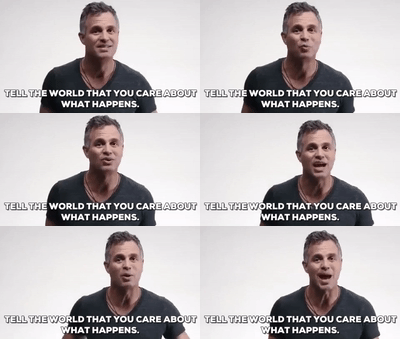
          Both tragically and thankfully, this election season is nearly over, however there is still plenty of time to get educated and get to the polls! Don’t let the rhetoric and oversaturated market you’re seeing scare you away!

    I understand how it could feel overwhelming with how intense our political climate seems to be nowadays. New policies and claims appear to be made daily that threaten the lives of minorities, women, the LGBT+ community, and many others. From DACA to birth control to trans livelihoods to gun control, there seems to always be something new and confusing to comprehend in the political sector.
    64b814bd-9f6f-496f-83f9-6f0ba3d07703       The issues lie with all the campaign ads you see, and the crazy claims being made by publications and political groups. Don’t let all the talk freak you out. This is an exciting and promising time in politics-we can make a real change. Take all the advertising you see with a grain of salt. We know to be responsible communicators and go into the world with honesty and transparency, and to do good. Unfortunately, not everyone communicates in this way and it’s important to keep that in mind. So, when the opportunity presents itself to make a difference about who gets to represent you in Washington, you need to take it.
    200w_d (1).gif

     Here’s five steps you can take to tackle this as educated as possible!

    1. Register
      Several states allow voters to register on election day! If you’re lucky enough to live in those few states, congratulations! If you’re a resident of NC I hope you planned and registered ahead of time, because the deadline has unfortunately passed. Registering to vote is the first step in our voting process and if the number of ads we see to encourage registration is anything to go by, it might be the most important. What can you do if you aren’t registered? If you missed the deadline this time around, don’t worry. There is a lot you can do to help the candidates you support. The rest of this list won’t be too useful for a while but feel free to continue reading anyways and share it! You never know who could need a little push in the right direction.
      2. Think
      You know what’s important to you and what values you want upheld. Really think of how you believe those values should be fought for in office. What do you want your candidates to stand for? Guide yourself by the issues you see discussed on the news, online, in your classes. How do you feel about gun control, abortion, education, universal healthcare? While I do believe the information we see is highly polarized and a lot of times dramatized, those are issues that matter. There are so many policies to have opinions on and the more you understand your own, the better you can decide who should stand up for you in government.
      3. Search
      Looking up a sample ballot for your address is the easiest way to conduct a search about the candidates you need to learn about. It’s not very helpful to distract yourself with all the political discussions when you don’t even know who’s running in your district.
      4. Check
      Read up and check on the candidates now! See who fits best with what you want to see in government. Once you’ve researched your ballot, spreading out and looking at other districts and states could be helpful to see whom the candidates associate with and endorse. We know the candidates in different levels of government will often associate publicly and belong to the same public groups to spread their message. Association is a powerful force when marketing and that sort of branding doesn’t come easy. Reputations matter, both in politics and in marketing.
      5. Vote!
      This is my favorite step. Go out to your voting place and fill in your ballot. Don’t forget to grab a sticker and share it online!

    My Post (4)

    More Readings!
    Main Source

    -Rachel Montesinos Jorro
  • “I’d like to buy the world a Coke”

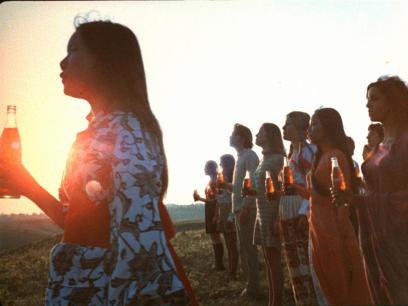
    In 1971 Coca-Cola launched one of its very first in-color TV commercials. It was named; “I’d like to buy the world a Coke” and has been called, “one of the best-loved and most influential ads in TV history”. It featured a multicultural cast with actors and actresses from over 20 countries singing together on a hilltop in Italy. All holding a cold bottle of coke in their hands.

    cocacolapic2

    The commercial has been called “groundbreaking” and was a part of the Coca-Cola campaign, “It’s the real thing”. The slogan, as well as the commercial was created by Bill Backer (creative director for the Coca-Cola account at McCann). The idea of the commercial came to Backer while in an airport on the way to London. He quickly wrote down the words, “I’d like to buy the world a Coke and keep it company” on a white napkin so that he would not forget it in the morning.

    cocacolapic1

    Backer got help from established song writers Roger Cook, Billy Davis and Roger Greenway to write the full song for the commercial. The song became such a hit it was recorded by the New Seekers, a British pop-band. It was so idolized that it was played on the radio as a full-on song.

    The lyrics read;

     “I’d like to teach the world to sing in perfect harmony”
    “I’d like to buy the world a Coke” 
    “And keep it company”
    “It’s the real thing—Coke is”
    “What the world wants today”


    The commercial has received praise throughout the years, and rightfully so. Davis truly captured the essence of Coca-Cola’s brand identity explaining that, Coke was more than a liquid refresher. Saying that, Coke is a “tiny bit of commonality between all people”.

     cocacolapic3.png

    The commercial gave hope to a multicultural world in where a bottle of Coke could be shared together amongst anyone in “perfect harmony”. The Coca-Cola bottle was used as a symbol of peace. By using a multicultural cast the commercial aimed for a world filled with greater acceptance and inclusion. Erasing divisions between people with different skin colors, ethnicities, and backgrounds.

    The commercial first aired in 1971. The same year as the US voting age was lowered to 18, Disney World welcomed it’s first visitors, the Pentagon Papers were published, and National Public Radio broadcasted for the first time.

    cocacolapic4

    A lot of things were changing at this time. You could possibly argue that in a state of doubt and anti-Vietnam war attitudes, Coca-Cola was ahead of its time releasing this “feel good” commercial focused on friendship and happiness. And it might have been a slight nod against the war oversees.

    Take a look at the commercial yourself! Why do you think this became such a hit? Why do you think it resonated with people?

    P.S. If you watched Mad Men, the final scene of the show is followed by the Coca-Cola Hilltop commercial. Showcasing just how iconic it was and still is today.

    – Olivia Nilsson

  • The Key to Success

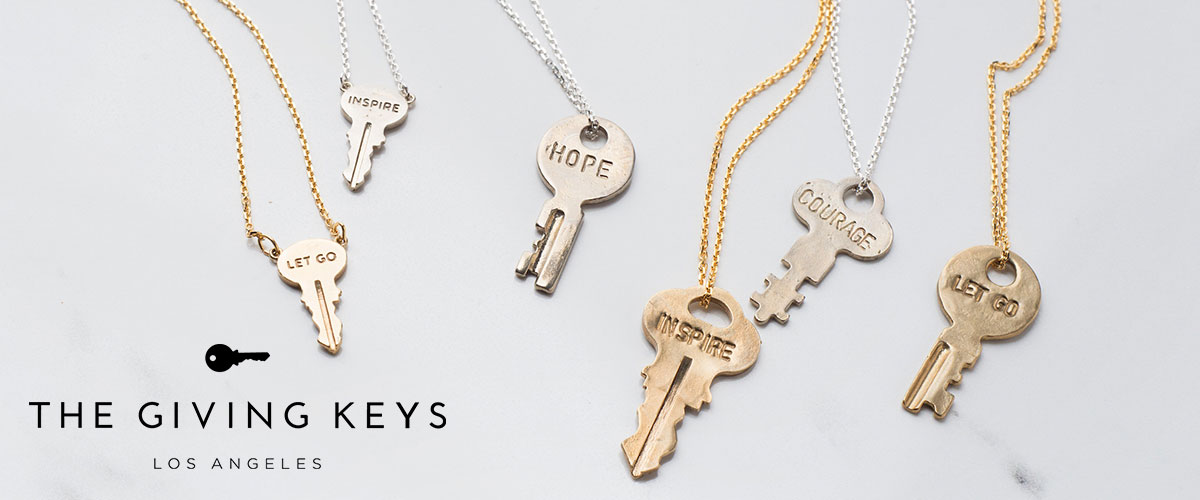
    What would happen if every company in the world was socially conscious? Would we diminish poverty or maybe end world hunger? This would be a simple solution to much of our worlds problems and it seems as though only a few companies have this figured out like The Giving Keys, a Los Angeles-based jewelry company.

    4-Charitable-Companies-we-LOVE-The-Giving-Keys.png

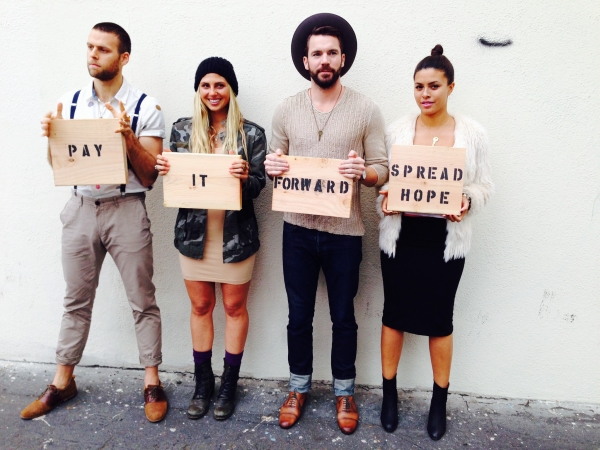
    The Giving Keys is not a nonprofit but a social enterprise.  They believe that the solution to ending generational poverty and homelessness is to provide jobs for those in need. Instead of raising donations, the company employs those transitioning out of homelessness. The Giving Key is a pay it forward company where you can purchase an collection of different vintage keys with phrases like love, breathe, courage engraved into them. You pick the key with the word that speaks most to you and then once you feel as though it has served its purpose in your life you give your key to a person who needs the message. Through your purchase you help those transitioning out of homelessness get jobs, the company has currently provided 70 plus jobs opportunities to those in need.

    tgk-header-1200x500-opt-1.jpg

    Simple and meaningful. These are two words which can be used to describe the keys. It seems as though it is the meaning and purpose behind the keys that sells them. Founder Caitlin Crosby says “We aren’t in this just to make money and be fashionable. We exist to change people’s lives”. Being socially aware and using that to set you apart from other companies can turn a simple idea turn into a widely known enterprise.

    904699_696285380410829_3501537327158763815_o.jpg


    Check out their website and see how they are changing the world one key at a time!

    Does a company with a social purpose make you more prone to buying their product? Why or why not?

    • Isabella Martinez


  • @POTUS

    rt-rump-plane-mem-161206_12x5_1600

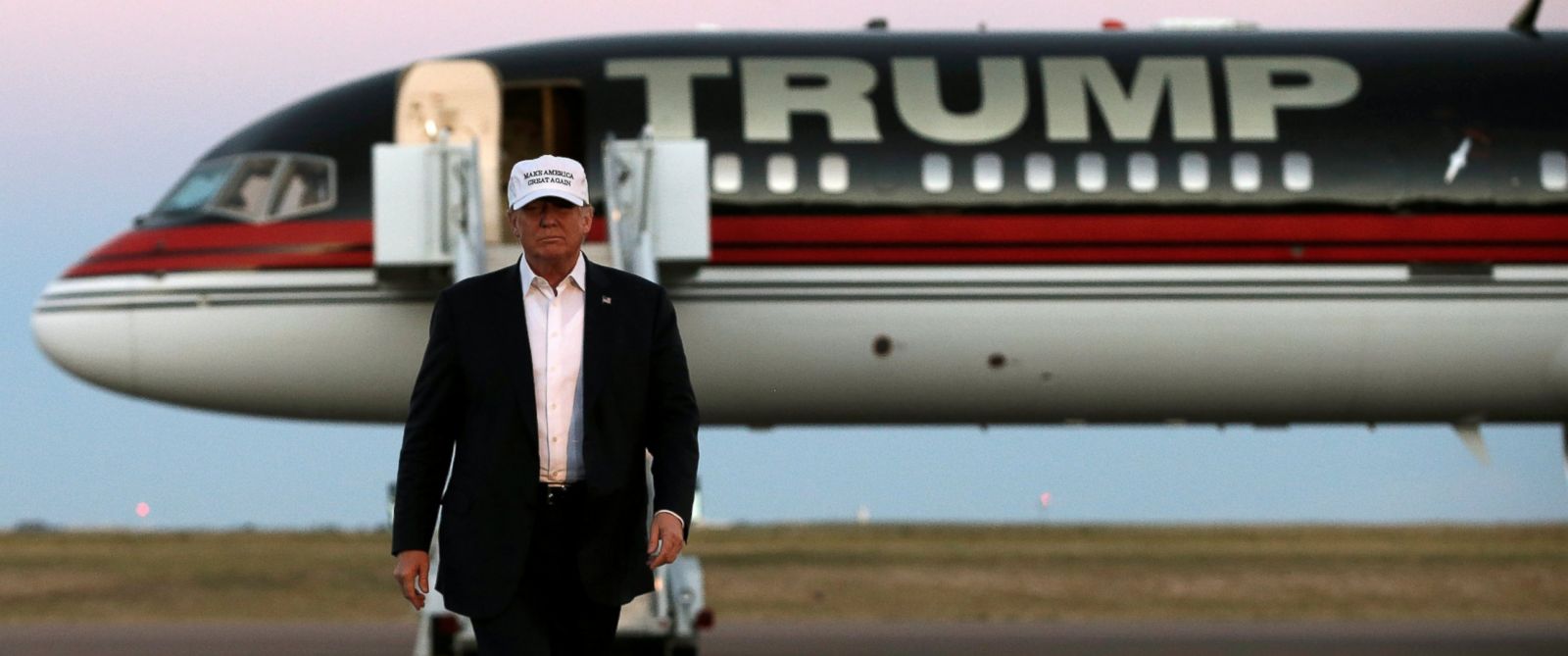
    Donald Trump as a citizen and as a presidential candidate was known to get himself into sticky situations on social media, more specifically Twitter.

    @realDonaldTrump engaged heavily in Twitter communication during the course of the election cycle. His ‘twitter-happy’ personality often came across aggressive and disrespectful. However, this was the brand that Donald Trump created for himself, as he knew what I was getting himself into.

    screen-shot-2017-02-03-at-10-14-41-am
    Donald Trump, just minutes before the inaugural ceremony, took the time to tweet for the first time with his newly adopted Twitter handle @POTUS.

    A little less than a month ago, on January 20th, Donald J. Trump was sworn into the Office. Also on that day, the now 45th President adopted the Twitter handle @POTUS. With this transition comes a bigger responsibility of how the President chooses to communicate using social media. President Trump must now reinvent his social media communication strategy, and re-brand himself as the President of the United States.

    Former President Barack Obama was the first president to utilize Twitter to communicate with the nation; However, the 44th President was not nearly as dependent on this form of communication as is President Trump.

    screen-shot-2017-02-03-at-10-21-03-am

    Ever since President Trump entered office, he has been utilizing Twitter and Facebook heavily. I have personally seen several events streaming live via Facebook. As many of us know, it can take up valuable time to generate a powerful message with only 140 characters. As students who are studying communication, we understand that a key skill to have in the process of “managing mutual responding” is to be able to generate effective and efficient messages to convey understanding to listening parties. It is not easy, especially with a limit of 140 characters. President Trump, however, seems to have no problems generating messages throughout the day among his Presidential duties. I can almost see the book on the shelf now…The Art of the Tweet by Donald Trump.

    Regardless of anyone’s opinions of President Trump’s policies, decisions, and beliefs, he is still breaking through barriers by trying to cut out the middleman in bringing you important information. If he is able to maintain ‘presidential etiquette’, do you think it is appropriate for President Trump to continue his frequent tweeting? Can this help prevent news sources from misinterpreting his attitude towards something, or an event that occurred? Just a couple points to think about.


    ~ Ben Yerby


  • Donald Trump: An IMC Approach

    Donald Trump: An IMC Approach

    Donald Trump

    By Daniel Dawson

    The race for our next presidential candidates has been nothing short of entertaining this year, to say the least. The Republican Party’s posterchild, Donald J. Trump, is currently the frontrunner in polls. When Trump announced his presidential campaign, our nation couldn’t help but look incredulously at the millionaire mogul who’s already built his successful brand through business, franchises and TV networks. Despite bluntness, controversial statements and even discrepancies in political speeches, Trump has garnered the support of thousands of Republicans and the praise of being one of the most candid, or “authentic” candidates—but how and why?

    Perceptions of Authenticity

    Can a political candidate, or anyone for the matter, be authentic? In short, no. Or at least this is what Andrew Potter argues, author of The Authenticity Hoax, a 2010 book that criticizes the modern individual’s search for an ultimately unattainable “authentic” self.

    In his chapter titled “Vote for me, I’m Authentic” Potter delves into the issue of voter apathy in democratic societies and how political campaigning and the media affect this. Most of us are used to manufactured speeches and the all-talk-no-results perception of politicians—and there’s been a trend of voter apathy, or the choice to not vote, in developed countries.

    Trumps political extremism manufactures a perception of authenticity which could motivate U.S. citizens to vote who may consider themselves apathetic. He delivers seemingly uncensored and extemporaneous speeches—however questionable they may be—that echo his results-oriented business background. Why does he have a larger following than, say, Carly Fiorina, former CEO of HP and businesswoman alike?

    The Media Controls It

    Agenda-setting theory, anyone? This communication theory says that the media manipulates what the public thinks is important. Basically, whatever stories have the most coverage in the news become the “important” issues—the flavor of the week. Trump, for a variety of reasons, has been covered practically every day by some type of media outlet since he announced his participation in the race. You probably have read a story or two about Trump, even if you didn’t want to.

    In a recent example of agenda setting not involving Trump—who won the first Democratic debate? Major media reports that Hillary Clinton was the clear winner when, according to online polls, Bernie Sanders was voted the winner by viewers. Is this a disparity of choice or opinion? Potter writes, “The media’s pundit class feeds this gladiatorial conception of political debates by treating them as a boxing match, with the post-debate analysis invariably focused on who scored what points, and whether any of the candidates was able to strike the mythical “knockout blow” (p. 172). While the media like to sensationalize, there are other factors involving what the media cover. In short, the media, across multiple outlets, can report that Hillary Clinton won when voters disagree.  How do we evaluate the ways we receive our news?

    Trump’s Brand

    Like all political candidates, Trump is a brand. Donald Trump is a symbol, a message and a vehicle for his message. Trump is a business icon and has built an empire over many years, but why is Trump running for president, too? Political IMC is integral to the success or failure of a candidate’s campaign—establishing ethos, effective marketing, political advertising, event planning and speech writing are just some components that go into the branding of a politician.

    “‘’Some people think this will be good for my brand,’ Trump concluded, as deep as he probes. ‘I think it’s irrelevant for my brand.’” This blasé quote came from Trump himself in a feature written by Mark Leibovich in the New York Times Magazine.

    I disagree with Mr. Trump. For public figures, every extension of oneself, every action, participation, speech, statement, declaration affects one’s brand. One’s brand is the essence and the story of who they are. While Trump will probably only gain revenue and face time with his campaign, to say that it doesn’t affect his brand is nonsense. Whether it’s good or bad is a value judgment, but it’s fair to say that is not now, Trump’s brand will see the effects of this year’s political campaign.

  • A.C.E. – Your Source for Campus Entertainment

    Please nod your head if you have ever taken another route to class pretending to be on your cell phone or completely ignoring someone who was trying to give you an event flyer. If you give your computer screen a nod, we applaud you.  However, if you are like 99% of the student population at UNCW and nodded your head–we understand.

    There are over 250 student organizations vying for our attention, membership and time so how do we pick what to attend? Our choices depend on how, or if, we hear about the event and how creative the marketing is. The Association for Campus Entertainment is the university’s student programming board Did you enjoy Hoddie Allen last year? That was ACE. What about when Maci Bookout from Teen Mom was here in the spring? That was ACE too.

    In the midst of everything college kids have going on, ACE provides an outlet for free entrainment. But just like every other student organization, they have to compete for your time as well. Integrated Marketing Communication, IMC,  allows us to diversify the means by which we achieve our marketing goals. A public relations campaign? Check. Social media presence? Also check. Cool and engaging advertising? Also IMC.

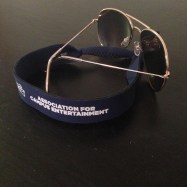
    ACE does this through an array of promotional tools each year, the first being through giveaways what college student doesn’t like free things? This year ACE gave phone wallets, Croakies, car USB adapters and staplers. This may seem like a mishmash of items but each one served a purpose: to be seen and get the ACE name known. Whether it is letting a classmate use the ACE braded stapler, or paying for food in Wag as you pull your OneCard out of your ACE branded phone wallet, ACE is marketing their brand. The goal is to increase the number of times a student sees a brand and how they associate it—hopefully in a positive light.

    image1

    There is more to promotions than simply getting a name out; ACE must also promote their events. There are the standard campus marketing methods such as banner, chalking and flyers, but in order to infiltrate the calendars of college students, you must take efforts farther. ACE is a brand that thrives on creative promotions, whether this be acting out a scene from an upcoming movie in the campus theatre or handing out paint brushes across campus for a Cheerwine and Design event. There is always something being passed out.

    A successful marketing campaign goes beyond creating and implementing the campaign. The ultimate goal of IMC, is to not only change one’s beliefs, but to change his or her actions. Whether this be successfully convincing students to change their plans and attend an event or sign up for ACE, we want them to act on our suggestions. So how do you think ACE stacks up, do you hear about their events through traditional means of advertising or through creative promotions across campus? Furthermore – how do you prefer to be wooed into coming to an organization’s event or do you organically decide to attend? Let us hear your thoughts and comments blow!

    -Amanda, Daniel, Kendall, Meleah and Luke

  • Brands – The Biggest Fans in the Game.

    According to ESPN.com, 49 percent of Americans are football fans…but just in case you’re not among them, football season can also mean a whole new ball game in the world of advertising.

    Companies will capitalize on anything they can and football season is no exception. Brands launch new campaigns both in preparation for, and during the season, in order to take advantage of the huge draw from football audiences. By gearing their products and services towards this huge target market, companies can add a new segment to their customer base regardless of whether they are directly related to football or not.  Advertisement strategies will range from direct involvement through sponsoring the NFL to simply trying to profit off the hype.  Football fans who are considering the Bojangles 20 piece jumbo tailgate special now have extra incentive to make Bojangles their game day choice. Bojangles is embracing football season with their second year of offering up football shaped Bojangles biscuits. These tasty bites are available for a limited time until September 26th.

    Boberry

    While food and football go hand in hand, make-up is a less traditional, yet still relevant way to show your team spirit.

    CoverGirl’s 2014 campaign featured a series of makeup and nail designs that represented each of the NFL teams colors and mascots. Inviting women to “Get your Gameface on” CoverGirl found an effective way to include their target audience, possibly otherwise ignored, in the team spirit so many Americans feel during the pro football season. This campaign is a prime example of the diversity of brands using football as a marketing technique, proving even CoverGirl is more than just a pretty face.

    covergirl

    ezebel.com/covergirl-on-nfl-sponsporship-we-support-female-empowe-1635251344

    Brands are not just incorporating football into their advertising campaigns but turning to social media for game day participation. During the 2013 Super Bowl, the power went out in the Mercedes-Benz Superdome while the Saints played against the Ravens. Minutes after the power outage, Oreo took to Twitter and posted “Power out? No problem. You can still dunk in the dark.” The tweet generated more than 15,000 retweets and according to www.mashable.com won respect for making the most out of the blackout situation. Other companies that took to Twitter during the power outage were Tide with their ad, “We can’t get your blackout. But we can get your stains out.” Jim Bean also got in on the hype via Facebook with their ad, “In case you missed the memo… tonight’s big game ‘power outage’ was brought to you by Jim Beam Black.”

    Dunk-in-the-dark

    http://wemedia.com/2013/02/05/lights-out-oreos-super-bowl-dunk-in-the-dark/

    Some people welcome football season in for the games, while others may find creative brand efforts to be the real source of entertainment. What’s your favorite football related campaign?

    -Carey Poniewaz, June Wilkinson, Aki Suzuki, Carey Shetterley, Alexis Trimnal