Category: Advertising

  • Igniting Your Inner Marlboro Man

    Image

    On January 10, Eric Lawson, an actor who played the “Marlboro Man” in print and outdoor advertising for the cigarette brand from 1978 to 1981, died from chronic obstructive pulmonary disease, commonly known as COPD—a disease frequently caused by smoking. Lawson was 72.

    Lawson isn’t the first Marlboro Man to die from a smoking-related disease. At least three other men who acted in the iconic campaign died due to causes linked to smoking cigarettes. David Millar died from emphysema in 1987, Wayne McLaren from lung cancer in 1992, and David McLean from lung cancer in 1995. McLean’s widow sued Philip Morris in 1996, claiming McLean had to smoke up to five packs of cigarettes per TV commercial filming. TV commercials for cigarettes were banned in 1971.

    The rugged, masculine Marlboro Man campaign was introduced in 1955 to market Marlboro to men, because at the time, filter cigarettes were regarded as feminine. The campaign ended in 1999, when the use of humans and cartoons (see Joe Camel) were banned as a result of the 1998 Master Settlement between tobacco companies and the state attorneys general. Today, cigarette advertising is primarily in magazines and retailers.

    Now, the very product the Marlboro Man advertised is ultimately taking away the actors’ lives. After he hung up his hat for Marlboro, Eric Lawson was an anti-smoking advocate, appearing in a public service announcement and a segment on Entertainment Tonight about the negative effects of smoking.

    Image

    Looking back at the cigarette ads of yesteryear, they definitely weren’t ethical, but they sold a lot of cigarettes. The Lucky Strike ad from 1930 claims a pack of Luckies protects against obesity. Today, we are more educated and know the real harm cigarettes cause. The percentage of adult smokers in the U.S. has dropped from 43 percent in 1964 to 18 percent today. (http://www.pbs.org/newshour/bb/health/jan-june14/lushniak_01-12.html)

    With the rising popularity of e-cigarettes, brands such as Blu are taking a “tough and masculine” approach. Does this ad remind you of something?

    Image

    Advertising for e-cigarettes does not fall under the same regulations as tobacco advertising because the product does not contain tobacco. However, e-cigs have not been proven safer than traditional cigarettes. Did Blu make an ethical choice by channeling Marlboro’s now-infamous campaign that made Marlboro the most popular cigarette brand in the country? Blu is a young brand that is advertising in a fashion similar to Marlboro did when it was new. If e-cigs are found to be not at all safer than tobacco cigarettes, should they be subject to the same regulations? What will it take to regulate e-cigarette advertising? These are questions to ask about the ethical implications of cigarette advertising today.

    -Nathan Evers

  • You can’t have your Coke and drink it too

    It’s one of the pillars of successful marketing, target your audience. Individualizing ads to particulars groups or regions of consumers ensure that messages have the most impact. But what happens when a company features a controversial scene in a spot, then removes it for some audiences and not others? Good marketing move or failure to take a stance?

    In its newest global campaign, “Reasons to Believe” Coca-Cola set out to inspire consumers that no matter what happens in life, it’s those small happy moments that make life worth living.

    Check out the commercial below.

    In most European countries the ad contains a scene of two gay men holding hands in front of their wedding party. However, in the Irish version (the video below) the scene has been replaced to feature a bride and groom.

    The Irish LGBT publication, EILE Magazine, brought attention to the issue, calling the removal an “inexplicable move”. In response to the criticism, Coca-Cola said that the advertisement had been tailored to individual markets so that the ad resonates with the people in each country where it is shown. The company defends the decisions saying that grooms were excluded from the Irish version because gay marriage is not legal in the country. EILE Magazine claims the Coca-Cola reasoning moot. The footage of the two grooms is known to be a video clip from a same-sex union ceremony in Australia – equivalent to a civil partnership in Ireland. Yet gay marriage is also illegal in Australia, but shown there. EILE claims the spot should have been suitable for Ireland as well.

    Coca-Cola has unequivocally made public their supporting stance on same sex marriage. Since 2006, the Human Rights Campaign continues to award Coca-Cola with a 100 percent ranking of their company polices and practices regarding LGBT. The Coca-Cola Company notes on their website, “To achieve a perfect score, companies must have fully inclusive equal employment opportunity policies, provide equal employment benefits, demonstrate their commitment to equality publicly and exercise responsible citizenship”

    Many are saying that Coca-Cola’s recent actions were hypocritical. Coca-Cola claims to support gay marriage, but their choice to remove a gay marriage scene from a commercial in Ireland, in which law does not prohibit such imagery, is misleading of the company’s values. Similarly, another beverage icon, Starbucks, has also gained attention for their hypocritical actions.

    Bryant Simon discusses the company Starbucks in his book Everything But the Coffee. Through his research he comes to discover that Starbucks isn’t delivering what they are promising in their brand – good coffee with little environmental impact. Claiming to buy fair-trade coffee from Rwanda and Nicaragua farmers, Starbucks was actually buying from bigger farmers and only buying 5-6 percent of fair-trade out of all the total coffee purchases.

    Much like Starbucks claiming to be environmentally friendly yet not taking the necessary steps in order to be green, Coca-Cola’s actions were just as misleading; claiming to support gay marriage yet removing a scene from one version of a commercial for the sole purpose of trying to please everyone.

    As future and current brand ambassadors we have to remember that every decision we make, including company policy decisions, become an integral part of brand, and when decisions are made that contradicts that it hurts the brand.

    On the other side of things, as consumers (and as Simon states in his book) we have to remember pursuing “solutions to highly complex social problems through buying and buying alone” doesn’t fix the problem or change the ideology. We have to stop relying and believing that buying certain brands is going to change a social issue.

    So, does Coke’s decision to take out the gay marriage scene hurt its brand identity? Should companies take stances on social issues? What practices do you follow to make sure this brand conflict doesn’t occur in your company or with your clients?

    Savannah Valade, Caroline Robinson, Elizabeth Harrington

  • “How REAL Will American Idol Get This Season?”

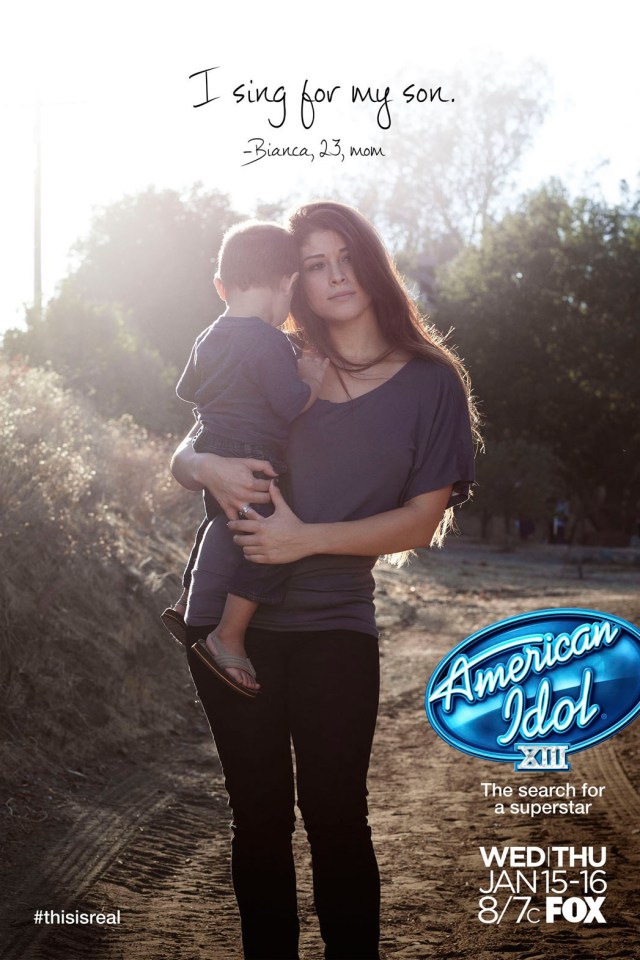
    It’s that time of year again! All our favorite shows are returning, after a seemingly long-awaited hiatus. The longest running singing competition, American Idol, has returned for its thirteenth season. But this season, Idol has been forced to change things up. The show is taking on a fresh, new approach to increase the amount of viewers by revamping their marketing schemes.

    In previous seasons, the show directed promotions towards the judges, featured cities, and upcoming drama. The initial aspirations of the show to seek out raw talent has slipped within the past seasons and in return, turned away viewers. At the shows peak, American Idol attracted 30.4 million viewers in season eight. Since then, viewer ratings have only decreased and reached an all time low with 14.3 million viewers for season twelve. As a result, Fox has decided to rebrand the show by bringing in a new team of producers, less drama-filled judges, and a more heartwarming advertising campaign.

    Within the past seasons, focuses of promoting the show featured drama among the judging panel rather than the actual talent of the contestants. Producers recently have realized the show has drifted away from the heart and original purpose of the show–discovering real people with real talent around the country. In an effort to rebrand their image, season thirteen marketers began focusing on the background stories of the contestants in hopes to return Idol to its initial purpose.
    American-Idol-2014-spoilers-480x265

    American Idol

    One component of the new advertising campaign features eight contestants in their hometowns sharing their personal motivations as to why they sing. Producers felt this new type of advertisement would help viewers identify with the stories and be able to relate to the contestants. Viewers are invited to participate in the hopeful journey of the “average Joe’s” transformation into a superstar.

    American Idol’s new video promotion of the upcoming season also focuses on introducing new contestants and excluding any drama or glamour of the judges (hallelujah). In addition to highlighting real contestants, marketers have incorporated social media by producing a new tag line for the show, #ThisIsReal, to encourage audience conversations on Twitter. Producers hope that the incorporation of social media marketing will increase the show’s ratings and reputation. The advertising of real people and their real aspirations are designed to appeal to a variety of audiences on social media platforms, especially the younger demographics.

    By incorporating a variety of platforms such as television, print and social media, American Idol hopes to attract a wide array of audiences through this new and improved IMC campaign. Do you think this new campaign will be effective in increasing and engaging audiences? Or will American Idol continue its downward spiral?

    -Briana McWhirter, Emily Foulke, Hannah Turner

  • Hyundai’s “Suicidal” Marketing Crisis

    In April of 2013, Hyundai released a commercial known as “Pipe Job” that left many people in the UK confused and shocked. The commercial’s primary goal was to illustrate the car’s new water engine emissions in a humorous way. However, due to this very commercial, Hyundai soon found itself in a potentially “suicidal” PR and marketing crisis.

    Image

    The ad was written about a topic that should clearly never be joked about and is very personal for many people across the world. The ad shows a man who is attempting suicide through inhaling harmful emissions, but fails due to the company’s new water engine emissions. Obviously, Hyundai released this ad in hopes that their audience would find humor in the failure of his attempt at suicide because of their water engine emissions. The company soon found that the ad produced the opposite effect. One of the main people who caused the uproar regarding this commercial was blogger Holly Brockwell. Holly wrote an emotional post regarding this poor taste in marketing.

    Image

    Unfortunately for Hyundai, this entire crisis could have been somewhat avoided. While of course it could have been completely avoided by simply never allowing the commercial to air, it could have also been avoided if the company had a crisis management plan implemented. Instead, Hyundai was slow in their apologies and even ignored reporters when they reached out for answers. This lack of communication for those with questions is what ultimately left Hyundai in a PR crisis that was nearly impossible to overcome. While Hyundai finally released apologies and statements, the damage that has been done is immeasurable. In the end, companies must be proactive when dealing with crises that involve their products to have a chance at managing them before they have a chance to become something larger.

    -Ryan Nagy

  • “Together We Make Football” and Community

    When I think about the NFL, or football in general, my mind immediately goes to large men with helmets running into each other; granted, I am not a big sports fan.  Most people’s minds wouldn’t imagine a little girl as the face of a major NFL ad campaign.  However, tiny Samantha Gordon, a ten-year-old pee-wee football player from Utah, is featured on the first commercial of the NFL’s “Together We Make Football” campaign.

    0ap2000000247227

    “Together We Make Football” is a contest where football fans of all ages, shapes and sizes are encouraged to share their stories of how football impacts their lives and what it means to them.  The contest narrows down to ten finalists, with five invited to take part in Super Bowl XLVIII festivities.  These stories can be in video, picture or story form and are posted to the “Together We Make Football” website.  The winners are chosen by a panel of judges, and the site’s visitors are invited to “like” the different posts; although these likes don’t have any affect on the contest winners.

    So how can I, someone so inexperienced in all things NFL, take an interest in “Together We Make Football?”  By applying it to what I know.  This campaign is a perfect example of how subcultures form and become such tight-knit communities.  The Social Identity Theory of communication states that people have many different versions of themselves depending on the groups, or subcultures, they belong to.  Different social situations are what drive these separate “selves” to behave in certain ways.  The title alone explains why “Together We Make Football” exemplifies this theory.  Defining fans of football as a “we” takes thousands of people and brings them together into a single unit.

    nfl-rivals-has-arrived-bring-your-rivalries-into-the-game-now_niesg_0

    Social Identity Theory goes further, saying that people belonging to one group tend to favor others within the group at the expense of others on the outside.  This holds true in the NFL regarding team rivalries in which fans become passionately involved.  Rivalries are like a double-edged sword, bringing together fans of the same team while creating tension with the fans of the opposing team.

    “Together We Make Football” reminds us that all fans are the same.  Ultimately, the goal is for their favorite team to win.  The campaign reminds us that all fans have the same goal, though it might be for different teams.  It allows people to share why they love the game so much, which can bridge the gap between rivals.  The different fan groups can become a single football-loving “we” because of the “Together We Make Football” campaign.

    – Maggie Dowicyan

  • Training Fresh with Subway

    Athletes today are not only known for their moment of fame on the big screen during game day, but also, for their many appearances endorsing popular products, brands, and, restaurants. Subway is a restaurant chain not only known for their popular array of sandwiches, but, also for the many athletic spokespeople that work to promote their healthy food options. Surpassing McDonald’s in number of worldwide restaurants, Subway is most definitely a force to be reckoned with in the fast food industry.

    Being so high on the fast food chain, a restaurant of such magnitude wants only the best to represent their brand. This is why Subway has chosen to use well-known athletes as celebrity endorsements. They have been quick to snag star athletes from a plethora of sports and now appear to be greatly reaping the benefits of their decisions, but, why? How do these athletes help encourage everyday consumers to eat Subway? Easy!

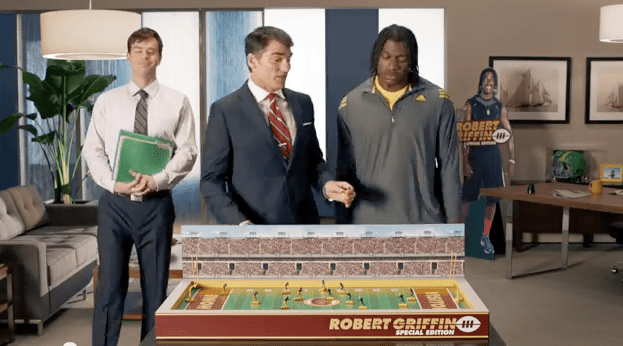
    Subway prides themselves on being able to partner with big name athletes such as Nastia Liukin, Michael Phelps, Robert Griffin III and Apolo Ohno, but, they did not pick these celebrities at random. According to Tony Pace, SVP and global CMO of Subway “We choose fans of Subway who just happen to be famous.”

    One of Subway’s newest marketing campaigns utilizes their celebrity endorsements by asking them the simple question; what’s your favorite Subway sandwich? Each athletes answer can be found on the Subway website under the “Famous Fans” tab.

    sub

    The page includes a brief description of each of their fourteen supporters alongside the name of their favorite sandwich. Subway’s slogan is, “Subway, the official training restaurant of athletes everywhere.” This goes hand in hand with their promotion of healthy eating and low-calorie sandwich options. Yet still, many want to know why just the sight of their website or viewing of a thirty-second commercial clip makes us want to eat Subway.

    It has to do with the attribution theory, studied in many communication and psychology classes. Viewers of Subway commercials see famous celebrity athletes supporting Subway and attribute their success to Subway and its healthy sandwich options. One of Subway’s newest commercials features the famous Washington Redskin’s quarterback, Robert Griffin III, better known as RG3. Throughout the commercial the narrator makes Comments such as, “RG3 trains hard and smart with low-fat protein-rich turkey breast” and “RG3 always scores with his fav, Subway turkey breast with spinach and tomatoes.” This creates an automatic correlation in the mind of consumers between the success of Robert Griffin III and his decision to eat at Subway.

    RG3

    As we continue to see RG3 and other athletes on Subway commercials, and hear about all of their many accomplishments, we will most likely continue to choose Subway as a top fast food restaurant. I mean, who else wants to eat at the same restaurant as Jarvis Jones, Mike Trout, and Carl Edwards? We do! This healthy promotion is one that has everyone giving Subway two thumbs up and a stamp of approval.

    -Caitlin Ford, Kaitlin Bateson, Parker Farfour, Alex Corrigan

  • “Everything for U”: Target’s Brilliance…Part Two

    Since Target has proved their brilliance once again with their back-to-school marketing and advertising campaigns, we just had to talk about it again! For years, companies have struggled to invent new and innovative ways to advertise this exciting time of the year.  However, Target has perfected profitable, long-term campaigns and has successfully created fresh, new advertising strategies.

    img-thing

    As Thursday’s post mentioned, Target has been successfully hosting Target After-Hours Busing Events for twelve years.  Adding UNCW to its list of schools this year was very popular amongst students in Wilmington. The idea of getting to shop for trendy dorm and apartment materials after hours gives students the feeling that Target is catering to their needs personally. This year, Target took that personal touch one step further.

    With all the hype surrounding live events and social media, Target decided to try their hand at it as well.  Bullseye University, Target’s back-to-school campaign, created five dorm rooms decorated with Target products that real, soon-to-be college students lived in from July 15th to July 18th.  Viewers could interact with the participants by asking questions through social media, entering drawings, and purchasing products without interrupting the streaming video.  This campaign is the perfect way to reach their target audience, college student. Target has not just promoted their brand, but has given their audience an opportunity to interact with their brand.

    Advertising enforces the idea of a Commodity Culture.  Commodities are marketable items that satisfy the wants and needs of consumers.  In many ways commodities are a central aspect to a culture’s values, traditions, and meanings.  Target has mastered the idea of appealing to the Commodity Culture, especially in its Back-To-College marketing strategies.  On their Back-To-College webpage, the “…for U” theme is prevalent for every category of dorm essentials.  The home page advertises an end of back-to-school-season sale, with “Deals for U” stamped in the corner. When you click on “college bedding,” a picture of the many colorful Twin XL beds that college freshmen are so familiar with, with the phrase “Zzz’s for U” in the same position.  Target’s website is advertising the personalization aspect of their products to college students.  Making sure their dorm room, or apartment, and school supplies are able to tell the story of who they are to their classmates.  Commodity Culture states that people define themselves by what they purchase.  Target understands that young adults are finding themselves in college and want to stand out, which they encourage by allowing this personalization.

    everything-for-you-footer

    -Maggie Dowicyan, Tilson Hackley, Hilary Hall, Kelsey Raskob, Christine Schulze