Tag: television

  • UNCWingSpan

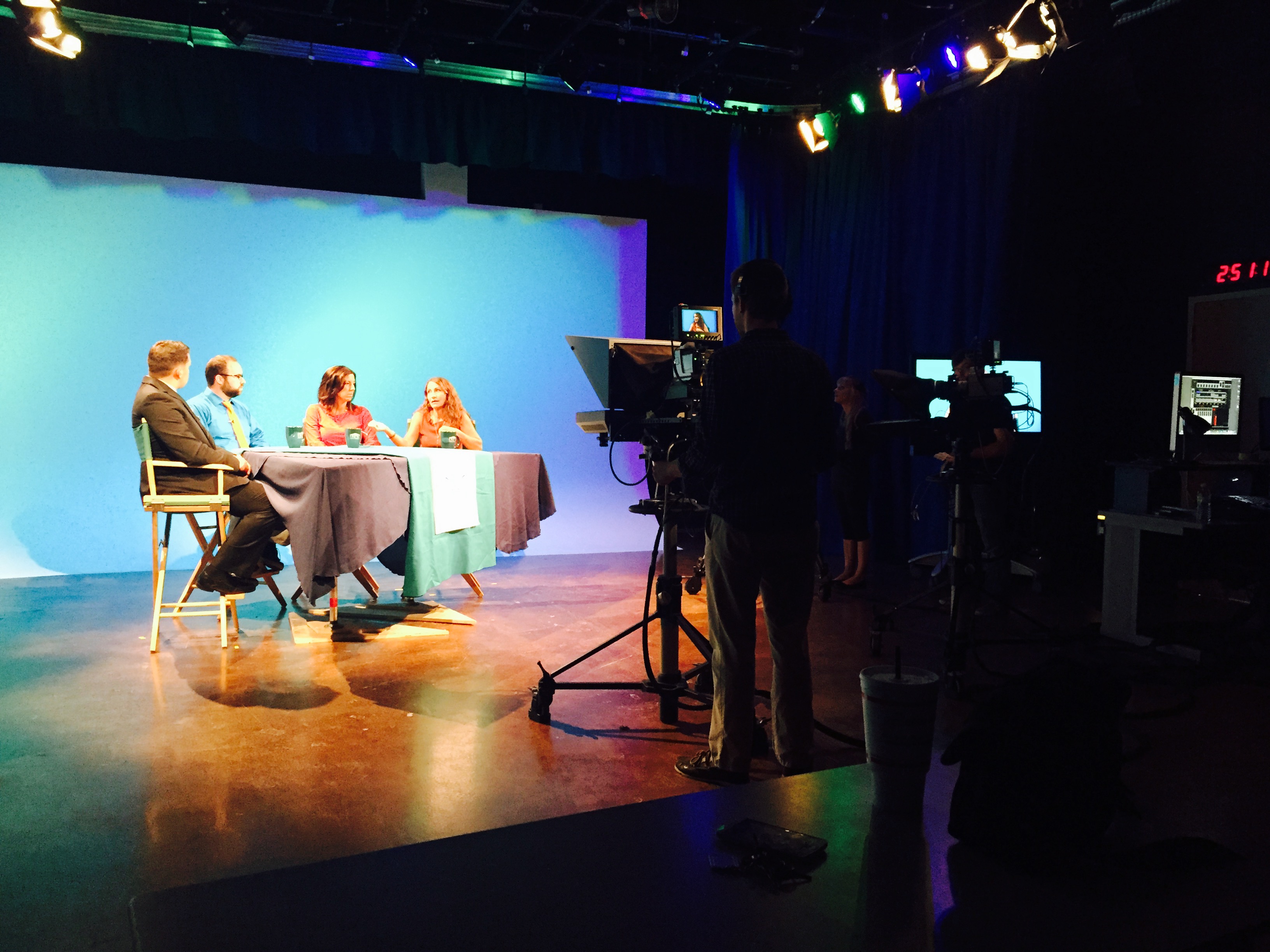
    11988465_1160279773988423_7033451740836374441_nIn case you haven’t heard the buzz throughout the halls of Leutze, there is a new project on campus called WingSpan. WingSpan is a weekly talk show that discusses political issues with guests who are experts on various topics. In the first episode, Wilmington Mayor Bill Saffo discussed the economic development of Wilmington. During the second episode, County Commissioner Rob Zapple discussed environmental incentives in our region.

    An ETEAL funded project, WingSpan is produced entirely by COM 351, Media and Politics. The students are responsible for the research, production, and promotion of WingSpan, under the guidance of Dr. Jennifer Brubaker. The first step for branding the television show included a naming contest throughout UNC Wilmington’s campus. Students were encouraged to submit possible names for the show, winning the contest and prizes. This contest raised awareness for WingSpan, and directly engaged one of the show’s publics – college students.

    For the remainder of the ten-week show, the students are reaching out to different UNCW campus organizations, who pertain to the topic for that week. In the second episode, COM 351 contacted organizations such as The Plastic Ocean Project. They ensured students who are passionate about the environment- to tune in and watch the show that week. WingSpan recognizes the importance of discussing topics that resonate with the students at UNCW.

    The group of PR and promotion students understand the significant need to have a presence on social media – further connecting and building relationships with the viewers. WingSpan students plan to continually push for the UNCW community to get involved through social media interaction, using the hashtag #WingSpan. Media’s role is to tell you what to think, not how to think. According to the Agenda Setting Theory, mass media has the ability to transfer the salience of issues on the news agenda to the public agenda. WingSpan recognizes the importance of remaining unbiased, and simply giving viewers the tools necessary to form their own opinions on political topics.

    Screen shot 2015-10-01 at 10.42.31 AM

    The twitter account raises political issues with its followers and encourages discussions, without a bias toward one opinion over another. As represented by the tweet, WingSpan is presenting the political issue of education. Wingspan encourages the community to think about and discuss the topic, by sharing data regarding the educational system. It is evident the students understand their roles and goals: to inform students and the community about political issues. COM 351 Media and Politics encourages students, faculty/staff, and the Wilmington community to think about political issues, not how to think about them.
    FullSizeRender

    In a city that has been a production hub for many years- it is an exciting opportunity for UNCW students to experience the other side of television, first hand. You can follow WingSpan on FacebookTwitter, and Instagram, and tune in on Fridays at Noon on www.uncwingspan.com, or Mondays and Wednesdays at 6pm on TLN.

    -Jonathan Callahan, Erin Fouhy, Julia George, Joseph Hines, and Sarah Suggs

  • The fall of network TV

    With the start of fall comes much anticipated television network premieres. Major broadcasting networks debuted new series to compete with the established streaming community. Fox’s Minority Report, Scream Queens & Rosewood, ABC’s The Muppets, NBC’s Heroes Reborn, Blindspot & The Player, and CBS’ Limitless & Life in Pieces were expecting high ratings, but most did not meet expectations. The Muppets and Rosewood were the two exceptions.

    With Netflix growing to over 65 million subscribers, the streaming platform has started to gain control of the TV market. AdAge reported every single TV network drama that aired on Tuesday night suffered a double-digit decline in ratings. One theory that could explain the drop in numbers is the Media Ecology theory.

    Screen Shot 2015-09-25 at 12.04.21 PM

    Media Ecology theory is defined as the study of complex communication systems as environments, furthermore, how the medium in which the message is delivered is equally as — if not more — important as the message, itself. In this case, Netflix is taking advantage of its medium by being more convenient for the consumer. Viewers can stream content on multiple devices, anywhere, at anytime. According to Reed Hastings, Netflix CEO, all TV will move online by 2030, proving true to the theory.

    While Netflix is currently thriving, network TV still has an appeal to viewers. Families still watch TV together and the anticipation of a new episode each week brings viewers back; a few disadvantages of Netflix. Although streaming is convenient, some viewers appreciate the ability to follow a show together as a community. However, Hastings believes the transition to an online platform is “kind of like a horse – you know, the horse was good until we had the car.”

    Netflix-Streaming-Devices

    With networks still releasing shows next week, will they follow the current decline of network TV? As a viewer, do you prefer an online platform or network TV?

    – Nick, Melanie, Mary & Patrick

  • How to Pitch to the Who’s Who of Wilmington Media

    So maybe you aren’t an advertising or public relations expert, but you do need to get your local business’s name and message out to the media. Pitching to the media isn’t as easy as submitting a release and expecting it to show up in publications. Despite being aimed at mass audiences, media outlets still have targeted content. It’s important to keep in mind a variety of factors when deciding which outlets you want to pitch to and how to execute those pitches.

    The first and most important factor is understanding the audience. If you know your audience this will “help you choose the media that will deliver your sales message most effectively”.

    In “How to Pitch 6 Things You Must Know” Jeff Haden explains that understanding the media’s readership and demographics ensure that your advertisement and business match. Outlets often provide a page that covers information such as the demographics and psychographics of their readers or subscribers – average age, most predominant gender, and what their interests are. Below is an example from Wilma Magazine’s website.

    wilma web screenshot

    Once you have decided on the outlet you want to make sure your pitch has the seven values of newsworthiness such as, timeliness, impact and proximity. You can read more about these here.

    The hardest step in a pitch is actually finding the right person to pitch to. So below are some tips from Carrie Morgan and some suggested Wilmington area outlets to pitch to.

    Local Broadcast: WECT 6 Wilmington, WWAY 3 ABC, CBS 10 Wilm, News 14 Carolina, The Cape Fear CW 3.2.

    • Start with emailing the news desk.
    • Look for an online staff directory.
    • Call and ask questions.
    • Pitch the producer for that specific show.
    • Watch the news.

    Local Newspapers: Star News, Lumina News

    • Look for specific beat reporters.
    • Don’t pitch to the editor in chief.
    • Get familiar with the staff directory.
    • Read their job descriptions.

    Local Magazines: Encore, Salt, Men, Ink., Wrightsville Beach Magazine, Wilmington Magazine, Focus on the Coast, The Greater Wilmington Business Journal, Wilma.

    • Always pitch to the editor.
    • Obtain a staff directory.
    • Don’t reach out to the publisher.
    • Identify regular columnists.

    Local Radio: Coast 97.3, Z 107.5, Sunny 104.5, WWQQ 101.3, 94.5 Hawk, 93.7 & 106.3 The Dude

    Noticing a theme? Be familiar with who the writers are and what they write about. Don’t auto generate your pitch; personalize according to readership, reporter, and relevance. Furthermore, make it easy for those you are pitching to. Don’t add extra fluff, make sure the who, what, when, where, and why of the pitch are all clearly identifiable.

    Knowing how to pitch your business or brand is a valuable asset. Do you have any tips on pitching to the media? Share them with us in a comment below!

    Caroline Robinson, Elizabeth Harrington, Savannah Valade

  • Tackling Consumers

    A round of applause for the Seattle Seahawks as the champions of the Super Bowl XLVIII. Even if you were not a fan of either the Broncos or the Seahawks, it almost a sure bet you tuned into the game. Every year over 100 million people observe what is arguably the sporting event of the year.

    The Super Bowl, however, is known for more than a fierce round of football – it’s known for the commercials. Here is time where advertisers pull out all the stops. Audiences expect commercials of both artistic and humorous grandeur. Prices for spots annually rise, this year topping at $4 million for a 30 second spot.

    Yet companies don’t spend millions for spots merely to entertain viewers. Unlike in decades past, advertisers are no longer in the business of explaining, but in the business of convincing and reinforcing. This is often the purpose of commercials we see every day. So, other than the guaranteed viewership, what is the worth of a Super Bowl spot?

    Credibility, claims Joe Glennon, assistant professor of advertising at Temple’s School of Media and Mass Communication. In an article for the Philadelphia Business Journal, Glennon explains that many advertisers walk away from the exorbitant price tag due to the simple financial standpoint that $4 million for 30 seconds is a largely impossible return on investment. He explains that of those who do justify the expense there are two primary advertisers – large, well known, companies who use the spots to reinforce brand propensities among current users, and smaller companies who use the spot as a means to launch into the market by gaining notoriety.

    So, in the myriad of last night’s entertainment, we have selected four commercials that beautifully represent the two credibility building categories Glennon noted; some attempting cut into, or further into the market, others reinforcing brand attitudes.

    Squarespace

    Squarespace created a spot that was a humorous, but accurate depiction of what the Internet is like – cluttered. Personifying memes, obnoxious advertisements, and the “duck face”, Squarespace offered to consumers that when using their services for website building and maintenance, the company could alleviate such distraction. So, why did Squarespace make it onto the list today? Simple, the Squarespace commercial introduced the company values and brand in a creative, weird, funny, and somewhat true way. Justifying the $4 million dollar expenditure seems to working so far – we are talking about – there’s probably a good chance other people are too.

    WeatherTech

    Although the ad was neither humorous nor heart-warming, WeatherTech’s commercial built on a sacred theme in the Super Bowl: American pride. Their slogan, “American Factories, American Raw Materials, and American Workers”, was enough to draw people’s interest and introduce their company as a defying the odds, sticking with their gut, and overcoming obstacles many American companies have faced. During a time when many gripe about US jobs becoming outsourced, it’s hard to say that WeatherTech didn’t prove their credibility with their national pride.

    Cheerios

    Yes, the adorable little girl is back and this time she is getting a brother. This 30-second ad wraps up what all of us remember of Cheerios and what the Cheerios brand wants us to remember about them; families coming together over love. Here Cheerios is showing how they are continuing to be a hearty and healthy part of growing families.

    Bank of America/(RED)/U2

    What does this commercial not do? It introduces U2’s new song “Invisible” (there is still time to get your free download if you haven’t done it), it highlights and raises money for the charity (RED), increases knowledge of AIDS/HIV, and shows Bank of America’s humanitarian efforts. Reinforcing their slogan, “Life is better when your connected”, Bank of America is giving a chance for its customers and the world to connect by helping to end an epidemic.

    What is your opinion? Do you think these commercials deserve a spot in these categories? What other commercials did you see that introduce the brand or reinforce existing brand propensities?

    Caroline Robinson, Savannah Valade

  • Remember When… Cupcakes Were Just for Kids?

    Think back to your elementary school days.  Were you one of the “lucky ones” whose birthday happened to fall on a school day?  If your parents were anything like mine, this probably meant having the honor of bringing your class a huge batch of store-bought (or on the rare occasion, homemade) cupcakes.  Right now you’re probably picturing them, covered in sprinkles and icing that turned your mouth bright colors, maybe decorated with plastic Barbie or Spider-Man rings that everyone would wear for the rest of the day.  Back then cupcakes could make you king or queen for a day, at least in the eyes of your classmates.

    Image

    Nowadays cupcakes have a different reputation.  An exceptional batch could win you $10,000 and instant fame.  Thanks to television programs that highlight the new art of cupcake baking, these mini treats are taking the country by storm, and it’s not just the kids that are buying in.

    In 2010, the show “Cupcake Wars” began airing on the Food Network.  Each episode brings together 4 top-rated cupcake bakers from across the country to compete for $10,000 and the chance to debut their cupcakes to crowds of America’s elite at events such as awards shows and charity parties.  The list of ingredients these bakers are given ranges from fruits and nuts to chili peppers and vodka and the finished products are a far cry from the yellow cake and chocolate icing of our childhood.

    The popularity of cupcakes is rapidly spreading and the evidence is popping up in cities nationwide.  Cupcake bakeries that specialize in traditional, exotic, and chic flavors are now conveniently located next to your favorite coffee shops and boutiques.  These bakeries are rebranding the phenomenon of the cupcake with unique flavors and styling that aim to please a more adult crowd.  Not only are they a pleasure for the palate, but cupcakes these days are like a new accessory.  They can be as high-end as the bakeries that produce them and the clientele that consume them.   A cupcake bakery called Georgetown Cupcakes, also famous for a television show that airs on TLC called “DC Cupcakes,” has catered to clients such as Kim Kardashian.

    ImageHowever, it’s not just the ingredients or the celebrity that make cupcakes more appealing to adults.  Now, anyone over the legal drinking age can partake in fine cupcake-inspired wine and vodka produced by Cupcake Vineyards.  Why not pair your cupcake with a glass of wine?  Bakeries and other specialty shops now host cupcake and wine tasting events where adults can mingle and the two indulgences can be enjoyed side by side.

    So is this new trend something to expect from all of our childhood favorites? Will popsicles be the next big thing?  Leave it to the media to help us decide.  Until then we might as well have our cake, and eat it too. Bon appétit!

    Ally Walton, Lauren HabigErin Kiffmeyer, Hannah EureGene Lee

  • Ron Paul, Who?

    Over the past eight years, the media coverage regarding Ron Paul has been very lackluster to say the least. Although most of the coverage he has received has been positive, the overall amount is significantly lower than the other candidates running. The messages he supports are often considered the most accurate and truthful by any candidate and many believe him to be the most qualified for the political office. However, the media seems to have its own agenda, and seem to have a different idea on who should be the frontrunner.

    Although there are four candidates, CNN seems to believe that only three are relevant. Missing from this photo is Ron Paul, sitting just left of candidate Santorum.

    Both CNN and Fox News are partially to blame for this so-called “media blackout”, and have not been giving fair coverage to Congressman Paul. When it comes to debates or discussion, Ron Paul seems to mysteriously disappear from the subject and is often overlooked. In a recent interview with Fox News, he states that he has observed that the amount of coverage on himself post-debate has a ratio of about 90:1 in favor of his opponents. This shows a tendency that the media does not believe that Ron Paul has the ability to win the candidacy and therefore neglects to give him adequate coverage.

    Although the media coverage on Ron Paul is largely absent from television and news broadcasting channels, he receives overwhelming support on major social media networks. Seeing as the majority of his supporters are those of a younger generation, Twitter plays a large part of his support and communication between his fans. During a recent poll, the Washington Post found that from July of 2011 to January of 2012 that the amount of mentions on Twitter significantly increased from about 30,000 to almost 260,000. Compared to Newt Gingrich who had 294,000 mentions, Ron Paul still comes in second. Luckily, thanks to his many loyal supporters there is still a good chance for him to succeed despite the media’s lack of belief.

    Leslie Tyler, Leanna Marshall, Bryce Koonts, Julius Roberts