Tag: Sports Week

  • March Madness: The True Underdog Story

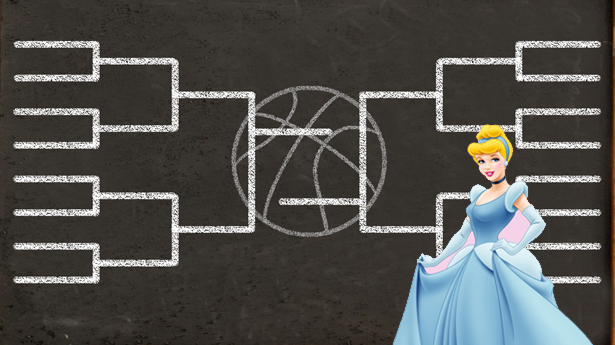
    Every NCAA Tournament kick starts spring and there is truly nothing like the opening days of tournament basketball. People have put all their time and effort into studying brackets for their office or friendly pool. As the tournament starts we all question whether a 16 seed will finally upset a number 1 seed. Yet again, this year it did not happen. No matter what happens there are always upsets, and this tournament was no different. After the upsets occur the “Cinderella Story” comparisons start to fly around. Marketers and advertisers beg to ask who will wear the glass slipper this year.

    For some reason our country loves the underdog story. We love to see Rocky make a courageous comeback and win the fight in the last round after getting beat the entire time. The NCAA Tournament has its fair share of underdog stories this year with Virginia Commonwealth, Richmond, and Butler. Butler is the most ironic of the “Cinderella Stories” because they reached the NCAA Final last year and came narrowly close to beating National Champion Duke. So why do we love to see Butler as the underdog? Reporters continue to ask Butler Head Basketball Coach Brad Stevens about the Cinderella story and he simply responds with “the Cinderella story worked well for us last year so I love to hear it.” The problem is that we are much too quick to forget about Cinderella teams. Marketers and advertisers use these schools and teams to market their underdog story and then after the tournament we quickly forget about them. We don’t hear a word about the universities or their basketball teams until they become the underdog story then marketers pump money to inflate their story. The Butler Bulldogs were not talked about much this regular season yet they find themselves in the Sweet Sixteen again. No matter how successful they were last season Butler will continue to be branded as a Cinderella team because they are a small school that lacks a deep, rich basketball tradition. Teams like Kansas and North Carolina will never be mentioned as an underdog or a Cinderella no matter how much better the opposing team is. These branding techniques seem to always be used during March Madness.

    There is a special story for two of the three Cinderella teams previously named. If Richmond and VCU both win it will be the first time in NCAA Tournament history that two teams from the same city or town will have played each other. Let’s hope that both win so we can celebrate two great teams from Richmond making it to the Elite Eight. More importantly, we can cheer for our fellow Colonial Athletic Association partners the VCU Rams. I’m sure CBS and advertisers will hype up the battle of the underdogs and ask whether the glass slipper fits Richmond or VCU. At this point we might be getting ahead of ourselves, but we can all dream. Hey, it worked for Cinderella.

  • Integrating Social Capital, The Court and Beyond

    As Black History Month comes to an end, many of us would be remiss to think that only about sixty years ago, names like Kobe Bryant, Michael Jordan, or Lebron James wouldn’t exist, or in essence they wouldn’t. Approximately 80% of players that make up the African-American National Basketball Association would not even be allowed on the court, if it weren’t for the efforts of 3 individuals who have truly changed the face of the game.

    A New York Times piece covered the 50 year commemoration of the first 3 African-American players to play in the NBA, which took place at a Knicks game in 2000. The article spoke about the men’s struggles with playing an integrated game in a segregated world. Earl Lloyd, Nat “Sweetwater” Clifton, and Chuck Cooper endured the ugly side of social capital on an everyday basis in the still separated America. Jeering fans often taunted the men when they played well, but ignored them if they played terribly. Lloyd said he “took special pains in those towns” to make sure he was called names.

    Though there were many negative aspects of social capital they experienced while in their early days as NBA players, there were also some positive aspects. NBA legend Bob Cousy was one of the white players who created positive social capital as a teammate to Chuck Cooper. Cooper’s widow stated that without Cousy’s continuous support, Cooper’s career wouldn’t have been near as long. She shared “once, they were down south, and the people at the restaurant put Chuck’s food out by a railroad track and Bob went out there and ate dinner with him.”

    These historic events happened without much fanfare at all. It happened after Jackie Robinson’s entrance into baseball and the NBA was nowhere near as popular as it is today. The impact of the positive and negative social capital experienced by these 3 players has truly affected the way we come together in sports. Many basketball fans couldn’t really imagine the game without flashy alley-oop passes from the Canadian star Steve Nash or a slamming Amare Stoudemire. Well just think, if the positive and negative social capital between Cousy and Cooper never brought them to a railroad track for dinner some time ago, what would the face of basketball look like today?

    Colby Lewis

  • Jay-Z Joins the NJ Nets on the Court of Social Media

    The New Jersey Nets have had a questionable relationship with Twitter, recalling a scenario not too long ago when their teammate, Terrence Williams, tweeted out how he regretted being drafted to the Nets. With this in the past, it appears the Nets are attempting to rekindle their relationship with the social media giant. They are now attempting to use its features a little more…constructively.

    The Nets are deemed by many sports fans as “historically bad” at basketball with a record of 5-51. Thus, they are attempting to liven up their fan base and keep the support on the court. In an article on February 23, 2010, the Nets unleashed their newest marketing effort to try and increase their wobbly attendance. They have announced a contest for fans to win tickets to Jay-Z’s concert on March 6th.  In order to be a “fan” and enter the contest, an individual must become a fan of the team on Facebook or must follow them on Twitter.

    Once a fan on Facebook, fill out a form before March 1st to be entered into the drawing. As a follower on Twitter, tweet the message “Hey @NetsBasketball I want to win two tickets to the Jay-Z concert at the Izod Center on March 6th. More info: http://bit.ly/jayznets.”

    It is clear the Nets are attempting to build a stronger social network to not only increase attendance but also foster an identity for the future. They are attempting to connect better with their fan base and build a lasting brand. With part owner Jay-Z on their side, this strategy might actually work. Let’s just hope Terrence Williams does not tweet out that he’d rather have Lady Gaga tickets…

    Rachel Kaylor

  • Athletes Better Watch Out

    We’ve all heard the advice, “Be careful with what you post on ________.” Just fill in the blank with your favorite social media. That is certainly the advice given to collegiate athletes about their Facebook, Twitter and MySpace accounts. Before the social media craze hit, many colleges and universities had no idea what social networking was until there was some incident being broadcasted by the news about some damaging pictures or comments that were posted on the internet. This according to a recent article on ESPN: The Life.

    How could schools counter this? What could administrators do to prevent such online scandals? Kevin Long had the answer. Long, founder of MVP Sports Media Training, came up with the website UDiligence.com. This site is the only automated service that helps collegiate athletic departments protect against damaging exposure. For a fee ($1,250 a year for 50 athletes or less and $5000 a year for 500-750 athletes), schools are provided with a monitoring system for student athletes’ Twitter, Facebook, and MySpace accounts. Schools type in keywords into the program that they would not like to see on their athletes’ social networking sites. If these buzz words are used, then administrators will be alerted via e-mail. Then, a detailed account of the instance is added to a spreadsheet log.

    This service is definitely a great program for universities to use. Instead of hearing of damaging instances through the news or on blogs, they are able to prevent and handle such issues before they make it to the press. Long believes his service is both a tool of protection and education. According to Long, “UDiligence.com is about protecting brand, image and reputation. And it’s about education and responsible social networking.”

    Ryan Corazzo, author of the article, notes that colleges aren’t the only users buying into Long’s services. NFL teams are also looking into the monitoring system. With UDiligence.com teams have the ability to gather information about potential draft picks. For years now, concerns of character issues have been raised after teams draft certain troublesome players. Problem players like Adam ‘Pacman’ Jones and Deltha O’Neal could have been better assesed if teams possessed a service like Long’s.

    Whether you are an athlete or not, maintaining your social networks is important. Your friends and followers aren’t the only people looking in on your posts or pictures. Potential employers and graduate schools google your name to get a glimpse of who you are. So take the advice, watch what you put up online.

    – Jesse Bazemore

  • I’m Lovin It! McDonalds Dominates Olympic Marketing Scene

    McDonald’s is the top sponsor for this year’s winter Games in Vancouver. Sportsfeatures.com describes how they have branded themselves as the Official Restaurant of the Olympic Games while opening three restaurant areas in the Olympic Villages in Vancouver and Whistler and the main press center in Vancouver.

    Much of the advertising is athlete-themed while embracing a “Share the Gold” slogan with Chicken McNugget promotions.  Along with the golden Chicken McNuggets, stores here in the U.S. are offering a new limited time sauce.

    McDonald’s is using three new advertising campaigns specifically targeting the Olympic season.  New items that have been added to the menu are the S’mores Pie and the Crème Brulee, and Crunch McFlurry.  To further support the Olympic themes, Happy Meals will include interactive toys of the 2010 Winter Games mascots.

    Outside of the Olympic themed advertising, McDonald’s is also continuing their Champion kids program which began at the Beijing 2008 Olympic Summer Games.  This program offers children ages 6-14 from all around the world the opportunity to personally experience the Games first-hand.  A panel of ten ambassadors at the Vancouver Games along with Olympic athletes judge essay entries to award the winners.

    As the Official Restaurant of the Olympic Games, McDonald’s focuses their advertising on supporting the Games and branding themselves through new winter themed menu items.  Their Champion kids program embraces the Olympic spirit while reaching out to involve young kids all around the world.

    Taylor Diehl

  • Tiger Woods and His Wounded Image

    Last Friday, Tiger Woods finally came out of hiding.  Nearly three months after his car crash, which unveiled rumors of cheating, Woods made his first public appearance. With his mother present, he apologized and took sole responsibility for his actions. Woods pleaded for acceptance, stating, “What I did is not acceptable. I never thought about who I was hurting.” Although his speech was meant to be humble and selfless, many believe otherwise.

    Many people have been asking whether or not his personal life should really even be brought into the spotlight. Some argue that his personal life really doesn’t affect his ability to perform on the golf course. While these are valid arguments, there is something to be said about the personal life of a public figure, especially one who is tied up in endorsement deals.

    When Woods committed these acts of adultery, he hurt more than those who love him and those who follow him. He hurt himself. He hurt his image, his reputation and his personal brand. His actions in his personal life have had a negative affect on his public image. An article in the New York Post from December states, “Analysts said his contracts likely contain a “morality clause” that allows sponsors to walk if Woods engages in bad behavior.” Many of his sponsors have been doing just that.

    It was no accident Woods’ statement took place during the Match Play Championship. Player Ernie Els, among others, believes Woods was trying to play by his own rules. He stated that Woods is “selfish” for choosing the week of a World Golf Championship to make a public apology. Of course the media would give priority to Woods for his apology.

    Although the statement was a widely announced event, the media had limited access to the live speech. Three camera crewmen were allowed in the room, along with only 40 friends and family members. Also, no questions were to be asked during the speech, minimizing the media’s involvement in the speech.

    No matter the game, golf included, sports creates a sense of comradery and raises morale, especially within American society. When one of America’s most valued, favorite and squeaky clean athletes such as Tiger Woods commits adultery, the spirits of the golfing community as well as sports fan community are weakened. Tiger Woods did not only hurt his family life and golf game, but he diminished his public image and contributed to what many feel to be the slow decline of social capital within the world of sports.

    Lacey Inman

    Nicole Doherty

    Stephanie Saulsbury