With a week full of fails, I imagine that readers will display a facepalm or two. Ad fails are fairly common and many are laughed off and explained through the phrase, “Everyone makes mistakes.” While ad fails often hit us in our funny bones, some offend readers far more than expected. This past year, AT&T and Esquire Magazine produced some facepalm-worthy ads that hit our country in one of its most sensitive spots: 9/11.
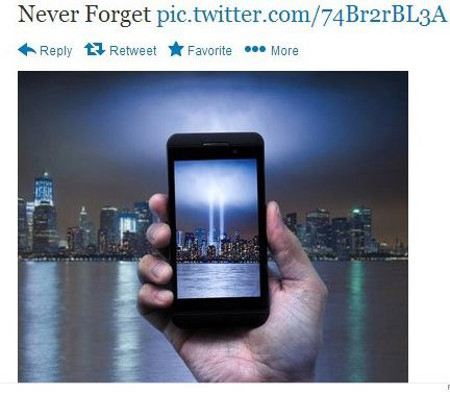
What was supposed to be an anniversary tribute to those who died in the Twin Towers turned into an outrageous ad for AT&T. The company tweeted the below photo as a 13th anniversary mark of respect to 9/11. The tweet immediately went viral, leading to hundreds of angry comments within minutes that claimed the ad was “tacky” and “tasteless”. The image was pulled from Twitter within an hour, followed by a tweet from the carrier saying, “We apologize to anyone who felt our post was in poor taste. The image was solely meant to pay respect to those affected by the 9/11 tragedy.”
It seems that in this situation, AT&T just can’t do anything right. Users of Twitter still were not happy with the apology, admitting that it’s insincerity somehow made the situation worse. Some consumers were so outraged that they threatened to change phone carriers, all because of this ad. In today’s market, finding new customers costs six to seven times more money than it would cost to maintain them. Finding new customers can’t be easy, especially after the bad media attention that AT&T received once the photo was released. If the Twitter comments live up to their words, AT&T could be out a lot of cash by the end of this year.
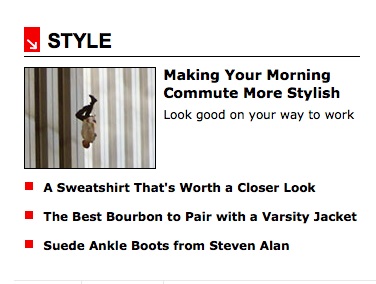
AT&T was not the only company to bring the facepalms this past 9/11. Esquire Magazine’s online server accidentally posted an iconic photo next to a headline for another article. Instead of describing it, here’s an example of “a picture is worth a thousand words” :
Following the post, Esquire tweeted a half-hearted apology saying, “Relax, everybody. There was a stupid technical glitch on our “Falling Man” story and it was fixed asap. We’re sorry for the confusion.” I imagine that Esquire did not consider their Return on Investments (ROI) when posting this tweet. While such outrage over a glitch may seem silly, taking the time to post a genuine apology would secure their consumers and perhaps draw in more. Because the Huffington Post reported on the incident, consumers from all over the world could unsubscribe from the magazine, causing a bad ROI for Esquire. It seems that a genuine “I’m sorry” tweet from the magazine would be far worth the investment it takes to produce the post. Instead, they received a negative return in response to their unenthusiastic efforts.
It has been exactly one year since Hurricane Sandy first hit the coastline of the United States. Much of the news media last October covered Hurricane Sandy and the damage that it caused. With all the focus on such a serious event it was important that brands and companies remained sensitive to the issue at hand. However this is exactly what several brands, including American Apparel, did not do. American Apparel was criticized for their promotion of their “Sandy Sale” during the storm. The ad stated, “In case you’re bored during the storm just Enter SANDYSALE at Checkout.” The sale was only available in the states that were most impacted by the storm, which included Connecticut, Delaware, Massachusetts, North Carolina, New Jersey, New York, Pennsylvania, Virginia, and Maryland.
During this disaster consumers were most likely expecting to see messages that were heartfelt and encouraging, not promotional social media ads for clothing companies. This violation of expectancies caused by American Apparel created negative backlash from not only their consumers, but also the public. The Expectancy Violation Theory states that the outcome of negative communication may result in uncertainty in people’s behavior. A consumer replied to American Apparel’s ad by tweeting that she will forever boycott their stores. This consumer, along with many others, probably became uncertain if they wanted to purchase from this brand in the future.
Another aspect of the Expectancy Violations Theory explains that reward from the violation can be either negative or positive. In American Apparel’s case, the ‘reward’ was negative. In most cases, a negative reward is met by socially acceptable behavior in attempt to correct any violation, but the CEO of American Apparel did the exact opposite. In response to the unfavorable backlash, he stated that, “I don’t think our marketing guys made a mistake. Part of what you want to do in these events is keep the wheels of commerce going,” he told Business Week. “People shopped on it. We generated tens of thousands of dollars from the sale, but we’ll probably lose a million dollars from this (storm) event at a minimum. We’re here to sell clothing. I’m sleeping well at night knowing this was not a serious matter.”
Over the years, “Made in the U.S.A.” has become American Apparel’s trademark marketing approach, but in this particular situation, nothing could be less depicting of American ideals and morals than this failed attempt to generate income. This and other failed public relations ventures should be seen as an example of what not to do during a national crisis. The way we see it, during crises, PR specialists and media relations professionals should proceed in one of two ways. Either stray away from social media, or only produce messages that do not promote one’s brand. In the long run, this situation did not make a lasting impact on American Apparel, but if you were the CEO, how would you have responded to this negative feedback? When have other brands violated your expectancies in a positive or negative way?
-Aaron Love, Kara Zimmerman, Rachel Clay, Rebecca Hobbs
Presentations are everything in life, and in a sense, we are always marketing ourselves to the public with our voices and actions. These components work together to create a brand image for each person as an individual. James Twitchell claims that a brand “is the application of a story to a product or service,” so it is important to realize what stories your life is telling and what images you are portraying. Many people tend to forget that online communication can be extremely harmful to a personal brand, and often diminish their brand images with common mistakes. The top 5 personal brand fails to avoid have been listed to help strengthen and build who you are as a brand.
# 1 – Oversharing
Although the tailgating and partying of your undergraduate days may be over for the most part, many forget that the pictures and posts that documented all those nights have not. Not only do people look at all of the bits of information people say and share, but posts remain in cyber space long after they are forgotten, and are easily and readily available for anyone and everyone to see.
Susan Adams wrote an article on managing online reputation, one of her key points was this: “Keep private things private, while assuming nothing is truly private.”
Everything about you on the Internet comes together to form a picture of your personality, even if you feel this picture may not be true to who you are. Think treating the Internet as a diary doesn’t matter? Oversharing has been linked to: self-incrimination, break-ins, loss of employment, and failed relationships.
Having trouble entering the workforce? You may need to examine what’s on your social media sites. Employers routinely search applicants to see what type of information, pictures, and statuses pop up. Besides not being able to land you a job, oversharing can also get you fired from one. Monster.com shared how an employee took the day off from work, telling his boss he had a funeral, however, later that day the employee posted pictures of himself at a party. His boss found out, and naturally he got fired.
Every time you go to post something whether it be as a status, tweet, wall post, share, picture, whatever- think to yourself, “Is this TMI? Would I want my employer to see this? Would I be proud of this years from now?”
# 2 – Underestimating Technology
We’ve all heard of Snapchat , the application that allows you and your friends to take ridiculous photos that once viewed, are immediately deleted… until recently. Not only can people screenshot your snap, but a counter-application called Snaphack has brought into question whether or not the photos you are sending are truly being deleted. Snaphack allows users to save screenshots of snapchats. Once saved, these photos can be uploaded to social media outlets such as Facebook or Twitter. One of Snapchat’s original uses was for sending racy photos, and Snaphack could easily lead to some very personal pictures being published for all to see.
Snapchat is just one of the many applications that at face value seems harmless and fun, but could easily affect employment opportunities. Being aware and responsible for everything you send via any technology medium is essential to keeping your personal image a good one. So next time you think it might be funny to send a Snapchat of you and your friends doing something questionable, make sure you would be okay with seeing it on the Internet the next day. What you might think is funny during the time, won’t be funny if it is found on your employer’s desk the next morning.
# 3 – Not Staying Up-to-Date With the Latest Social Media Sites and Apps
Facebook, Twitter, Pinterest, Vine, Instagram, LinkedIn, -the list is constantly growing and evolving when it comes to social media sites and apps available for public use. One of the biggest PR fails that people tend to overlook is not taking advantage of these social media techniques as a way to catch employer’s eyes, and to network.
Understanding and taking advantage of social media sites is essential in a world that is each day growing more reliant on technology. Where in the past employers only had a resume and a portfolio to judge a candidate for a job position, now the possibilities for judgment are endless. So why not take advantage of it? Take for example LinkedIn, a social media site that caters specifically to people to network professionally and allows users to connect with one another and build and maintain a broader network of professionals you can trust. It is a smart way of getting your personal name and brand out there for employers to see.
The website is helping people get jobs, so make a great move for yourself and join if you haven’t already!
# 4 -Talking Badly About Your Boss… Or Anyone For That Matter
In order for anyone to be happy with his or her job there must be a positive work environment. Most of us have had that one job we hated because of co-workers, company standards, the work itself, or the boss. In these sort of situations, trash talking seem to come with the business. So, for future and recent graduates we want to warn you, one of the biggest fails you can make in your career is talking trash about your boss, company, or coworkers online.
Recently, this video, featuring Marina Shifrin quitting her job, went viral on YouTube. You have probably seen it, but please feel free to watch it again and laugh.
Funny right? Except for the fact that her past boss knows how she really feels about him and her future employers will undoubtedly see her as unprofessional. So, as a rule of thumb, always save your rantings and trash talkings for your parents and close friends because if you share your personal (and most likely unprofessional) opinions and the wrong person sees it , you can kiss recommendations good-bye, as well as turn your personal brand image into that of a spiteful person.
(Also, take a look at her ex-boss’s response.)
# 5 – Poor Grammar
Poor grammar can affect your brand and your career. Anna Underhill, a consultant for a HR firm, said poor spelling and grammar has become a serious issue for employers. Writing is the main way communication takes place via employers and employees and clients. Having poor correspondence in writing undermines the professionalism of yourself as well as your company.
Communication skills are consistently rated in the top 10 things employers look for. Knowing the difference between affect/effect, their/there, its/it’s, should be common sense not consistent mistakes. While shorthand and abbreviations are the norm in social media, that type of writing should never be integrated into business composition.
Erik Deckers asks for you to think of it this way: If you receive a cover letter from a perspective employee filled with errors, would you hire that person? What sort of message are you sending to potential business partners when your initial email is riddled with mistakes?
Make your personal brand an effective one that highlights all of your best qualities. Don’t be afraid to jump into the cyber world to “sound [your] barbaric yawp,” but be cognizant of the do’s and don’t when it comes to establishing and maintaining a great image.
We already know that social media is a powerful tool in the realm of advertising and promoting a brand. Companies are able to buy advertisements that show up on our Facebook and Twitter feeds. Whether or not you find it obnoxious or love the introductions to new brands, the advertisements will probably only increase and spread to more social media sites. Personally, I typically find the ads annoying but every once and awhile, they lead me to a new site. Now, a less interrupting way to promote and communicate a brand is by creating accounts on these social media sites. Companies are able to build their brand identity and communicate with their target audience. As consumers, we can follow the brands on Facebook, Twitter, Instagram, Tumblr, Pinterest, etc. if we choose to do so. We can, in a sense, choose which brands communicate to us and which brands we form a relationship with.
The importance of social media in communicating to a target audience cannot be overlooking. The medium, social media, through which the content or message is presented, plays an important role in the message the brand communicates. As theorist Marshall McLuhan said, “The medium is the message.” The frame in which the communication occurs has a great impact on the actual message. Brands such as Pepsi have used social media to communicate with brands in a modern way. Staying relevant to their target demographic allows Pepsi to continue building their brand. Brands using social media suggest that they are open to two-way communication and connecting with their target audience. The social media avenue they decide to take also impacts the message. With Twitter, businesses can “quickly share information with people interested in their products and services” using no more than 140 characters. Using Pinterest as a medium, businesses use photograph’s linked to other sites. These pins can represent the brand’s personality to its followers. Amongst his ideas, McLuhan points out the importance of technology and the medium of communication in how it affects our society.
In terms of social media, McLuhan’s theory applies. The brand communication that occurs because of social media is unlike communication that occurs through any other medium. However, it is important to clarify that the message displayed for the world to see on social media sites is vitally important. We have seen and heard our fair share of social media mistakes that require a full cleanup crew.
In our technologically savvy and social media buzzing society, I think we can agree with McLuhan that media alters our environment. Using social media is another step in brand communication.
In the past few years, Pinterest has been the protagonist of a real-life international explosion, a phenomenon with incredible numbers constantly growing worldwide. The steady growth of their users, combined with the social media’s careful attention to what is now clearly a new platform of communication, has led many brands to explore and take advantage of this viral sensation. Kotex, a famous feminine hygiene brand owned by Kimberly-Clark, partnered with the lesser-known (at least until now) Israeli social media agency Smoyz, for the first Pinterest-based campaign that finds expression in the initiative “Women’s Inspiration Day.” The creative talents of Smoyz searched and analyzed thousands of boards of women who eagerly use the social media site, until they finally selected 50, the muses who would then become the medium itself for the campaign.
Once the “muses” were selected, they analyzed all of their boards on the website trying to find out what inspires them, after which the brand created individually personalized gift packages with the products they wanted decorating them with different styles that would capture each one’s attention. The 50 users selected to receive the packages did not have to do anything but re-pin Kotex’s original invite. How did this tactical advertising strategy go? Well, the numbers speak for themselves: 50 sent packages, 2284 interactions and almost 695 thousand impressions.
This marketing experiment was a huge success, a buzz that then involved several other social media platforms such as Facebook and Twitter, not to mention the amount of traffic generated to the brand’s websites. Both Kotex and Smoyz did a great job at carefully taking advantage of Pinterest’s peculiarities, such as females’ natural predilection for this specific social media, which holds about 68% of female users. Their careful demographic analysis combined with the use of the website for the production of gifts that were “tailored” around the user was refreshing and original.
For quite some time now, Kotex has been conducting strong content advertising strategies, starting from their very own official site, which is home to a fairly populated online community. In fact the brand has already hosted several successful initiatives such as the campaign “Stand Up for What’s Real.” The campaign is primarily targeted at young women between the ages of 14 and 24 and it is aimed at helping women to talk about a subject that is usually viewed as taboo. Overall, this campaign certainly opens an interesting new chapter when it comes to online marketing by once again demonstrating how the dynamics of communication, thanks to the new media, are increasingly moving towards a more “tailor-made” approach.
Bacon flavored mouthwash, lunchmeat DVDs, and glass-bottom airplanes?? This year’s April Fools holiday has caused an eruption of many brands’ foolish pranks going viral on social media. Some brands have even gone as far as creating spoof commercials and print ads along with their playful posts and tweets.
For example, the P&G brand, “Scope” ran an ad on Facebook promoting their new “Bacon Flavored Mouthwash.” As you can see below, the company created a video spoof and several advertisements with catch phrases such as “Taste breakfast while washing it away” to promote this fictitious new product before they came out with the final phrase, “APRIL FOOLS!”
Another brand having fun with this holiday is the movie rental company, Red Box, who is advertising “Sandwiches at Redbox.”
To keep up with their April Fools promotional efforts, Red Box noted that they will be offering 50 cents off their rentals today only by entering the promo code “APRILFOOLS.”
Virgin Atlantic Airways founder Richard Branson fooled customers in his blog featuring a new “glass-bottom airplane.” (Not for those afraid of heights!)
The main reason marketers have chosen to embrace April Fools Day pranks is to make consumers laugh and create a lasting impression. However, these advertising pranksters may have another prerogative: by playing April Fools jokes via social media, these brands have the opportunity to go viral and target the new generation of social media natives.
I think this is a smart tactic for advertisers as it shows that they can poke fun at themselves while promoting a playful culture that consumers can enjoy. Furthermore, as these spoofs go viral, they are gaining more traffic to their company webpages where actual products can be marketed and sold.
Daniel Kahneman, author of Thinking Fast and Slow introduces the idea that our minds are associative machines where there are two systems at work. While advertisers may be promoting fictitious products to fool consumers, they are also taking advantage of our associative minds. By being playful and enjoying the holiday, consumers may associate these brands with being lighthearted and fun, further promoting a positive brand image.
All in all, these April Fools pranksters have the right idea: using humor in advertising and focusing on building relationships with consumers should lead to a more positive brand image and (hopefully) increasing sales!
So you’re dead, now what? Well, by signing up with LivesOn, an app developed as a new artificial intelligence undertaking, your tweets will not only be immortalized, but will actively continue from beyond the grave. LivesOn advertises itself as “your social afterlife,” and they strive to be just that. With just a few simple steps, you can sign yourself over to the world wide web for all eternity, or, at least until Twitter is replaced by the next advancement in social technology.
At its core, LivesOn is an intriguing idea; it’s something that has crossed the minds of many, “what happens to my social networks when I die?” Well, by creating a new algorithm, LivesOn has provided an answer. While still in this plane of existence, members sign up for a new Twitter provided by LivesOn. After the account is created, users then periodically will update their likes, dislikes, favorite celebrities and other information relevant to the post-mortem tweets. Users can even preview the service and see examples of what their future account will say, and are able to edit accordingly. The service, which has been developed by Dave Bedwood, in conjunction with the Queen Mary University in London, then uses an algorithm, one that is still shrouded in mystery, to continue the social networking following death. The algorithm in question will then, and it is still unclear how this happens, continues updating from your profile in occurrence with your pre-chosen likes and dislikes. None of this happens however, until your LivesOn executor, who you choose, gives his or her approval for the service to begin.
However, as impressive as this sounds, one has to wonder how much of this is actually possible. Will the account actually be able to successfully replicate a human being? Or will, in a more likely scenario, the account just occasionally retweet a favorited celebrity or celebrated television show or movie? Of course, this is problematic in itself, do people still want to be seeing a deceased loved one continue to fawn over their celebrity of choice, likely long after the celebrities fame has passed? Also, while to some, the idea of continuing tweeting following death may be fascinating, others find it less than appealing. In reality, how easy could it be to grieve if you’re still seeing the individual in question on your newsfeed every day still complaining about their lives as if they were still living them? And this begs another question, what happens to your account after twitter has long-been forgotten? Do you just continue tweeting about Justin Bieber to an empty newsfeed for all of eternity?
While the creator himself has said that the intended audience will probably be a niche market, the bandwagon has already begun for LivesOn. It seems that only time will tell as to exactly how well this will work out in the future, but unfortunately, it will require a few members of the living to depart before we’ll ever be able to tell.


 IMC Hawks Blog