All night long Americans were glued to their televisions or their computers anticipating the results of the 2012 Presidential Election. Around 11:20PM on Tuesday, 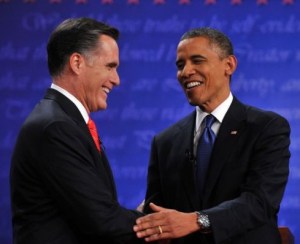 November 6th America got their answer: four more years for President Barack Obama. Some celebrated and some cried. This election deepened the political divide between Americans unlike any other election. What made this election different from any other? The answer is the mainstream media bias.
Even though Obama’s campaign team stood their ground in the battleground states, the real winner should be media outlets. Whether it was the presidential debates or the campaign trail, media coverage was everywhere. Does this increased access to information via the media mean we are better informed than we used to be? The mainstream media is our main source of information; we rely on them to know what is going on outside of our bubble.
The question is… what happens when the media takes on a biased role? A major criticism of the media is that it isn’t just giving us information but also conditioning us about how to think about the issues. CNN and Fox News are criticized as two of the most biased sources in the market, and they are also two of the largest. This means the same story can be presented on both outlets but the facts included can persuade the reader to feel a certain way about the issue. This article from CNN states that Romney supporters were asking for Fox News instead of CNN when it became clear that Obama was taking the lead. This is good news in that it means people are aware of the biased, however, turning to a known biased source to get the story you want compromises the credibility of the information you receive.
Media bias is everywhere. It is nearly impossible to get just the facts on the current issues. As informed consumers, this leads us to question how the bias impacts the general public. What happens when the public accepts the bias opinion as factual information? For one thing, the party divide deepens. A conservative tuning into Fox News sees his/her beliefs reaffirmed day after day, and the same happens when a liberal tunes into CNN. After a while, this can create a red and blue polarization. In some cases the divide has increased so much so that the two parties cannot begin to reason with the opposite side. Does this mean it is the media’s fault we have become so divided in our political views?
Now that the election is over, it is time that we refocus our attention on the issues at hand in our country and work together for the greater good of America despite personal political affiliation. Is this still possible with such biased media? Regardless of who won, how do we now come together to do what is best for America? President Obama: the media will either provide a platform to cultivate support for your ideas, or tear every move you make to shreds. As citizens of this great nation, we are all rooting for you… the President of the United States of America.

– Alexandra Huss, Caroline Merrill, Alyssa Morrello, Lauren Van Trigt, Dann Williams
 IMC Hawks Blog