
Tag: Rhetoric

  • Story Telling or Story Selling?

    Screen Shot 2015-10-02 at 1.04.13 PMTake a moment to think about your home. What comes to mind? Think far beyond the floors, ceilings, and furniture. Whether it is a dorm room, an apartment, the structure forcing you to have a mortgage loan over the next thirty years, or simply the place you grew up with a white picket fence, each one harnesses specific memories and has its own unique story to share. The thoughts of an apartment could evoke memories of college life, living with roommates, throwing parties instead of studying for finals, and that insanely uncomfortable futon in the living room. On the other hand, a childhood home could conjure feelings of comfort and security when thinking about playing football with dad or mom’s fresh-baked apple pie.

    As an intern for a local real estate agent, Patrick Gahagan, who is a UNCW Communication Studies alum, I am learning narrative is at the core of selling homes. Each prospective buyer has his or her own story, which encompasses the place they currently live, the place they grew up, and thus influences their ideal home. One of the biggest challenges a real estate agent faces is gaining a solid understanding of each client’s needs for a new home and finding the perfect place for them. Are they yearning for a cozy place that reminds them of their childhood home? Would an apartment that reminds them of their college days when life was far less stressful be best? Or does the buyer want to keep his or her past homes out of mind and find something new? Buyers must be able to see themselves in a home before they can begin to consider taking out a loan that could keep them in debt for 30 years. Therefore, the real estate agent must craft a story to sell homes.
    Screen Shot 2015-10-04 at 9.52.53 AM

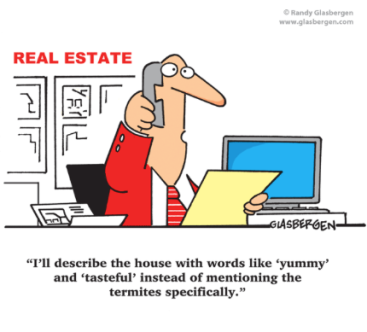
    Given real estate agents work for commission, it is critical to master the art of story selling. Professional photos with the perfect lighting, and statistics regarding value and square footage, combine with the home tour to compose a narrative for each home on the market. In real estate, photos, stats, and the home’s structure are all rhetorical tools. A real estate agent’s job is to combine these rhetorical elements using the appropriate language to create a powerful story that will attract prospective buyers. The way in which a real estate agent uses rhetoric to frame a home essentially makes or breaks the sell. Sounds like marketing, doesn’t it? If the real estate agent composed an impactful narrative for the home, the buyers will likely proceed to make an offer and the agent is on their way to getting paid.

    In the world of real estate, stories are not simply told, but sold.

    By: Meleah, Amanda, Kendall, Luke, and Dan

  • Persuasion Through Customization: Moto X

    “If you wish to persuade me, you must think my thoughts, feel my feelings, and speak my words. -Cicero

    Spoken nearly 2000 years ago, this statement still rings true today. Philosophizing rhetoric and the art of persuasion, Cicero understood the importance of connecting with an audience at the mental and emotional level.

    The above quote points out three of his main claims. To persuade an audience one must “think their thoughts”.  People are more likely to be persuaded when the rhetorician communicates in a way that embraces the individual’s own point of view. Focusing solely on changing point of view results in discomfort and suspicion. Rhetoricians must also “feel their feelings”. To do so, one must ask themselves what the deep-seated feelings are that drive the listeners. Asking this question and reflecting on the answers is an essential part in the pathway to connecting. Finally, according to Cicero, to persuade an audience, one must “speak their words”.  People need to understand what you have to say in order to care about it.  If they don’t care, they won’t do the ultimate goal – act.

    In the age of advertising, these classical concepts are still prevalent as we transcend into the postmodern era. In postmodernity the “self” becomes the ultimate selling point. Marketers strive to persuade their audience that their product does more than whatever its mechanical purpose – the pitching point becomes that their product is an extension of oneself. As a result, individualization and customization are reigning themes. Furthermore, because individuals are immersing themselves as an object, consumers become an actual participant in customization. Products are increasingly less of a finished object, allowing consumers to provide direct input – ultimately and simultaneously becoming a producer as well.

    Therefore, it is no coincidence products today are increasingly individualized. An example of this is the new Motorola Moto X phone. Check out it’s commercial, Customize below.

    After watching this how do you feel? This is a pretty cool phone, right? You can make it however you want! Notice how this commercial mentions nothing about tech specs, mobile web speed, or how the phone will be used in your every day life. Its persuasion strategy focuses on “you” – “your ride”, “your pet”, “your body” and now “your phone” – the idea that you can be in charge of customizing your phone, just as you do everything else, as an expression of your self. You are the producer. No longer are the only options either black and white. Your options are whatever you think brands yourself best.

    This commercial is the essence of Cicero’s idea of persuasion combined with post-modernism ideals. By knowing what its postmodern consumers think and feel about individualization, Motorola has created a product that speaks to every thing you as a consumer expects and wants – customization. Not only do you become a buyer of the Moto X, but a producer of it. Their persuasion hook is that you can directly produce their product as a means of your own expression.

    Has this commercial persuaded you? What other brands and products use customization and self-expression as a persuasion tool?

    Savannah Valade, Caroline Robinson

  • Just say anything to win.

    With the 2012 presidential election day right around the corner, the candidates have found themselves in a television battlefield. Each candidate hopes to take his opposition down by firing loaded words weekly. It seems that advertisements to vote for a candidate have instead evolved into advertisements to not vote for their competitor. Both the Obama and Romney campaigns have spent millions on these largely negative commercials that appear to be overflowing our televisions, especially in battleground states. As viewers being constantly bombarded by accusatory messages, are these presidential candidate advertisements doing more harm than good?

    Romney has recently received immense criticism for a misleading television advertisement that aired primarily in Ohio about Obama and the auto industry. The commercial states that Chrysler is moving Jeep production to China because of Obama’s failed policies, a claim that aimed to hit home with the thousands of Ohioans employed in the industry. Although Chrysler does intend on building Jeeps in China, it can be interpreted from the advertisement that Chrysler will stop making Jeeps in the United States and move all production to China. The Democrats’ response to Romney’s claim used blunt terms attacking Romney’s character. The claims were deemed as “outrageous assertions” and Biden even asked of their competitors at a rally in Youngstown, Ohio, “Have they no shame?”

    These responses may have successfully portrayed Romney as a “liar,” but Obama’s auto advertisement used some of the most biting rhetoric yet, according to The Detroit News. It emphasizes Romney’s “wrong-headedness on the auto bailout” (as cited from The Detroit News’ editorial page) but never mentioned the paper’s overall endorsement for Romney in the election.

    Every word in a speech by a presidential candidate is deliberately chosen. Each phrase in a campaign advertisement is carefully crafted. Nothing presidential candidates deliver is accidental, innocent, or meaningless. Politicians are most successful when their campaigning efforts communicate the precise message their audience wants to hear. But what happens when they will say just about anything to win?

    Erin Kiffmeyer, Hannah Eure, Eugene Lee, Ally Walton, Lauren Habig