Tag: Public Relations

  • A Soda With A Cause

    Are you shopping for a cause this holiday season?

    They don’t call it the giving season for nothing. Around the holidays you see and hear it everywhere “Would you like to donate a dollar to ______ to help sick children today? It only takes a $5 donation to _______! Or, shop here! We’re a good organization! We support ________. ” That _____ has a name: cause marketing.

    According to The Nonprofit Times, cause marketing, in a broad sense, is when  “a nonprofit and for profit corporation partner together with the purpose of advancing the mission-related work of the nonprofit, and the marketing goals of the corporation.” We regularly see this through traditional cause-related marketing on a day-to-day basis (donation-with-purchase of a product/service), but it seems as though cause marketing during the holidays is especially pertinent.

    Do you feel as though companies that don’t partake in cause marketing are more rare than those who do? This holiday season, Coca-cola is doing the opposite of advertising, while still partaking in cause-marketing. Confusing right? Well check this out.

    Starting November 18th, Coca-Cola decided to cut all advertisement funds and donate the money that would be used for relief efforts in the Philippines from Typhoon Haiyan. The company still plans to partake in holiday ads soon, but the pathos link that the company is creating by helping out those devastated by the disaster is sure to boost sales. The company has raised $2.5 million for the relief already. Way to go, Coke.

    So how about you? Does the pathos-oriented approach presented by cause-marketing make you more vulnerable to purchasing a product, or is it just expected now-a-days?
    Morgan Jones, Jade Lester

  • Water for the People, But A Crisis for the Company

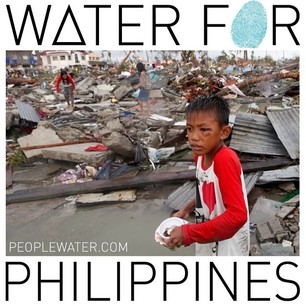
    When a natural disaster occurs, it is always encouraging to see how much help, love, and prayers are poured forth from the general public. People and companies across the world donate what they can to help. Recently, the Philippines have seen some of that generosity. The country is recovering from a massive typhoon that devastated communities across the islands. Now the people are struggling to find food and clean water. So when Instagramers saw that People Water was offering to solve that problem, they jumped on the bandwagon pretty quickly.

    People Water is a company that defines itself as a “for-profit, cause-based business that is committed to alleviating the global water crisis.” Their claim is that for every bottle of People Water purchased, the company will give an equal amount of clean water to someone in need. On November 12th, the picture below appeared on Instagram with the caption “EVERY REPOST = 1 @peoplewater will donate $1 for every repost #peoplewater”.

    people water

    Cody Barker, one of the founders of People Water, was the one who originally posted this picture. It soon exploded all over social media as people started sharing in support of the Philippines. However, People Water posted on Instagram a day later explaining that they weren’t entirely on board with this campaign. “People Water’s management was not consulted about this campaign before it was posted to our social media outlets,” claimed the post. “In an honest attempt to help those in need, some of our employees hurriedly decided to launch this initiative…Although our employees’ intent was sincere, we are troubled by what may be perceived as an advertising campaign based on those who are seriously suffering.” They go on to say that they will honor their commitment for the first day’s shares during their regular business hours, but that they can’t afford to give any more.

    Looking at this from a public relations standpoint, People Water did almost everything right. They were honest with their public and tried to communicate that to them as best they could. They shared the “open letter” on their website and Instagram, making it as clear as possible that they didn’t want to hide anything. As Coombs advises in Public Relations: Strategies and Tactics by Dennis L. Wilcox and Glen T. Cameron, People Water minimized their responsibility for the fiasco by making excuses. While this may seem like a cop-out, finding someone else to blame is a successful way to change the way the public views your business. In this case, the scapegoat was Cody Barker. Unfortunately, he didn’t have full permission from the company to post such a generous offer. Because of his actions and their “limited resources,” People Water was put in an awkward place. In an attempt to save their reputation, they had to let Barker go and show their public that they are doing everything they can to ensure this won’t happen again.

    But not everything was handled correctly. Many Instagram users claimed that they couldn’t reach the company by phone or email in the aftermath of the crisis. Whether this was due to an influx of phone calls or the company was purposely avoiding their customers, People Water violated the number one rule during a public relations crisis: be accessible. Had they picked up the phone, they might not have so many angry consumers talking smack about them on social media.

    What do you think People Water should have done? How should they move forward?

    – Christine Schulze

  • Hyundai’s “Suicidal” Marketing Crisis

    In April of 2013, Hyundai released a commercial known as “Pipe Job” that left many people in the UK confused and shocked. The commercial’s primary goal was to illustrate the car’s new water engine emissions in a humorous way. However, due to this very commercial, Hyundai soon found itself in a potentially “suicidal” PR and marketing crisis.

    Image

    The ad was written about a topic that should clearly never be joked about and is very personal for many people across the world. The ad shows a man who is attempting suicide through inhaling harmful emissions, but fails due to the company’s new water engine emissions. Obviously, Hyundai released this ad in hopes that their audience would find humor in the failure of his attempt at suicide because of their water engine emissions. The company soon found that the ad produced the opposite effect. One of the main people who caused the uproar regarding this commercial was blogger Holly Brockwell. Holly wrote an emotional post regarding this poor taste in marketing.

    Image

    Unfortunately for Hyundai, this entire crisis could have been somewhat avoided. While of course it could have been completely avoided by simply never allowing the commercial to air, it could have also been avoided if the company had a crisis management plan implemented. Instead, Hyundai was slow in their apologies and even ignored reporters when they reached out for answers. This lack of communication for those with questions is what ultimately left Hyundai in a PR crisis that was nearly impossible to overcome. While Hyundai finally released apologies and statements, the damage that has been done is immeasurable. In the end, companies must be proactive when dealing with crises that involve their products to have a chance at managing them before they have a chance to become something larger.

    -Ryan Nagy

  • Paul McCartney’s NEW Publicity Stunt

    The digital world of iTunes and social media has given the music industry both high and low notes. While the Internet offers accessibility, it also caters to specificity. Most predominantly, the Internet offers an array of platforms for artists to upload, share, and send their music.  However, while music junkies may be constantly searching for new digs, most people eventually acquire a particular taste for what they choose to send through their ear buds.  Internet music services such as Pandora, Spotify, and iHeartRadio allow users to handpick and listen to an endless variety of artists and genres. This narrowcasting of music leaves artists waging campaigns to try to reach listeners. As a result, clutter prevails.

    Like in advertising, clutter has become a big problem in music promotion. As Douglas Rushkoff pointed out in The Persuaders, “The more messages they create, the more they have to create to reach us.”

    The more opportunity social media platforms – YouTube, MySpace Music, and most recently Vine – offer artist to share their music, the more competitive and important promotion of music and musician become.

    So how does a music artist break through all the online music clutter without breaking budget? The answer is: great music, a little luck, and a publicity stunt.

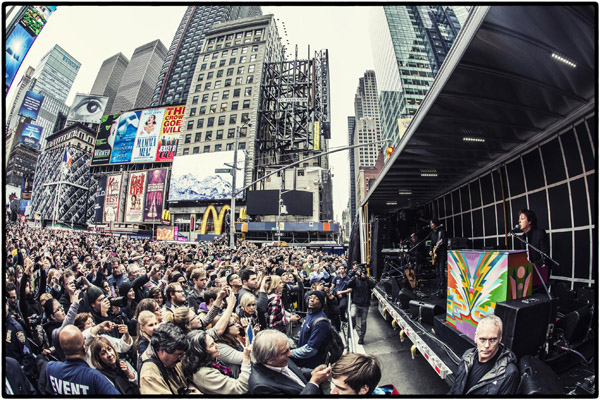
    Not new to the music arena are surprise gigs on rooftops or buses in the middle of big cities, events known in the public relations world as a publicity stunts. This past October, music legend Sir Paul McCartney promoted his recently released album, NEW, by doing just such a thing – performing a surprise concert in the middle of Times Square.

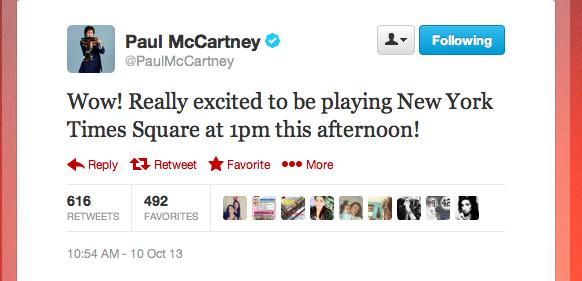
    Paul McCartney at performs at the Times SquareTelling fans only hours before – via Twitter – he played a 15-minute long show featuring the single “New”, as well as music from the (not at the time released) album. McCartney was not only able to give NYC fans a concert, but fans from around the world could tune in through Times Square live webcast and watch the performance.

    pm tweet nyThe surprise gig resulted in social media buzz and major news coverage, all promoting the NEW album for free. The stunt was so successful; exactly a week later he performed another surprise concert in London.

    pm tweet loSir Paul McCartney proved how to conquer the masses. Not only did he succeed in making his fans happy, but also he succeeded in executing a publicity stunt that generated both word of mouth and media coverage that ended up promoting his music at no cost to him.

    Caroline Robinson, Savannah Valade 

  • Anna Rexia Makes Another Appearance

    Zombies. Ghosts. Serial killers. These are some popular symbols of Halloween that are frequently seen in movies, haunted houses and decorations. However, what I find more frightening are some of the costumes that I see while trying to find my own “original” costume idea each Halloween. This year, I came across the most frightening costume of them all, not because of a scary mask or fake blood, but because it is poking fun at a serious mental illness that affects millions of people around the world. The “Anna Rexia” costume first caused some serious uproar back in 2011, when retailers like HalloweenStore.com and Ricky’s NYC began carrying the costume, manufactured by Dreamgirls International, but they stopped after a great deal of media backlash and thousands signed a petition on Change.org.

    Now, two years later, this controversial and insensitive costume is apparently back up for sale on the website HalloweenParty13.com, which I discovered from a Facebook posting of a more recent Change.org petition. At first, all I could think about was how disgusting a costume like that is, and how I would judge anyone wearing it, but I want to turn this into a learning opportunity by relating this controversy to public relations. My question is: Did the companies handle the outrage and negative publicity surrounding this costume appropriately?

    As I did my research, I found articles on news sites such as The Huffington Post and other blogs, about the resurrection of “Anna Rexia.”  I saw on Buzzfeed that the retailer HalloweenStore.com posted a status to their Facebook page about one week ago, explaining that people should do research before signing a petition because the retailer hasn’t sold that costume since 2011.  This status was calling out people who angrily emailed the store about their distaste, when they weren’t actually the retailers currently selling the costume.   The wording was harsh, with certain words fully capitalized and many exclamation points, which detracts potential customers and pushes current customers away.  The post has since been deleted.

    enhanced-buzz-32177-1382713416-25
    via BuzzFeed

    During the original controversy in 2011, Dreamgirls International said the costume was a form of “dark humor,” and that people wearing it is a “matter of taste.”  However, the company is now saying that the costume was discontinued in 2007 and the matter is now out of their hands.  At first, Dreamgirls International was using the communication theory of framing, which highlights specific aspects of an issue and “frames” people’s perspective on it.  The company was trying to downgrade the offensive costume as being humorous and describing themselves as a “company run by women for women”; that just wanted to create an “eccentric” way for a woman to express herself on Halloween.  Now, they are denying all responsibility for any current sales of the costume.  This denial is not only inconsistent, but it is the opposite of what any student in an introductory PR class would learn—don’t deny ownership of a problem.

    I believe that neither of these companies handled the “Anna Rexia” backlash well.  If you, the reader, were the spokesperson of either company, how would you handle this situation?

    -Maggie Dowicyan

  • “Did I do that??”

    With a week full of fails, I imagine that readers will display a facepalm or two. Ad fails are fairly common and many are laughed off and explained through the phrase, “Everyone makes mistakes.” While ad fails often hit us in our funny bones, some offend readers far more than expected. This past year, AT&T and Esquire Magazine produced some facepalm-worthy ads that hit our country in one of its most sensitive spots: 9/11.

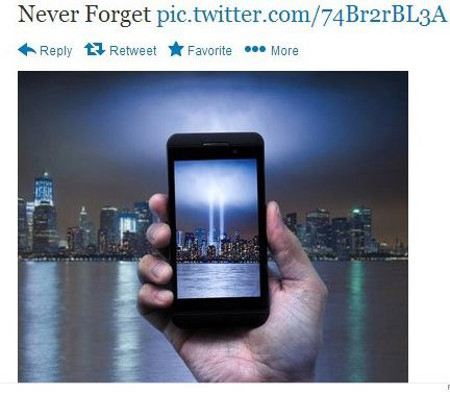
    What was supposed to be an anniversary tribute to those who died in the Twin Towers turned into an outrageous ad for AT&T. The company tweeted the below photo as a 13th anniversary mark of respect to 9/11. The tweet immediately went viral, leading to hundreds of angry comments within minutes that claimed the ad was “tacky” and “tasteless”. The image was pulled from Twitter within an hour, followed by a tweet from the carrier saying, “We apologize to anyone who felt our post was in poor taste. The image was solely meant to pay respect to those affected by the 9/11 tragedy.”

    Image

    It seems that in this situation, AT&T just can’t do anything right. Users of Twitter still were not happy with the apology, admitting that it’s insincerity somehow made the situation worse. Some consumers were so outraged that they threatened to change phone carriers, all because of this ad. In today’s market, finding new customers costs six to seven times more money than it would cost to maintain them. Finding new customers can’t be easy, especially after the bad media attention that AT&T received once the photo was released. If the Twitter comments live up to their words, AT&T could be out a lot of cash by the end of this year.

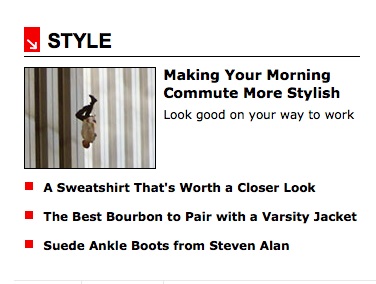
    AT&T was not the only company to bring the facepalms this past 9/11. Esquire Magazine’s online server accidentally posted an iconic photo next to a headline for another article. Instead of describing it, here’s an example of “a picture is worth a thousand words” :

    Image

    Following the post, Esquire tweeted a half-hearted apology saying, “Relax, everybody. There was a stupid technical glitch on our “Falling Man” story and it was fixed asap. We’re sorry for the confusion.” I imagine that Esquire did not consider their Return on Investments (ROI) when posting this tweet. While such outrage over a glitch may seem silly, taking the time to post a genuine apology would secure their consumers and perhaps draw in more. Because the Huffington Post reported on the incident, consumers from all over the world could unsubscribe from the magazine, causing a bad ROI for Esquire. It seems that a genuine “I’m sorry” tweet from the magazine would be far worth the investment it takes to produce the post. Instead, they received a negative return in response to their unenthusiastic efforts.

    #fail #facepalm

    -Dylan Fowler

  • PR Disaster in Wake of Natural Disaster

    It has been exactly one year since Hurricane Sandy first hit the coastline of the United States. Much of the news media last October covered Hurricane Sandy and the damage that it caused. With all the focus on such a serious event it was important that brands and companies remained sensitive to the issue at hand. However this is exactly what several brands, including American Apparel, did not do. American Apparel was criticized for their promotion of their “Sandy Sale” during the storm. The ad stated, “In case you’re bored during the storm just Enter SANDYSALE at Checkout.” The sale was only available in the states that were most impacted by the storm, which included Connecticut, Delaware, Massachusetts, North Carolina, New Jersey, New York, Pennsylvania, Virginia, and Maryland.

    Image

    During this disaster consumers were most likely expecting to see messages that were heartfelt and encouraging, not promotional social media ads for clothing companies. This violation of expectancies caused by American Apparel created negative backlash from not only their consumers, but also the public. The Expectancy Violation Theory states that the outcome of negative communication may result in uncertainty in people’s behavior. A consumer replied to American Apparel’s ad by tweeting that she will forever boycott their stores. This consumer, along with many others, probably became uncertain if they wanted to purchase from this brand in the future.

    Image

    Another aspect of the Expectancy Violations Theory explains that reward from the violation can be either negative or positive.  In American Apparel’s case, the ‘reward’ was negative.  In most cases, a negative reward is met by socially acceptable behavior in attempt to correct any violation, but the CEO of American Apparel did the exact opposite.  In response to the unfavorable backlash,  he stated that, “I don’t think our marketing guys made a mistake. Part of what you want to do in these events is keep the wheels of commerce going,” he told Business Week. “People shopped on it. We generated tens of thousands of dollars from the sale, but we’ll probably lose a million dollars from this (storm) event at a minimum. We’re here to sell clothing. I’m sleeping well at night knowing this was not a serious matter.”

    Over the years, “Made in the U.S.A.” has become American Apparel’s trademark marketing approach, but in this particular situation, nothing could be less depicting of American ideals and morals than this failed attempt to generate income.  This and other failed public relations ventures should be seen as an example of what not to do during a national crisis.  The way we see it, during crises, PR specialists and media relations professionals should proceed in one of two ways.  Either stray away from social media, or only produce messages that do not promote one’s brand.  In the long run, this situation did not make a lasting impact on American Apparel, but if you were the CEO, how would you have responded to this negative feedback? When have other brands violated your expectancies in a positive or negative way?

    -Aaron Love, Kara Zimmerman, Rachel Clay, Rebecca Hobbs