Tag: President

  • @POTUS

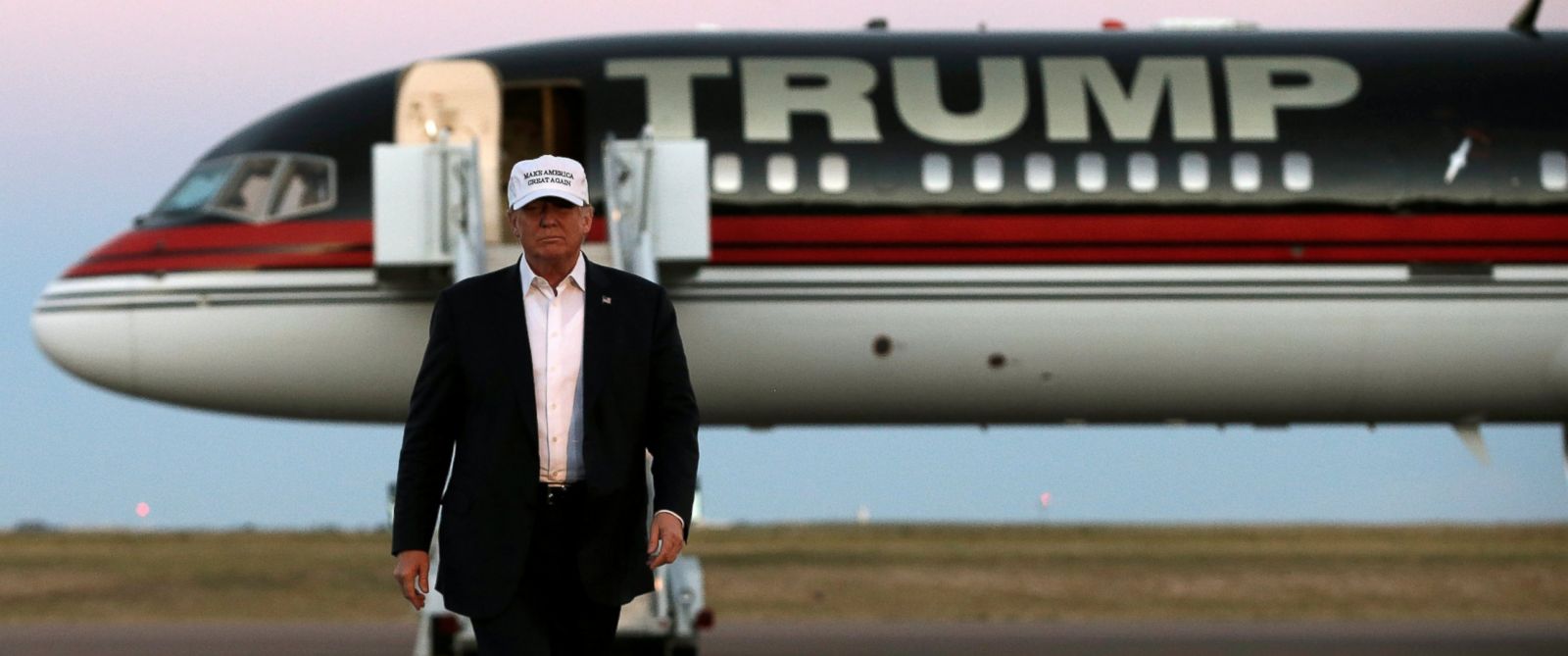
    rt-rump-plane-mem-161206_12x5_1600

    Donald Trump as a citizen and as a presidential candidate was known to get himself into sticky situations on social media, more specifically Twitter.

    @realDonaldTrump engaged heavily in Twitter communication during the course of the election cycle. His ‘twitter-happy’ personality often came across aggressive and disrespectful. However, this was the brand that Donald Trump created for himself, as he knew what I was getting himself into.

    screen-shot-2017-02-03-at-10-14-41-am
    Donald Trump, just minutes before the inaugural ceremony, took the time to tweet for the first time with his newly adopted Twitter handle @POTUS.

    A little less than a month ago, on January 20th, Donald J. Trump was sworn into the Office. Also on that day, the now 45th President adopted the Twitter handle @POTUS. With this transition comes a bigger responsibility of how the President chooses to communicate using social media. President Trump must now reinvent his social media communication strategy, and re-brand himself as the President of the United States.

    Former President Barack Obama was the first president to utilize Twitter to communicate with the nation; However, the 44th President was not nearly as dependent on this form of communication as is President Trump.

    screen-shot-2017-02-03-at-10-21-03-am

    Ever since President Trump entered office, he has been utilizing Twitter and Facebook heavily. I have personally seen several events streaming live via Facebook. As many of us know, it can take up valuable time to generate a powerful message with only 140 characters. As students who are studying communication, we understand that a key skill to have in the process of “managing mutual responding” is to be able to generate effective and efficient messages to convey understanding to listening parties. It is not easy, especially with a limit of 140 characters. President Trump, however, seems to have no problems generating messages throughout the day among his Presidential duties. I can almost see the book on the shelf now…The Art of the Tweet by Donald Trump.

    Regardless of anyone’s opinions of President Trump’s policies, decisions, and beliefs, he is still breaking through barriers by trying to cut out the middleman in bringing you important information. If he is able to maintain ‘presidential etiquette’, do you think it is appropriate for President Trump to continue his frequent tweeting? Can this help prevent news sources from misinterpreting his attitude towards something, or an event that occurred? Just a couple points to think about.


    ~ Ben Yerby


  • Why did you vote for THEM?

    The strength of political party’s brand largely depends on knowledgeable voting consumers who understand what the brand has to offer.  However, no matter what a person thinks about a particular party, everyone tends to come to an agreement that the strength of a brand can quickly collapse. If the party is viewed as divided or sending incompatible messages, their voter’s perception of the cohesiveness breaks down and credibility is lost.  Although, if the party is perceived as being more “exciting” and innovative the voters are more likely to pardon their misdoings.  According to Gareth Smith and Alan French, “as all political brands try to appear trustworthy and honest, transgressions pose a clear threat to political brand relationships.”  They also stress that the overall brand must satisfy their needs when it comes to “the competitive nature of the political market, the credibility, attractiveness and personality of its leaders, and the party’s perceived salience and credibility in fulfilling its promises.”

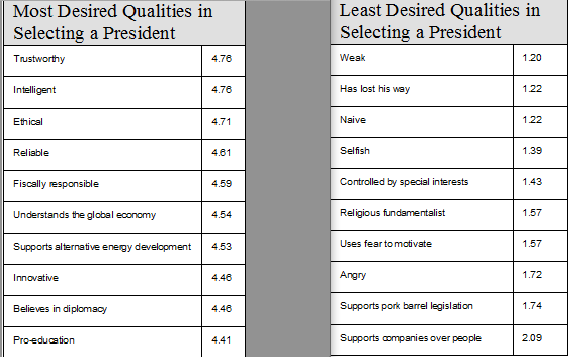
    A politician’s campaign for the Presidency is no different than a company marketing a product or service to a target audience.  Just like in marketing, it’s important for politicians to conduct research and gain knowledge about what their target audience perceives to be important and credible.  During the 2008 election, Brad VanAuken, author of Brand Aid, developed, conducted and analyzed a survey given to 100 people from 29 states on political branding strategies.  He hoped to gain insight into the personality traits often associated with strong and powerful political brands.  Through his research, he established two lists; the most desirable and the least desirable qualities for potential Presidential candidates.  Two of the most desired qualities for a potential President include trustworthiness and intelligence. On the other hand, two of the least desired qualities include using fear to motivate and supporting companies over people.  Political candidates should integrate these characteristics into their brand to appeal to their target audience.


    With the upcoming elections, politicians can take this study into consideration when developing a campaign to promote their personal brand.  It’s important to remember that consumers can make or break a political candidates’ chances of becoming our next President.  Candidates should do whatever they can to connect to their audience.  People feel more of a connection with a political brand if there is access to online interactions. Obama successfully created an online community to establish social networks to recruit and fund-raise among the local community. The Internet has become a means of relationships with its voters and will be of importance for the future political brands.

    “Political brands clearly face a challenging future with the only certainty being that old strategies such as the occasional re-branding and change of leader will be insufficient to address the core concerns that consumers have of them. As the world becomes more interrelated, nation states are increasingly unable to deliver on their promises to electors; electors who are increasingly aware of the brand’s attempt to influence them and less prepared to accept their right to do so.” –Gareth Smith and Alan French


    -Kelsey Bendig, Andrea Blanton, Brooke Keller, Brian Burch