Tag: Personal Branding

  • Celebrity Branding Through Social Media

    Nowadays, there is a wide variety of ways to advertise and promote one’s image as well as many products through personal branding. Celebrities are among the first to take advantage of the new social media phenomenon to further promote themselves and products they have endorsed.  Social media outlets such as Facebook, Twitter, YouTube, Instagram, Tumblr, Pinterest, etc. have been in a state of constant growth, as they cater to both the average consumer as well as celebrities. Interconnectivity has played a crucial role in keeping celebrities globally connected to a wider public in order to further promote themselves and gain a higher level of exposure.

    When it comes to many things such as self-branding and the use of social media, one must elaborate a thought-out, cohesive strategy in order to achieve optimum results. First of all, it is important to keep in mind that not all celebrities wish to accomplish the same thing through their social media outlets.  There are many reasons for a celebrity to join a social media site, from simply connecting with fans to promoting a product or event.  Also, each social media medium serves a different purpose and targets a more specific audience. In a recent trend, celebrities have been representing themselves by “opening up” and increasing their level of self-disclosure through many forms of social media. This could be due to the fact that it is believed that social media can be used to build trust with fans as well as build and develop a more personal connection with them by allowing them to see the “real” superstar.  For example, it is difficult to feel a personal connection to President Obama.  By following Obama on Twitter or Facebook, one might feel that this personal relationship has greatly improved.  Not only is this beneficial for the average American, but it could indirectly help Obama.  For example, someone that does not currently have a stance on politics could follow Obama on Twitter, like what they see, and vote for him in the next election.  This is just one example that portrays that social media outlets are a powerful, mass communication tool.  That being said, it is important for one to remain very conscience about what they say.  It does not take much for a tweet by a celebrity or political figure to create a huge controversy, whether or not they intended it to.  We sometimes forget that celebrities are human beings that make mistakes, and one of these mistakes could be by putting too much personal information on the internet.  Voicing an opinion can easily offend many other people.  The celebrity could in theory remove the tweet, but that does not mean it will be deleted from the Internet.  With the millions of followers many celebrities have and the fact that celebrities tend to keep social media outlets as public as possible, almost anyone could snap a screenshot of the tweet immediately and continue to circulate it through the web.

    While there are disadvantages for celebrities putting their lives on the World Wide Web, outlets such as social media can also be used as a free type of advertising or promotion.  Almost all main-stream celebrities have utilized multiple forms of social media from blogs to Twitter.  Britney Spears, Kim Kardashian and Justin Bieber are all examples of celebrities that have endorsed various products and used social media (more specifically, Twitter) to promote them. This has shown to be an effective marketing technique at little or no cost to them.
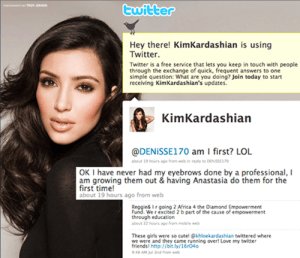
    Not every celebrity endorses a certain product, but they do essentially brand themselves when they decide post on social media sites.  Whether they mean to or not, the content they post reflects their personality and in turn, allows followers to characterize them.  Mastering how to effectively brand one’s self on these sites has in essence became a modern day art.  In today’s day and age, a social media suicide could destruct the celebrity’s image as a whole.

    Sasha De Vecchi, Lindsay Gallagher, Jay Reilly, Cary Welborn

  • Going Green, Brings Green

    Brands can promote themselves through almost any medium nowadays. Pens, stickers, posters, billboards, you name it, you can put your brand on it. Planet Earth Promotions is a company that is designed to help brands promote themselves in an eco-friendly way. There is constantly increasing awareness about environmental protection and a greater consciousness about how important it is to protect these environmental and natural resources. Planet Earth Promotions is leading the way for this “EcoSmart” promotional item trend.

    Planet Earth Promotions’ mission statement indicates that their “goal is to help companies and corporations around the nation proactively enhance their brand through the use of environmentally conscious and educational promotional items”. They have certainly delivered in this respect. This company has been ranked #1 in promotional advertising for the past ten consecutive years. Not only are they paving the way for other companies, they have become a greatly successful brand that is little to no impact on the environment. Planet Earth Promotions has built a successful brand on a trend that is becoming increasingly important as time goes on. This brand is very strong considering they have remained at the top of the list from Arizona Magazine for the last ten years and they are here to help other brands.

    They are able to offer many alternatives for companies to help cut back on environmental damage by providing recycled goods, information about recycling and environmental days in the USA and tips to bring pollution down. With so many companies shifting focus to being the “EcoSmart” companies and LEED (Low-energy electron diffraction) certified, it is a challenge to stay on top. Planet Earth Promotions has paired up with other environment-friendly companies such as AWEA (American Wind Energy Association) and Women’s Business Enterprise to built a very powerful and successful brand and continue to pave the way for other companies looking to create environment-friendly products and solutions for all varieties of businesses.

    – Julius Roberts, Leanna Marshall, Leslie Tyler and Bryce Koonts

  • What’s Your Unique Brand Style?

    UNCW’s Communication Studies Day includes an informative Dress for Success Fashion show for college students of all ages and levels. The fashion show will also include skits demonstrating the importance of an elevator speech, professional attire, portfolios, and how necessary it is to be prepared for interviews. This year the theme, “Will You Make the Cut?” is based upon the Food Network show “Chopped.”

    One idea about IMC manifested in this fashion show is that company image and brand management is very vital for growth and success. Individuals, as well as companies, have always had their own image and have to manage their own brand. It is sometimes hard for college students to transition from a student image that they have had for the past 13 years to a business professional image. The great part about the fashion show is that it shows students how to transition from their current image and brand to something more professional.

    Whether people realize it or not, we are branding ourselves every day through the types of clothes we choose to wear in professional or unprofessional settings. Your unique brand style can be a description of who you are in a job interview setting. It is very important to make interpersonal connections with job interviewers through your developed style and authenticity that will make you stand out from others. Branding yourself when looking for a job is very similar to branding a product. Basically, you are selling yourself as a product to your potential employer with the goal of standing out amongst the rest. Are you casual business, formal business, chick, trendy, preppy, classic, or a hybrid of several?

    By: Laura Simmons, Mollie Berthold, Dorothy Conley, Christina Stevenson

  • Will JoePa Rest In Peace?

    Anyone who has been tuned into ESPN recently knows that Joe Paterno, “JoePa”, was the football coach at Penn State for 42 years, starting in 1966.  In the wake of a child abuse scandal centered around Jerry Sandusky, Penn State’s former assistant coach, Paterno was fired this past November. He was the face of Penn State and his brand was ultimately tarnished due to the scandal. Some are concerned that his tainted brand will overshadow his lifelong legacy. Sadly, Joe Paterno passed away on January 22nd due to his battle with lung cancer making it impossible to mend his stained brand.

    The media has been criticized for how they handled the situation regarding Joe Paterno; some even question if the media’s involvement aided in tarnishing his brand. The question is not whether the media has a legal right to report whatever they find newsworthy because the First Amendment guarantees that they do. The issue is how media managers should employ that freedom in their own decisions about what is ethical and professionally responsible. Some may view that the media took their interrogations too far by harassing Paterno at his home and accusing him of allegations before they even knew the whole story.

    “The media jumped to the conclusion that Paterno was trying to cover up the scandal when it broke out.  Because his name is so iconic, linking his name to the scandal would attract more viewers on their websites as opposed to Sandusky… more has been written about Joe Paterno’s involvement than Sandusky in the media.” – Chris Moore, Penn State University Senior  

    Is it ethical for the media to do whatever it takes to get the story out first even if it damages a man’s reputation beyond repair? On another note, people have a right to know what is going on in today’s world, so is doing whatever it takes to get the news as bad as it seems? Some argue that the media is just doing their job and presenting breaking news to the public. It was already too late for his reputation when the news came out that Paterno had told superiors about the issue in 2002. According to the Penn State Board of Trustees, their reasoning for terminating Paterno was partially based on his failing to uphold a moral responsibility to report allegations made in 2002 against Sandusky to authorities outside the university.

    There is no question that Paterno let the victims, their families, and the university down by not pressing the issue with the police after he approached his superiors. In our opinion, Joe Paterno deserves to be remembered for who he was as a coach and as an individual; not as a man who was in over his head dealing with the worst scandal in his university’s history.

    Kelsey Bendig, Brian Burch, Brooke Keller, Andrea Blanton

  • Breaking the Brand Bank

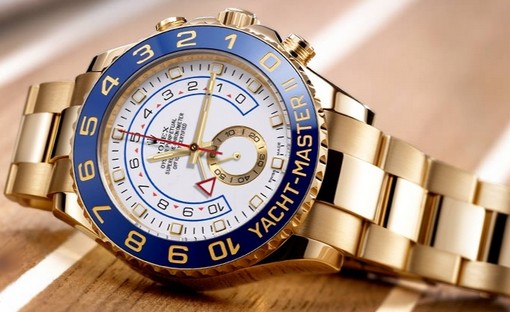
    It’s just a watch right? Wrong. It’s a representation of who you are as a person, an insight into your success and a statement of your style and character. It’s a Rolex and it costs a ridiculous amount of money.

    What do customers look for when shopping for a product? Quality? Price? For most people, this depends on the product. I am sure everyone can think of at least one consumer good in which you are loyal to a single brand. For me, this is my shampoo. Why pay twice as much for a bottle of John Frieda when I can easily get the knock off and save a buck? Because I have developed a brand loyalty; an unwavering devotion to John Frieda hair products and I don’t care if it’s on sale or not. I’m choosing this brand. For most other things in my life, I am content with generics or off brands that generally work as well as the name brands they imitate but when it comes to my hair care I never compromise.

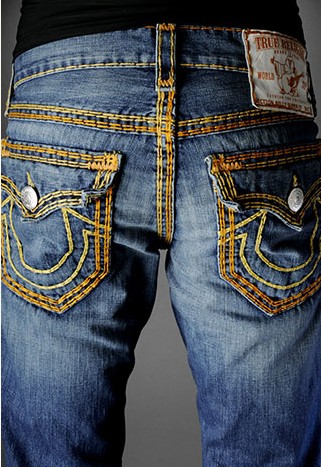
    What phenomenon is it that gets us to pay exponentially more for something that works just marginally more effectively? Does the $8000 Louis Vuitton suitcase really do the job better than your army issue canvas duffel bag? Do the $400 True Religion jeans really make your hips look smaller? The truth is it doesn’t matter. What matters is how we feel. Like the feeling that results from when out of the corner of your eye you notice someone taking an appreciative glance at your checked bag or the “Nice Trues!” from the guy at The Dirty Martini when you come off the dance floor…it’s all about feelings…and feelings matter…to the tune of over 4 trillion dollars domestically in 2009 alone.

    The theories behind brand loyalty run far and wide with arguably one of the more interesting being religion.  An article from futurepundit.com shares that Prof. Ron Shachar of Tel Aviv University’s Leon Recanati Graduate School of Business Administration says that a consumer’s religiosity has a large impact on his likelihood for choosing particular brands. Consumers who are deeply religious are less likely to display an explicit preference for a particular brand, while more secular populations are more prone to define their self-worth through loyalty to corporate brands instead of religious denominations.  Whether it’s religion, feelings, need or just plain greed motivating us, Americans consume labels and brands voraciously.  Perhaps we could all use a little less of both.

  • Marketing’s New Superhero

    In a world where most of the general public has been inundated by the vast amount of advertising on every realm of media, advertisers are struggling to connect with one of their prime markets – the college student. College students are a principal market for corporate marketers with their discretionary spending, having a $2 billion gain from 2009 to 2010. Along with their spending habits, these young adults are beginning to shop for themselves for the very first time, thus beginning to form brand loyalties that marketers strive to form in their target audiences. Herein lays the problem: since we are prone to ignoring most forms of traditional media marketing on television, radio, or newspapers, recent studies have shown that college students are no more likely to open an Internet ad than the rest of the population.

    Introducing corporate marketing’s new superhero: the student brand ambassador. Large corporations are starting to tap campus leaders with a wide sphere of social influence, not to mention the people skills to go along with marketing the brand to a variety of students across their campuses. They also paper bulletin boards, chalk sidewalks, and have constant Facebook or Twitter updates promoting their brand. “The student ambassador tactic embraces all the elements that corporations find [have the] most effect,” states Matt Briton, managing partner of Mr. Youth, a firm that specializes in college marketing, “It’s peer-to-peer, it’s word of mouth, it’s flexible and it breaks through the clutter of the media.” As a market that generally tends to distrust corporate messages, having a peer spin the praises of a certain brand can certainly turn more heads than an ad placed in the correct time slot on MTV.  Marketers are finally beginning to realize something WE all already knew, the best way to sell students something is for other students to be talking about it.                                                                              

    – Jessica Kingman, Alaethea Hensley, & Lauren Phelps

  • Blaming based on Naming


    While we remember the tenth anniversary of the 9/11 attacks, we recall the sadness and despair felt nationwide when the lives of nearly 3,000 people were lost.  The murder of the many innocent bystanders shocked the world, and resulted in distrust among certain races and religions.  Is it human nature to want to place blame in the wake of such tragic circumstances?  Maybe so, but it is very important to be sure that the blame goes to the rightful place.

    The attacks of 9/11 were the doings of extremist terrorist groups, in particular, Al-Quada.  Sadly, many people who do not stay abreast of current events and political issues associate the attacks with all Middle Easterners and/or all Muslims.
    Al-Quada is NOT representative of all Middle Easterners or all Muslims, and thinking so is an appalling mistake that some people have been making over the last ten years.   This act of stereotyping someone based on their religion or appearance can be associated with branding.  Some think that branding is about how you present yourself, but branding is really about how other people see you. Unfortunately, in many parts of the world, instances of intolerance, discrimination, and acts of violence occur based solely on discrimination against ethnicity and appearance.

    In the book, “The Authenticity Hoax” by Andrew Potter, he explains the difference between actual truths and perceived truths.  Since the media is such a powerful force in our society, they may inadvertently allude to something that changes the truth in your mind from the actual truth to a perceived truth.  Another problem is that we live in communities with members who share the same beliefs and motives.If your community tends to think ill of a certain group, religion, race, etc. you are prone to such beliefs as well.  Unfortunately, the only way to avoid being persuaded by the media and your community is to disconnect yourself from society, according to Potter.  As PR and IMC students,we agree with Mr. Potter, but we have also learned that there are ways to filter information to stay as close to the “actual truth” as possible.

    We must always look at both sides of the story, and question everything.  For each possible scenario, ask yourself every question that it could be associated with.  All Americans are not members of hate groups like the KKK.  All Christians are not gay hating anti-progressive activists, and all Muslims are not terrorists.

    – Stephanie, Claire, & David