Tag: October

  • Scaring Up An Audience

    Halloween is a lucrative season. In 2013 the holiday generated around $7 billion in revenue. Most of this get split up between costumes, candy, and festivities, including haunted attractions. Haunted houses bring in over $300 million every year, and it’s no surprise that such a profitable market would invest in integrated marketing communication efforts.In order for haunted houses to stay competitive every year they have to push themselves to darker and scarier extremes, Blackout: Hell at the Armory is a prime example. “I personally found this to be one of Blackouts best shows…It is a relentless bombardment of images, notions, experiences, sounds, lights and sensations that is designed precisely to have a lasting effect on your psyche. Not a haunted house, but a haunting one (HorrorBuzz.com).” With a customer base that desensitizes themselves more every season, marketing efforts needs to be enticing without giving away the big scare.

    maxresdefault

    Haunted Houses represent a niche segment of consumer goods yet are successful in generating a respectable amount of hype for being such a  specialized product. Haunted houses must keep up with products that are relevant year round, even when their product only appeals for less than two months to audiences whom acknowledge the Pagan tradition. Experienced haunted house brands and experts who have thrived in the industry have confirmed strategies that work to showcase haunted houses, taking advantage of the entertainment, and community gathering aspect of the industry. We have compiled a list of those tips that stood out as most effective.

    Tips for marketing a haunted house:

    1. Free stuff! People love free stuff and it is a fast way to grab the public’s attention because their is no risk involved. Stickers, buttons, t-shirts with the haunted house advertised on them are just a few ideas!
    2. Local advertising through as many mediums as possible, whether that be radio ads or local television promotions. This encourages the community to unite to support a local business rather than traveling hours to pay for one that has no ties to the community.
    3. Paper advertising can also be an effective way to promote your haunted house. Come up with a logo, a print ad or brochure to market yourself and hand it out everywhere you go. Become a walking advertisement for your haunted house.
    4. Save a tree and start a blog. Social media is an effective way to reach a large audience.Take charge of these opportunities! Make a youtube channel, a Twitter which constantly teases the attractions highlights, and facebook facebook facebook. Facebook in particular has proved especially useful for promoting haunted houses through creating event pages and inviting friends which leads to a domino effect of community hype.
    5. Attention to year round marketing! The attraction may be once a year but that doesn’t mean the marketing gets to go into hibernation along with the house itself. Make sure to keep your audience’s attention year round by asking for them to subscribe to emails or social media updates that  build anticipation for the upcoming haunted house. This can also be done by updating the website and social media with monthly clues for new themes or mini contests that reward participants with discounted entry!

    1773517_zps9a172f21

    What are your Halloween plans? Feel free to check out the Museum of the Bizarre located in the heart of Downtown Wilmington. It is open all year round and offers a similar atmosphere to a Ripley’s Believe It or Not according to tripadvisor.com. Pick any spooky night in October to see the store transform into the Museum of Nightmares. Filled with special effects and actors, you will be sure to get your money’s worth for 20 dollars to visit this local attraction! Visit their Facebook page: Museum of Bizarre to find out more information!

    By Aki Suzuki, Carrie Poniewaz, Carey Shetterley, Lexie Trimnal, June Wilkinson

  • Making a Difference Off the Field

    October holds several different meanings for the members in our society. It represents the beginning of the fall season and the theatrical holiday Halloween. To a smaller group, it is about National Bullying Prevention Month, which was recognized by the United States since 2006. October also stands for a nationally recognized, very important cause that affects thousands of individuals every year: “Now, therefore, I, Barack Obama, President of the United States of America, by virtue of the authority vested in me by the Constitution and the laws of the United States, do hereby proclaim October 2012 as National Breast Cancer Awareness Month.” As individuals in our society are guided by various narratives and learn from different experiences, Pittsburgh Steelers’ running back and former Carolina Panther DeAngelo Williams finds a special importance in the month as he unfortunately lost his mother to breast cancer in May of 2014.

    In the book “Communication Theories for Everyday Life”, Walter Fisher, a contemporary theorist, speaks of how people are strongly influenced through storytelling: “Fisher believed that human beings are by nature tellers of stories… that the world was best understood as a series of stories that compete for our attention and adherence,” (Baldwin, Perry, & Moffitt). Individuals process and evaluate the persuasiveness of competing stories using narrative rationality, but the stories must also be popular or understood by the masses to have a full effect. About 1 in 8 women will develop invasive breast cancer during her life and about 40,290 women in the United States are expected to die in 2015 from breast cancer. However, our society didn’t quite stress the importance on the issue until recently and the actions that DeAngelo Williams has taken along with the NFL community have helped increase awareness immensely. Breast cancer is a part of his family’s story like many others, but he has used his stage as an NFL player to help take the initiative and his passion about raising awareness increases participation from other members of the NFL community and American society.

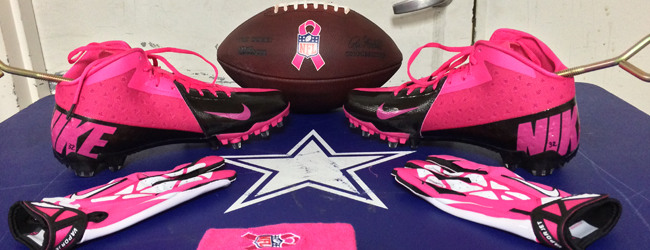
    The color pink is now extremely prominent on the football field during National Breast Cancer Awareness Month and a sport so heavily reliant on the bravado and testosterone of its players are now seen wearing pink gloves, shoes, and towels with a pink breast cancer awareness ribbon. Williams is the pioneer of this tradition and it is amazing to see where it has gone. It initially started in the summer of 2009 when Williams asked Riley Fields, Panthers director of community relations, if he thought the NFL might consider letting players wear pink cleats in addition to other pink apparel the league already planned to allow. Not only do players, coaches, and game officials wear pink, but many of their game-worn items are auctioned off with direct proceeds going to the American Cancer Society.

    The role that breast cancer played in Williams’ life left him compelled to help try to fight a disease that will continue to plague the lives of so many others. The support he has received in his efforts have allowed for the widespread increasing awareness of breast cancer in the month of October. Even the video game “Madden NFL 16” has incorporated the ‘pink treatment’, as Williams’ character in the game reflects his decision to dye some of his dreadlocks pink last September in honor of his mother. In a recent effort to increase awareness, Williams uploaded a two-part video to Instagram with him as the focal point of a commercial to help spread awareness with the caption: “This new TV commercial is dedicated to my mom, my 4 aunts, and women everywhere affected by Breast Cancer. I love you. #WeAreInThisTOGETHER.” It can be seen at https://www.youtube.com/watch?v=F5vahCK0pyg.

    -Griffin Weidele, Austin Moody, Luci Keefer, Allen Wooten, Scott Uraro

  • Is the Cure on your Agenda?

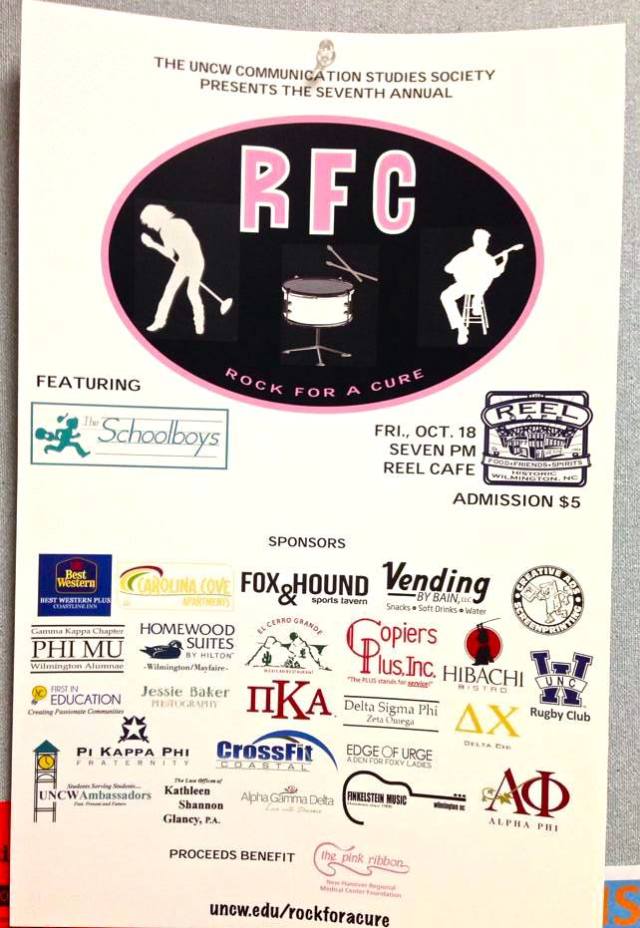
    In just a few short days, the Communication Studies Department at University of North Carolina Wilmington will be hosting their 7th annual ‘Rock for a Cure’ fundraiser.  The event is held to help raise funds and awareness for the New Hanover Regional Medical Center Foundations ‘Pink Ribbon Project.’  On October 18th, at 7 p.m. students, staff, and community members will head to Reel Cafe in downtown Wilmington to listen to live music, enjoy drinks, and socialize while raising money to help local women fighting breast cancer.  To attend this event, all you have to do is purchase a ticket for five dollars, and “since the events inception, Rock for a Cure has raised more than $22,000 to assist local women with mammography screenings and care bags for women who are undergoing cancer treatments.”  This is always a much anticipated event on campus because of the large amounts of community news coverage, sponsorships, raffles and the fact that UNCW’s very own, “The Schoolboys” will be performing.

    582135_511063455654107_2141160679_n

    The Pink Ribbon Project “has helped thousands of local women – without insurance or other financial resources – by providing mammography screenings, diagnostics, comfort items and spiritual support.”  They provide information via their Facebook page that informs the public of any local places or events going on that donate proceeds to their project. The Pink Ribbon Project, since its founding in 1998, has raised over $1.4 million for women undergoing cancer treatment in the New Hanover region. The organization has also provided over 5,200 comfort bags, which include necessities during treatment as well as inspirational insights.

    October was first designated as the National Breast Cancer Awareness Month over 25 years ago and since then has been used as a source of revenue for many foundations. Although foundations such as Susan G. Komen and the American Cancer Society raise money year round, October is targeted to generate specific media coverage for awareness, prevention, and research for breast cancer. Countless organizations including the NFL also bring awareness to this cause and by doing this, they, along with the other organizations are harnessing the Agenda Setting Theory. If a news item is covered frequently in the media, audiences will regard the issue as more important.  The Agenda Setting theory is used when telling audiences what to think about, not how to think. Rock for a Cure is able to gain so much support from students because it is a prominent topic on UNCW’s campus. Students, staff, and community members are all made aware of this event through various outlets such as Facebook, the school website, posters, online news articles, and information sessions.

    546908_10151980755359108_1202783879_n

    Can you think of a time when the media has influenced what you have thought about? Where have you seen the Agenda Setting Theory being used recently? Has this been a successful method used for Rock for a Cure?

    See you all Friday at Rock for a Cure!

    -Aaron Love, Kara Zimmerman, Rachel Clay, Rebecca Hobbs

  • Humor: The Helper

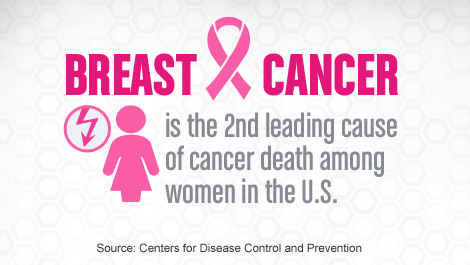
    It’s undeniable that cancer is a scary subject, and breast cancer is no exception. One simple statistic summarizes just how un-discriminatory and prevalent breast cancer is: breast cancer is the most common form of cancer in women, no matter your race or ethnicity. With the whole month of October designated as National Breast Cancer Month, reminders for women to get mammograms and to screen themselves appear regularly. So how do you get people to face one of the scariest diseases out there? The answer is humor.

    Rethink Breast Cancer is an organization dedicated to changing the perspective of breast cancer from scary, to preventive and manageable. Most notably, they want to change how awareness is taught. Rethink Breast Cancer has moved away from fear-based education tactics to using “fear-free, cutting edge messaging, multi-media platform reach and positive energy [that will] revitalize the breast cancer movement and motivate young people to action.” The YouTube video they have created for awareness has done just that.

    With over six million views, the video Rethink Breast Cancer produced in 2011 has done a remarkable job of not only raising awareness for breast cancer, but also doing so in an approachable manner. Based on the premise that “women are more likely to watch a video if it features a hot guy,” it stars male models that educate the audience on how to check for breast cancer. Humor is interwoven throughout the video in scenes such as a female nurse tripping over a stool, and a slow motion of a male model bathing himself.

    Together, all of these humorous scenes combine with raw education to make breast cancer awareness fun to learn about. By using a pop-culture medium, such as YouTube it is even harder to ignore the message. But most importantly, Rethink Breast Cancer is living up to its goal of helping to educate from a perspective of humor rather than fear. This is exactly the kind of video that women (and even men) will pass on to their friends, helping to spread the importance of proactively approaching breast cancer.

    Carefully balancing humor and sex appeal, Rethink Breast Cancer has created the ultimate advertisement for spreading awareness on how to help catch breast cancer. By using humor the ad becomes persuasive and makes examinations less of a chore and more of a self-service. But is this particular message the way that survivors would want to caution the public? While it seems appropriate to use humor on occasion, could there be a point where humor starts to detract from the sincerity of the situation at hand? If ads like this can be successful for breast cancer could this type of levity be introduced in messages of other health campaigns?

    Meghan Carey, Caroline Robinson