Tag: Internet

  • Ready or Not, Here We Come!

    Well, it wasn’t ready. The Affordable Care Act website, that is. Commonly known as Obamacare by critics, the program officially launched October 1, 2013 and attempts to allow each American the opportunity to have affordable health care. The program was signed into law in 2010, but only just now became part of daily American life. The website experienced technical errors last week, and again this past Tuesday. However, this was unrelated to the government shutdown. Instead, the system experienced a major overload due to mass traffic to the site, claimed those who run it. An estimated 8 million visitors forced the site to send a response of “Please Wait and Be Patient,” CNBC reports. Run by the Department of Health and Human Services, the process to acquire a health care quote is actually quite simple. I myself did it and, just shy of giving my contact information, I was inches from an affordable quote in less than two minutes.
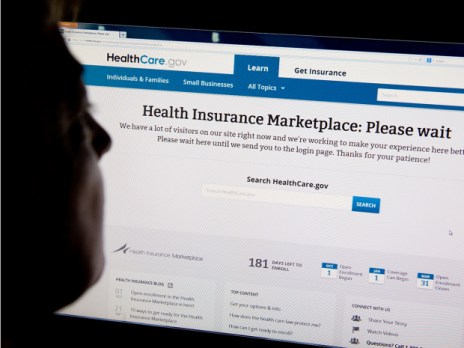
    Page that loads with technical issues, courtesy of MSNBC
    Page that loads with technical issues, courtesy of MSNBC

    Fox News said that the 93 million dollar website was the victim of poor Java Script coding, to the point where, simply put, the site freezes up. It doesn’t know where to go or in which direction to proceed. Yet MSNBC follows the path of the HHS, saying it was simply a matter of visitor overload to the site. MSNBC did not report, as of posting, that there were Java Script coding issues.

    So. Which to believe? It is common knowledge that news stations lean differently towards their side, whether it be right or left. Even CNN, a major world news outlet, leans toward one side. This post is neither liberal nor conservative, and it neither promotes nor discourages the Affordable Care Act. However, it does encourage that American citizens not rely solely on one news outlet for information. Rather, gather your news from a multitude of sources. Otherwise a viewer faces the possibility of being a victim of “Spiral of Silence.” The Spiral of Silence is an instance where an individual, with one opinion differing from that of the majority, is unable to voice said opinion for fear of judgment. For instance, if I believe Theory X, but my neighborhood only watches one news channel that reports solely on Theory Y, the neighborhood will only be educated on Theory Y. If the entirety of the neighborhood, apart from myself, believes in Theory Y, I would be uncomfortable in expressing my opinions and differences. I am lost in the Spiral of Silence. If you support a cause that one news station does not, you are only educated on their belief. In the land of the free, is our free speech being suppressed by the media?

    -Hilary Hall
  • Today’s Politics in the Internet Age.

    With the Republican Primaries and Caucuses well underway, the candidates are narrowed down to the four main contestants. Mitt Romney, Rick Santorum, Newt Gingrich, and Ron Paul are campaigning across the nation and participating in debates to convince voters that they are what the nation needs in a candidate. How do the general public learn information about the candidates though, if they aren’t campaigning in their state? The answer is found on the candidates’ websites.

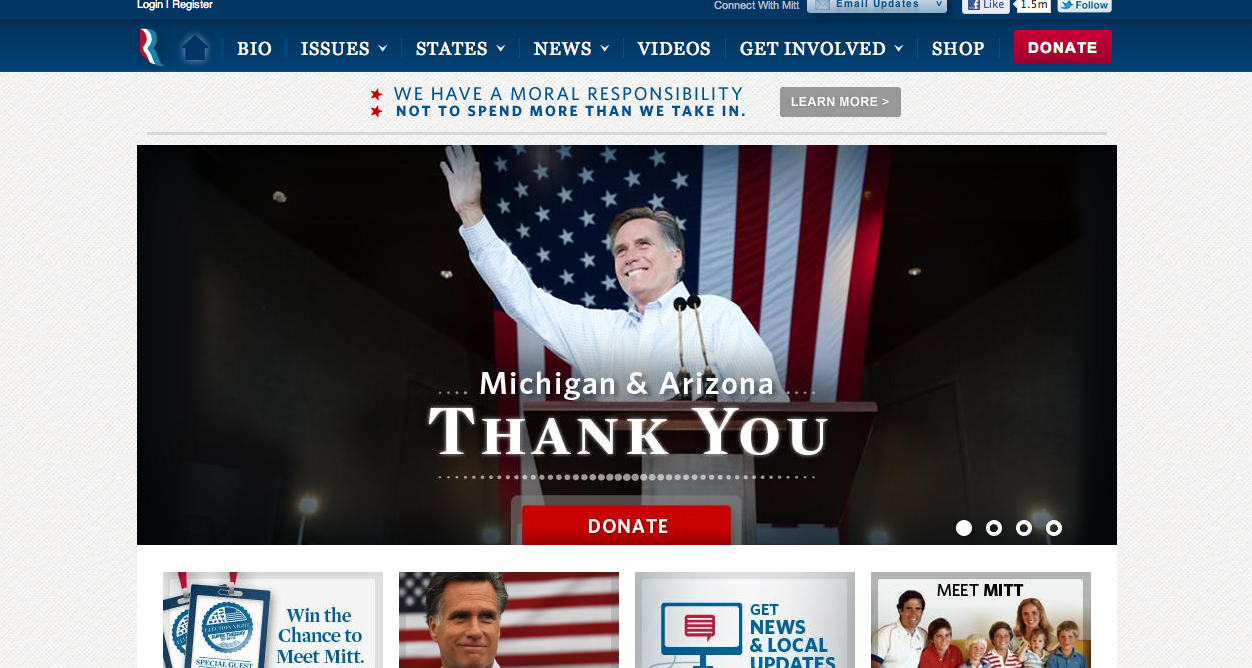
    Mitt Romney uses his website to thank the voters in the states in which he was victorious.

    Each candidate has their own website, run by their political team and volunteers that keep their information (like interviews, media, photographs and messages) up to date. On these sites are direct links to the candidate’s social media outlets, such as Facebook and Twitter, and their Youtube channels to watch ads that have been produced.

    Rick Santorum's website has his beliefs and campaign strategy on the main page.

    Something you will notice on each candidate’s page are donation links, most notable on candidate Ron Paul’s page who needs the money to continue his campaign. For those who want to support their favorite candidates, there is no better way than to go online and donate to their campaign using links found on each site.

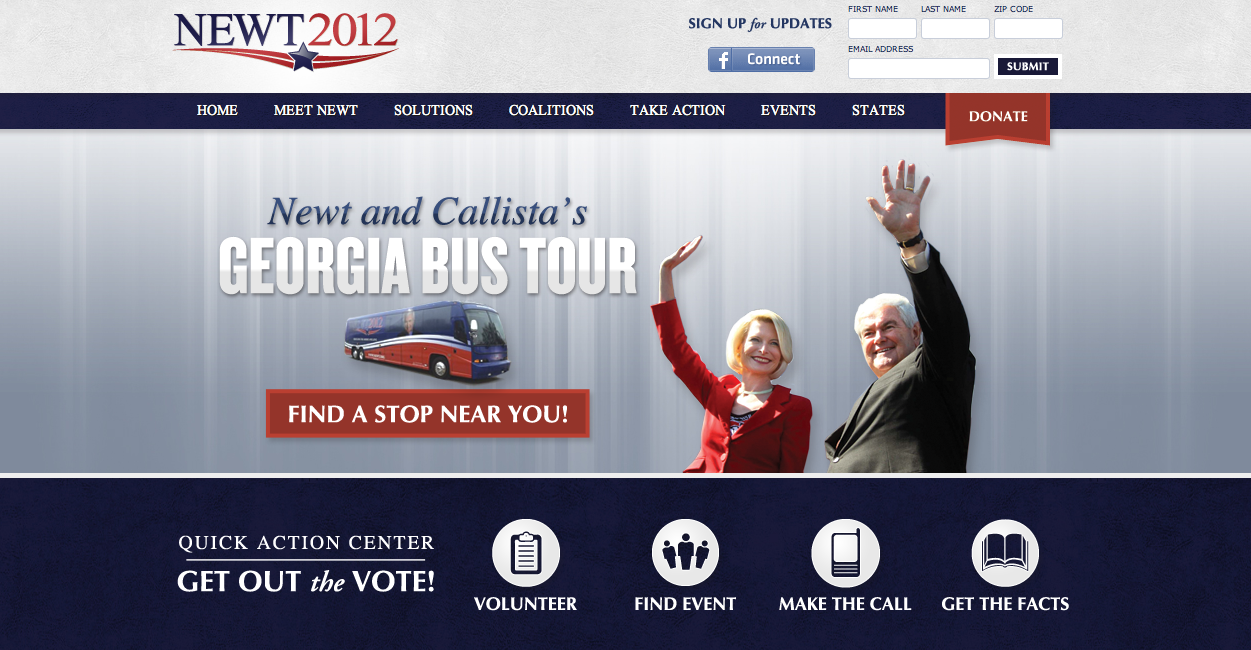
    Newt Gingrich uses his homepage to let supporters know where he will be next and how to contact him.

    These websites are also excellent outlets to connect to mass groups of people at once, without having to pay to run advertisements or receive television or print media coverage.  For candidates who don’t receive as much media coverage as they feel they deserve, this can be a vital part of their campaign. Since so much information is traded on the internet now, much of the general population is turning to the internet to learn more about the potential leaders of the United States.

    Ron Paul's main page takes you directly to his donation totals to try to get more support for his campaign.

    Joshua Vester, Molly Jacques, Ashley Oliver, and Hunter Wilson.

  • Campaigning 2.0

    Social networking is the biggest thing to happen to political campaigns since television, and this medium is rapidly changing the way candidates reach voters.  We first saw heavy use of social media tactics with the 2008 presidential election.  You could “friend” the candidate you planed to vote for on Facebook or “follow” them on Twitter.  If you chose to do so, you were given access to immediate updates from the campaign trail and information on platforms in quick, bite-sized pieces of information that were easily digestible.  The trend of using social media in political campaigns has only strengthened since 2008; now almost all candidates have Facebook pages and a presence on other sights such as Twitter, Linkedin and Gist.

    Political campaigns are benefiting greatly from the use of social networking.  The sights help to lend transparency and credibility to political campaigns by eliminating a middleman.  Voters can go straight to a candidate’s Facebook page and read facts straight from the candidate, rather than receiving biased information from a third party.  Michigan House of Representatives member, Justin Amash, began posting his votes, along with a short explanation from the House floor as his Facebook statuses.  He immediately received feedback from his “friends”, both good and bad.  Since starting this, Amash has gained popularity and even announced his candidacy for the US Senate through his fan page.

    Social networking sites also offer the ability for candidates to access a wide variety of voters inexpensively.  Facebook, Twitter, Linkedin, and various other social networking sites also allow people to be the voice for candidates, which could either make or break them.  If a candidate has supporters touting their name all over their profile, then they are likely to receive more attention.  If people are constantly talking about how great somebody is then other people are going to think that candidate is a good choice.  Refer back to the last presidential election and this is seen clearly.

    All in all, social networking has evolved the way political campaigns are carried out.  No longer can candidates rely on traditional tactics, rather they have to continuously keep their publics informed through status updates, tweets, etc.

    Sarah McIntosh, Eliza Wadson, Jocelyn Walson, Sean O’Connell


  • The Internet Too Slow?

    The Internet is apparently too slow according to a Google analyst. Google has almost always had a very conservative view of the internet and the advocate for few, if any government censorship and barriers. There are many countries, such as China and France that put blocks on website’s information in order to hinder the amount and type of information its citizens receive. Google’s ideal would be achieving a single Web in order for all people to have high-speed, open and all-access internet connections.

    Google has recently taken strong actions against China by threatening to completely pull Google out of the country because of their strong governmental intervention and hacking. By taking out all of the blocks and creating a unified Web, Google says that everyone will be able to use the internet to its strongest ability. During an interview with CNN , Google analyst Derek Slater answered questions to give insight on how we can get this broadband, high-speed internet. Slater says, the Federal Communications Commission has started working towards creating a national broadband plan to give fast, affordable and open access to the internet in the United States in effort to put the US back on top in regards to internet leaders. The plan of action to achieve this is very in depth and requires much experimentation. It will be vital to achieve this solution that all sectors, municipalities and government agencies.

    Some ideas Google has submitted include using communities as central hubs for this broadband internet access for people to use and disperse. Furthermore to spread multiple strands of fiber to people’s homes in order to eliminate the high cost of digging up the streets and running cable into people’s homes.  Slater emphasize how essential it is for people to participate in civil society and political processes, along with economic growth, innovation and job creation. By falling behind on the implementation of this, we are falling behind in global competition economically and innovatively.

    Using Google as an example, Slater shows how the open internet can benefit all users and society through greater innovation, creativity, and free expression. This Democratization of the internet will further evolve the way people, business, and society use the internet in a seemingly immeasurable way.

    Shannon Meadows