Tag: international

  • One Country Painted Red

    With the rapid growth of new products, brand extensions and the blurring of traditional and new age advertising, marketing and advertising to target audiences has reached a new level of competitiveness. Brands now must adapt to this changing environment and contest with competitors to stay at the top of their market and target to audiences in creative, attention-grabbing tactics.

    The most iconic brand in the soda market, and throughout the world, is undoubtedly that of Coca-Cola. In the summer of 2011, Coke created an original marketing strategy to run a campaign that would inspire people to connect with the brand both online and offline in order to acclimate to the changing marketing environment. The campaign’s prime objective was to increase consumption of Coke over the summer season and to get people to fall in love with the iconic brand again. Particularly, in Australia, at the time nearly 50% of teens and young adults had never tasted a Coke and this drove the brand to reconnect with the country.

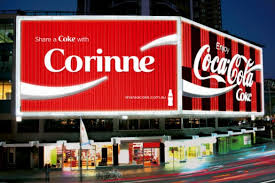
    Established in Australia, the ‘Share a Coke’ campaign immediately received positive media attention and consumer responsiveness. The idea of the ‘Share a Coke’ campaign was to place Australia’s 150 most popular names on the front of millions of Coca-Cola bottles, simple right? This was the first time in 125 years that Coke had made such a paramount transformation to it packaging, and it was revolutionary.

    “We used publicly available data to review the most popular names in Australia and ethnic representation in Australia to ensure the diversity of our multi-cultural nation was represented appropriately.”

    – Coca-Cola Spokesperson.

    The Coca-Cola brand wanted to initiate conversations by putting Australians front and center and inspire them to connect with people and ‘Share a Coke’. The central theme that gave ‘Share a Coke’ its power was the way a brand so universal could replace its logo with individual names by reaching out to consumers and personalizing its brand to individuals.

    “We are using the power of the first name in a playful and social way to remind people of those in their lives they may have lost touch with, or have yet to connect with”

    -Lucie Austin, Marketing Director for Coca-Cola South Pacific.

    The ‘Share a Coke’ campaign strategically exhibited that when personalization in advertising is done the right way, it can be highly appealing and extremely effective. While Coke got personal, media was buzzing with talk over what the brand was implementing behind the personalization. Coke remained silent until Australia’s highest rated media weekend. The campaign was revealed to the public and aired across the biggest weekend in Australian sport, during the AFL (Australian Football League) and NRL (National Rugby League) grand finals which reached over 30% of the population.

    Succeeding the campaign launch, requests for more names were coming in the thousands. Coke was prepared for this boom of requests by setting up kiosks that toured 18 Westfield shopping centers attracting consumers to personalize any name on a Coca-Cola bottle.

    Coke wanted to especially reach out to the 50% of young adults that had never tasted a Coke in Australia, and there was no better way to reach this target market than online. Participation and mass allocation was achieved through Facebook by providing consumers with the resources to connect and ‘Share a Coke’ by creating a personalized virtual Coke bottle to share with a Facebook friend. Consumers were tagging friends in pictures with personalized Coke bottles and sharing stories on social media platforms like Twitter, Facebook and YouTube. Coke consumers also could create their own commercials! With the abundance of requests still pouring in, Coke told consumers to put in a vote of “who do you want to share a Coke with the most?” via Facebook. After 65,000 people voted, Coke bottles with 50 new names were released. “Consumers were invited to SMS a friend’s name, which was projected live onto the iconic ‘Coca-Cola’ sign at Sydney’s King’s Cross. They then received an MMS enabling them to share their friend’s name up in lights, via Facebook and email.”
    untitled

    The multi-platform communications strategy was implemented to ‘Share a Coke’ with someone you know, or want to know and ultimately gave people the resources to find, connect and share. After 3 short months of running the campaign, young adult Coca-Cola consumption increased significantly in Australia by up to 7%, making 2011 Coke’s most fruitful summer season in history. The ‘Share a Coke’ campaign resulted in 76,000 virtual coke cans shared, 378,000 extra coke cans printed at kiosks, and 5% more people were drinking coke. Coca-Cola had successfully won over Australia and became a part of popular culture again.

    -Briana McWhirter
  • See the USA in Your Chevrolet, or See China in Your Buick

    Baseball, hot dogs, apple pie and Chevrolet. That line from this 1970s ad for Chevrolet exhibits the brand’s position as an American icon.

    Fast-forward several decades, and General Motors’ Chevy is still an iconic American brand. Meanwhile, in China, the Chevrolet brand is still young. Chevy is China’s seventh-best selling brand, although two models, the Cruze (sold in North America) and the Sail are strong sellers.

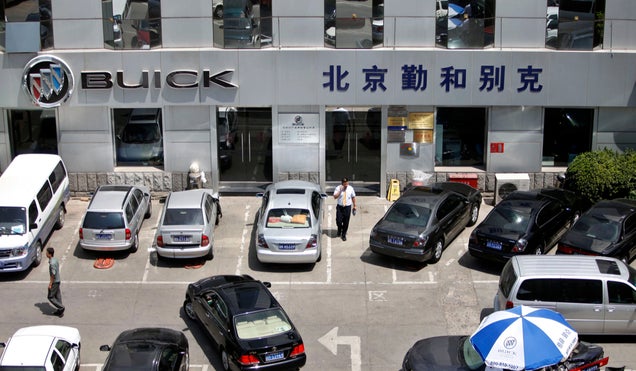
    While Chevy is still catching on in China, another longtime GM brand from the United States holds popular: Buick.

    lugzaoaf2otau1jrolprYou may be asking yourself: Buick? Isn’t that the car for old people? Not so the case in China! In 2013, four times as many Buicks were sold in China than in the U.S.  Nearly 810,000 Buicks were sold in China, compared to over 205,000 stateside.

    What explains Buick’s popularity in China? The answer is rooted in the early 20th century when important Chinese government figures such as president Dr. Sun Yat-sen, premier Zhou Enlai, and emperor Pu Yi either owned, drove, or were driven around in Buicks. This historical background adds to Buick’s image of upper class and prestige. Their advertising uses images of success to propel Buick to a high-end brand, such as in this Buick Excelle ad from the 2000s.

    Establishing global brand coherence has its difficulties. To contrast, in the United States, Buick is having trouble shaking off the “55-to-dead” demographic, and they tackle that problem in this new ad that features the demographic commonly associated with the brand in the U.S. with the desired target demographic in the driver’s seat of the brand-new 2014 Buicks:

    GM isn’t the only American automaker popular with the Chinese. Ford’s sales in China rose 49 percent in 2013, and the Ford Focus was China’s best-selling car that year. NPR interviewed 32-year-old Li Ning, who said he bought a Focus because he likes its muscular American style. In China, Ford is establishing its image as young and trendy.

    chinaford2_wide-852ed1ca329096cde3278d9430a4ed11fd559123-s40-c85

    Auto China 2014, the Beijing International Automotive Exhibition, kicked off on April 20th and runs until April 29th. At Auto China, Ford is introducing a luxury brand familiar to Americans—Lincoln.

    LincolnThumb_1398177154

    Lincoln’s model of selling cars in China is called “The Lincoln Way” and features luxurious showrooms that feel like a five-star hotel. Lincoln plans to focus on building customer relationships by understanding and fulfilling their needs. Lincoln may bring this style of personal selling to the U.S. based on how it works in China.

    Only time will tell if Ford’s effort to introduce the Lincoln brand to China will be a success. Will it become a competitor to Buick, which is already established as a strong luxury brand in China? Are there other ways in which this is an example of globalization?

    Nathan Evers

  • Students Help Students Travel

    Ready to experience the world with exclusive travel discounts and rewards without breaking your college fund? Well we found just the website to make this process and your travels go much smoother. StudentUniverse is a technology company that offers these incentives and many more through their website. The best part? Membership is free! StudentUniverse is the leading student travel agency with almost one-third of all U.S. college students visiting the site every year. The website and blog offered by this company are operated by college students themselves. This team of students creates and spreads the latest trends so you know the destinations chosen are the “hottest” vacation spots this year.

    This travel agency also coordinates campaigns to engage students with brands and destinations, gaining their attention and swaying purchase decisions. StudentUniverse sells exclusive airfares from over 60 airline partners as well as sale rates on hotels and tours all throughout the world. The company also writes a blog, likewise conducted by students, which discuss the latest and greatest deals. They offer apps that you can download that release discounts on hotels, tours and more. The blog posts also offer information and tips about the youth travel market and how this industry is growing. Airline deals are also displayed in the blog along with the benefits for international students. StudetUniverse also gives away free round trip flights to a maximum number of students and scholarships to study abroad.

    wales

    StudentUniverse recently introduced WeHostels, which is a new application for any smart phone that allows users to book hotels or hostels last-minute all over the world. It also features over 200,000 properties listed within the app. The target audience of this app is for students and young budget-conscious travelers between the ages of 18 and 28. WeHostels is currently  one of the most downloaded apps across the globe. It has been called one of the “100 Brilliant Companies of the Year” by Entrepreneur Magazine.

    One of the main components of WeHostel’s said brilliance is the emotional appeal of its campaign. Their campaign focuses on the destinations that people would like to travel to before death. This idea heavily utilizes pathos and pulls as the heart-strings of the target audience. WeHostels encourages people to deeply think about where they would love to travel most to before they die by using the hashtag “beforeidie” on Twitter. In turn of promoting the app via hashtag usage, WeHostels has made the promise to send a few lucky travelers on their dream bucket list journey. This is a prize that is sure to be coveted by inspired young travelers.

    In addition to promoting #beforeidie on Twitter, WeHostel has also created a video to display their mission of empowering young travelers. The video shows different individuals on the street saying where exactly in the world they would like to go before they die. Once again, pathos is strategically incorporated into this advertisement by providing young dreamers with a sense of empowerment.  In the end of the short video, WeHostels encourages audience members to go to their website to take the next step in making their dreams come true.

    The promotions and ideas that StudentUniverse provide are endless and the information is very beneficial for the average college student. StudentUniverse’s mission states, “It’s about getting the most out of your time in school. We believe in the positive effects that travel experiences can have on a person’s character and that having those experiences early on in life is critical in personal development”. They are a dedicated company who value the experience to travel and attempt to make the process a little easier. The company even offers a 24/7 customer support line for any comments, questions, or concerns at your convenience! Do you think that their use of pathos was effective in the overall advertisement of the app?

    -Briana McWhirter, Hannah Turner, Emily Foulke